
Industrial Compressor Scale Model
Physical compressor models that clarify equipment architecture, component relationships, and selected operating concepts
Compressors can be difficult to present when housings conceal the components that distinguish one design from another. A custom scale model can expose the right relationships while remaining practical for meetings, training, and exhibits.
Technical Overview
Start With the Compressor Type
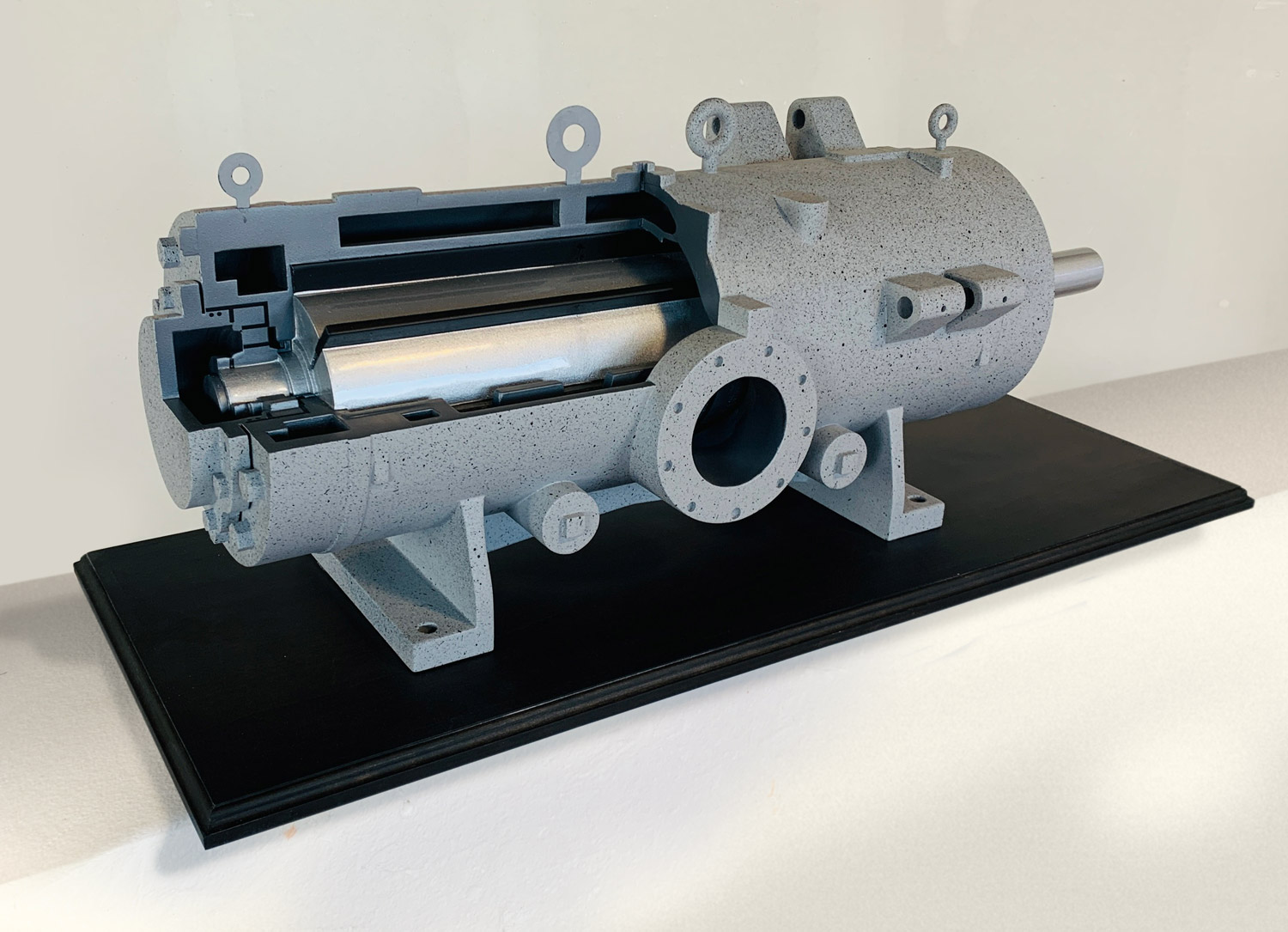
A rotary-screw compressor uses intermeshing helical rotors, a reciprocating compressor uses piston movement within a cylinder, and a centrifugal compressor accelerates a gas through rotating components. Those architectures create different modeling priorities and should not be blended into a generic compressor form.
Identify the exact machine, configuration, and revision before the model is designed. The selected type determines which housing, rotor or piston group, valves, ports, controls, drive components, and support systems need to remain recognizable.
Define the Audience and Teaching Goal
A sales model may need a strong exterior identity and one memorable internal view. A training display may require component names, color-coded groups, or a sequence that follows air through the equipment. The physical format should follow that objective.
List the questions the model must answer and rank them. This prevents the display from becoming crowded with small features that are dimensionally present but do not help the audience understand the machine.
Expose the Components That Matter
A fixed cutaway can keep internal components visible at all times, while a removable housing preserves the complete exterior profile for part of the presentation. The cut line should reveal a planned relationship rather than simply remove a large portion of the enclosure.
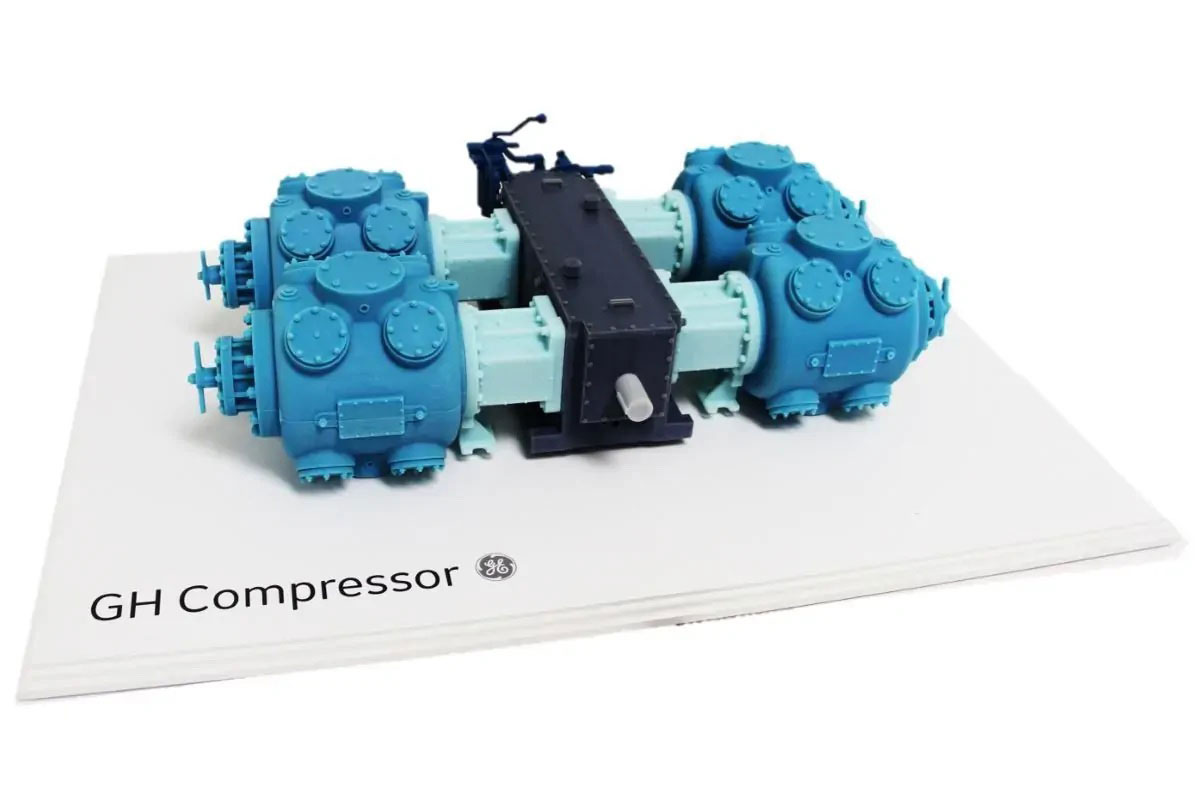
Contrasting colors, concise labels, transparent areas, or directional graphics can reinforce the explanation. These devices should distinguish the model from the operating machine and should not suggest that the display reproduces pressure, temperature, or full mechanical behavior.
Set Scale and Detail Priorities
Finished scale should make the smallest essential component legible while fitting the intended counter, pedestal, or floor area. Some dimensions may be emphasized slightly when a literal reduction would make an interface too fragile or too small to discuss.
The review should document those presentation choices, along with any simplified fasteners, passages, or repeated components. Technical credibility depends on making deliberate abstractions and preserving the relationships that define the compressor type.
Build From Current Equipment References
Useful inputs include CAD, assembly drawings, sections, dimensions, product photography, finish specifications, logo files, and approved terminology. The file package should identify which information is current and which geometry may be simplified or withheld.
Review checkpoints can cover silhouette, section boundaries, component placement, labels, colors, base design, and any planned illumination. Resolving these items before fabrication limits interpretive changes late in the project.
Plan for the Model's Working Environment
State whether the model will remain in one facility or travel between shows, how it will be handled, and what setup time and power are available. A case, removable assembly, or reinforced base may be useful, but the need should come from the actual use plan.
WhiteClouds can evaluate those requirements with the equipment data and produce a compressor model focused on the architecture and component relationships the audience needs to see.
Develop a custom compressor model
Review industrial model fabrication and examples of WhiteClouds machinery and equipment models.
Tell us what your model needs to communicate
Share the intended audience, approximate size, level of detail, available source files, and project timeline.