
Location briefing model
Show elevation, routes, access points, boundaries, and named features for a group reviewing a location or movement plan.
A physical terrain model can support location briefings, art-department planning, set dressing, or an on-camera map scene. The useful starting point is not a movie reference; it is a clear definition of the terrain, audience, viewing distance, and role the map must perform.
Discuss a Production Map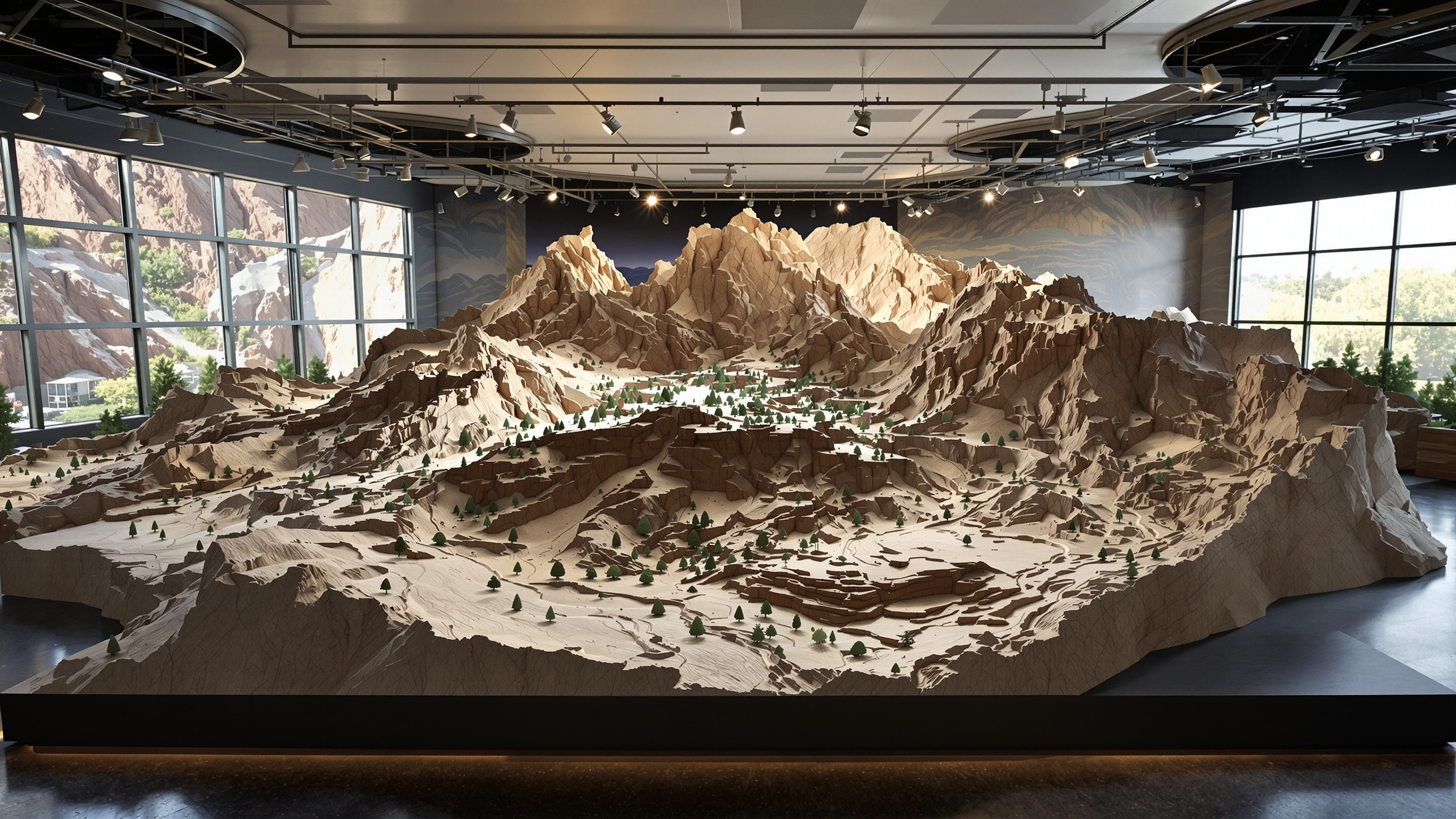
A production map may be a working reference, a presentation model, a scenic element, or a prop that appears on camera. Those uses call for different decisions about scale, labels, finishes, viewing sides, and handling. Identifying the job first keeps decorative detail from obscuring information the crew actually needs.
Show elevation, routes, access points, boundaries, and named features for a group reviewing a location or movement plan.
Provide a shared physical view of terrain relationships while scenic, set, and production teams coordinate their own work.
Plan the map face, label size, viewing angle, and finish around the intended shot rather than around close inspection alone.
Use a terrain form as part of an office, command room, visitor center, or other environment where the map supports the scene.
Create a portable or installed model for approvals, stakeholder reviews, or technical explanations before production moves forward.
Where the brief calls for updates, discuss removable labels, overlays, or replaceable information panels during scoping.
These physical map examples show different terrain extents, surface treatments, labels, and presentation formats. They are planning references, not film or television case studies.
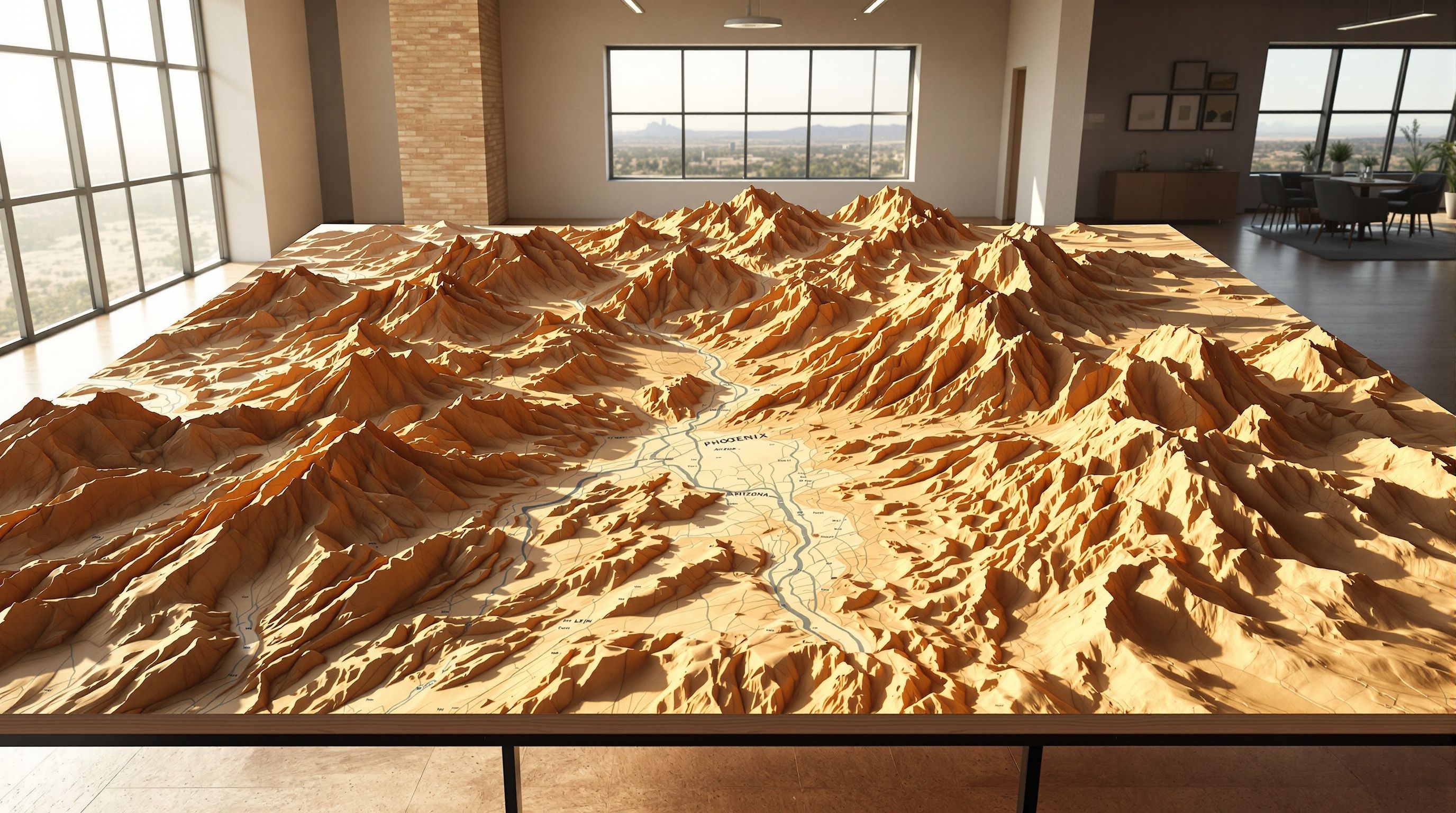
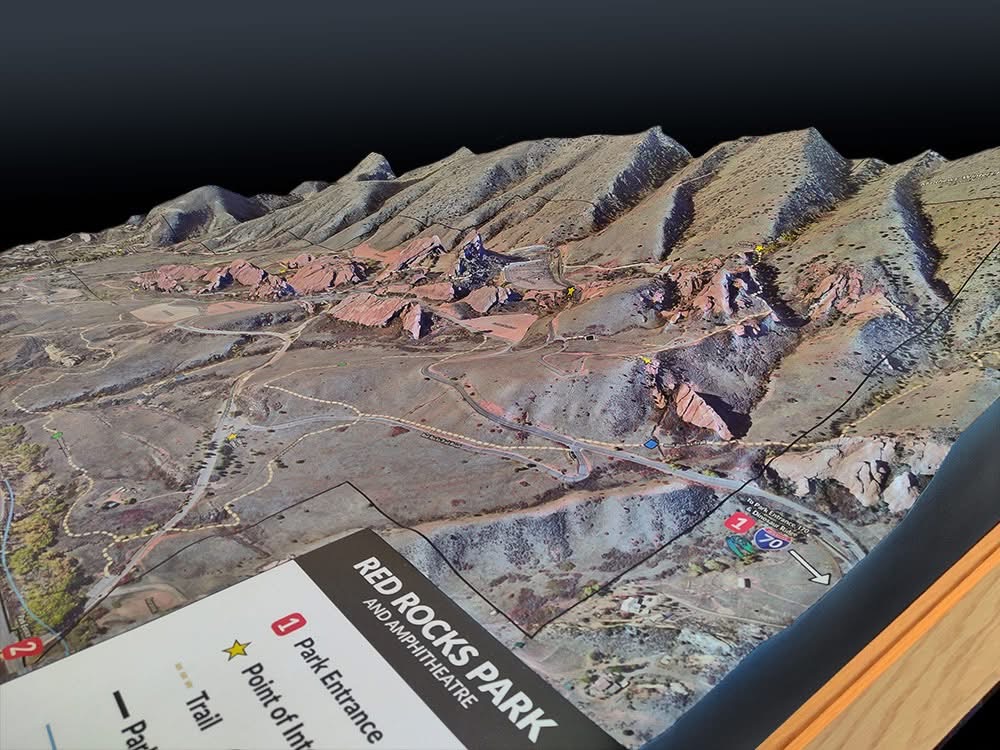
For an on-camera map, provide the intended framing, camera distance, aspect ratio, and the information that must remain legible. A steep vertical exaggeration may read clearly from a low angle while looking excessive from directly overhead. Labels that work for a person standing beside the model may disappear in a wider shot.
Also identify which sides can appear in frame. A map built for one hero angle can concentrate edge treatment and orientation around that view. A model handled by performers or photographed from several positions needs a more complete perimeter and a deliberate north orientation.
Supply the desired geographic extent, available elevation data, imagery, labels, boundary files, and any production graphics. Mark essential features separately from optional detail. If the map must align with a script, storyboard, or technical plan, identify the exact locations that must be recognizable without relying on unverified geography.
The finished footprint is connected to data density. A large region at a small display size may require simplified labels, while a focused site can support more detailed terrain and route information. WhiteClouds can review the source package and propose a practical balance for the intended use.
A concise production brief lets the team evaluate both the physical map and its presentation requirements.
Review the broader topographical-model service for fabrication scope, then use the gallery to compare terrain, labeling, bases, and presentation formats.
Send the map extent, source files, intended production role, finished size, and schedule. If the map must appear in a particular shot, include a reference frame or marked storyboard so orientation and readable detail can be discussed early.