
From napkin sketch to production blueprint
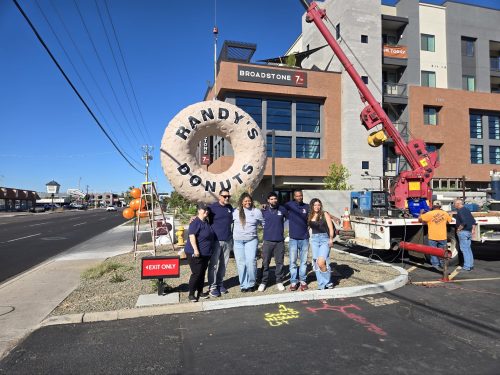
Every successful donut starts with a story. Is the prop meant to look fresh-from-the-fryer, dripping glaze under bright studio lights? Is it a roadside icon designed to weather a decade of sun, rain, and selfies? Or is it a touring piece that must break down fast and roll through standard doorways? Creative direction frames the technical decisions to come—the diameter, thickness, pose, color palette, mounting method, and how close viewers can get without touching.
Fabricators capture that story in a brief and turn it into scaled concept art. They establish silhouette and proportion, decide whether the donut reads as playful, hyper-real, or stylized, and lock in details like frosting edge, crumb texture, and the style of sprinkles. A physical maquette or a digital 3D model follows. Donuts are geometric cousins of a torus, so modelers can generate a perfect base form, then artfully “break” it by adding believable sag, pull, and drip. Even outlandish donuts benefit from real-world cues—subtle surface dimples, irregular glaze thickness, and imperfections that catch light like the real thing.
Selecting the core: foam types and why they matter
The foam core is the unsung hero. Expanded polystyrene (EPS) is the go-to for its light weight, affordability, and compatibility with hot-wire or CNC carving. When projects demand sharper edges or thinner details, fabricators sometimes use higher-density EPS or polyurethane tooling foam, which machines more like soft wood and holds crisp contours with less post-sanding. For outdoor installs, closed-cell foams resist moisture better and reduce the risk of swelling if the protective skin is nicked. Density is chosen with intent. Low-density foams carve quickly and keep shipping weights low, which saves budget and simplifies rigging, but they need robust hardcoats and careful handling. Higher-density foams allow finer features—like deeply beveled frosting ridges or individually carved sprinkles—while still supporting a smooth, automotive-style finish. The right choice is a balance among scale, intended environment, timeline, and budget.
Carving the donut: from blocks to believable bite
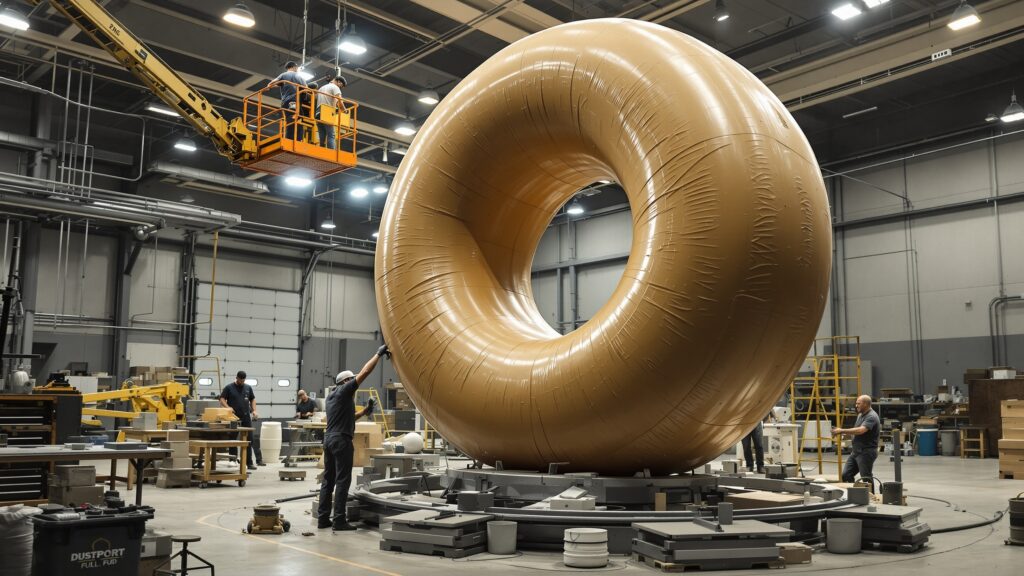
With the core material decided, the donut body is cut. For symmetrical forms, hot-wire cutting through EPS blocks can rough out the torus efficiently. When the design calls for asymmetry—glaze drips, bites, or a twisted pose—fabricators turn to CNC routers and 3D toolpaths. The donut may be milled in rings or pie-slices and then laminated with foam-safe adhesives, avoiding visible seam locations or placing them where frosting will later conceal the join. Hand-sculpting remains indispensable. Tools range from serrated rasps to flexible sanding pads that ride the curves without flattening them. Sculptors feather glazing drips so they look poured, not stuck on. They knock down milling lines and build in micro-undulations that make paint later look deliciously wet. If the donut includes a “bite,” texture becomes the star: fabricators stipple an irregular crumb and add torn edges where glaze gives way to exposed interior. Every pass respects gravity and flow, because lighting reveals truth—what looks plausible in the shop will feel convincing under stage or daylight only if the form follows physics.
Building a skeleton: hidden strength that saves the day
Even light props need a plan for lifting, mounting, and surviving the chaos of real activation. Fabricators integrate an internal armature—a concealed skeleton that might include a steel center hub, plywood spines, or composite tubes—to tie the whole structure together. The armature provides threaded inserts or welded receivers for stand mounts, truss clamps, or base plates. It also sets the center of gravity, which prevents a donut from “rolling” visually off its stand or becoming top-heavy when sprinkles are added.
For touring or outdoor pieces, the base interface is engineered early. A donut destined for a trade-show floor may sit on a sleek plate with discreet outriggers, while a permanent outdoor installation might require a structural post and hidden bolts. Planning the armature before carving keeps the foam thickness consistent around the supports, preventing weak spots that telegraph as dents once the hardcoat goes on.
Hardcoating: the protective shell that unlocks durability
Foam alone can’t handle crowds, climate, or transport. That’s where hardcoats come in. Sprayable polyurea or brush-on epoxy systems create a tough shell that protects the foam and gives paint a stable foundation. Polyurea excels when impact resistance and quick turnaround matter; it sets quickly into a resilient skin. Epoxy or polyester systems allow longer working time for smoothing, which is useful when the finish needs the deep gloss of a showroom car. After the shell cures, the surface is refined. Fabricators skim low spots with lightweight filler and wet-sand progressively to erase tool marks, ripples, and pinholes. The goal isn’t a sterile, plastic perfection; it’s a heightened realism that still feels edible. Under directional lighting, a well-finished donut will catch crisp specular highlights on the glaze and softer diffusion on the dough, inviting lenses and human eyes alike.
Primers, paints, and the alchemy of glaze
Paint systems do more than color; they finish the illusion. A high-build primer seals the surface and reveals any last imperfections when sanded. Colorists then apply a base coat tuned to the “dough” temperature—golden tan for classic yeast-raised, slightly deeper for cake styles. Subtle mottling, freckling, and edge browning mimic a real fry. The glaze typically starts with a semi-translucent layer that allows the warm dough tone to ghost through, just like thin sugar icing. Painters build up layers and feather edges so the glaze tapers naturally at the drip ends, thickening near the crown.
The magic is in micro-gradients. Airbrushed transitions imply pooled sugar near low points and thinner sheens where gravity would have pulled the glaze downward. Satin or gloss clearcoats dial the “wet” look. Some activations favor a gloss so it pops in photos; others prefer a satin to reduce hotspots under harsh lighting. A final UV-stable topcoat protects the pigmentation from sun fade and makes cleanup easier after hundreds of fingerprints.
Sprinkles: small details, big personality
Sprinkles define mood. Chunky, playful rods scream “carnival,” while petite confetti reads “artisan bakery.” Fabricators have options. For speed projects, sprinkles can be sculpted directly in foam and hardened with the body, then masked and sprayed in candy colors. For premium builds, sprinkles are individually cast in urethane resin or 3D-printed, sanded smooth, and finished separately for glass-like brilliance. Mounting is engineered so sprinkles survive transport—hidden screws, bonded studs, or embedded magnets for removability during crating. The layout avoids unnatural grids; instead, it suggests a real toss with denser clusters near glaze “pools” and sparser distribution on vertical faces.
Color strategy matters. Choosing five or six saturated hues with just-off-primary shifts—raspberry instead of red, marigold instead of pure yellow—keeps the palette vivid without looking toy-like. A micro-glitter in the clear can add a sugary twinkle that photographs beautifully, especially under event lighting.
Outdoor readiness: weather, wear, and the long game
When donuts go outside, the specification tightens. Seams are minimized or located where water can’t sit. The hardcoat is chosen for flex so the shell doesn’t craze with temperature swings. The paint stack includes UV inhibitors and a graffiti-resistant clear so cleanup won’t burn through the glaze. Drainage paths are considered for drip valleys so rain doesn’t pool. If the donut mounts vertically, the armature accounts for wind loads; even seemingly smooth rings can act like sails during gusts. Anchoring is non-negotiable—a hidden base with tamper-resistant hardware protects both the prop and the public.
Maintenance plans are documented from the start. A simple regimen—mild soap, soft cloth, no abrasive pads—keeps finish integrity. For high-traffic attractions, keep a touch-up kit on hand with colormatched paints, a small sanding block, and clearcoat to erase the occasional nick quickly.
Modular builds: breaking down the impossible
Very large donuts, or those destined for tight venues, are designed in sections. Quarter wedges or split rings let crews navigate freight elevators and doorways without compromising the illusion. Hidden keys and internal latches pull the segments tight, while seams disappear under thoughtfully placed glaze lines. Sprinkles that straddle a seam might be removable to expose hidden fasteners. Modular design also reduces crate sizes, saving on freight and storage costs while preserving the dream of “giant” once it’s reassembled.
Rigging, crating, and the calm before showtime
Transport is where great props get their battle scars if not properly prepared. Fabricators build custom crates with cushioned saddles that conform to the donut’s curvature, strapping points that prevent bounce, and labeled access panels so crews can install or remove sprinkles and hardware in the right order. For vertical installations, lift points are engineered into the armature, and lift plans specify strap angles so loads distribute evenly, never crushing glaze edges. On site, installers level the base, double-check all fasteners, wipe down fingerprints, and run a quick light test to ensure the glaze’s specular highlights sing.
Budget, timeline, and the choices that move the needle
A giant donut’s price isn’t just about size. Surface ambition drives hours—glass-smooth frosting with believable layering takes longer than a matte, stylized finish. Outdoor duty cycles require more expensive coatings and armatures. Tight timelines might shift the build toward faster-curing systems or greater CNC time to reduce hand labor. Smart value engineering preserves the impact: cast sprinkles instead of carved-in, a satin clear instead of high-gloss where lighting is forgiving, or a modular donut that reduces shipping class. During scoping, align expectations with how the prop will be used. Will it be hugged by thousands of festivalgoers? Does it sit behind a velvet rope for VIP photos only? Is it a hero brand backdrop for national media? The answers help the fabricator allocate budget toward durability, flawless finish, or rapid turnaround—as needed—without compromising the central goal: a donut that looks irresistible from every angle.
Creative direction for different platforms and stories
Not all giant donuts share the same personality. For a red-carpet activation, a high-gloss, mirror-smooth glaze under dramatic lighting gives a luxe, larger-than-life dessert vibe. For a family park, a softer satin frosting with bouncy, oversize sprinkles invites playful interaction and forgiving fingerprints. For a prestige gallery or sculptural display, a restrained palette with matte “sugar dust” and delicate dripping suggests craftsmanship and high art.
This is where cross-disciplinary thinking pays off. The prop must read equally well to smartphone cameras, DSLR lenses, and passing pedestrians. It should hold up in wide shots and reward closeups with layered detail. That means treating a donut like a character: giving it features—drips, sprinkles, browning—that telegraph personality and story instantly.
SEO spotlight: weaving in related donut worlds
Giant donut props don’t exist in a vacuum—they borrow celebrity from their cousins across events, sculpture, signage, and screen. If your brand campaign needs proof that oversized sweets can stop traffic and spark shares, explore how marketers leverage colorful rings in Big Donut Props for Events and Advertising to anchor pop-ups and photo moments. If you’re building something timeless and monumental for a plaza or park, you’ll love the artistry showcased in Giant Donut Statues and Sculptures—a masterclass in turning playful forms into lasting public art. For place-making that blends nostalgia and commerce, soak up the legacy of roadside icons in Famous Giant Donut Shops and Signs. And if you’re chasing the spotlight, nothing beats seeing how directors and prop masters frame pastries on the big and small screen; dive into Donut Props in Pop Culture and Movies for inspiration that bridges fantasy and fabrication.
Finishing touches that photograph like a dream
A camera “reads” surfaces differently than the eye, so fabricators stage-test finishes. A glossy glaze can bloom into hot spots if the specular highlight is too tight; a quick knockdown with ultra-fine sanding and a re-spray of satin clear opens up that highlight and makes the donut feel richer on camera. Edges where glaze meets dough benefit from a micro shadow—an airbrushed whisper that adds depth without calling attention to itself. Sprinkles pop when they cast tiny shadows; that means ensuring the clearcoat doesn’t flood them into a single reflective plane.
Color proofing happens under the lights you’ll actually use. Warm tungsten cues different tones than cool LEDs or outdoor shade. The difference between “delicious” and “plastic” can be a two-percent hue shift, so colorists keep test chips and paint ladders until the finish behaves under real conditions.
Safety, compliance, and crowd-friendly design
Even the friendliest donut needs boundaries. Public-facing props should avoid sharp sprinkle edges and fragile drip tips. If kids are likely to climb, the mounting base should discourage stepping while remaining elegant. Touchable surfaces benefit from clearcoats that resist lotions and hand oils. Where regulations apply—venues, festivals, and certain municipalities—fabricators specify coatings and substrates that meet relevant standards and provide documentation for organizers. The best safety plan is invisible: the donut simply feels inviting and solid, no signs needed beyond a gentle “please don’t climb.”
Storage and long-term care
After the final photo, smart storage preserves the investment. Crates with shaped saddles prevent pressure marks on the glaze. Desiccant packs and breathable wraps control humidity without trapping moisture. Before bed, the donut gets a gentle wipe to remove fingerprints and a quick inspection for chips, which are touched up before they become bigger repairs. A simple log—date, condition, any small fixes—keeps the prop camera-ready for the next activation.
A note on sustainability
Sustainability is a journey of better choices. Selecting durable finishes extends a donut’s useful life, reducing the need for rebuilds. Modular designs enable re-skins and repainting for new campaigns. Water-based primers and low-VOC paints can be used where the performance spec allows. When a prop finally retires, disassembly plans make it easier to recycle metal armatures and responsibly dispose of foams.
From foam to finish—why craft still matters
What makes a giant donut irresistible isn’t just scale. It’s the respect for materials, the understanding of light and color, and the willingness to push tiny details—like a sprinkle’s bevel or the way a glaze drip thickens at its base—until the whole prop clicks into believability. It’s engineering restraint so strength disappears. It’s paint that lives right on the line between dessert and design.
Whether your goal is to anchor a brand moment, crown a storefront, commission a sculpture, or outfit a film set, mastering the fabrication journey turns a fun idea into a reliable, tour-ready hero prop. And when done right, your donut won’t just be big—it’ll be unforgettable. If you’re mapping the whole donut universe—from edible records to immortal icons—explore the pillar hub for context, timelines, and inspiration on the World’s Largest Donut.