
The Spell of the Giant Pastry
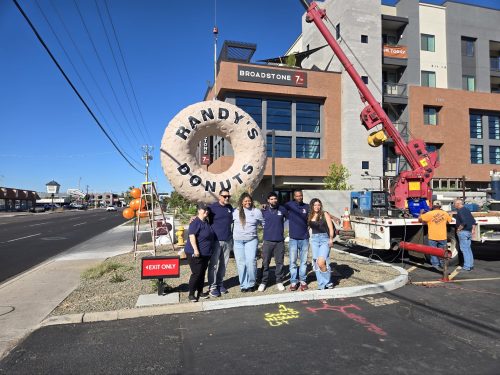
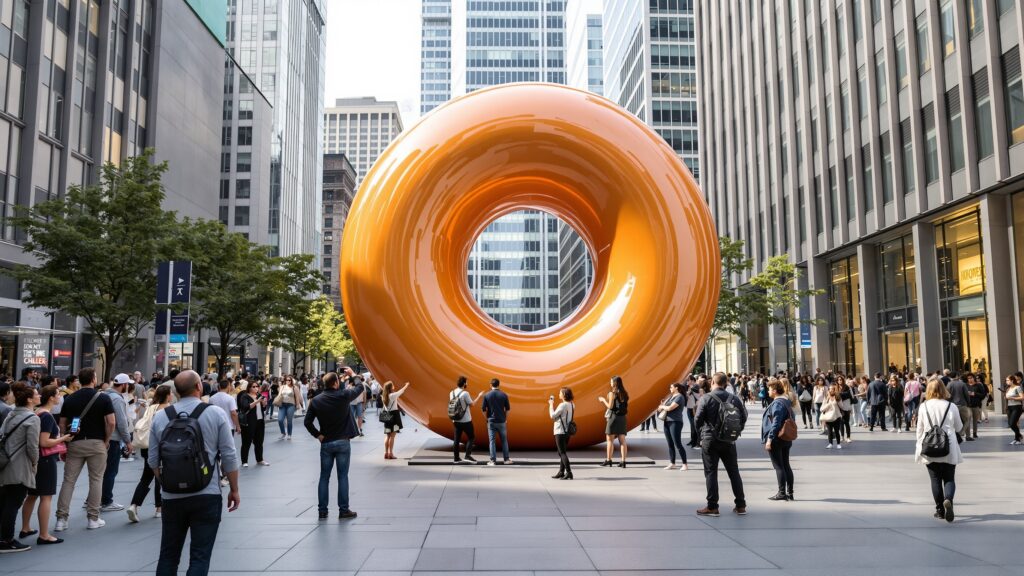
A convincing donut replica doesn’t just look like food; it acts like it. It catches sunlight like glaze would, softens along curves the way dough does, and invites you to stand in the right place and take a photo through the hole. That invitation is the secret sauce. The ring’s geometry makes instant frames for faces and skylines; the simple silhouette reads from across a street or a feed thumbnail; the warm palette carries nostalgia without words. When a replica nails those cues, it becomes a beacon—tourists seek it out, kids tug parents toward it, and marketers start counting impressions they didn’t have to buy.
Why “Edible” Is a Visual Illusion
When your brain says “edible,” it’s responding to an orchestra of small, coordinated signals. True-to-life donuts are a duet of gloss and matte: a glistening glaze with tiny specular highlights, and a soft, warm underlayer that promises tenderness. The best replicas mimic that relationship with paint chemistry and optical layering. Finishes are not just shiny; they are tuned. Too glossy, and you get a mirror that photographs like plastic. Too matte, and you’ve lost dessert. A satin-plus micro-gloss mix lets highlights bloom without blinding the camera. The dough tone underneath matters too. A whisper of golden-brown peeking through translucent color creates the impression of depth and moisture, like a real glaze laid over a still-warm ring.
Anatomy of a Look-Good-Enough-to-Eat Donut
Most large replicas begin as a torus—a ring shape modeled in 3D—then become real in foam or composite. The foam is often CNC-carved in segments that laminate into a seamless blank. From there, artisans rasp and sand imperceptible waves into the “dough,” because real food isn’t mathematically perfect; it’s deliciously human. The radial curve of the outer edge gets softened, the inner edge “tightened,” and any “bite” details are given an authentic crumb. A protective hardcoat—polyurea, epoxy, or fiberglass—turns delicate foam into a crowd-ready shell. After priming, a warm basecoat simulates fried dough, translucent paint layers simulate glaze, and careful airbrushing adds edge browning and shadow. Cast or printed sprinkles go on last, either stud-mounted or bonded with hidden hardware so they survive transport and selfie culture.
If you’d like to follow the whole shop journey in detail, the deep dive on How Giant Donut Props Are Fabricated traces this process from first sketch to camera-ready finish, including armatures, coatings, and the final clear that keeps colors lively outdoors.
Glaze That Glows, Not Glares
Glaze sells the illusion, and lighting sells the glaze. Replicas that photograph like food use translucent color passes rather than a single opaque coat. Painters fog on candy layers, letting the base breathe through, then lock everything down with a UV-stable clear that’s glossy enough to suggest moisture without turning into a harsh spotlight. Under raking sunlight, micro-highlights sparkle along drip tips; under overcast skies, the satin component keeps surfaces creamy instead of chalky. At night, uplights placed just forward of the base will wash the glaze without blowing out the rim. A single warm gel is often enough to flip a sculpture from “painted” to “mouth-watering.”
The Sprinkle Is Not an Afterthought
Sprinkles are tiny architecture. Their scale relative to the donut must feel plausible; their spacing must avoid accidental grid patterns; their edges must be beveled enough to catch light. An uneven mix of sizes reads more natural than a perfect match set. Color is a narrative tool here: pastels prime nostalgia, bold primaries announce carnival energy, monochrome palettes feel luxe for brand activations. To keep them looking crisp after shipping and thousands of taps from curious hands, sprinkles are usually resin or urethane, pinned and epoxied into the shell. The trick is to mount them with an almost invisible shadow line so they read as candy sitting on glaze, not paint trapped under clear.
Scale, Structure, and Safety You Don’t Notice
The first job of a giant donut is to look delicious. The second job—one you never think about if it’s done well—is to be safe in the real world. Hidden steel or composite armatures anchor the piece to posts, plates, or rooftops. Internal ribs resist warping and impacts, while connection points line up with standard rigging hardware. Outdoor replicas need drainage paths to avoid water pooling in deep drips. Edges are rounded for friendly touch. Bases are weighty and wide enough that no one worries about a breeze. The best engineering disappears behind the magic, letting the public interact without anxiety or hazard.
Where Big Donut Replicas Shine
Events and pop-ups love these pieces because they create instant landmarks. A single ring can pull foot traffic through a space, organize lines, and brand a stage without a word. When the goal is a shareable, high-energy experience, glossy sweets do the job with fewer signs and more smiles. For marketers and producers weighing options, Big Donut Props for Events and Advertising offers practical ideas on how a hero donut can anchor a campaign, grid-plan a festival, or turn a plaza into a walk-in set.
Permanent public art is a different—but related—stage. A donut rendered as a sculpture becomes part of the civic language, a year-round place to meet, pose, and celebrate. Materials and finishes shift toward long-term durability and artful restraint, but the essential charm remains. If you’re scouting inspiration across styles and settings, Giant Donut Statues and Sculptures showcases works that sit comfortably between pop and museum-grade craft.
Color Theory for Crave-Ability
Why does a warm dough tone feel edible while a cooler beige goes flat? Because “tasty” lives near the golden hour on the color wheel. Painters bias the base toward honey and toasted sugar, then layer semi-transparent raspberry, maple, chocolate, or ube inspired glazes to let that warmth glow through. Even neutral “sugar” finishes do better with a tiny hint of cream rather than white. Edge browning—applied with a soft airbrush or dry brush—adds a subconscious “fried” cue. Photographers will thank you for gradient rolls along the curve; the camera reads them as depth, not paint.
Photographs That Taste Good
Replicas are designed to be eaten by cameras. That means composition, not just craft. Installers think like directors: where will people naturally stand; how does the skyline sit inside the hole; what’s the sunset doing on event day? A simple chalk dot labeled “photo spot” can transform queue chaos into orderly, flattering frames without killing spontaneity. String lights positioned to trace the upper arc of a ring read as edible sparkle at night. Shade sails matter more than you think in summer—they keep people in line longer and produce better selfies with softer highlights. The truth is, the prettiest donut is the one you see well.
Indoors vs. Outdoors: Two Worlds, Two Finish Stacks
Indoor replicas are sheltered and can tip glossier, embracing show-floor glitter and theatrical color pops. They don’t fight UV or weather and can afford more delicate glaze effects. Outdoor pieces need UV-stable clears, graffiti-resistant coatings, and drain logic built into the deepest drips. Color choices shift slightly—saturated but not cartoonish—to survive harsh sun without looking brittle. Both worlds benefit from a “camera test” in shop: roll the piece under lights you’ll mimic in the field, shoot it from audience height, and adjust sheen and color until the donut looks edible from the intended distance.
The Logistics of Something Everyone Wants to Touch
Big donuts spend time on trucks. Modular builds save sanity: split the torus into manageable arcs with hidden latches and seams disguised under drips. Custom cradles with padded saddles keep pressure off the finish. Labels on hardware bags are boring until they save an install. On site, lift plans prevent scuffs and cracked sprinkle tips. And once the piece is in place, a care card turns hosts into heroes: soft cloth only, mild soap, no solvents, here’s your tiny bottle of touch-up paint for the one scratch that will happen.
The Psychology of Crowd Delight
People’s reactions are consistent and wonderful. Kids run circles. Couples line up the ring with a sunset. Friends take turns shooting through the hole until everyone has a perfect frame. That ritual is part of the value. Designers lean into it: gentle paths lead you to the right angle; benches curve just so; a musician lands under the ring as if by accident; night lighting flips to warmer cues at golden hour so the donut gleams in a way that makes sharing irresistible. When a replica becomes a stage for small rituals, it stops being décor and becomes a memory engine.
How to Judge a Replica in the Wild
Stand in front of a giant donut and give it thirty seconds. Do the drips thicken near the tip the way gravity would demand? Is the highlight soft and continuous, not a chaotic barrage of hotspots? Does the dough look like it has air in it, or like paint pretending to be pastry? Are the sprinkle shadows consistent with the scene’s light? Do you forget the engineering because the invitation to play is so strong? If yes, you’re looking at a winner. The camera will agree.
Fabrication Mistakes You’ll Never Notice—Unless They Happen
The invisible villains of bad replicas are symmetry and cheap gloss. Perfect torus math looks computer-born; real pastry needs gentle irregularities. Painters sometimes over-commit to glassy clears, which photograph like plastic and blow out under sun. Sprinkles can drift into tidy rows if the layout isn’t randomized. And seams—if not buried under drips—can break the spell in a second. These are easy to avoid with testing and time, but they’re also why the best replicas feel different. Care shows.
The ROI of a Convincing Fake
A donut that photographs like dessert pays for itself in attention. It reduces the need for heavy signage. It becomes a wayfinding anchor on event maps. It generates repeat visits and seasonal re-posts when you change sprinkle palettes. In brand math, that’s earned media with a glaze on top. In human terms, it’s kindness: a place that rewards you for showing up with a smile. That combination—soft power and soft edges—explains why replicas keep spreading from trade shows to conference lobbies to city squares.
Sustainability and Care That Keep the Sweetness Going
“Good enough to eat” shouldn’t be “bad for the planet.” Today’s large-scale builds mix durability with stewardship: low-VOC coatings, longer-life UV clears that reduce repaints, recyclable crating materials, and smart travel plans that piggyback installations on regional routes. In the field, water-based cleaning keeps finishes and surroundings happy. The longer a donut lives camera-ready, the better its footprint per smile.
When a Replica Graduates to Sculpture
Sometimes a piece outgrows its role as a prop and becomes part of the city’s voice. The paint palette quiets; the finish leans satin; the geometry carries more of the narrative. The donut is still “edible,” but now it’s also contemplative. It’s a place to meet before the show and a spot to celebrate afterward. If your interest stretches from scenic craft into public art, you’ll enjoy browsing Giant Donut Statues and Sculptures for examples that wear time, and attention, beautifully.
A Taste for Trivia
Part of the fun of oversized sweets is the lore: how much the glaze “weighed,” how many sprinkles were cast, whether anyone has proposed under the ring. These tidbits become the stories people tell their friends later, and they help a replica travel farther online. If you’re collecting conversation starters for your next visit or event, Fun Facts and Donut Trivia is a candy box of delightful details.
Future Flavors: What’s Next for Giant Donut Replicas
Expect more translucency, more depth, and more play at the edges of reality. Projection-mapped drizzle animations will transform static glaze into living sugar for evening programs. AR layers will add seasonal sprinkles without repainting. Materials will lighten even as they toughen, opening the door to rooftop installations on older buildings. And modularity will get smarter, letting one hero donut tour a region with fresh color stories in every city. Underneath all the novelty is something steady: a circle that invites you in. The best replicas don’t merely copy dessert; they copy the feeling dessert gives you in a line, in a car, at a table. They translate that feeling into public space and hand it back as a gift.
Where to Go from Here
If your imagination is already scaffolding a giant ring for your next activation or set, you’ll find practical strategy in Big Donut Props for Events and Advertising and shop-floor craft in How Giant Donut Props Are Fabricated. For a muse run through permanent works, keep exploring Giant Donut Statues and Sculptures. And when you want to sprinkle your tour with surprises, bring along Fun Facts and Donut Trivia to keep your crew smiling in line.
For the broader universe—records, replicas, rooftops, and ring-framed sunsets—start at the master hub: World’s Largest Donut