

Exploring the Timeless Art of Sculpting Life from Wood
Wood statues have fascinated people for thousands of years. From ancient temples and sacred shrines to modern art galleries and decorative home interiors, wooden sculptures have carried stories, traditions, and craftsmanship through generations. There is something deeply compelling about seeing a lifelike form emerge from a piece of wood that once stood as part of a living tree. The warmth of the material, the intricate textures carved by hand, and the natural character of the grain make wood statues some of the most expressive sculptures ever created. But what exactly is a wood statue? How are these captivating works of art made, and why do artists continue to choose wood in a world filled with metal, stone, and digital fabrication tools? The answers lie in the remarkable relationship between human creativity and one of nature’s most versatile materials.

Defining a Wood Statue
A wood statue is a three-dimensional sculpture carved, shaped, or assembled primarily from wood. Unlike flat carvings or decorative relief panels, statues are freestanding objects designed to be viewed from multiple angles. They may represent people, animals, mythological figures, spiritual icons, or purely abstract forms.
Wood statues can vary enormously in scale and style. Some are small enough to fit in the palm of a hand, while others tower over visitors in museums or temple courtyards. They may be finely detailed and realistic or bold and stylized, depending on the artist’s vision.
What makes wooden statues unique is the organic quality of the material itself. Wood contains natural grain patterns, color variations, and subtle imperfections that become part of the finished artwork. Instead of hiding these features, many artists embrace them, allowing the wood’s character to influence the sculpture’s final form. Because of this partnership between artist and material, no two wood statues are ever exactly alike.
The Ancient Origins of Wood Carving
The tradition of carving statues from wood stretches back to the earliest human civilizations. Long before advanced tools existed, people discovered that wood could be shaped with simple knives and stone blades.
Archaeologists have uncovered wooden figures dating back thousands of years. Some of the oldest known examples come from ancient Europe and Africa, where early cultures carved ritual figures believed to hold spiritual power. These statues often represented deities, ancestors, or protective spirits.
In ancient Egypt, wooden statues were commonly placed in tombs to accompany the deceased into the afterlife. Because wood was more readily available than stone in certain regions, it became a practical material for sculptors creating burial figures and symbolic guardians.
Across Asia, wooden statues became essential elements of temples and shrines. In China, Japan, and Southeast Asia, artisans carved elaborate representations of Buddhist figures, bodhisattvas, and mythical guardians. These sculptures were often painted or gilded, transforming simple wood into radiant sacred imagery.
Meanwhile in Europe, medieval churches filled with intricately carved wooden saints, angels, and religious scenes. Skilled craftsmen spent years perfecting their techniques, creating statues that still stand today as masterpieces of sacred art.
Although wood is more vulnerable to decay than stone or metal, many ancient wooden sculptures have survived thanks to dry climates, careful preservation, and the exceptional durability of certain tree species.
Why Artists Choose Wood
Despite the availability of modern materials like steel, plastic, and resin, wood remains one of the most beloved materials for sculptors. Its appeal lies in a combination of practical advantages and artistic possibilities.
One of the most important benefits of wood is its workability. Compared to stone, which requires heavy tools and significant force, wood can be carved with relatively simple equipment. Artists can cut, shape, sand, and refine wood with remarkable precision. Another reason artists love wood is its warmth and natural beauty. Unlike cold materials such as marble or metal, wood carries the subtle warmth of organic matter. The visible grain patterns create flowing lines and textures that add depth to a sculpture.
Wood also offers a wide range of visual tones. Some species are pale and delicate, while others are dark, rich, and dramatic. This natural variation allows artists to choose wood that enhances the mood and character of their work.
Finally, wood connects art directly to nature. Every statue begins as a tree that once grew in forests or landscapes. Many sculptors feel a profound sense of respect for the material, seeing their work as a transformation rather than a creation from nothing.
Types of Wood Used in Statues
Not all wood is suitable for sculpture. Different species offer unique qualities that influence how a statue can be carved and how well it will last.
- Hardwoods are often preferred for detailed carving because they provide strength and stability. Woods such as oak, walnut, and maple hold fine details and resist wear over time. Walnut, in particular, is valued for its deep color and smooth carving properties.
- Basswood is one of the most popular choices for beginner carvers and professional sculptors alike. Its softness allows tools to glide smoothly through the material, making it ideal for intricate designs and delicate figures.
- Mahogany is another prized carving wood. Its rich reddish tones and consistent grain make it both beautiful and durable. Many high-end statues and decorative carvings are made from mahogany.
- Teak and cedar are frequently used for outdoor statues because they resist moisture and insects. These woods naturally contain oils that help protect them from weather damage.
Some artists even use reclaimed wood from old buildings or fallen trees. This approach adds historical character and sustainability to the finished sculpture.
The Art of Wood Carving
Creating a wood statue is both an artistic and technical process. It requires patience, skill, and an understanding of how wood behaves.
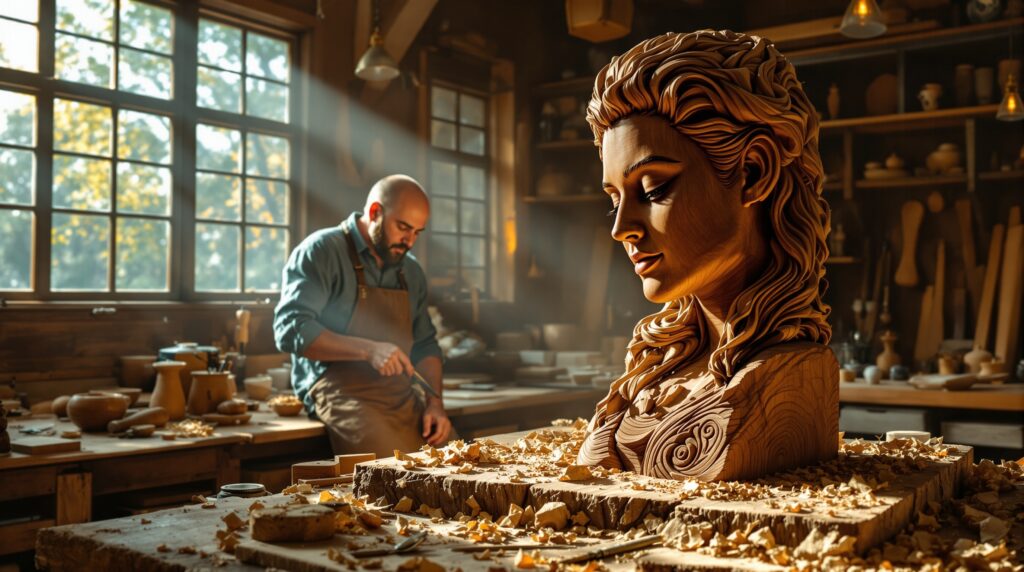
- The process usually begins with selecting the right piece of wood. Sculptors carefully examine the grain pattern and shape of the block to determine how the statue should be positioned. Because wood fibers run in specific directions, carving against the grain can cause splits or rough textures.
- Once the wood is selected, the artist typically sketches the design directly onto the surface or creates a separate drawing. Some sculptors also produce clay models before beginning the carving process.
- The first stage of carving involves rough shaping. Using chisels, mallets, or power tools, the artist removes large portions of wood to establish the basic form. This stage focuses on proportions and structure rather than fine details.
- As the sculpture begins to take shape, the artist switches to smaller tools to refine features such as faces, clothing, textures, and decorative patterns. This stage demands extraordinary control and precision.
- After carving is complete, the statue is sanded to smooth the surface. Some sculptures remain natural, highlighting the raw beauty of the wood, while others are stained, painted, or sealed with protective finishes.
The final result is a unique work of art that reflects both the vision of the artist and the natural character of the wood.
Cultural Significance Around the World
Wood statues hold deep cultural meaning in many societies. In numerous traditions, they serve as sacred objects that connect people to spiritual beliefs and ancestral heritage.
In parts of Africa, wooden statues and masks play vital roles in ceremonies, storytelling, and community identity. These sculptures often represent ancestors or symbolic forces believed to influence daily life.
Across Southeast Asia, elaborately carved wooden statues are central to temples and spiritual rituals. Many depict Buddhist figures, mythical guardians, or divine beings that guide followers toward enlightenment.
In Japan, traditional Buddhist statues carved from wood are revered for their spiritual significance and artistic mastery. These sculptures often feature serene expressions and flowing robes carved with delicate detail.
Indigenous cultures throughout the Americas have also created powerful wooden sculptures. Totem poles carved by Native American tribes along the Pacific Northwest coast are among the most recognizable examples. These towering works of art tell stories about family lineage, mythology, and cultural history.
Even in modern times, wood statues continue to carry symbolic meaning, appearing in public spaces, memorials, and community landmarks.
Modern Wood Sculptures
While traditional wood carving techniques remain important, contemporary artists are constantly pushing the boundaries of what wooden statues can be. Some modern sculptors combine wood with other materials such as metal, glass, or resin. This fusion creates striking contrasts between natural and industrial elements.
Others experiment with large-scale installations that transform entire environments. Massive wooden figures displayed in parks or urban plazas invite viewers to walk around and interact with the sculpture from different perspectives.
Digital technology has also entered the world of wood sculpture. Computer-controlled carving machines can rough out complex shapes that artists later refine by hand. This hybrid approach allows for intricate designs that would be extremely time-consuming to carve entirely by hand. Despite these innovations, many sculptors still rely on traditional hand tools and techniques. The tactile connection between artist and material remains a central part of the craft.
Caring for Wood Statues
Because wood is an organic material, it requires proper care to maintain its beauty and stability over time.
Indoor wooden statues should be kept in environments with stable humidity levels. Extreme dryness can cause cracking, while excessive moisture may lead to swelling or mold growth.
Direct sunlight should also be avoided whenever possible, as prolonged exposure can fade the wood’s color and damage protective finishes.
Outdoor wooden statues require additional protection. Many are coated with sealants or oils that help repel moisture and prevent insect damage. Regular maintenance ensures that these sculptures remain strong and visually appealing.
With proper care, wooden statues can last for centuries, continuing to inspire viewers long after the artist has finished carving.
Wood Statues in Homes and Interior Design
Beyond museums and temples, wood statues have become popular decorative elements in homes and interior spaces. Their natural appearance adds warmth, texture, and artistic interest to rooms of all styles.
In rustic interiors, wooden statues complement exposed beams, stone fireplaces, and natural fabrics. In modern homes, minimalist wooden sculptures provide a striking contrast against sleek surfaces and neutral color palettes.
Smaller statues often serve as focal points on shelves, tables, or entryway displays. Larger sculptures can anchor a room, creating a sense of drama and artistic sophistication.
Many homeowners choose wood statues because they feel authentic and timeless. Unlike mass-produced decorations, a hand-carved wooden sculpture carries the story of its creation and the individuality of its maker.
The Emotional Power of Wood Sculpture
One of the most fascinating aspects of wood statues is their emotional resonance. The tactile quality of wood gives sculptures a sense of warmth and life that other materials sometimes lack. When viewers encounter a wooden statue, they often feel an immediate connection to the craftsmanship involved. The marks left by carving tools, the smooth curves shaped by careful sanding, and the subtle variations in grain all reveal the human effort behind the work.
This sense of authenticity makes wood statues particularly powerful in storytelling and symbolism. Whether representing a human figure, an animal, or an abstract form, the sculpture seems to carry the spirit of the artist who created it. In many ways, wood statues remind us of the enduring relationship between humanity and the natural world.
A Living Tradition
Although wood carving has ancient roots, it continues to evolve in exciting ways. Artists around the world are experimenting with new forms, techniques, and cultural influences while honoring the traditions that came before them.
From small handcrafted figurines to monumental public sculptures, wooden statues remain an important part of artistic expression. They bridge the past and present, combining natural materials with human imagination.
Each time an artist begins carving into a block of wood, they participate in a tradition that spans thousands of years. With every careful cut and deliberate stroke, the hidden form within the wood slowly emerges.
The result is more than just a statue. It is a transformation of nature into art, a reflection of culture and creativity, and a reminder that even the simplest materials can hold extraordinary beauty.
Final Thoughts
A wood statue is far more than a carved object. It represents the intersection of nature, craftsmanship, and artistic vision. From ancient religious icons to modern sculptures displayed in galleries and homes, wooden statues continue to captivate audiences with their warmth, detail, and authenticity. As long as artists continue to explore the possibilities of wood, this timeless art form will endure. Each new sculpture adds another chapter to a story that began thousands of years ago, when the first human picked up a carving tool and discovered the magic hidden inside a piece of wood. And perhaps that is the true essence of a wood statue. It is not simply carved from wood—it is revealed from it.