
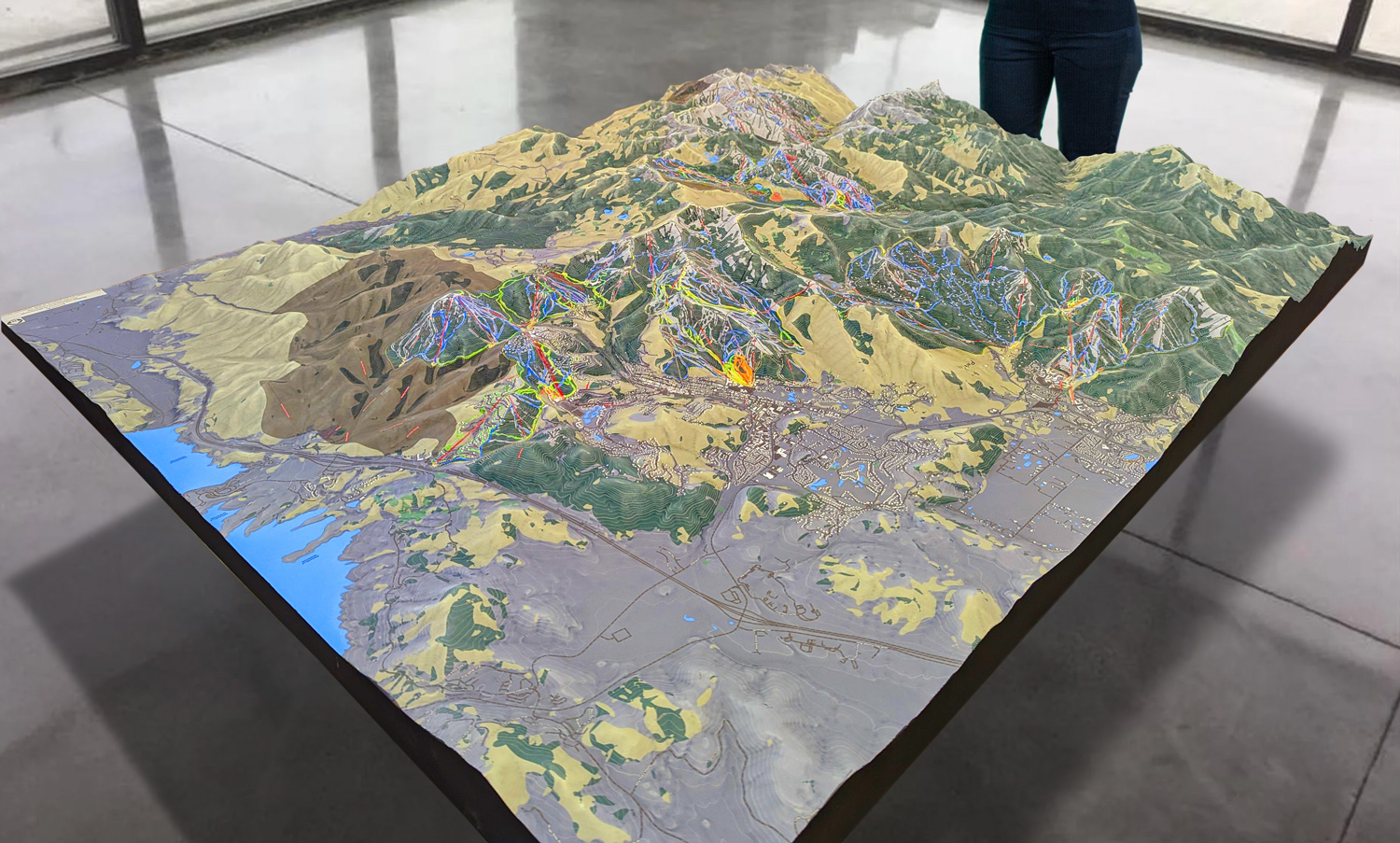
The Visual Language of Property, Place, and Possibility
When you hear the phrase “real estate map,” you might picture a simple street grid with a few colored plots — something practical, maybe even dull. But in reality, a real estate map is anything but boring. It’s part art, part science, and part secret weapon for anyone involved in buying, selling, developing, or even just dreaming about land. A real estate map is where geography meets opportunity. It transforms lines, coordinates, and satellite imagery into a living story — one that shows how people shape the world and how the world, in turn, shapes value. Whether you’re a homebuyer, developer, investor, or city planner, real estate maps reveal what raw numbers can’t: location intelligence. Let’s explore what these maps truly are, how they’ve evolved, and why they’re one of the most powerful — and beautiful — tools in modern real estate.

Defining the Real Estate Map: More Than Lines and Lots
At its simplest, a real estate map is a visual representation of land, property boundaries, and related data — everything from streets and zoning codes to topography, flood zones, and even neighborhood trends. But what makes it special is what it reveals beneath the surface. A real estate map connects dots between geography, ownership, and economy. It shows where the property sits, what surrounds it, and how it interacts with the larger environment — legal, natural, and human. It might display parcel boundaries, lot numbers, and dimensions for land ownership records. Or it might layer in zoning information, showing where you can build homes, factories, or shops. For a developer, it’s a design blueprint. For a buyer, it’s a glimpse into lifestyle. For an investor, it’s data — pure and powerful. In short, a real estate map is a visual gateway to property insight, distilling the complexity of land into something anyone can understand.
The Origins of Real Estate Mapping: Drawing the Modern World
The idea of mapping property is older than real estate itself. Ancient civilizations drew boundaries on papyrus and stone to record ownership and taxation. The Romans meticulously surveyed land for their empire’s infrastructure. Medieval kingdoms drew rough territorial sketches to settle disputes and define rights.
Modern real estate mapping as we know it began in the 18th and 19th centuries, as cities grew and governments sought to manage property and taxes systematically. Surveyors used compasses, chains, and astronomical readings to chart every corner of developing towns.
Then came the plat map — a revolutionary concept. A plat map formally documented land divisions, turning messy frontier claims into orderly grids. It showed each parcel’s boundaries, dimensions, roads, and landmarks. This was the birth of official real estate mapping — and it transformed the chaos of land ownership into organized property systems. Today’s maps are digital, dynamic, and deeply data-driven. But the idea remains the same: to turn land into legibility.
The Layers That Tell a Story: What Real Estate Maps Show
A great real estate map isn’t one layer deep — it’s a multilayered story told through colors, symbols, and data points. Each layer adds new meaning.
- One layer might show parcel boundaries, identifying where one property ends and another begins.
- Another layer adds streets and addresses, linking lots to real-world navigation.
- A third might reveal zoning classifications, color-coded to show whether a parcel is residential, commercial, or industrial.
- The most advanced maps include topographic contours to show elevation, aerial imagery for visual context, and heat maps for property value trends.
For city planners, these maps reveal growth corridors. For investors, they expose undervalued areas. For real estate agents, they visualize neighborhoods in a single glance. And for buyers, they bring clarity — showing exactly what’s being purchased, where it sits, and what surrounds it. Each line, shade, and coordinate is a piece of a bigger narrative: how human ambition meets geography.
Digital Revolution: How Technology Changed Real Estate Mapping
Gone are the days when real estate maps were just paper charts in dusty offices. Today, the world of property mapping has gone digital — and interactive. Online mapping platforms, Geographic Information Systems (GIS), and drone technology have turned static maps into living, breathing databases.
A GIS-powered real estate map can integrate dozens of datasets — from census demographics to traffic flow to school district boundaries. With a few clicks, users can switch between street views, satellite overlays, and zoning heat maps, revealing insights that once took days of research. Tools like Google Earth, ArcGIS, and property-specific platforms such as Zillow and Realtor.com visualize real estate data in immersive, 3D environments. You can virtually “fly” over a neighborhood, measure lot sizes, and explore terrain as if you were standing there.
For developers and investors, this shift means power: the ability to see patterns — migration, demand, and development potential — across massive geographic areas, all from a laptop. Mapping is no longer just about where. It’s about why — why prices rise here, why zoning matters there, and why location truly is everything.

The Many Faces of Real Estate Maps
Not all real estate maps serve the same purpose. Some are designed for visualization, others for analysis. Here are the main types, each with its own personality and role in the real estate world.
- A plat map focuses on lot divisions, legal ownership, and parcel boundaries. It’s the backbone of property law — every recorded plot of land has one.
- A zoning map governs what can be built and where. It divides areas into residential, commercial, industrial, or mixed-use zones — sometimes down to precise height limits or density rules.
- A topographic map shows elevation and terrain, crucial for builders assessing slopes, drainage, and grading.
- A heat map visualizes data intensity — such as property values, rent prices, or market trends — through color gradients, allowing quick insights into real estate dynamics.
- And then there’s the interactive digital map, the modern hybrid that combines all the above with live data and user-friendly layers.
Each type answers a different question, but together, they form a unified truth: every real estate decision begins with a map.
Why Real Estate Maps Matter: Beyond Coordinates
A map might seem simple — just data on display. But in real estate, it’s pure decision power.
- For buyers, it’s reassurance. A map clarifies what you’re buying, from lot lines to neighborhood proximity. You can see if a home backs up to a park, a highway, or a potential flood zone.
- For sellers, it’s storytelling. A map shows how a property fits into the larger community — close to schools, surrounded by amenities, or near future development.
- For investors, it’s strategy. Real estate maps reveal growth corridors, zoning potential, and infrastructure plans — helping to predict where value will rise.
- And for city planners and architects, maps are blueprints for urban life itself. They guide everything from road networks to green space allocation, turning vision into geography.
A good real estate map doesn’t just answer “where?” — it inspires what’s possible.
The Art and Aesthetics of Mapping: Beauty in Precision
Though designed for function, real estate maps are often strikingly beautiful. The combination of geometry, color coding, and landscape textures transforms information into art. A zoning map painted in pastel hues of residential and industrial zones resembles abstract expressionism. A satellite composite showing rooftops, rivers, and roads can feel like a living mosaic. Even the crisp black-and-white precision of parcel maps carries a quiet elegance — the beauty of order carved out of chaos. For designers and visual thinkers, real estate maps represent the perfect fusion of logic and imagination. They aren’t just tools; they’re visual poetry of how humans occupy the Earth.
The Future of Real Estate Mapping: AI, AR, and Immersive Data
Tomorrow’s real estate maps are already taking shape today — and they’re astonishingly futuristic.
- Artificial intelligence is now being used to analyze satellite imagery, identify building types, and predict land-use changes. AI-driven maps can even estimate future property values based on infrastructure plans and migration patterns.
- Augmented Reality (AR) is changing how we experience location itself. Imagine pointing your phone at an empty lot and instantly seeing a 3D model of a future building rendered in real time. That’s already happening in advanced property development platforms.
- Drones are adding ultra-high-resolution mapping data to the mix, capturing topographic details invisible to the naked eye. And blockchain technology may soon allow decentralized property mapping — tamper-proof and globally accessible.
In short, the future of real estate mapping is smart, visual, and predictive — transforming not just how we see property, but how we imagine it.

Real Estate Maps as Storytellers
Every real estate map is more than a snapshot — it’s a story. Zoom in, and you see the tale of one parcel, one owner, one home. Zoom out, and you see the rise and fall of neighborhoods, the sprawl of cities, the pattern of progress.
A real estate map is history and prophecy all at once. It records what was built, hints at what’s changing, and forecasts what’s to come. It shows migration, innovation, and sometimes, inequality. It’s a mirror held up to society — showing where people thrive, where they struggle, and where the next chapter might unfold.
In this sense, real estate maps are emotional documents. They carry the weight of aspiration and the shape of human ambition. They’re reminders that geography is never static — it’s alive, evolving, and deeply human.
From Paper to Portal: Mapping the Buyer’s Experience
For the modern homebuyer, maps have become more than research tools — they’re part of the buying journey itself. Platforms like Zillow, Redfin, and Realtor.com use interactive maps as gateways to listings. Buyers can view homes, filter by neighborhood, and compare prices — all layered onto digital geography. With each zoom and click, maps turn curiosity into understanding. Neighborhood boundaries, school ratings, commute times, even walkability scores — all appear as visual data overlays. Buyers no longer have to imagine the context of a home; they can see it, in living color and live data. Maps are turning what used to be a dry, confusing process into a dynamic exploration — blending emotion, logic, and location in one visual experience.
Mapping Dreams: The Emotional Geography of Real Estate
Real estate isn’t just about structures — it’s about stories, hopes, and belonging. And maps are how we visualize those dreams.
Think about it: when you look at a map of a city, your eyes trace routes of possibility. “Could I live there?” “What if I built here?” A real estate map is the first spark of imagination in every project, every move, every milestone.
Developers use maps to dream up communities. Buyers use them to find home. Investors use them to envision potential. Every square and line becomes a possibility — the first visual proof that a dream might one day have an address.
The Power of Seeing the World in Parcels
So, what is a real estate map? It’s more than a document. It’s a compass for the modern world — showing not just where land lies, but how people live, grow, and build upon it. It’s a fusion of geography, data, and imagination — turning space into story and numbers into vision. From ancient sketches to digital 3D landscapes, real estate maps have evolved into one of humanity’s most powerful ways to understand itself. Next time you see one — whether it’s a zoning chart, a parcel viewer, or a colorful city map — look a little closer. You’re not just looking at land. You’re looking at the architecture of civilization itself.