
The Fascinating Story of Jade Carving, Symbolism, and the Art of Creating Jade Statues
Across thousands of years of human history, few materials have inspired as much fascination as jade. Smooth, luminous, and incredibly durable, jade has been carved into ornaments, ceremonial objects, jewelry, and sculptures for millennia. Among the most captivating creations made from this legendary stone are jade statues—works of art that combine natural beauty, cultural symbolism, and masterful craftsmanship. A jade statue is far more than a decorative object. It represents a fusion of geology, artistry, and tradition. From ancient Chinese emperors who believed jade embodied virtue and immortality to modern collectors who treasure it for its rarity and elegance, jade statues have long carried a sense of mystique and reverence. Understanding what a jade statue truly is means exploring not only the stone itself but also the artistic process, historical traditions, and cultural meanings that surround it.
Understanding Jade: The Stone Behind the Statue
To understand jade statues, you first need to understand jade itself. Interestingly, the word “jade” actually refers to two different minerals: nephrite and jadeite. Both stones share similar appearances and qualities, but they differ in composition and rarity.
Nephrite is the more common variety and has been used for thousands of years in ancient carvings. It tends to appear in creamy white, soft green, or dark mossy shades. Jadeite, on the other hand, is rarer and often more valuable. It can appear in vibrant emerald greens, lavender tones, icy whites, and even deep blues.
One of jade’s defining features is its toughness. Unlike brittle gemstones that fracture easily, jade is incredibly resilient. Its interlocking crystal structure makes it resistant to breaking, which is why ancient artisans could carve intricate shapes without the stone shattering. This strength also contributes to jade’s silky texture. When polished, jade has a soft glow rather than a glassy shine. The result is a surface that feels warm and smooth, almost alive under the fingertips.
When artisans transform jade into statues, they are working with a stone that has both physical strength and visual elegance—qualities that make jade one of the most revered carving materials in the world.
What Exactly Is a Jade Statue?
A jade statue is a sculpted figure carved from jade stone. The statue may represent a person, deity, animal, mythological creature, or symbolic object. These sculptures can range in size from tiny figurines only a few inches tall to monumental statues weighing hundreds of pounds. Unlike simple jade jewelry or beads, statues require extensive carving and shaping. The artist must carefully remove layers of stone while preserving the natural beauty of the jade. Every cut must be precise, because mistakes cannot be easily corrected.
Many jade statues highlight the stone’s natural color patterns. Skilled carvers often position the design so that darker veins or lighter areas enhance the sculpture’s features. A streak of darker green might become the mane of a lion, while translucent areas may emphasize a figure’s face. In this way, jade statues often feel organic and harmonious with the stone itself. The sculpture does not fight against the material—it works with it.
The Ancient Origins of Jade Sculptures
Jade carving has roots that stretch back thousands of years. Archaeologists have discovered jade artifacts dating as far back as 7,000 years ago in East Asia. Early cultures viewed jade as a sacred material associated with purity, strength, and protection.
In ancient China, jade was considered more valuable than gold. Emperors and nobles commissioned jade carvings as symbols of status and power. Jade statues were placed in temples, palaces, and tombs, where they were believed to provide spiritual protection and honor the gods. Some of the earliest jade sculptures included ceremonial blades, ritual objects, and animal figures. Over time, jade carving evolved into a sophisticated art form. Craftsmen began creating detailed statues depicting dragons, guardian lions, Buddhas, and legendary heroes.
During certain dynasties, jade statues were even used in burial rituals. The famous jade burial suits worn by elite rulers were constructed from thousands of small jade pieces sewn together with gold or silver thread. These traditions helped establish jade as a stone deeply connected with immortality, wisdom, and spiritual balance.
Cultural Meanings Behind Jade Statues
One of the reasons jade statues remain so captivating is the symbolism they carry. In many cultures, jade represents harmony, prosperity, and longevity. A jade statue is therefore not just an artistic object—it often carries deeper meaning.
In Chinese tradition, jade symbolizes virtue. Ancient scholars compared jade’s qualities to human ideals such as kindness, courage, wisdom, and justice. Owning jade was believed to inspire these virtues in everyday life.
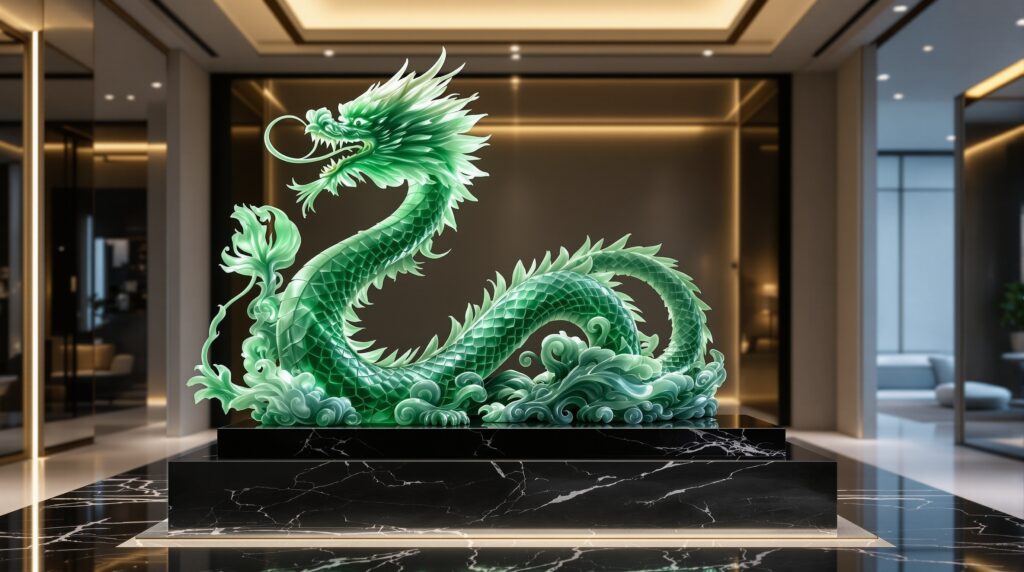
Certain figures carved in jade also carry specific symbolic meanings. A jade Buddha statue represents peace and enlightenment. A jade dragon symbolizes power and protection. Jade lions are believed to guard homes and temples from negative energy.
Even animals carved in jade can carry meaning. Turtles often symbolize longevity, while cranes represent immortality and wisdom.
Because of these associations, jade statues are often given as meaningful gifts. They may be placed in homes, gardens, temples, or offices to promote prosperity and harmony.
The Art of Carving Jade
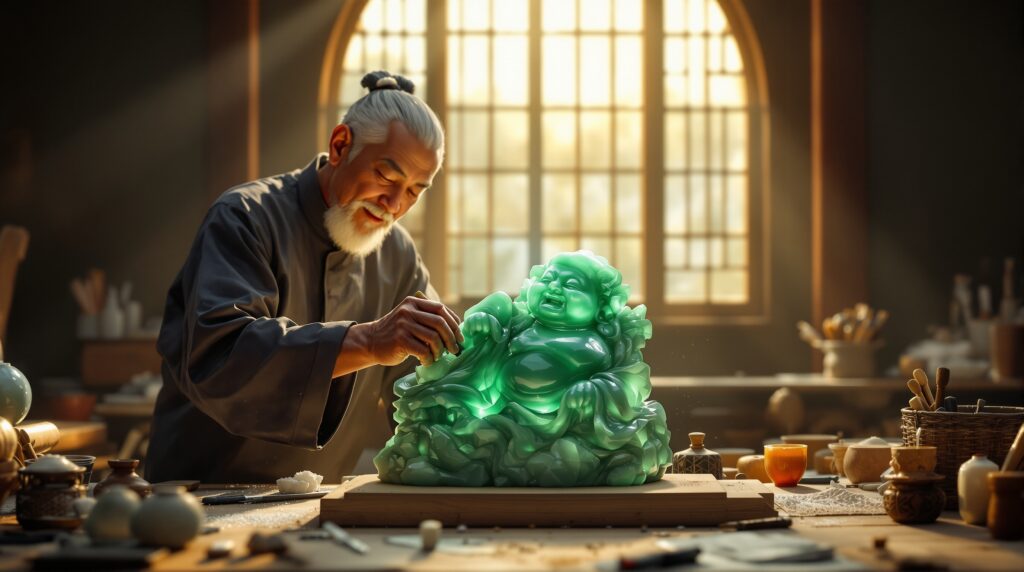
Creating a jade statue is a slow and demanding process. Unlike softer stones that can be chiseled quickly, jade requires patience and precision. Traditional jade carving does not rely on heavy hammering or chiseling. Instead, artisans typically use abrasion techniques. Historically, carvers used sand and rotating tools to gradually grind the stone into shape.
Today, modern diamond tools and rotary equipment make the process somewhat easier, but the basic approach remains the same. Jade is carefully ground, shaped, refined, and polished. The carving process often begins with selecting the right piece of jade. Raw jade boulders can appear rough and unremarkable from the outside, so artisans must examine the stone carefully to determine how its colors and patterns run internally.
Once the artist understands the stone’s structure, they design the sculpture around it. This planning stage is crucial because jade cannot easily be repaired if mistakes occur. After shaping the statue, the surface is polished until it develops jade’s signature silky glow. The final sculpture reveals not only the artist’s skill but also the stone’s natural beauty.
Types of Jade Statues
Jade statues come in many forms, each reflecting different artistic traditions and symbolic themes.
- Religious statues are among the most common. Sculptures of Buddha, Bodhisattvas, and spiritual guardians are often carved in jade to represent enlightenment and divine protection.
- Animal statues are also widely popular. Dragons, lions, horses, turtles, and cranes frequently appear in jade carvings. These creatures symbolize strength, prosperity, and longevity.
- Human figures are another traditional subject. Jade statues may depict historical figures, scholars, warriors, or mythical heroes. These sculptures often celebrate cultural heritage and legendary stories.
- Some jade statues focus on abstract or decorative forms. Floral designs, mountains, and flowing shapes may highlight the stone’s natural patterns rather than a specific character.
- In modern times, jade statues also appear in contemporary artistic styles.
Sculptors sometimes combine traditional jade carving with modern design concepts, creating unique pieces that blend ancient craftsmanship with modern creativity.
Jade Statues Around the World
While jade carving is most closely associated with China, other cultures have also developed rich traditions involving jade statues.
In Mesoamerica, civilizations such as the Maya and the Olmec valued jade as a sacred stone. Jade carvings were used in ceremonial masks, figurines, and religious artifacts. These statues often represented gods, rulers, and spiritual symbols.
In New Zealand, the indigenous Māori people have long carved jade-like nephrite stone known as pounamu. While many carvings are pendants or tools, statues and symbolic sculptures also appear in traditional Māori art.
Across Southeast Asia, jade statues frequently appear in temples and shrines. Sculptures of Buddha carved from jade are especially revered.
Today, jade statues can be found in museums, temples, private collections, and art galleries across the globe. Their appeal transcends borders, drawing admiration from collectors, historians, and art lovers alike.
How Jade Statues Are Valued
The value of a jade statue depends on several factors. Color is one of the most important elements. Rich, vivid greens—especially those associated with jadeite—are often the most prized. Transparency also plays a role. Highly translucent jade can appear almost luminous when polished, increasing its desirability.
The craftsmanship of the carving is equally important. Detailed sculptures with intricate features require exceptional skill and time, which can significantly raise their value. Size and rarity also influence price. Large jade statues carved from a single piece of high-quality jade can command remarkable prices in the art market. Finally, historical significance can elevate a statue’s worth. Antique jade statues from certain dynasties or cultural periods may be considered priceless artifacts.
Jade Statues in Modern Design and Collecting
Today, jade statues continue to captivate collectors and designers. Some people acquire jade sculptures for their artistic beauty, while others value them for their cultural symbolism.
Interior designers often incorporate jade statues into elegant spaces. A jade sculpture can become a striking focal point in a living room, entryway, or meditation space. The stone’s natural glow adds a sense of calm and sophistication to a room.
Collectors also appreciate jade statues as long-term investments. Because high-quality jade is rare, finely carved statues can maintain or increase their value over time.
In recent years, contemporary artists have begun exploring new ways to work with jade. Modern sculptures sometimes combine jade with other materials such as wood, metal, or glass. These hybrid artworks blend ancient traditions with modern aesthetics. Despite these innovations, the timeless charm of jade remains unchanged.
Why Jade Statues Continue to Fascinate
There is something uniquely compelling about jade statues. They connect us to ancient civilizations while still feeling relevant in modern life.
Part of their allure comes from the stone itself. Jade’s smooth texture and gentle glow create a sense of tranquility that few other materials can match. When shaped into statues, this natural beauty becomes even more expressive.
Another reason jade statues endure is the craftsmanship behind them. Each sculpture represents hours—or even months—of careful work. The artist must respect the stone’s natural structure while bringing their vision to life.
Finally, jade statues carry stories. They tell tales of emperors and artisans, myths and spiritual traditions, cultures and civilizations. Holding or viewing a jade statue can feel like touching a piece of history.
In a world filled with mass-produced objects, jade statues stand apart as timeless works of art. They embody patience, artistry, and the enduring relationship between humans and the natural world.
The Enduring Legacy of Jade Sculpture
From ancient temples to modern galleries, jade statues have traveled through time as symbols of beauty, meaning, and craftsmanship. They remind us that art can emerge from the earth itself, shaped by human creativity into something extraordinary. A jade statue is not merely a carved stone. It is a meeting point between geology and culture, between natural forces and human imagination. Within its polished surface lies the story of the earth, the skill of the artist, and the traditions of countless generations. That is why jade statues continue to captivate people around the world. They are not only sculptures—they are enduring expressions of history, art, and timeless elegance.