How 3D Printing Is Transforming the Art of Prop Creation
In a world where creativity is constantly pushing boundaries, 3D printed props have emerged as one of the most exciting tools for turning imagination into reality. Whether it’s a futuristic helmet for a sci-fi convention, a larger-than-life food prop for a marketing event, or a detailed replica for film production, 3D printing has revolutionized how props are designed, built, and experienced. So what exactly is a 3D printed prop? At its core, it’s a physical object created layer by layer using a digital 3D model. But that simple definition barely scratches the surface. A 3D printed prop represents a shift in how we think about fabrication, storytelling, and visual impact. It’s faster, more flexible, and often more cost-effective than traditional prop-making methods—while offering a level of detail that was once nearly impossible to achieve.
Understanding the Basics of 3D Printing
To fully appreciate what makes a 3D printed prop so unique, it helps to understand the technology behind it. 3D printing, also known as additive manufacturing, builds objects layer by layer from materials like plastic, resin, or even metal. Unlike traditional manufacturing, which often involves cutting or carving material away, 3D printing adds only what is needed. The process begins with a digital 3D model, created using design software or scanned from a real object. This model is then sliced into thin layers by specialized software, which guides the printer as it constructs the object from the ground up. Each layer is fused to the one below it, gradually forming a complete, tangible piece. For prop makers, this means unparalleled control over shape, texture, and complexity. Intricate details, internal structures, and organic forms that would be difficult or time-consuming to sculpt by hand can now be produced with remarkable accuracy.
What Makes a Prop “3D Printed”?
A prop becomes “3D printed” when its primary structure—or a significant portion of it—is created using a 3D printer. This can range from small handheld items to massive installations composed of multiple printed sections.
Some props are entirely printed in one piece, especially smaller items like accessories or tools. Larger props, however, are often printed in segments and then assembled, much like a puzzle. This modular approach allows creators to build objects far larger than the printer itself.
It’s also common for 3D printed props to be part of a hybrid process. A prop might be printed for its core structure and then enhanced with traditional techniques like sanding, painting, molding, or adding fabrics and electronics. This blend of digital precision and hands-on craftsmanship is where the magic truly happens.
The Rise of 3D Printed Props in Film and Entertainment
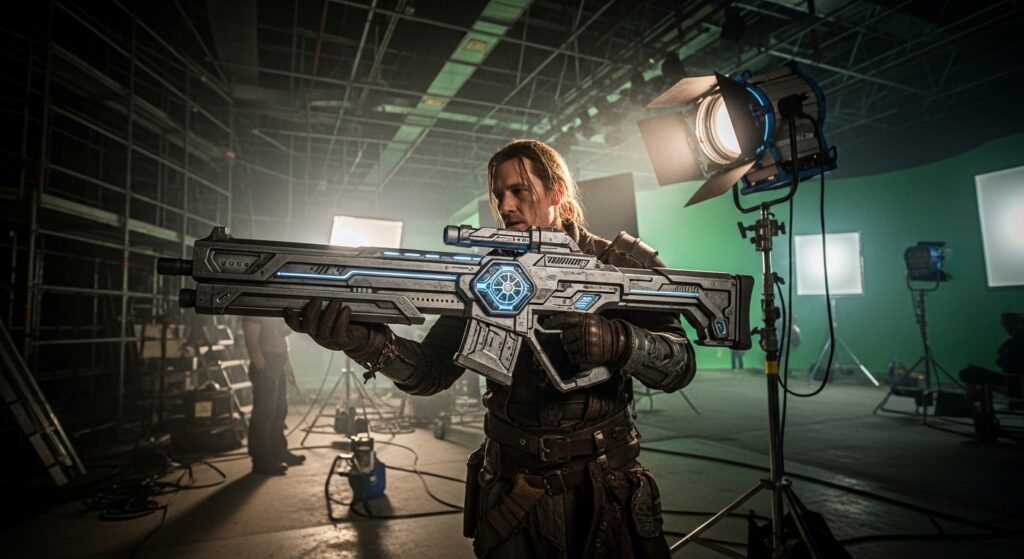
The entertainment industry has been one of the biggest adopters of 3D printed props. Film studios, television productions, and streaming platforms rely on props to bring fictional worlds to life, and 3D printing offers a level of efficiency and detail that aligns perfectly with modern production timelines. Instead of spending weeks sculpting a complex prop by hand, designers can create a digital model and print it in a fraction of the time. This is especially valuable for productions that require multiple copies of the same item or need to make last-minute design changes. 3D printed props also shine in genres like science fiction and fantasy, where designs are often highly intricate and unconventional. From alien artifacts to advanced weaponry, the technology allows creators to push visual boundaries without being constrained by traditional fabrication methods.
Beyond Hollywood: Events, Marketing, and Exhibits
While film and television may grab the spotlight, 3D printed props are making waves across a wide range of industries. Event planners and marketers are using them to create eye-catching installations that draw crowds and generate social media buzz.
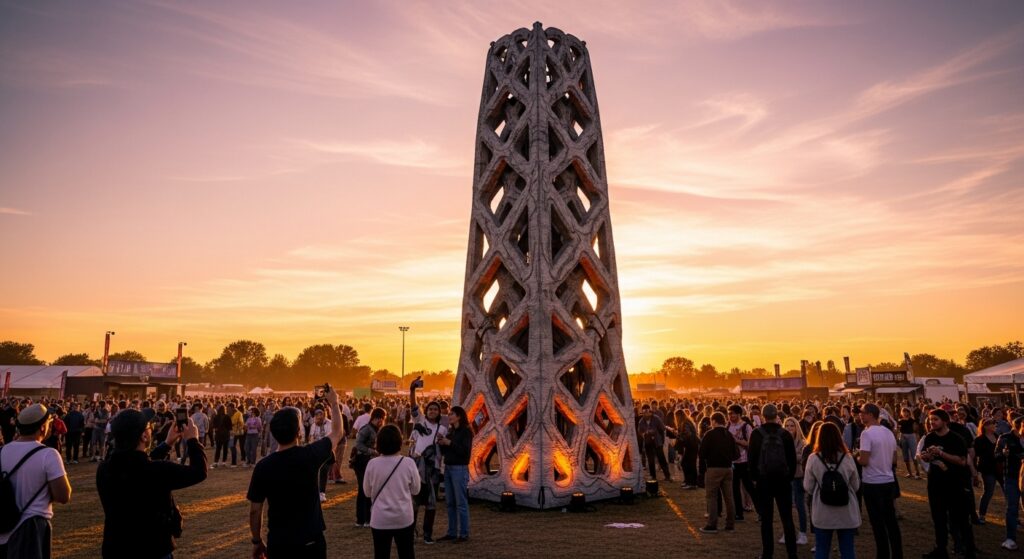
Imagine walking into a trade show and seeing a massive, hyper-detailed product replica towering above the booth. Or attending a festival where oversized, photo-ready props invite attendees to interact and share their experience online. These are the kinds of moments that 3D printing helps bring to life.
Museums and educational exhibits also benefit from 3D printed props. Historical artifacts can be replicated with incredible accuracy, allowing visitors to engage with objects that would otherwise be too fragile or rare to display. Interactive learning becomes more immersive when people can see and sometimes even touch these recreations.
Size Matters: From Small Details to Giant Installations
One of the most fascinating aspects of 3D printed props is their versatility in size. At one end of the spectrum are small, handheld items like gadgets, tools, or costume accessories. These can be printed quickly and with fine detail, making them perfect for close-up use in film or photography. At the other end are massive props that dominate entire spaces. These are typically created by printing multiple sections and assembling them into a single structure. With careful planning and engineering, even objects several feet—or even dozens of feet—tall can be produced. The ability to scale designs up or down with relative ease is a game-changer. A prop that starts as a small digital model can be resized to fit different needs without losing its proportions or detail.
Materials That Bring Props to Life
The choice of material plays a crucial role in how a 3D printed prop looks and performs. Plastics like PLA and ABS are commonly used for their affordability and ease of printing. They are ideal for prototypes, lightweight props, and decorative pieces.
Resin printing offers higher resolution and smoother surfaces, making it perfect for detailed components or props that require a polished finish. Metal printing, while more advanced and costly, can produce incredibly durable and realistic pieces.
After printing, props often undergo finishing processes to enhance their appearance. Sanding smooths out layer lines, painting adds color and realism, and coatings can simulate materials like metal, wood, or stone. The result is a prop that looks far more complex than its printed origins might suggest.
The Creative Freedom of Digital Design
One of the greatest advantages of 3D printed props is the creative freedom they offer. Designers are no longer limited by the constraints of traditional tools or materials. Complex geometries, intricate patterns, and organic shapes can all be achieved with relative ease. Digital design also allows for rapid iteration. If a prop needs to be adjusted, the designer can modify the 3D model and print a new version without starting from scratch. This flexibility is invaluable in fast-paced industries where time is a critical factor. Collaboration becomes easier as well. Designers can share digital files with teams across the world, enabling seamless communication and coordination. A prop designed in one location can be printed in another, reducing shipping costs and production delays.
Fabrication: From File to Finished Prop
The journey from a digital file to a finished 3D printed prop involves several stages. It begins with modeling, where the design is created or refined. This is followed by slicing, where the model is prepared for printing.
Once the printing process begins, the object is built layer by layer. Depending on the size and complexity, this can take anywhere from a few hours to several days. After printing, the prop is carefully removed and cleaned.
Post-processing is where the prop truly comes to life. This may include sanding, priming, painting, and assembling multiple parts. Additional elements like lighting, electronics, or moving components can also be integrated at this stage.
The final result is a prop that combines digital precision with handcrafted detail, ready to be used in its intended setting.
Cost and Efficiency: A Modern Advantage
Compared to traditional prop-making methods, 3D printing can offer significant cost and time savings. While the initial investment in equipment and software can be substantial, the ability to produce props quickly and with minimal waste makes it an attractive option for many creators. Material usage is efficient, as only the necessary amount is used to build the object. This reduces waste and can lower overall costs. Additionally, the ability to produce multiple copies of a prop without recreating molds or patterns streamlines the production process. For small businesses, independent creators, and large studios alike, this efficiency opens up new possibilities for experimentation and innovation.
Limitations and Challenges
Despite its many advantages, 3D printing is not without its challenges. Large prints can take a long time to complete and may require careful planning to avoid errors. Layer lines, while often subtle, can affect the surface finish and require additional work to smooth out.
Material limitations can also come into play. Not all materials are suitable for every application, and some props may require additional reinforcement to achieve the desired strength and durability.
However, as technology continues to evolve, many of these challenges are being addressed. New materials, faster printers, and improved software are constantly expanding what is possible.
The Future of 3D Printed Props
The future of 3D printed props is incredibly promising. Advances in technology are making printers faster, more precise, and capable of handling a wider range of materials. This means even more ambitious designs can be brought to life. We’re also seeing the integration of smart technologies, such as embedded electronics and interactive features. Props are no longer static objects—they can light up, move, and respond to their environment, creating more immersive experiences. As accessibility increases, more creators will be able to explore 3D printing, leading to a surge in innovation and creativity. The line between imagination and reality will continue to blur, opening up endless possibilities.
Why 3D Printed Props Matter
At their core, 3D printed props are about storytelling. They help bring ideas to life, whether it’s a fictional universe, a historical moment, or a brand’s vision. They make the intangible tangible, allowing people to see, touch, and experience something that once existed only in the mind.
Their versatility, efficiency, and creative potential make them an invaluable tool across industries. From entertainment to education, marketing to art, 3D printed props are reshaping how we create and interact with the world around us.
Final Thoughts: A New Era of Creation
So, what is a 3D printed prop? It’s more than just an object made by a machine. It’s a fusion of technology and artistry, a bridge between digital design and physical reality. As the technology continues to evolve, so too will the possibilities. Whether small and intricate or large and awe-inspiring, 3D printed props are redefining what it means to create—and proving that the only real limit is imagination.