
The New Language of Immersive Retail
Retail spaces are undergoing a transformation. As online shopping dominates convenience, physical stores are forced to offer something digital platforms cannot: an immersive, sensory-rich experience. Customers walking into a store expect to be transported into a narrative that reflects a brand’s identity and values. For many companies, that narrative is now being told through massive 3D topographic map installations. These giant sculptural pieces are far more than decoration. They are storytelling devices, cultural landmarks, and interactive features that connect visitors to place, memory, and aspiration. By carving landscapes into walls or building freestanding topo monuments, brands create environments that are unforgettable, photogenic, and deeply authentic. In the process, they redefine what it means to visit a store, a showroom, or even a corporate headquarters.
The Allure of the Landscape
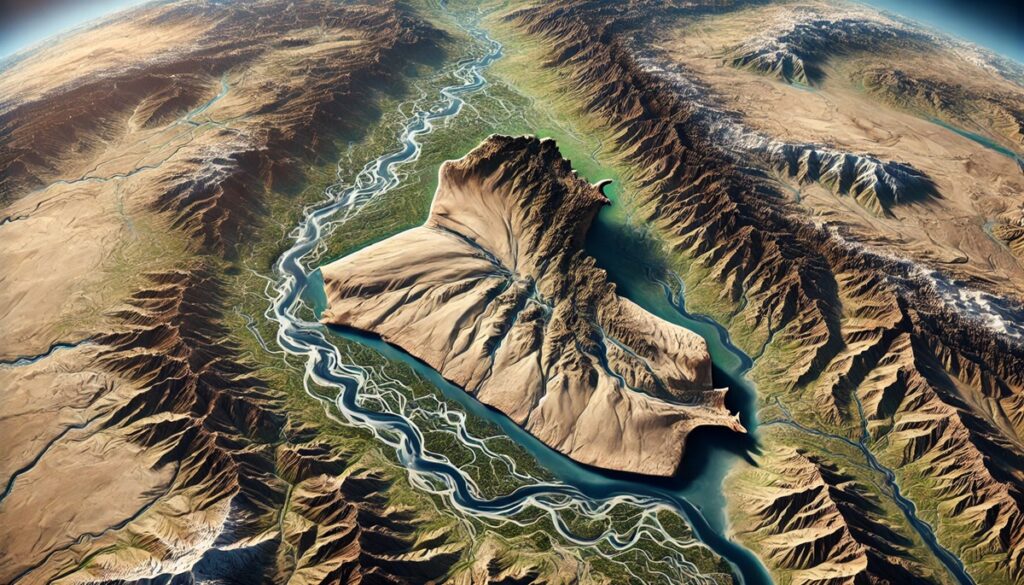
Why topography? Maps have always fascinated humanity. They orient us, inspire curiosity, and spark dreams of exploration. When translated into three-dimensional form, they become visceral. A giant topo installation is not a flat image—it’s a sculptural landscape that draws people in, inviting them to trace ridgelines, follow valleys, or marvel at the contours of mountains. For brands, topography carries universal appeal. It represents place, identity, and discovery. A retailer rooted in the outdoors can display a beloved mountain range. A university might showcase the geography of its region. A museum can highlight natural history in an interactive way. Even corporations outside the outdoor sector are using topo maps as powerful metaphors for vision, ambition, and connection to place.
The sheer scale of giant installations magnifies their impact. Spanning entire walls or stretching across lobbies, they command attention in ways no poster, mural, or screen can. They become destinations within spaces, places where visitors pause, gather, and engage.
Case Study: Arc’teryx’s Epic Vancouver Wall
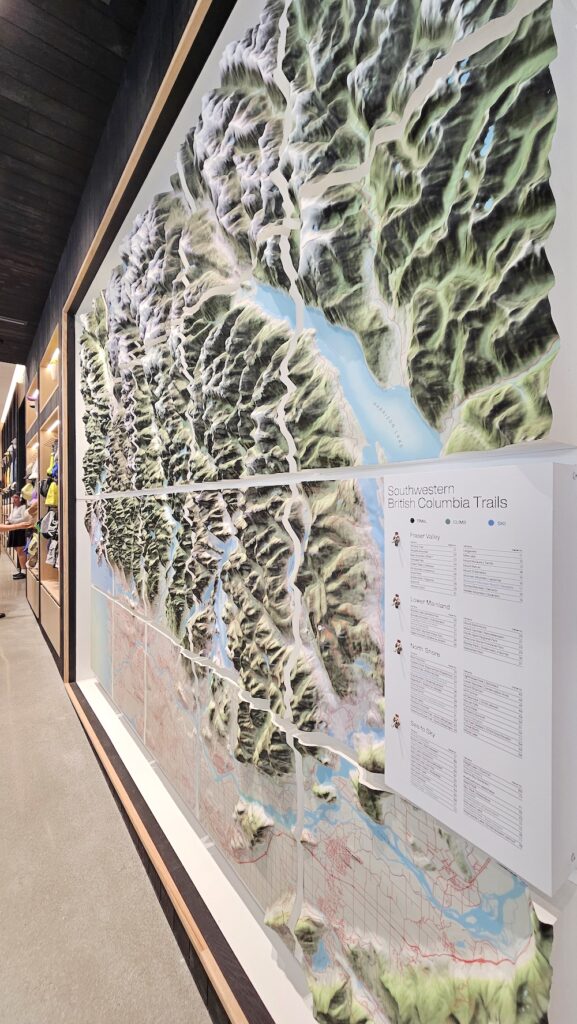
One of the most striking examples of this trend can be found in Arc’teryx’s flagship store in Vancouver. To celebrate its reopening, the brand commissioned an 11-by-9-foot illuminated topographic wall map of Southwestern British Columbia. This installation is a testament to what happens when artistry, engineering, and storytelling converge.
The map features layered contours of the region’s rugged mountains and coastline, rendered in sculptural precision. What makes it extraordinary is the integration of LED markers. Through a push-button control panel, visitors can light up trailheads and identify routes across the terrain. Four switches correspond to specific trail systems, turning the wall into both an interactive guide and a tribute to local athletes and adventurers.
The piece transforms the store into more than a retail space. It is a cultural landmark where customers connect with landscapes they love, discover new routes, and feel the essence of the brand’s DNA. Arc’teryx demonstrates how giant topo installations can elevate retail design to immersive storytelling.
Beyond Retail: Expanding Applications
Although outdoor retailers like Arc’teryx have embraced topo installations most visibly, the trend is spreading across industries. Universities are commissioning giant topographic walls for science buildings and student centers, showcasing the local terrain as both educational resource and design statement. Museums are using them to engage visitors with exhibits on geology, history, or regional culture. Even airports have begun exploring topo features to highlight the landscapes travelers are entering or leaving.
Corporate environments are also finding value in these installations. A company headquarters might feature a massive topo wall of its founding region, reinforcing its identity and roots. For international companies, installations can celebrate global landscapes tied to their brand story or projects. In each case, the topo installation becomes a conversation piece that anchors the space with meaning.
In the hospitality sector, hotels and resorts are experimenting with topo art to highlight the landscapes their guests come to experience. Imagine walking into a ski lodge where a wall-sized illuminated topo map shows the slopes outside, or entering a coastal resort with a 3D map of the surrounding bays and reefs. These features deepen the connection between guest and destination, reinforcing the appeal of place.
Design and Engineering: The Anatomy of Impact
Behind every giant topo installation lies a marriage of creative vision and technical precision. These are not simple wall hangings; they are engineered structures designed to endure heavy interaction and remain visually striking for years.
Most installations begin with digital elevation models derived from cartographic data. Designers translate this information into layered contours, which are then fabricated using CNC cutting, 3D printing, or a combination of techniques. Materials vary—powder-coated aluminum for sleek durability, layered wood for warmth and texture, or acrylic composites for translucency and light play.
Lighting is a frequent addition, ranging from subtle edge-lit contours to pinpoint LEDs marking landmarks. Interactivity takes the experience further, with switches, touchscreens, or augmented reality overlays allowing visitors to engage directly with the map. Anchoring systems are engineered to handle the weight and scale of the installation, while finishes are chosen to align with brand aesthetics.
The result is a seamless blend of science and art. Every contour line represents real geography, yet the entire installation is elevated into something symbolic, aspirational, and memorable.
Why Brands Are Making the Investment
The rise of giant 3D topo installations is not just about aesthetics; it is about strategic impact. For brands, these installations deliver value on multiple fronts. First, they create experiences. Customers don’t just shop; they explore, linger, and remember. These moments of immersion build emotional connections that translate into loyalty.
Second, they spark conversation and sharing. Giant topo walls are highly photogenic, often becoming the most photographed element of a store or space. Social media amplification extends their reach far beyond the physical location. Third, they reinforce authenticity. A brand tied to exploration, sustainability, or regional identity gains credibility when it invests in a feature that celebrates landscapes. Customers see not just products but values in action.
Finally, they offer longevity. Unlike seasonal displays, a topo installation remains relevant year after year. It becomes part of the architecture and the brand’s story, a lasting centerpiece rather than a temporary attraction.
The return on investment is measured not just in sales but in reputation, recognition, and cultural impact.
The Future of Topographic Storytelling
As technology advances, the potential of giant topo installations will only expand. Projection mapping could animate terrain with flowing rivers, shifting seasons, or live weather data. Augmented reality might allow visitors to hold up a phone or tablet and see trail information, geological history, or cultural context layered over the physical map. Touch-sensitive surfaces could let visitors highlight regions with the brush of a hand.
Sustainability will also play a growing role. Many brands are exploring materials that are recycled or responsibly sourced, ensuring that the installations align with their environmental commitments. But even as innovations emerge, the timeless appeal of topography will remain at the core. The contours of the Earth have always inspired awe, and when magnified into giant installations, they speak to something universal. They remind us of place, scale, and connection to nature—values increasingly cherished in a fast-paced, digital-first world.
Landscapes Carved into Memory
Giant 3D topographic map installations are reshaping the way brands design their spaces. They transform walls into landscapes, counters into storytelling hubs, and lobbies into destinations. They bring geography into architecture, creating environments that inspire, educate, and connect. From Arc’teryx’s illuminated Vancouver masterpiece to universities, museums, hotels, and corporate headquarters around the world, these installations are proving their power. They are not fleeting design trends but lasting investments in brand identity and human connection. For top brands, the decision to invest is about more than aesthetics—it is about carving landscapes into memory. By celebrating place through giant topo installations, they ensure that every visitor carries away not just a purchase or an impression, but a story etched in the contours of land and imagination.
Contact us today to learn more about our 3D services and how we can help you achieve your goals.