
Redefining the Retail Landscape
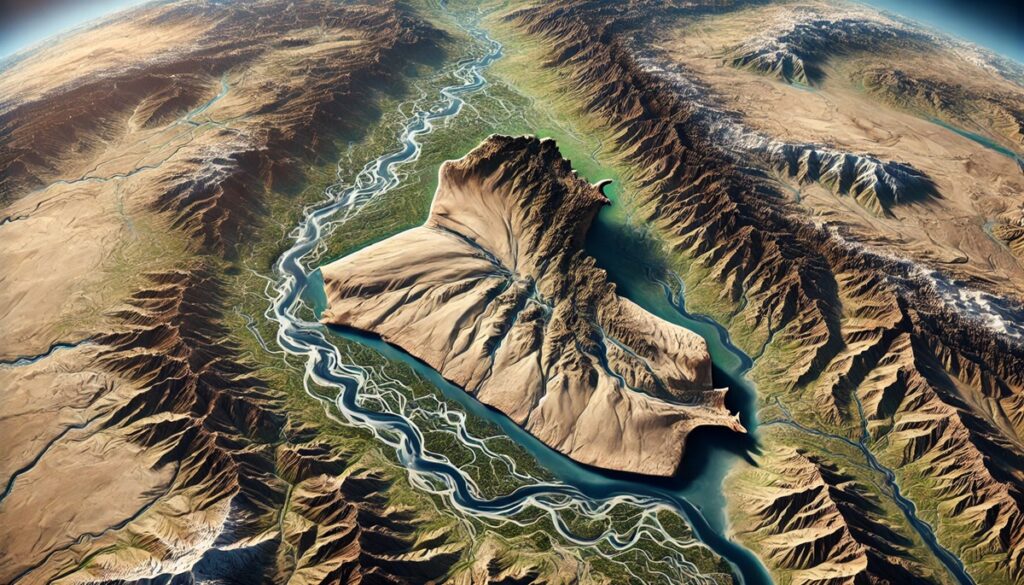
In the evolving world of retail, the pressure to create memorable, immersive experiences has never been greater. With the rise of online shopping, brick-and-mortar stores are challenged to give customers something beyond convenience. For outdoor brands in particular, this challenge takes on a unique dimension. They are tasked with recreating the very landscapes that inspire their products, weaving the raw beauty of nature into a built environment. This is where 3D trail maps have begun to shine. These large-scale installations, sculpted with precision and artistry, bring mountains, valleys, and trails directly into retail spaces. They are more than decorations; they are immersive storytelling devices that connect customers to the wilderness without leaving the city. By blending topographic accuracy with cutting-edge design, 3D trail maps are transforming stores into cultural and experiential landmarks.

The Power of Topography in Storytelling
For centuries, maps have held a magnetic pull. They orient us, guide us, and spark curiosity about the places they represent. In outdoor retail, maps have always been a natural fit, symbolizing adventure and exploration. But while traditional maps inspire imagination, 3D topographic maps take storytelling to a completely different level.
The contours of a landscape carved into a wall evoke emotion in a way flat prints cannot. Customers can see the rise and fall of ridgelines, trace valleys with their fingers, and visualize the terrain where their next adventure might unfold. This tactile and visual engagement creates a powerful bridge between the store and the outdoors.
Brands have discovered that this physicality resonates deeply with customers. The landscapes are not abstract; they are the places people hike, climb, ski, and camp. A 3D map offers a moment of recognition, where a visitor might see the familiar outline of a beloved trail or discover a new path they’ve never explored. It transforms a shopping trip into a personal and memorable experience.
Case Study: Arc’teryx’s Vancouver Flagship
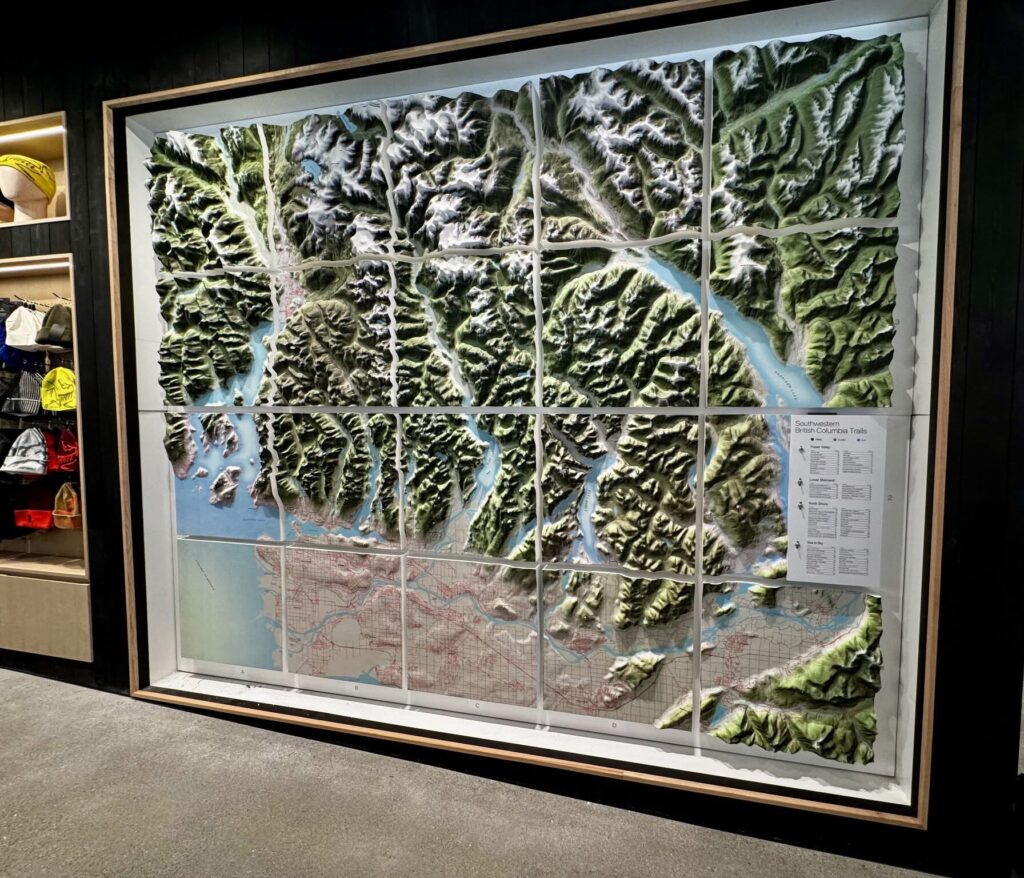
One of the most striking examples of this trend can be found in Arc’teryx’s flagship store in Vancouver. When the company reopened the space, they knew they needed a centerpiece that reflected their deep connection to the local mountains and the athletes who define the brand’s spirit.
The solution was an epic illuminated 3D topo wall map of Southwestern British Columbia. Measuring over 11 feet wide and 9 feet tall, the installation dominates the space with layered contours of mountains, valleys, and coastlines. Yet its scale is only part of its impact. Integrated LED markers highlight trailheads, activated by customers through a push-button control panel. With four switches linked to different trail systems, the map comes alive at the touch of a button, guiding visitors through real landscapes that lie just beyond the city skyline. This installation is more than an artistic feature. It’s a storytelling tool, a way to connect customers to place and to the brand’s identity. It reminds locals of their adventures and invites travelers to explore British Columbia’s wild terrain. Most importantly, it transforms the store into an experience that can’t be replicated online.
Immersion as the New Standard
The Arc’teryx example is just one among a growing number of outdoor brands embracing 3D trail maps. The reason is simple: immersion has become the new standard for retail design. Shoppers no longer want to simply browse products; they want to feel part of a larger narrative.
3D trail maps accomplish this by embedding a sense of place into the store environment. They create focal points that spark conversation, encourage interaction, and inspire emotion. Customers don’t just see jackets and climbing gear on display; they see the mountains those products were designed for. This contextual connection gives products greater meaning and reinforces the authenticity of the brand.
From a design perspective, 3D maps also elevate the atmosphere of a store. They act as both art and function, drawing people in while serving as landmarks within the space. A massive topo wall becomes a destination within a store, encouraging visitors to linger and explore. This increased dwell time is invaluable for retailers looking to build loyalty and deepen engagement.
Bridging Technology and Nature
One of the reasons 3D trail maps resonate so strongly is their ability to combine traditional craftsmanship with modern technology. These installations often begin with digital elevation models and cartographic data, which are transformed into layered physical models. Advances in CNC cutting, 3D printing, and LED integration allow for extraordinary precision in replicating landscapes.
The addition of interactive lighting and controls takes the experience even further. Customers can activate trailheads, highlight routes, or follow illuminated pathways across the terrain. These features not only make the maps more engaging but also turn them into functional guides. For a brand, the ability to highlight specific trails linked to its culture or products provides a powerful storytelling opportunity.
The marriage of technology and nature also reflects the values of many outdoor brands. Just as their gear is designed with both performance and sustainability in mind, the maps showcase how innovation can be used to celebrate and protect the natural world.
A Tribute to Place and People
At their core, 3D trail maps are about more than design. They are tributes to the landscapes that shape us and the communities that explore them. For brands, they offer a way to honor local identity and connect with customers on a deeper level.
Imagine a hiker stepping into a store and seeing their favorite mountain range carved into the wall. The recognition sparks pride and nostalgia. Or consider a traveler visiting for the first time, discovering the terrain they are about to explore. In both cases, the map creates an emotional anchor that strengthens the bond between customer and brand.
These maps also pay homage to the athletes who embody the outdoor spirit. Every illuminated trailhead represents stories of endurance, discovery, and camaraderie. For Arc’teryx, highlighting specific trails in British Columbia wasn’t just about geography—it was about celebrating the people who climb, ski, and hike those routes.
Looking Ahead: The Future of Retail Design
As retail continues to evolve, the role of immersive installations like 3D trail maps will only grow. They address a fundamental need for brick-and-mortar spaces: the ability to create experiences that cannot be replicated online. They blend art, science, and storytelling into a single package that inspires, educates, and connects. We can expect to see 3D maps appearing not just in flagship stores but in a wide range of retail and public environments. Museums, visitor centers, universities, and even airports are discovering the power of topographic installations to engage audiences. Outdoor brands, however, are uniquely positioned to lead this movement. By celebrating landscapes through their stores, they align their physical spaces with their mission and values.
The next generation of 3D maps may include even more interactivity, with augmented reality overlays, projection mapping, and digital touchscreens integrated into physical models. But no matter how technology evolves, the core appeal will remain the same: the ability to bring the beauty of the outdoors into our daily environments.

Where Maps Become Memories
3D trail maps are not simply retail displays—they are bridges between people and place, between city and wilderness, between product and experience. They transform stores into destinations, reminding us that the mountains, rivers, and trails we love are always closer than they seem. Arc’teryx’s illuminated topo wall in Vancouver is a shining example, but it is just one chapter in a larger movement. As more brands embrace these epic installations, customers will continue to be drawn not just to products but to the stories and landscapes that inspire them. The future of outdoor retail displays is here, and it is carved in the contours of 3D trail maps—illuminated, immersive, and unforgettable.
Contact us today to learn more about our 3D services and how we can help you achieve your goals.