
The Faces and Forms of Imagination
When you watch a movie with a fantastical alien, play a video game with a lifelike hero, or flip through an animated series bursting with stylized figures, you’re engaging with character models. They are the digital—or sometimes physical—blueprints that give shape, personality, and presence to fictional beings. Without character models, stories would remain locked in scripts and sketches, never leaping into vibrant, immersive worlds. But what exactly are character models, how are they made, and why do they matter so much to film, animation, gaming, advertising, and even education? Let’s take a deep dive into this fascinating craft that combines artistry, technology, and engineering.
Defining Character Models
At their simplest, character models are three-dimensional representations of characters built for digital or physical use. In the digital realm, they’re polygons and meshes meticulously sculpted using software like Blender, Maya, or ZBrush. In physical production, they may be foam sculptures, resin maquettes, or animatronic shells crafted by fabricators. The term doesn’t just describe a static shape—it encompasses textures, rigging, and often the framework that allows characters to move, emote, or even speak. Essentially, a character model is the skeleton, skin, and surface personality all rolled into one.
The Role of Character Models in Storytelling
Why do we need them at all? Because stories are best told when they are embodied. In film and television, character models allow actors to interact believably with digital creatures, from dragons soaring above castles to Pixar-style companions brimming with charm. In gaming, models are what players inhabit, customize, and control. In advertising, giant mascots or quirky animated spokes-characters anchor a brand’s identity. Even in education and training, models can represent people, animals, or scenarios to create simulations that feel real. Without them, we’d be left with voiceovers and abstract imagery. With them, worlds become immersive playgrounds.
From Concept to Model: The Creative Pipeline
Character models begin long before any polygons are pushed or clay is carved. The process usually unfolds in several stages:
- Concept Art – Artists sketch the character, exploring different silhouettes, proportions, and stylistic flourishes. This step defines personality, whether exaggerated and cartoonish or photorealistic.
- Sculpting – In digital workflows, 3D sculptors block out shapes, gradually refining until the model resembles the character in full detail. In physical fabrication, sculptors work in clay or foam.
- Retopology and Mesh Refinement – For digital models, the rough sculpt is transformed into an efficient, animation-friendly mesh.
- Texturing – Artists add skin tones, hair strands, fabric weaves, scars, freckles, or metallic finishes. Textures bring raw geometry to life.
- Rigging – A digital skeleton is added so the model can move. This is where arms bend, eyelids blink, and tails flick.
- Animation/Testing – Animators push the rig, ensuring it stretches and compresses realistically, while fabricators test physical joints or foam-covered structures for durability.
By the time you see a finished character, dozens of specialists may have touched the model, each leaving fingerprints of skill and imagination.
Digital Character Models vs. Physical Fabrications
Not all character models are confined to the screen. In fact, some of the most iconic character moments in history were physically fabricated props.
Digital models live in software and appear in movies, games, or VR experiences. They can be endlessly adjusted, duplicated, and reskinned. Physical models, on the other hand, might be giant statues on a film set, parade mascots, or foam creatures brought to life with animatronics.
The line between the two is blurring. 3D printing, CNC milling, and foam carving allow digital models to be fabricated into physical props, while photogrammetry and scanning allow physical maquettes to be digitized. Today, directors and game designers often jump between the two worlds seamlessly.
The Fabrication of Physical Character Models
So, how do we fabricate a character model you can actually touch? The process is a blend of artistry and advanced technology.
- Digital Blueprinting – Most physical models begin as digital files. These files are sliced and scaled for fabrication.
- Foam Carving and CNC Milling – Large shapes are cut from blocks of EPS or urethane foam using robotic arms or hot-wire cutters. Foam is light, easy to shape, and cost-effective.
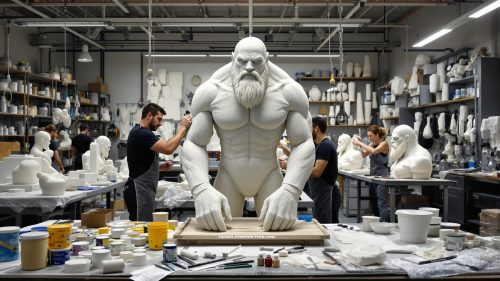
- Hand Sculpting – Skilled artists refine details, adding texture and form. Sculpting may involve clay overlays or direct foam carving.
- Coatings and Reinforcement – Polyurea, fiberglass, or resin coatings are applied to harden the surface, making it durable for outdoor use or handling.
- Painting and Finishing – Airbrush artists bring skin tones, fur, fabric patterns, or metallic surfaces to life. This is where the personality really shines through.
- Integration with Mechanics – For animatronic or interactive figures, joints, motors, or LEDs may be integrated to create motion and light.
The result can range from a giant foam mascot outside a stadium to a finely detailed maquette used for close-up shots in a film.
The Evolution of Character Models: From Clay to AI
Character modeling has come a long way from clay maquettes and stop-motion puppetry. The 1990s marked a turning point, with video games like Final Fantasy VII and films like Jurassic Park pushing 3D modeling into mainstream imagination.
Today, artificial intelligence is accelerating workflows. Procedural generation, AI-assisted rigging, and machine-learning texture synthesis are reducing the time needed to bring characters to life. What once took months can sometimes be achieved in weeks. Meanwhile, VR sculpting tools allow artists to “step inside” their models, shaping them as if working with virtual clay. And fabrication has evolved, too. With massive 3D printers and robotic carvers, life-sized character models can emerge almost overnight, ready to be painted and displayed.
Why Character Models Are More Than Just Shapes
A good character model isn’t just technically accurate; it resonates emotionally. Designers obsess over details like the tilt of a smile, the slump of shoulders, or the way light bounces on glossy eyes. These subtleties allow audiences to connect with digital or physical characters on a human level.
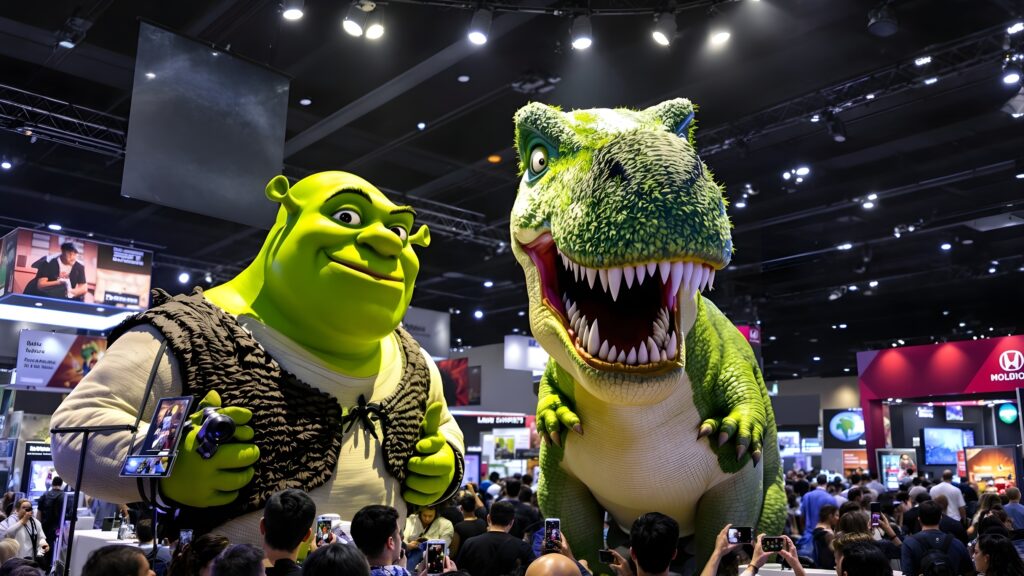
That’s why some models—like Shrek, Sonic, or even fast-food mascots—become cultural icons. They bridge the gap between art and psychology, embedding themselves into memory and identity.
Challenges in Character Modeling
Of course, modeling isn’t without its challenges. Digital artists wrestle with polygon counts, rendering times, and making sure characters deform naturally during movement. Fabricators juggle weight, safety, durability, and transportation logistics. Imagine shipping a 20-foot foam superhero statue across the country—it’s both an engineering and creative challenge. And then there’s the challenge of keeping characters fresh. Audiences evolve quickly, and what felt modern five years ago can seem dated today. Character modelers constantly innovate, borrowing from fashion, design, and cultural cues to keep their creations relevant.
Applications Beyond Entertainment
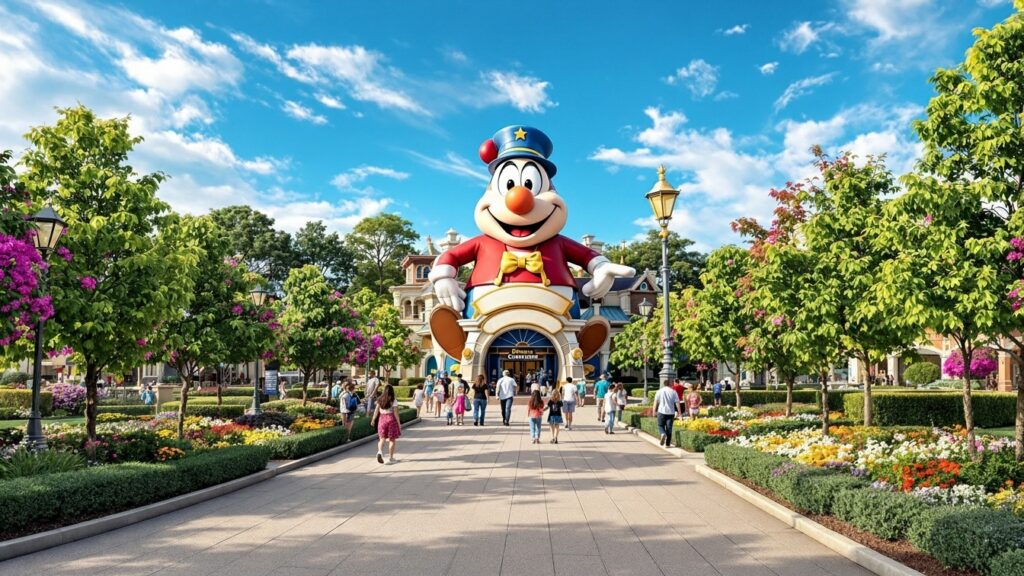
While entertainment remains the most obvious arena, character models are popping up everywhere. Medical schools use digital models of patients for training. Retailers use virtual avatars to show how clothes fit. Theme parks rely on physical mascots and animatronics to enchant guests. Museums use models to resurrect extinct animals or historical figures. The potential is almost limitless, proving that character modeling is not just about fun—it’s about communication, education, and connection.
The Future of Character Modeling
Looking forward, we can expect even more integration of AI, AR, and fabrication. Imagine a character that exists both as a hologram in your living room and as a foam statue at your local mall. Imagine custom avatars you can print in full size for an event, or interactive characters that respond to emotions in real time. As fabrication methods improve—lighter foams, stronger coatings, sustainable materials—we’ll see more character models inhabiting public spaces. Digital characters, meanwhile, will grow ever closer to photorealism, blurring the line between reality and imagination.
Characters as Living Bridges
Character models are far more than just tools of production. They are living bridges between imagination and reality. They carry the DNA of stories, brands, and ideas, translating them into forms we can see, touch, and believe in. Whether born in the digital sculpting rooms of a game studio or carved in foam by artisans for a parade float, character models represent the combined artistry of concept designers, fabricators, and storytellers. They remind us that every great story needs a body—and with character models, that body can be anything we dare to dream.
Check out WhiteClouds’ 3D Statues for more information.
Contact us today to learn more about our 3D services and how we can help you achieve your goals.