Topographic Wall Maps for Retail Stores: Design Ideas and Real-World Examples
We Build Custom Topographic Maps
Elevating Retail with Landscapes on the Wall
The landscape of retail is evolving rapidly. With online shopping dominating convenience, brick-and-mortar spaces need to stand apart by offering experiences that cannot be replicated with a click. Retailers are increasingly turning to immersive, visually captivating design features to capture the imagination of visitors. Among these, topographic wall maps have emerged as one of the most innovative, memorable, and versatile elements transforming modern stores.
Far more than décor, 3D topo wall maps are storytelling canvases. They connect customers to a sense of place, highlight brand identity, and add layers of functionality that go beyond aesthetics. For outdoor and lifestyle brands especially, they create bridges between the natural world and the retail environment, transforming shopping into an experience of exploration.

The Allure of Topographic Design
What makes a topographic wall map so compelling is its ability to fuse science, art, and storytelling into a single installation. Topography has always fascinated explorers, hikers, and geographers because it tells the story of the land—its ridgelines, valleys, and waterways. By bringing this information into a physical 3D form on a wall, retailers create something people want to engage with on multiple levels. A flat print map is informative, but it lacks the tactile, sculptural quality of layered contours. Customers can see and feel the terrain, following familiar mountain ranges or discovering new routes as though they were running their hands across the Earth itself. This element of touch and depth transforms a map into an immersive experience, one that naturally sparks curiosity and conversation.
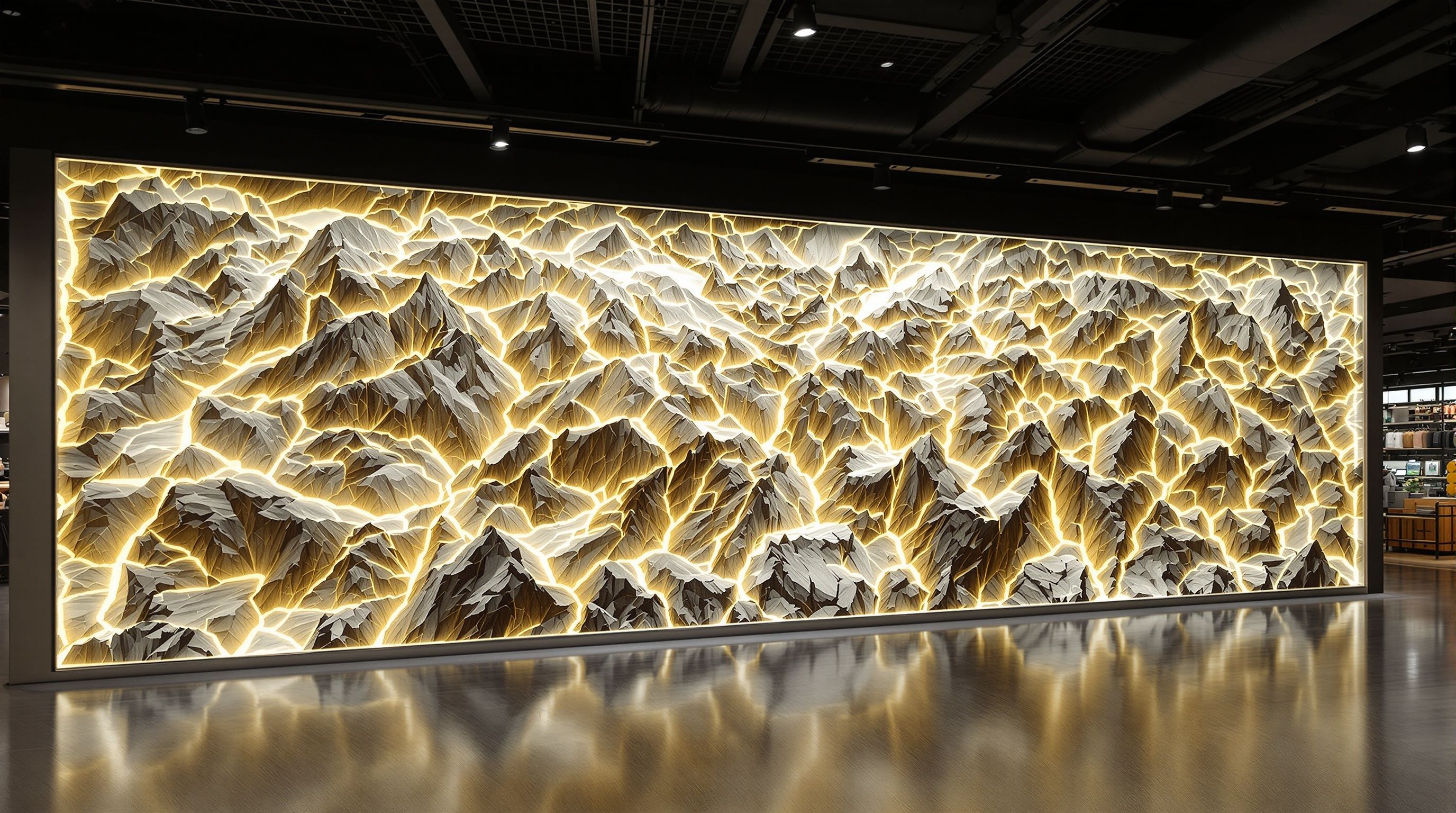
From a design perspective, topographic walls provide a striking focal point. They can be scaled to dominate entire store walls or adapted into smaller, detailed installations that complement displays. In both cases, they add dimension, intrigue, and authenticity.
Real-World Examples That Inspire
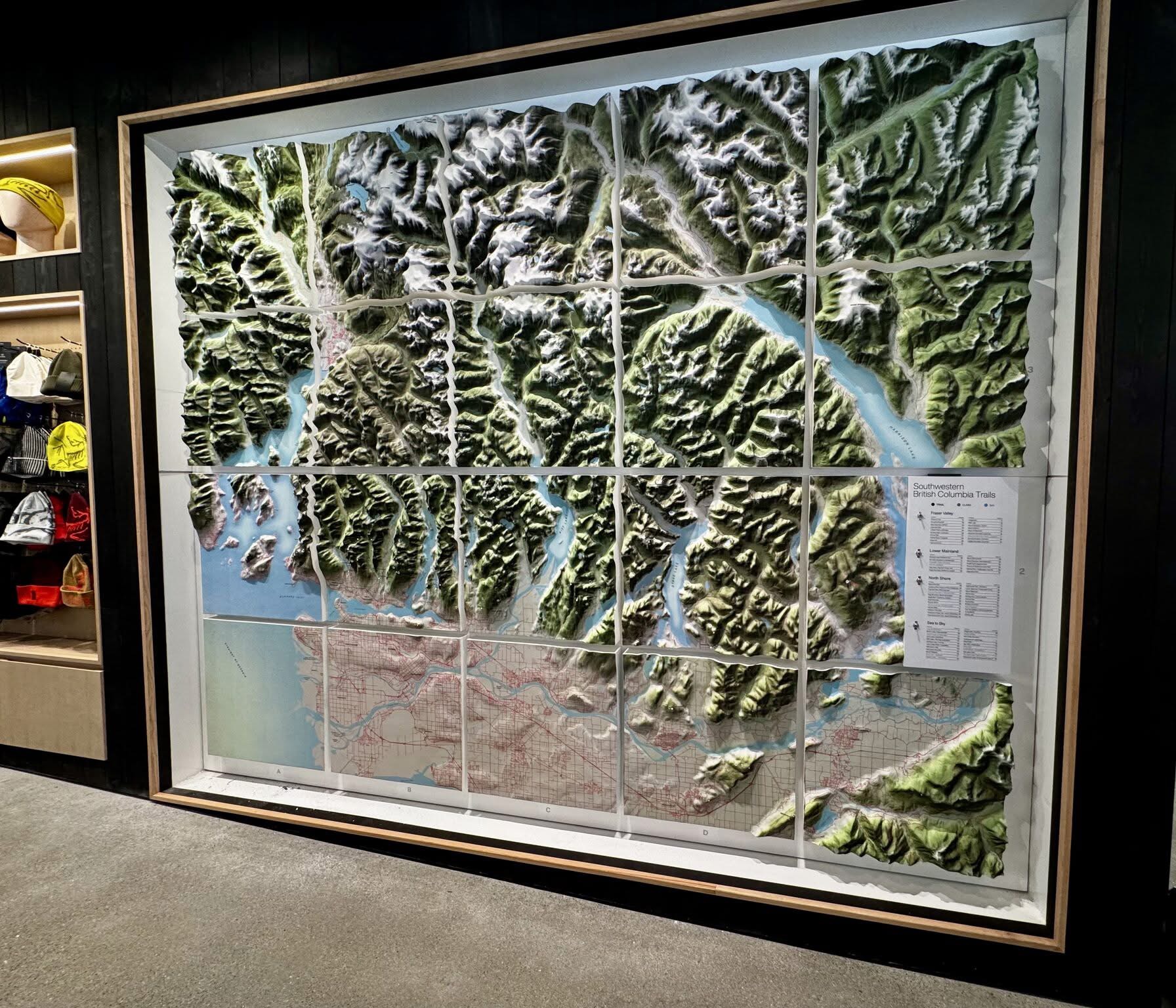
Several retailers have embraced topographic wall maps to stunning effect, proving their versatility across different industries. Arc’teryx’s flagship store in Vancouver stands as a prime example. To celebrate its reopening, the brand commissioned an epic 11×9 foot illuminated topo map of Southwestern British Columbia. Integrated LED markers highlight trailheads, activated by customers through a control panel. Four switches allow visitors to light up specific trail systems, turning the installation into an interactive guide to the region’s wilderness. The piece isn’t simply decorative; it’s a tribute to the brand’s roots and to the athletes who explore the terrain. Other retailers have used topographic walls as brand storytelling devices. An outdoor equipment store in Colorado installed a detailed topo map of the nearby Rockies, helping connect its gear directly to the mountains customers climb. A ski shop in Switzerland integrated illuminated contour maps of local slopes, guiding visitors to trails they could experience just minutes away. Even lifestyle and fashion retailers have begun incorporating abstracted topo designs, using stylized contours to create modern, artistic features that still evoke nature and exploration. These examples prove that topographic walls can be both literal and interpretive, offering endless design flexibility while maintaining their powerful ability to connect people with place.
Design Ideas for Every Retail Space
For retailers considering the leap into topo wall installations, the design options are as varied as the landscapes they represent. Some stores opt for massive wall-dominating pieces that act as the centerpiece of the space, while others incorporate smaller-scale versions as part of a larger design narrative.
Interactive elements elevate the impact dramatically. Illuminated trailheads, like those in the Arc’teryx installation, allow customers to actively engage with the map. Control panels, switchable legends, and even projection overlays can highlight different trails, routes, or regions. Digital integration is another frontier, where augmented reality could allow visitors to scan a portion of the map with their phones and receive information about the terrain, local wildlife, or trail difficulty.
Material choice also plays a critical role in design. White powder-coated aluminum, wood, acrylic, and layered composites can all be used to construct durable and striking pieces. The choice of finish—whether sleek and modern or rustic and natural—lets the map align with the overall aesthetic of the store.
Retailers can also decide how literal or abstract they want their topo wall to be. Some installations meticulously replicate specific regions, offering geographic accuracy down to trail markers. Others use contour lines as artistic patterns, creating walls that feel like a cross between geography and fine art. Both approaches can be effective depending on brand identity and customer expectations.
The Customer Connection
The true strength of topographic wall maps lies in their ability to foster emotional connection. Customers don’t just look at these maps; they see places they’ve been, routes they dream of exploring, and adventures yet to come. This recognition sparks memory and aspiration in equal measure. For outdoor retailers, this is invaluable. When a hiker recognizes the outline of a beloved trail, or a skier sees the contours of their favorite slope, they feel an instant bond with the store. The products on display no longer exist in isolation—they are connected to real-world experiences.
Even for lifestyle brands not directly tied to outdoor gear, the appeal remains. Topography taps into universal themes of exploration, nature, and discovery. It adds a sense of depth and meaning to retail spaces, encouraging visitors to linger longer and engage more deeply. Increased dwell time translates into stronger brand connection, higher engagement, and often greater sales.
Practical Considerations and Lasting Impact
As striking as these installations are, their success depends on careful planning and execution. A topographic wall must be engineered for longevity, especially in high-traffic retail environments where customers will interact with it regularly. Powder-coated frames, durable materials, and securely anchored structures ensure that the map can endure years of use.
Lighting and electrical components must be designed for reliability and easy maintenance. Interactive systems like LEDs and switches should be intuitive and built with durability in mind. In many cases, modular construction allows for repairs or updates without dismantling the entire installation.
From an investment perspective, topographic walls deliver long-term value. Unlike seasonal displays, they serve as enduring centerpieces that remain relevant for years. Their uniqueness also makes them powerful marketing tools, often becoming the most photographed and shared element of a store. In the age of social media, this kind of organic visibility can be priceless.
Looking Toward the Future of Retail Design
The rise of topographic wall maps signals a larger trend in retail: the blending of experience, art, and storytelling. As the line between shopping and experience continues to blur, features like topo walls will play a crucial role in making physical stores destinations rather than simple points of sale. The future may see even more ambitious integrations. Projection mapping could animate contour lines with flowing rivers or shifting seasons. Augmented reality could overlay real-time trail conditions on physical walls. Interactive legends could be tied to mobile apps, allowing visitors to learn more about the landscapes on display. What will remain constant is the core appeal: topographic walls connect people to place. They remind us that beyond every purchase lies an adventure, a story, or a landscape worth exploring. For retailers, they are not just displays but enduring investments in brand identity and customer loyalty.
A Landscape Etched in Memory
Topographic wall maps are more than design features—they are immersive storytelling tools that transform retail spaces into experiences. From Arc’teryx’s illuminated tribute to British Columbia’s wild landscapes to ski shops and outdoor outfitters around the world, these installations prove the power of connecting customers to place. They embody a fusion of art, engineering, and brand narrative, creating moments of recognition and inspiration. Whether interactive or purely sculptural, they offer a sense of depth and authenticity that few other displays can achieve. For retailers seeking to stand out in a crowded landscape, topographic wall maps are not just a design idea; they are the future of experiential retail. They carve landscapes into walls, etch memories into minds, and transform stores into destinations worth returning to again and again.