
Where Legacy Meets Architecture
Sports stadiums and arenas are more than places to watch a game—they are cultural landmarks, emotional gathering points, and living memory banks. Fans don’t just attend events; they participate in rituals. They walk the same paths, wear the same colors, and tell the same stories year after year. Statues placed within and around these venues transform that collective experience into something permanent. They anchor history in physical form, turning fleeting moments into timeless symbols. From bronze legends frozen mid-stride to modern resin installations capturing motion and energy, statues at stadiums serve as emotional gateways. They greet fans before the first whistle, frame victory photos after championships, and quietly remind visitors why the venue matters long after the lights go out.
Why Statues Matter in Sports Environments
A statue outside a stadium isn’t just decorative—it’s narrative architecture. These sculptures tell stories without words, communicating pride, loyalty, and legacy at a glance. For fans, statues become pilgrimage points. Touching a statue’s hand before entering the arena or taking a photo beside a hero becomes part of the game-day ritual. For teams and venue owners, statues reinforce brand identity without overt logos or signage. A powerful figure captured in motion instantly communicates values like resilience, teamwork, and excellence. Over time, these statues become synonymous with the venue itself, appearing in broadcast shots, social media posts, and fan-generated content that extends far beyond the stadium walls.
Honoring Legends and Iconic Moments
Many stadium statues focus on legendary players or coaches whose impact defined an era. These figures are often depicted in action—mid-throw, mid-swing, or locked in a moment of triumph. The goal is not realism alone, but emotion. A clenched jaw, a forward lean, or a raised arm can convey intensity more effectively than perfect anatomical detail.
Some venues choose to commemorate moments rather than individuals. A last-second shot, a game-winning catch, or a historic championship celebration can be captured as a frozen scene. These statues resonate with fans who remember where they were when the moment happened, turning personal memories into shared monuments.
Statues as Fan Experience Anchors
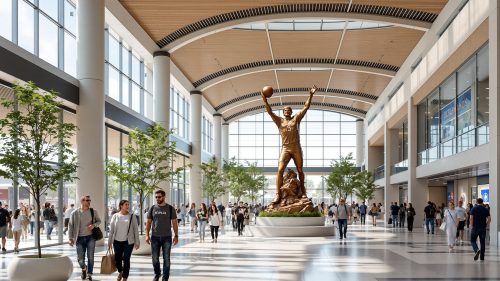
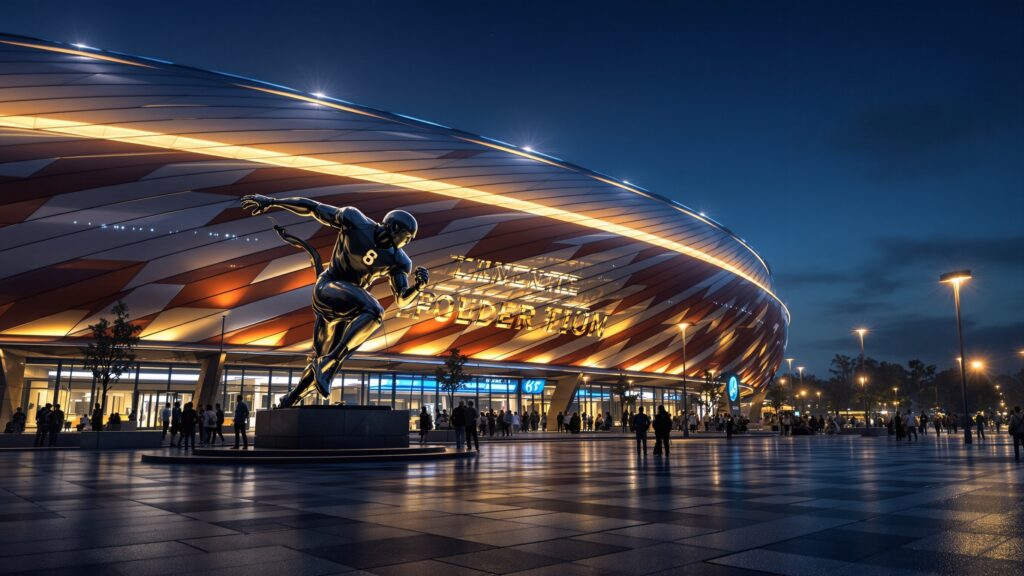
Modern stadium design emphasizes immersive fan experiences, and statues play a growing role in that strategy. Positioned near entrances, plazas, or interior concourses, sculptures act as natural gathering points. They help with wayfinding, create photo opportunities, and slow the pace of movement, encouraging fans to linger and engage with the space. When integrated thoughtfully, statues feel like part of the venue’s flow rather than add-ons. A statue emerging from landscaped greenery outside the gates or standing beneath a cantilevered canopy can feel cinematic, especially when paired with strategic lighting. At night, uplighting and subtle shadows add drama, turning statues into visual centerpieces even when games aren’t in session.
Materials That Shape Meaning
Material choice significantly influences how a statue is perceived. Traditional bronze remains popular for its durability and sense of gravitas. Bronze weathers beautifully, developing a patina that enhances its character over time, making it ideal for honoring long-standing legacies.
However, contemporary stadiums increasingly explore alternatives. Cast aluminum offers a lighter, more cost-effective option while retaining metallic strength. Fiberglass-reinforced resin allows for greater flexibility in form, making it easier to capture motion, fabric textures, and expressive poses. Stone and concrete blends can be used for more monumental or architectural designs, especially when the statue is integrated into walls, seating areas, or structural elements.
The choice of material often reflects the message. Bronze suggests permanence and tradition, while modern composites can feel dynamic, forward-looking, and innovative.
Scale, Proportion, and Presence
Statues for stadiums must strike a careful balance in scale. Too small, and they disappear into the vastness of the venue. Too large, and they risk feeling cartoonish or overwhelming. The most effective statues are large enough to command attention while still allowing fans to interact with them comfortably.
Human-scaled figures—slightly larger than life—tend to work best. They feel aspirational without becoming intimidating. Group statues or multi-figure scenes can expand visual impact horizontally rather than vertically, creating immersive moments that invite viewers to step into the story.
Fabrication: From Concept to Installation
The fabrication of a stadium statue begins long before materials are selected. It starts with research and storytelling. Sculptors work closely with teams, historians, and designers to understand the subject’s posture, personality, and significance. Reference photos, archival footage, and even motion studies may be used to capture authenticity.
Once a concept is approved, a full-scale clay or digital model is created. Digital sculpting allows for precise adjustments and easy collaboration, while traditional clay modeling offers tactile nuance. Many projects combine both approaches, using digital scans of clay models to refine details.
From there, molds are created for casting or fabrication. In bronze projects, the lost-wax process is commonly used, producing highly detailed, durable results. For resin or composite statues, layered fiberglass and reinforced cores provide strength while keeping weight manageable. Internal armatures are engineered to withstand wind, vibration, and environmental stress.
After fabrication, surface finishing brings the statue to life. Patinas, coatings, or textured finishes are applied to enhance realism and protect against weather. Installation requires coordination with structural engineers to ensure proper anchoring, drainage, and long-term stability. The final placement is carefully choreographed, often timed with renovations or off-season periods to minimize disruption.
Durability in High-Traffic Environments
Stadium statues face unique challenges. They must endure crowds, weather extremes, and constant exposure. Fans touch them, lean on them, and photograph them daily. Successful designs account for this interaction, reinforcing high-contact areas and using finishes that resist wear without losing character.
Maintenance planning is critical. Periodic inspections, gentle cleaning, and protective coatings can extend a statue’s life for decades. Some venues even embrace wear as part of the story, allowing polished spots to develop where fans interact most—visual proof of the statue’s role in living culture.
Modern Trends in Stadium Sculpture
Contemporary stadium statues are evolving beyond traditional hero figures. Abstract and semi-abstract designs are gaining popularity, using movement, form, and negative space to evoke emotion without literal representation. These pieces often integrate lighting or architectural elements, blurring the line between sculpture and structure. Another emerging trend is inclusivity. Statues now honor not only star athletes but also fans, community figures, and pivotal moments in social history. This broader storytelling approach reflects the idea that sports venues belong to entire communities, not just teams.
Economic and Branding Impact
Statues contribute to a venue’s long-term value. They enhance the stadium’s identity, support tourism, and generate organic marketing through fan photography and media coverage. A well-placed statue can become as recognizable as the stadium itself, appearing in broadcasts, merchandise imagery, and city branding.
From a financial perspective, statues are durable investments. Unlike temporary installations or digital displays, they retain relevance over time, often becoming more meaningful as years pass. For cities and teams, they represent both cultural capital and tangible legacy.
Designing for the Future
As stadiums continue to evolve into mixed-use destinations with retail, dining, and public spaces, statues will play an even greater role in shaping atmosphere. They act as anchors in spaces designed for constant activity, ensuring that history remains visible amid change. The most successful stadium statues feel inevitable—as if the space was designed around them rather than the other way around. They connect past, present, and future, giving fans something solid to hold onto in an ever-changing sports landscape.
Check out WhiteClouds’ 3D Statues for more information.
Contact us today to learn more about our 3D services and how we can help you achieve your goals.