
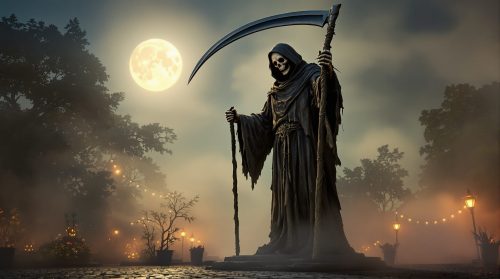
Monumental Frights, Immersive Nights, and the Art of Building Bigger Scares
Halloween has evolved far beyond porch pumpkins and plastic skeletons. Today, cities, shopping centers, theme parks, museums, corporate campuses, and even private homeowners are embracing large-scale Halloween installations that transform ordinary spaces into immersive theatrical environments. At the heart of these dramatic seasonal displays are statues—towering witches, looming reapers, mythical creatures, gothic angels, haunted guardians, and cinematic monsters that anchor an entire experience. Statues for Halloween installations are not just decorations. They are landmarks. They are photo magnets. They are storytelling devices that turn a simple seasonal setup into a destination people drive across town to see. Whether standing 8 feet tall in a retail atrium or soaring 30 feet above a festival entrance, these sculptural centerpieces set the emotional tone before a single sound effect plays. Let’s explore how Halloween statues are imagined, designed, fabricated, installed, and used to create unforgettable October spectacles.
Why Large Halloween Statues Command Attention
Scale changes everything. A standard Halloween prop can be charming. A monumental statue can be transformative. When guests approach an installation anchored by a massive figure—perhaps a 20-foot skeletal gatekeeper gripping rusted chains—their reaction is immediate. There’s awe, curiosity, and a subtle thrill. Human psychology responds to scale. Large forms activate instinctive emotional responses, particularly when paired with dramatic lighting and shadow.
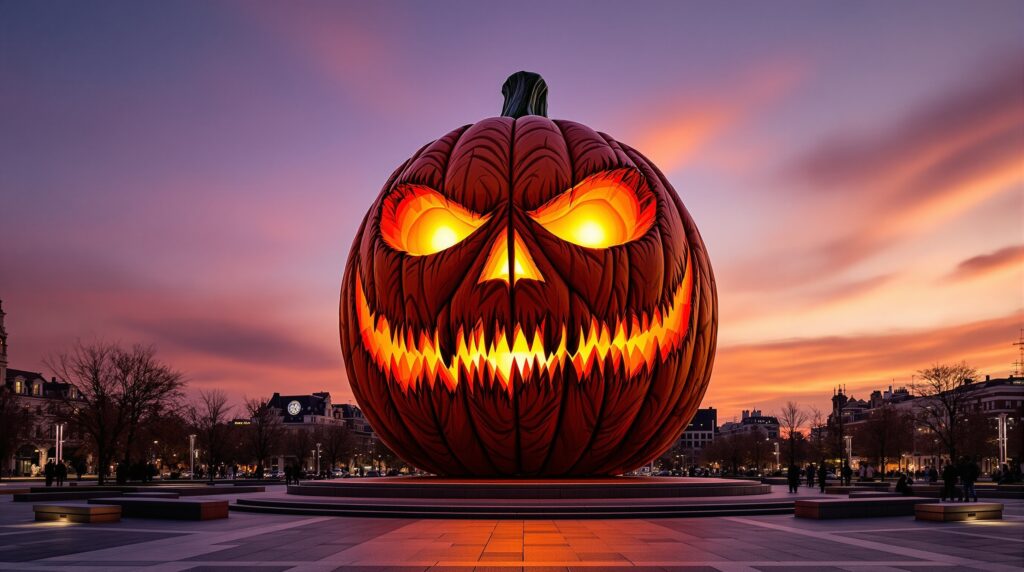
For commercial installations, statues create a visual hook that photographs beautifully. In an era dominated by social sharing, the most successful Halloween installations are those designed with camera angles in mind. A towering vampire emerging from a cathedral arch or a giant pumpkin guardian carved with intricate gothic patterns becomes an irresistible backdrop for selfies and group photos. Every shared image becomes free marketing. Statues also establish narrative. A haunted carnival installation feels incomplete without a towering ringmaster figure presiding over the chaos. A medieval haunted village becomes believable when stone gargoyles perch on parapets. The statue is the visual thesis statement of the theme.
Popular Themes for Halloween Installation Statues
Halloween statues span a wide range of aesthetics, from campy and whimsical to dark and cinematic. The chosen style depends on the audience, location, and brand personality.
- Classic horror themes remain enduring favorites. Grim reapers with flowing cloaks, winged gargoyles, skeletal knights, haunted angels with cracked stone textures, and towering witches clutching spellbooks evoke traditional Halloween mythology. These figures often feature exaggerated proportions, dynamic poses, and richly textured surfaces that look carved from stone or aged bronze.
- Cinematic and gothic horror installations take inspiration from Victorian architecture, abandoned asylums, and cathedral interiors. Statues in these environments might include robed sentinels with hollow eyes, ornate stone demons, or gothic arch guardians that frame entryways. The design leans heavily on dramatic lighting to cast elongated shadows and intensify atmosphere.
- Whimsical Halloween themes appeal to family audiences. Giant smiling jack-o’-lantern characters, friendly ghosts, oversized black cats, and cartoonish witches on broomsticks can be scaled up without becoming frightening. These statues prioritize color, expressive features, and playful poses.
- Fantasy and folklore installations blend Halloween with myth. Towering forest spirits, enchanted trees with sculpted faces, massive ravens, dragon guardians, and mythical beasts bring a storybook quality to fall festivals and botanical garden events.
Retail centers and city events often combine multiple styles, using statues as anchors in distinct themed zones throughout a property.
Designing Statues for Immersive Environments
A Halloween statue should never feel like an isolated object placed in a corner. The most compelling installations treat statues as architectural elements.
Design begins with context. Is the statue greeting visitors at the entrance? Standing at the center of a plaza? Integrated into a haunted house queue line? Each location determines scale, orientation, and visual direction.
Concept artists typically begin with sketches and digital renderings that show the statue in its intended environment. Designers consider sightlines from multiple angles, ensuring the sculpture looks dramatic from both near and far distances. A 25-foot reaper might have an exaggerated forward lean so its scythe frames the sky when viewed from ground level.
Lighting design is integrated early in the process. Uplights placed at the base of a statue can create towering shadows, while concealed LED strips inside carved eyes or beneath cloaks produce a subtle internal glow. Fog machines and projection mapping may be added to animate the surrounding space.
Texture is another critical design element. Surfaces are often sculpted to resemble aged stone, cracked marble, oxidized bronze, or weathered wood. Even foam-based statues can look convincingly ancient when properly finished.
Materials Used in Halloween Statue Construction
Halloween installation statues must be visually impressive yet practical. They need to withstand weather, repeated use, transportation, and sometimes thousands of daily interactions from guests.
Expanded polystyrene foam is commonly used for large, lightweight forms. Foam can be carved by hand or CNC-cut into detailed shapes, making it ideal for ornate gothic designs. Once shaped, the foam is coated with hard shells made from fiberglass resin, polyurethane coatings, or epoxy-based compounds to create durability. Fiberglass is another popular material, particularly for outdoor statues. It provides strength while remaining relatively lightweight compared to concrete or metal. Fiberglass molds allow multiple copies of a figure to be produced for multi-location installations.
For premium projects, steel armatures form the internal skeleton of large statues. The metal framework ensures structural integrity, especially for statues with extended limbs or dynamic poses. Aluminum may be used to reduce weight. Hard-coated urethane foam and high-density sculpting clays are often employed for detailed elements such as facial features, hands, and ornate carvings.
Paint systems are layered to create realistic finishes. Base coats establish color, while glazes and washes settle into crevices to simulate aging. Matte sealants reduce glare under bright event lighting.
Fabrication: How Halloween Statues Are Built
Fabricating a large Halloween statue is both an artistic and engineering challenge.
The process typically begins with concept approval and scaled maquettes, small physical models that allow stakeholders to visualize proportions. Once approved, designers create full-scale 3D digital models. These files guide CNC machines that carve large foam blocks into rough shapes. Sculptors refine the surface by hand, adding folds to cloaks, cracks in stone textures, and expressive facial details. For statues intended to appear ancient or decayed, artists intentionally distress surfaces, carving chips and erosion patterns.
An internal steel armature is fabricated simultaneously. This structural frame anchors the statue to its base and ensures stability. For outdoor installations, engineers calculate wind loads and weight distribution to prevent tipping. After sculpting, the statue is coated with a rigid shell. Fiberglass matting and resin layers are applied over the foam core. Once cured, the surface is sanded smooth or textured further as needed.
Painting is where transformation occurs. Artists apply multiple layers of paint using brushes, sponges, and airbrush techniques. Dry brushing highlights raised areas, while darker washes add depth. Metallic pigments can mimic aged bronze or iron. Lighting elements, wiring channels, and mounting brackets are installed before final sealing. If the statue includes interactive features such as moving eyes or smoke effects, these systems are integrated at this stage.
Finally, the statue is segmented for transportation if necessary. Large figures may be built in modular sections that bolt together onsite.
Outdoor Versus Indoor Installations
Location dramatically influences construction choices.
Outdoor Halloween statues must withstand wind, rain, temperature fluctuations, and UV exposure. Coatings are selected for weather resistance, and internal frames are reinforced. Anchoring systems may involve weighted bases, ground stakes, or concealed ballast.
Indoor installations, such as those in malls or convention centers, allow for lighter construction and more delicate finishes. These statues can feature finer detail and more intricate lighting without the same environmental concerns.
In either setting, safety remains paramount. Edges are smoothed, surfaces are sealed, and load-bearing structures are engineered to meet local codes.
Integrating Statues into Full Halloween Experiences
The most memorable Halloween installations are multi-sensory. Statues serve as visual anchors within a larger narrative that may include sound design, scent diffusion, interactive lighting, and live performers. Imagine entering a haunted forest installation where a 30-foot skeletal tree spirit towers above, its carved bark illuminated in deep amber light. Fog drifts through twisted roots. Subtle forest sounds echo in the distance. The statue becomes part of a living scene. In urban plazas, giant pumpkin guardians might flank a pathway lined with lanterns, guiding visitors toward a central stage. Retail environments often use statues as focal points surrounded by merchandise displays, tying seasonal sales into an immersive theme. Statues can also function as gateways. A colossal archway shaped like a dragon’s ribcage or a towering witch forming an entry portal instantly establishes mood.
The Role of Lighting in Amplifying Impact
Lighting can make or break a Halloween statue. Uplighting from ground level emphasizes height and casts dramatic shadows across facial features. Cool blue tones evoke moonlight, while warm amber creates a candlelit atmosphere. Deep reds intensify horror themes. Projection mapping technology allows designers to animate statues without mechanical movement. Flickering textures, drifting shadows, or glowing veins can be projected onto a static sculpture to create the illusion of life. Backlighting silhouettes a statue against the night sky, making it visible from afar. For daytime installations, subtle internal LED accents maintain visual interest even in bright conditions.
Reusability and Seasonal Storage
High-quality Halloween statues are often designed for multi-year use. Modular construction allows them to be disassembled and stored in climate-controlled warehouses. Protective crates and labeled sections simplify reinstallation.
Paint touch-ups and minor repairs are common after each season. Foam surfaces may require patching, while lighting components are tested and updated as technology evolves.
Investing in durable fabrication pays off over time, particularly for commercial venues that host annual Halloween events.
Customization for Branding and Events
Halloween installations are not limited to generic horror themes. Corporations, municipalities, and event planners frequently commission custom statues that reflect specific brand identities. A historic downtown district might feature statues inspired by local legends. A theme park may integrate characters from proprietary storylines. A luxury brand could opt for elegant gothic sculptures finished in metallic tones that complement architectural surroundings.
Customization extends to scale. Some projects call for intimate 6-foot statues lining a pathway. Others demand monumental 40-foot figures visible from highways. The creative possibilities are virtually endless.
The Emotional Power of Monumental Halloween Art
There is something uniquely thrilling about standing beneath a giant statue that embodies the spirit of Halloween. It feels cinematic, theatrical, and slightly surreal. These installations become seasonal landmarks. Families return each year to photograph children beside the same towering witch or haunted knight, marking growth through repeated visits. Social feeds fill with images, and the installation becomes part of local cultural memory. Statues transform Halloween from a single night into an extended, immersive experience.
Sustainability Considerations in Modern Fabrication
As environmental awareness grows, fabricators are exploring sustainable materials and processes. Recyclable foam cores, low-VOC paints, and energy-efficient LED lighting reduce environmental impact.
Modular design minimizes waste, allowing damaged sections to be replaced rather than rebuilding entire statues. Some installations incorporate biodegradable elements for short-term displays. Sustainability is increasingly part of the conversation when planning large seasonal events.
The Future of Halloween Installation Statues
Technology continues to expand creative possibilities. Augmented reality overlays allow visitors to view animated elements through smartphones. Embedded sensors can trigger lighting changes when guests approach.
Advances in lightweight composites enable even larger statues without excessive structural weight. Robotics may introduce subtle movements, such as slowly turning heads or shifting cloaks.
Yet despite technological innovation, the core appeal remains rooted in sculptural artistry. A well-designed statue captivates through form, texture, and presence.
Bringing Vision to Life
Creating statues for Halloween installations is a collaboration between artists, engineers, lighting designers, and event planners. It requires vision, craftsmanship, and attention to safety. When executed thoughtfully, these monumental figures redefine public spaces for an entire season. They invite wonder, spark imagination, and create moments people remember long after October fades into November.
From towering reapers to enchanted forest guardians, Halloween statues transform empty plazas into living stories. They are proof that seasonal art can be as grand and sophisticated as any permanent public sculpture—only darker, more mysterious, and infinitely more fun. If Halloween is about embracing the thrill of imagination, then monumental statues are its boldest expression.