
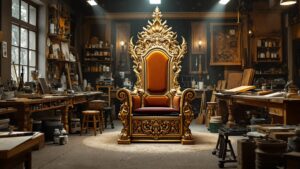
The Seat That Commands a Kingdom
There is perhaps no object in history more instantly associated with power than the royal throne. From glittering golden seats encrusted with jewels to carved oak chairs towering above courts, the throne has always been far more than a piece of furniture — it’s a symbol. To sit upon it is to embody authority, legitimacy, and divinity itself. Across empires, religions, and centuries, kings and queens have ruled from elevated chairs that told the world: Here sits someone chosen to command. Yet behind the splendor of every royal throne lies a fascinating blend of art, symbolism, and craftsmanship — each one designed to tell a story about power itself.
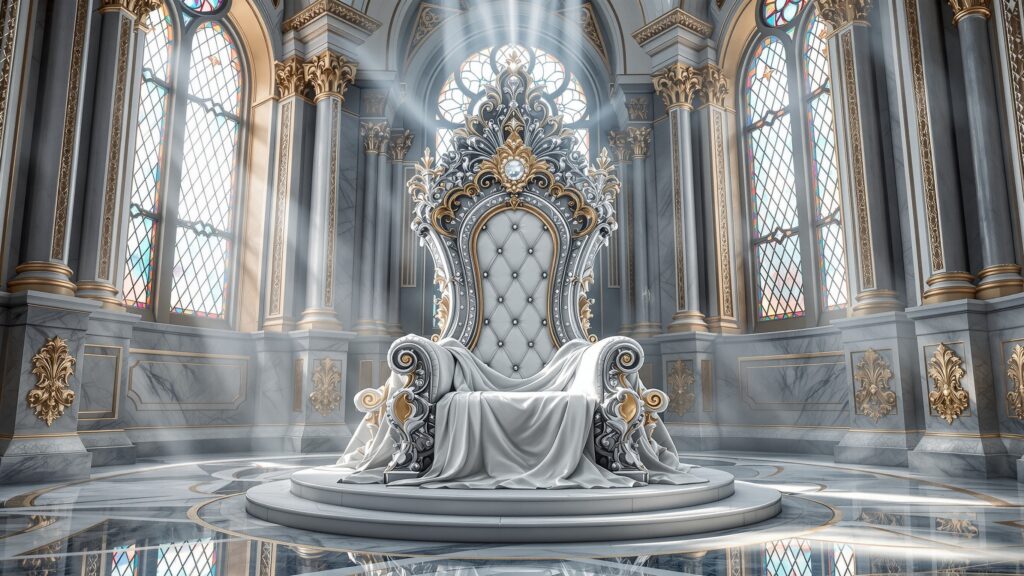
From Ancient Thrones to Modern Crowns
The concept of a royal throne is ancient — older even than many of the kingdoms we read about in history books. Archaeologists have uncovered thrones carved from limestone in ancient Egypt, where Pharaohs were considered living gods. In Mesopotamia, rulers sat upon raised platforms to distinguish themselves from mortals. The elevation of the seat alone communicated divine distance.
As civilizations evolved, so did the throne. The Greeks and Romans built elaborate marble and bronze versions that combined sculptural detail with political symbolism. Thrones in Byzantium shimmered with mosaic inlays and gold leaf, while in medieval Europe, craftsmen turned oak and walnut into massive Gothic masterpieces that looked as unyielding as the monarchs who sat upon them. By the Renaissance, the throne became an artwork unto itself. Embroidered silk, gilded carvings, and architectural flourishes reflected an age obsessed with splendor and ceremony. Monarchs used the throne to reinforce the idea that their power came not just from armies or bloodlines, but from divine right — an idea captured perfectly in every polished surface and shining crest.
Thrones as Symbols of Power and Personality
Every royal throne tells a story about its kingdom — and its ruler. Some were built to inspire fear; others to inspire awe. Every design choice, from material to motif, carried meaning. A golden throne signaled divine favor and eternal rule. A marble one whispered of stability and endurance. Thrones covered in red velvet hinted at passion, sacrifice, and royal bloodlines, while blue thrones embodied calm wisdom and heavenly sanction.
Look closer, and you’ll see messages encoded into every inch. The lions carved into the arms of England’s royal thrones represent courage and guardianship. In China’s Forbidden City, the Dragon Throne was adorned with twisting dragons — symbols of celestial power and imperial legitimacy. In France, the throne of Louis XIV was placed beneath a golden sunburst, reinforcing his image as the “Sun King.” The throne wasn’t merely a seat; it was a stage for symbolism. It declared the nature of power, projected identity, and reminded everyone who entered the chamber where ultimate authority resided.
The Ritual of the Seat
The act of sitting upon the throne was, and still is, a performance of sovereignty. Every coronation ceremony revolves around it. The new monarch, after anointing and blessing, takes the seat — and in that moment, becomes the living embodiment of the state.
In medieval England, the coronation chair in Westminster Abbey was designed to hold the Stone of Scone, a sacred relic symbolizing the unity of Scottish and English crowns. When the monarch sat upon it, they literally rested upon centuries of conquest and continuity.
In other traditions, the throne was also a spiritual conduit. Pharaohs were believed to merge with gods while seated upon their thrones, channeling divine wisdom. In Southeast Asia and Africa, the throne often connected rulers to ancestral spirits — carved figures and symbols on the seat itself became vessels of cultural memory. Even today, the symbolism endures. When a monarch sits for an official portrait or delivers a televised speech from the throne, that image conveys authority and heritage in ways that words alone cannot. The ritual is eternal, even as the world changes.
Iconic Thrones Through the Ages
The world has seen countless royal thrones, but a few stand above the rest as icons of artistry and influence.
The Throne of Tutankhamun, discovered in his tomb, remains one of history’s most dazzling artifacts — gold-plated, inlaid with colored glass and semi-precious stones, and decorated with scenes of the young pharaoh and his queen. It radiates both intimacy and eternity.
The Peacock Throne of Mughal India was a masterpiece of opulence. Crafted in the 17th century, it was encrusted with hundreds of diamonds, rubies, emeralds, and sapphires. Its golden structure was topped with a canopy supported by sculpted peacocks with jeweled tails — an embodiment of paradise on earth.
The Chrysanthemum Throne of Japan is one of the few still in ceremonial use today. More than 2,600 years of tradition have made it one of the oldest continuous royal seats in history.
And in Europe, the Throne of St. Edward in Westminster Abbey has witnessed every English and British coronation since the 1300s — worn, aged, and still commanding respect.
Each of these thrones is a portrait of its culture’s highest ideals — captured in wood, gold, and legend.
The Design Language of Royalty
A true royal throne combines symbolism, craftsmanship, and spectacle. It’s where architecture meets furniture, and where storytelling merges with status.
The first design principle is elevation. Thrones are almost always raised — either by steps or by platform — creating a literal hierarchy within the room. The higher the seat, the greater the authority.
The second is framing. Thrones are usually placed within elaborate backdrops or under canopies. These architectural “crowns” frame the monarch like a painting, controlling sightlines and commanding focus.
The third is ornamentation. Every motif — lions, fleur-de-lis, dragons, wings, or sunbursts — amplifies the throne’s message. The designs are chosen not for comfort, but for meaning. The more intricate the carving, the more divine the craftsmanship appears, reinforcing the idea that kings and queens are elevated above ordinary artisanship.
And finally, there is texture and light. Gold leaf and polished surfaces reflect illumination, surrounding the ruler in an aura of radiance. Deep fabrics — velvet, brocade, and silk — absorb light, giving the throne warmth and gravity. Together, these textures create visual power, turning the seat into a living symbol of rule.
A Throne for Every Kingdom
Royal thrones aren’t confined to one look or style. They evolve with the tastes and beliefs of each era.
In the Gothic period, European thrones were tall and vertical, almost cathedral-like, echoing the architecture of power itself. During the Renaissance, thrones became more sculptural and humanistic, incorporating mythological figures and fine marquetry. Baroque thrones exploded with drama — curling gilded scrolls, cherubs, and deep red fabrics designed to overwhelm the senses. Rococo softened those lines into graceful curves, trading severity for elegance.
Asian thrones developed along entirely different principles. Chinese imperial thrones balanced symmetry, symbolism, and celestial geometry — every line aligned with cosmological harmony. Indian thrones shimmered with precious stones and motifs of nature, blending spiritual and earthly grandeur. African thrones were often carved from single blocks of wood and adorned with ivory, beads, and gold, serving as sacred conduits between ruler and ancestors.
In every style, one truth remains: the throne reflects not only who rules, but how they wish to be seen.
How Royal Thrones Are Fabricated
Creating a royal throne is a blend of architecture, sculpture, and ritual craftsmanship. Each one is custom-built to embody majesty.
The process begins with concept design. Artists study historical references or create original sketches that align with the monarch’s symbolism — crown crests, mythic beasts, or celestial motifs. Once approved, artisans translate the concept into 3D models or technical drawings, determining proportions and construction details.
The frame forms the foundation. Traditionally, thrones were carved from hardwoods such as oak, walnut, or mahogany for strength and longevity. Modern reproductions or museum pieces might use engineered wood reinforced with metal subframes for stability.
Carving and sculpting bring the throne to life. Skilled woodworkers hand-carve armrests, legs, and back panels, shaping intricate scrollwork, crests, and figurative details. Some thrones incorporate stone inlays or metal fittings — combining materials for strength and splendor.
Gilding and finishing are where the throne becomes radiant. Layers of gesso are applied, followed by gold leaf or metallic paint. Scenic artists use glazing, antiquing, or patina techniques to give depth and age, making the throne look both ancient and eternal.
Upholstery completes the build. Rich fabrics like silk, velvet, or damask are hand-stretched and tufted with decorative buttons or embroidery. Royal insignias might be embroidered or embossed into the fabric, uniting comfort with ceremonial authority.
Finally, the throne is assembled and detailed — jewel settings, carved finials, or crystal accents are added. The finished piece is polished, inspected, and prepared for installation in its ceremonial setting.
In modern fabrication studios, traditional craftsmanship often meets cutting-edge technology. CNC carving, 3D printing, and fiberglass molding now allow artisans to replicate ornate details faster, while maintaining the handcrafted finish that gives every royal throne its soul.
The Majesty of Materials
The materials used to build a royal throne are chosen not only for beauty but for meaning.
- Gold, the eternal metal, symbolizes divine rule and immortality. Even when used as leaf or gilding, its shine immediately transforms the object into something transcendent.
- Silver conveys purity and wisdom, often reserved for queens’ thrones or ceremonial seats of counsel.
- Wood provides warmth and tradition. In medieval Europe, a throne carved from oak carried the gravitas of endurance.
- Velvet and silk embody luxury. These materials don’t merely decorate the throne — they communicate tactile power. To touch velvet is to feel privilege.
- Gemstones and inlays — rubies for courage, emeralds for life, sapphires for heaven — were often embedded into thrones as talismans of divine favor.
In contemporary reproductions or museum installations, modern substitutes like metallic finishes, synthetic gemstones, and eco-friendly fabrics achieve the same grandeur while improving durability and transportability.
Thrones in Modern Culture and Media
Even as monarchies have waned, the cultural fascination with thrones remains as strong as ever. Today, they appear everywhere — in movies, fashion editorials, concerts, and art installations. Television and cinema have reintroduced the throne as a visual shorthand for power. The iron throne of fantasy lore, crafted from forged swords, has become one of the most recognizable icons in pop culture. Fashion designers stage photo shoots on jewel-toned thrones to evoke regality. Even musicians adopt throne imagery to communicate status and creativity — a symbol that says, I rule my realm.
In event design and experiential marketing, custom thrones inspired by royal heritage are reimagined for modern audiences. They serve as backdrops for weddings, red carpet events, or luxury brand launches — bringing the spectacle of monarchy into everyday celebration. The continued appeal lies in the psychology of elevation. A throne is aspirational. It lets anyone step into a role of grandeur, even for a moment — and that emotional connection is timeless.
The Craft of Recreating History
Fabricators who specialize in royal thrones today often work at the crossroads of art, history, and engineering. Museums, theaters, and film studios commission replicas that must capture historical accuracy while remaining practical for use.
For a medieval reproduction, artisans might study surviving relics, paintings, or archival documents to replicate joinery and carving techniques. For a cinematic version, designers might exaggerate details for dramatic impact, enlarging the backrest or deepening the ornamentation so it reads clearly on camera.
The magic lies in the balance between authenticity and theatricality. Whether the throne is destined for a palace exhibit or a fantasy production, it must look believable, feel powerful, and photograph beautifully from every angle. Behind every successful replica lies a team of carpenters, sculptors, painters, upholsterers, and finishers working in harmony — each understanding that this is no ordinary chair. It is a story told through material and form.
The Psychology of Sitting on a Throne
Why do thrones captivate us so deeply? Part of it is psychological. The moment someone sits upon an elevated seat, perception changes — both for the sitter and for the audience. Thrones create vertical hierarchy. They make the sitter appear taller, centered, and framed — the literal focal point of a space. Our brains instinctively associate height and centrality with authority. Add gleaming surfaces and intricate detail, and the symbolism becomes almost irresistible. But there’s also a deeper emotional layer. Sitting on a throne transforms identity. It makes a person feel chosen, important, and part of a grand narrative. That’s why photographers, event designers, and even game developers keep returning to throne imagery. It channels the human desire for recognition and power — not in a political sense, but in a mythic one. To sit on a throne, even for a photo, is to borrow a little piece of that timeless illusion of greatness.
The Future of Royal Thrones
In the 21st century, thrones continue to evolve alongside culture and technology. Designers now blend traditional craftsmanship with modern materials to create lighter, more durable, and eco-conscious builds. Recycled metals, sustainable hardwoods, and low-VOC coatings allow artisans to recreate royal splendor responsibly. LED integration, interactive lighting, and digital projection mapping turn thrones into multimedia sculptures.
We’re also seeing a rise in inclusive thrones — designs that reinterpret royalty through diversity, gender-neutral aesthetics, and global influences. Instead of representing only hereditary power, these thrones symbolize creativity, equality, and achievement. In short, the throne has been reborn as an artistic form — one that continues to remind us of history’s grandeur while inviting new generations to imagine their own kind of royalty.
Why the Royal Throne Still Reigns Supreme
No object captures imagination quite like a royal throne. It condenses the history of civilization, the artistry of generations, and the drama of human ambition into one unforgettable form. Every curve, carving, and color carries centuries of symbolism — stories of faith, politics, and pride. Whether carved from stone, cast in gold, or sculpted from modern foam and fiberglass, the throne remains the most eloquent of all chairs. It’s a paradox of comfort and command: a seat that elevates the sitter and humbles the audience. A blend of craftsmanship and mythology that continues to enchant designers, filmmakers, and dreamers alike. As long as humans crave beauty and power, the royal throne — in all its shimmering variations — will continue to reign supreme.
Check out WhiteClouds’ 3D Props for more information.
Contact us today to learn more about our 3D services and how we can help you achieve your goals.