
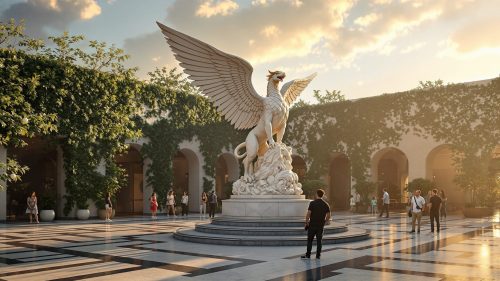
Where Legends Rise in Stone, Steel, and Imagination
Across centuries and continents, humans have imagined creatures that blur the line between gods and beasts, dream and reality. From the fiery breath of dragons to the noble wings of griffins, mythological creatures have haunted our folklore, inspired our art, and ignited our creativity. Today, these legends have stepped out of storybooks and onto real-world landscapes—towering in parks, museums, theme attractions, and gardens as awe-inspiring mythological creature statues. These works of art do more than depict fantasy; they embody the cultural imagination that shaped entire civilizations. A statue of Medusa doesn’t just freeze her gaze in stone—it captures a fragment of Greek fear and fascination. A phoenix sculpture rising from flames isn’t just decorative; it’s an eternal symbol of rebirth and hope. In modern architecture, entertainment design, and landscape art, these creatures reclaim their ancient power in a new form: sculpted, monumental, and breathtakingly real. Let’s step into the enchanted world of mythological creature statues—where ancient myths meet modern fabrication, and where every wing, horn, and claw tells a story written in legend.

The Call of the Mythic: Why We’re Drawn to Legendary Beasts
Humanity has always been drawn to creatures beyond the natural world. In ancient times, mythological beings represented mysteries of life and nature—guardians, omens, or embodiments of virtues and vices. Today, they serve another role: symbols of imagination, artistry, and storytelling that connect us to the past while firing up creative futures.
Walk through a sculpture garden or amusement park and you’ll notice how instantly these figures command attention. A bronze dragon perched on a cliff feels alive, its scales glinting in sunlight. A mermaid statue in a fountain invites reflection and wonder. A towering centaur in a museum courtyard symbolizes balance between intellect and instinct. These sculptures transcend simple décor. They evoke emotion, spark curiosity, and often become iconic landmarks that define a place’s identity. Whether playful or fearsome, every mythological statue invites us to ask questions: What story does it tell? What culture birthed it? And what does it awaken in us?
A World of Myths: Creatures That Inspire
Across the globe, mythological creature statues draw inspiration from every culture’s lore. Each carries the DNA of ancient storytelling and the artistry of modern design.
Dragons are perhaps the most universal mythic figure. In Western mythology, they are fiery and fierce, protectors of treasure and power. In Eastern cultures, they are wise and benevolent, embodiments of water, wind, and fortune. A dragon statue curling through a park fountain or wrapping around a pillar instantly commands reverence.
Griffins, with their eagle heads and lion bodies, symbolize divine strength and vigilance. Statues of griffins often guard gateways or castle entries, embodying nobility and protection.
Mermaids and sirens reflect mystery and allure—perfect subjects for fountains, pools, and coastal resorts. Sculptors use flowing forms and reflective materials to suggest movement through water.
Phoenixes rise from ashes as eternal emblems of transformation and resilience. Modern phoenix statues, often sculpted with wings aflame in metallic finishes, are popular in memorial parks, corporate atriums, and cultural centers celebrating rebirth and perseverance.
Centaurs, minotaurs, unicorns, and krakens have also stepped into the sculptural spotlight, mixing fantasy aesthetics with classical artistry. Each statue, whether stone, steel, or resin, becomes a bridge between myth and human imagination—a story frozen mid-breath.
The Art of Expression: Sculpting Emotion into Myth
Mythological statues are as much about emotion as they are about form. A sculptor doesn’t just create anatomy; they shape a story’s essence. The tension in a dragon’s coiled body, the serenity in a unicorn’s face, the majesty of a winged horse’s gallop—each curve and contour captures energy, movement, and mood.
Artists study not just myth, but psychology. A well-crafted mythological sculpture has presence—it seems aware of its surroundings. A viewer can almost sense the creature’s breath or the weight of its wings. This illusion of life is what separates a decorative sculpture from a timeless piece of mythic art.
Lighting, texture, and placement amplify this magic. A phoenix statue glowing under amber spotlights at dusk feels alive. A hydra statue rising from misted ponds evokes cinematic fantasy. Even small details—like scales that catch sunlight or feathers that ripple in shadow—can turn a static object into an experience.
Mythology in Modern Spaces: Where the Creatures Live
These statues are no longer confined to ancient temples or fantasy films. They’ve become centerpieces of modern design, appearing in zoos, amusement parks, resorts, museums, gardens, and urban plazas.
A resort might feature mermaids entwined around coral-inspired fountains. A fantasy-themed park could unveil dragons arching over pathways, smoke machines adding life to their nostrils. A museum plaza might display a Pegasus leaping into flight—a nod to art’s enduring imagination. Even corporate headquarters and universities have embraced mythological symbolism.
A griffin guarding a campus entrance, for example, embodies knowledge and strength. Meanwhile, luxury hotels and casinos use these sculptures as artistic storytelling devices—instantly recognizable, photographable, and unforgettable. Their presence not only attracts visitors but also creates immersive environments where architecture, landscape, and mythology converge into something transcendent.
Designing the Impossible: The Process of Creation
Creating a mythological creature statue is a daring act of invention. Unlike real animals, there’s no biological model to follow. The sculptor must merge imagination with plausibility, crafting anatomy that feels believable even if it could never exist.
The process begins with concept art—sketches that explore posture, emotion, and storytelling. Is the dragon perched protectively or attacking? Is the mermaid tranquil or mysterious? These artistic choices define the entire piece’s tone. Next comes 3D modeling. Digital sculpting software allows artists to refine every detail, from the curvature of horns to the layering of feathers or scales. The digital stage also helps engineers plan the internal structure—vital for balancing immense wingspans or dynamic poses.
After approval, the model is scaled up using CNC routers, robotic carving arms, or manual foam shaping. Large blocks of EPS (expanded polystyrene) foam are carved into the creature’s full form. This lightweight base is then coated, sculpted, and strengthened with layers of fiberglass or resin. Finally, scenic artists bring the creature to life with paint, patinas, and metallic finishes, creating iridescent dragon scales, burnished bronze feathers, or lava-like phoenix plumage. Every layer adds personality, turning myth into tangible presence.
Fabrication Unveiled: From Imagination to Monument
The fabrication process for mythological creature statues combines traditional artistry with cutting-edge technology. Here’s how these legends are built in real life:
Digital Genesis
Designers start by developing high-resolution digital sculptures using software like ZBrush or Blender. These 3D models ensure anatomical flow, symmetry, and visual impact from all angles. Engineers simultaneously map out internal supports—especially crucial for dynamic, airborne poses like a flying dragon or a rearing unicorn.
Foam Forming and Structural Core
Massive EPS foam blocks form the creature’s body. Robotic mills carve rough shapes based on the 3D design. Skilled sculptors refine details manually, carving intricate features such as teeth, talons, or wing membranes. A welded steel armature is inserted inside to provide strength and stability. This skeleton is designed to handle weather, vibration, and even climbing visitors in public installations.
Hard Coating and Reinforcement
The foam sculpture is coated with polyurea or epoxy resin, forming a rigid shell that’s both impact-resistant and weatherproof. For outdoor durability, many fabricators add a fiberglass layer or composite resin reinforcement, ensuring the statue withstands decades of sunlight, rain, and temperature swings.
Painting and Finishing
Once primed, artists use a mix of airbrushing and hand-painting to build realistic or fantastical finishes. Dragons shimmer with metallic green, serpents gleam under golden light, and phoenixes blaze in reds and ambers. Some projects include pearlescent coatings, reflective pigments, or even embedded LED lighting to simulate fire or magic.
Installation and Setting
Sections are transported and assembled on-site. The creature might rest on a stone base, emerge from a pool, or perch dramatically on a cliff-like structure. Final seams are sealed, and scenic touch-ups complete the illusion of a single, monumental being.
The result: a breathtaking mythological creature statue that feels both ancient and alive—a physical embodiment of imagination itself.
The Materials That Bring Magic to Life
Choosing the right materials is crucial when turning mythical concepts into durable, real-world installations.
- Foam (EPS or XPS): Used for shaping lightweight cores. It allows enormous forms without excessive weight.
- Fiberglass: Adds weatherproof strength and a smooth finish. It’s ideal for outdoor displays and detailed textures.
- Steel Framework: Acts as the skeleton of the creature, providing stability for wings, tails, and outstretched limbs.
- Polyurea Coating: Protects against UV rays, moisture, and physical wear.
- Scenic Paints and Finishes: Create realism, color gradients, and magical effects—metallic glows, iridescent reflections, and aged patinas.
Some advanced sculptures also integrate lighting systems, water features, or fog machines, enhancing immersion. Imagine a dragon that actually breathes mist or a glowing unicorn illuminated from within—suddenly, fantasy becomes an experience.
The Role of Culture and Symbolism
Every mythological statue tells a cultural story. The creatures we choose to immortalize reflect the values we cherish. In Greece, stone centaurs represent the struggle between reason and instinct—part man, part beast. In China, dragon statues signify wisdom and prosperity, often displayed near temples or civic buildings. Japanese kirin and Shisa statues guard entrances, blending lion-like strength with divine protection. Even modern interpretations carry this symbolism forward. A phoenix sculpture at a memorial park might represent renewal after tragedy. A sea serpent in a coastal resort could symbolize humanity’s harmony with nature. These statues aren’t mere fantasy—they are storytelling anchors linking modern architecture to humanity’s mythic imagination.
Artistic Interpretation: Between Realism and Fantasy
Every artist faces a critical choice: should a mythological creature look realistic or stylized?
Some sculptors pursue hyper-realism, studying animal anatomy to create believable hybrids. A dragon might have bat-like wings, crocodilian scales, and birdlike eyes—designed to look evolutionarily possible. Others lean into stylization, using exaggerated forms, geometric lines, or surreal textures. A minimalist unicorn carved in white stone might focus more on elegance and emotion than detail.
Both approaches have power. Realism invites belief—making us feel as though these beings could exist just beyond our world. Stylization invites wonder—reminding us that imagination is the realm where anything is possible.
From Fantasy to Landmark: The Public’s Response
When unveiled, mythological creature statues almost always become viral sensations. Visitors photograph them, tag locations, and share across social media—turning art into instant marketing.
A dragon archway might draw thousands of annual visitors to a botanical garden. A mermaid statue could become a symbol of an entire coastal town. These works often transcend their original purpose, evolving into landmarks of identity and pride. They also invite interaction. People touch, pose, and even create rituals around them. In some cities, rubbing a griffin’s talon or a unicorn’s horn is said to bring luck—a modern echo of ancient superstitions.
Balancing Fantasy and Engineering
Fabricators of mythological sculptures occupy a fascinating intersection of art and science. They must interpret the sculptor’s vision while ensuring physical safety, structural integrity, and environmental resilience. For example, a 15-foot dragon with outstretched wings needs internal reinforcement to withstand wind loads and vibrations. Engineers calculate weight distribution, weld joint stress points, and test stability in 3D simulations. At the same time, finish artists handle subtleties that machines cannot replicate—like translucent wing membranes, charred textures for volcanic dragons, or soft pearlescence for ethereal beings. It’s a collaboration of artistry and precision that makes each statue one-of-a-kind.
Mythology Meets Technology: The Future of Sculptural Legends
The next frontier of mythological creature statues lies at the crossroads of technology and enchantment.
3D printing is revolutionizing how details are formed—allowing for ultra-fine scales, feathers, and filigree armor impossible to carve by hand. Augmented reality (AR) integration lets visitors view animations through their phones: a phoenix flapping its wings, or a dragon breathing digital fire. Interactive sensors might let statues respond to human presence—lighting up, moving slightly, or playing ambient sounds tied to their myth. Solar-powered illumination systems ensure sustainability, blending eco-conscious design with mythic grandeur.
As storytelling media evolve, these statues may even merge with holographic displays and projection mapping, creating immersive mythological experiences where art, fantasy, and engineering merge seamlessly.
The Eternal Allure of Stone and Story
From ancient temples to modern gardens, mythological creature statues remind us of one timeless truth: imagination is humanity’s greatest monument. These sculptures are not relics of fantasy—they are expressions of our collective yearning to understand the unknown, to give form to the forces that shape us. Whether carved in marble or molded from fiberglass, each statue carries a whisper from antiquity: that stories never truly die—they evolve, adapt, and rise again, like the phoenix itself. To walk among these creatures is to walk through centuries of wonder. To create them is to shape the spirit of myth anew. And to stand before one—staring up at its wings, claws, or gaze—is to realize that the impossible is never truly out of reach.
Check out WhiteClouds’ 3D Statues for more information.
Contact us today to learn more about our 3D services and how we can help you achieve your goals.