How to Make Statues Portable for Events
We Build Custom 3D Statues
Engineering Art That Travels, Transforms, and Stuns
For centuries, statues were meant to stay where they were born—cast in stone, rooted to the earth, and destined to outlive generations. But today’s events, festivals, immersive exhibitions, pop-up brand experiences, and traveling shows demand something different. They want the drama of monumental sculpture without the permanence. They want something that arrives in a truck, assembles in hours, stuns a crowd, and disappears just as smoothly. Portable statues are no longer novelty props. They are engineered artworks—designed to move, transform, and adapt. Whether for city festivals, museum installations, corporate activations, or theatrical productions, mobile sculpture has become its own creative discipline. This guide explores how modern designers make statues portable, what materials and engineering techniques are used, how they are fabricated, transported, and installed, and how art and logistics now work together to create unforgettable moving monuments.

Why Portable Statues Are in High Demand
The modern event economy thrives on spectacle. Audiences crave immersive environments and visual landmarks that feel larger than life. Statues fulfill that need instantly. A single sculptural centerpiece can define a space, create social-media buzz, and turn a blank plaza into an unforgettable experience.
Yet most venues are temporary. A festival might last three days. A brand activation might occupy a mall atrium for a week. A touring exhibit might move through ten cities in a year. Traditional stone or cast metal statues are too heavy, too fragile, and too expensive to relocate. Portable statues solve this problem by offering the visual power of permanence with the freedom of movement.
They also reduce risk. Instead of carving once and committing forever, designers can test concepts, revise designs, and adapt to different environments. The statue becomes a living object—changing, traveling, evolving.
Designing for Mobility from the Start
Portability begins in the sketchbook. A statue designed to move must be imagined differently from one designed to stand still for decades. The artist and engineer work together to define limits: maximum weight, transport dimensions, assembly time, wind tolerance, and structural stability.
Instead of a single solid form, the sculpture is divided into modular sections. These may be stacked, bolted, or locked together on site. Internal frames replace solid mass, creating hollow forms that look monumental but weigh a fraction of traditional materials. Every curve, overhang, and surface is shaped with balance in mind. The statue must be visually dramatic, yet stable when exposed to crowds, vibration, and weather. This balance between art and engineering defines the success of any portable sculpture.
Lightweight Materials That Mimic Stone and Metal
Modern fabrication has unlocked a wide range of materials that look heavy but feel light. Expanded foam, rigid polyurethane, fiberglass, thermoplastics, and composite resins now replace stone, bronze, and concrete.
Foam is often used for the internal core. It can be carved, CNC-cut, or molded into complex shapes while remaining extremely light. Over this core, layers of fiberglass or resin provide strength and durability. The surface is then coated with specialty paints and textures that replicate marble, granite, oxidized bronze, or weathered steel.
These finishes are so convincing that most viewers never suspect the statue is hollow. From a distance—and even up close—the illusion is complete.
The Hidden Structural Frame
Inside every portable statue is a skeleton. This internal framework, usually made of aluminum or lightweight steel tubing, provides the structural integrity that foam alone cannot. It anchors the statue, distributes weight, and creates attachment points for assembly.
The frame is designed like a puzzle. Sections slide together or bolt into place, forming a rigid core that locks the outer shell into alignment. Engineers calculate load paths to ensure that the statue can handle wind, vibration, and minor impacts without shifting or cracking. This invisible architecture is what allows large statues to travel safely and stand confidently in crowded environments.
Modular Construction for Fast Assembly
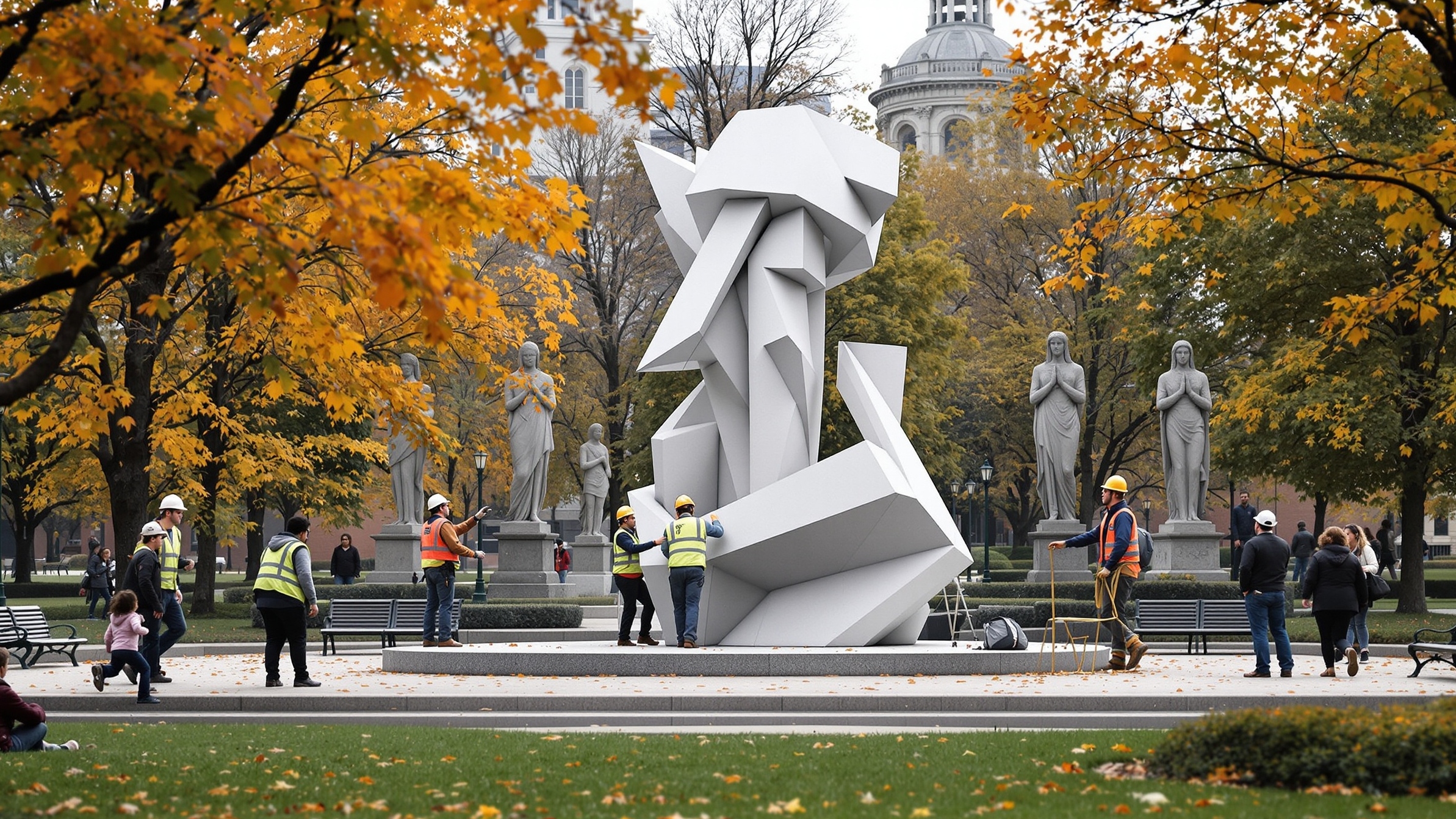
One of the defining traits of portable statues is modularity. A twelve-foot sculpture might be broken into four or five sections that fit inside standard shipping crates or trucks. On site, the pieces are lifted into place and secured with internal fasteners.
This system allows small crews to assemble large works quickly. A statue that appears massive and permanent may take only a few hours to build once it arrives. When the event ends, the process reverses, and the sculpture is ready for its next destination.
Modular design also allows for easy repairs. If a panel is damaged, only that section needs replacement—not the entire sculpture.
Anchoring Without Permanent Foundations
Because portable statues cannot rely on poured concrete foundations, alternative anchoring systems are used. Weighted base plates, hidden ballast, ground screws, or temporary footings keep the statue stable while remaining removable.
Engineers carefully calculate center of gravity and wind resistance. The goal is to make the statue feel immovable, even though it can be disassembled and relocated at any time. Safety is critical, especially in public spaces where people interact closely with the artwork.
How Portable Statues Are Fabricated
The fabrication process blends traditional sculpture with modern manufacturing. It begins with a digital or clay model. This prototype is scanned or sculpted in 3D software, allowing designers to plan internal frames and modular seams.
CNC machines or hot-wire cutters shape foam blocks into precise forms. These pieces are bonded together, carved by hand, and refined. The internal metal frame is built and embedded inside the foam shell.
Next comes the outer skin. Fiberglass or resin layers are applied, creating a hard, impact-resistant surface. Once cured, the statue is sanded and painted with textured coatings that replicate stone, metal, or aged finishes. Protective clear coats guard against UV exposure, moisture, and abrasion.
The result is a lightweight, weather-resistant sculpture that looks monumental but can travel anywhere.
Transporting the Statue Safely
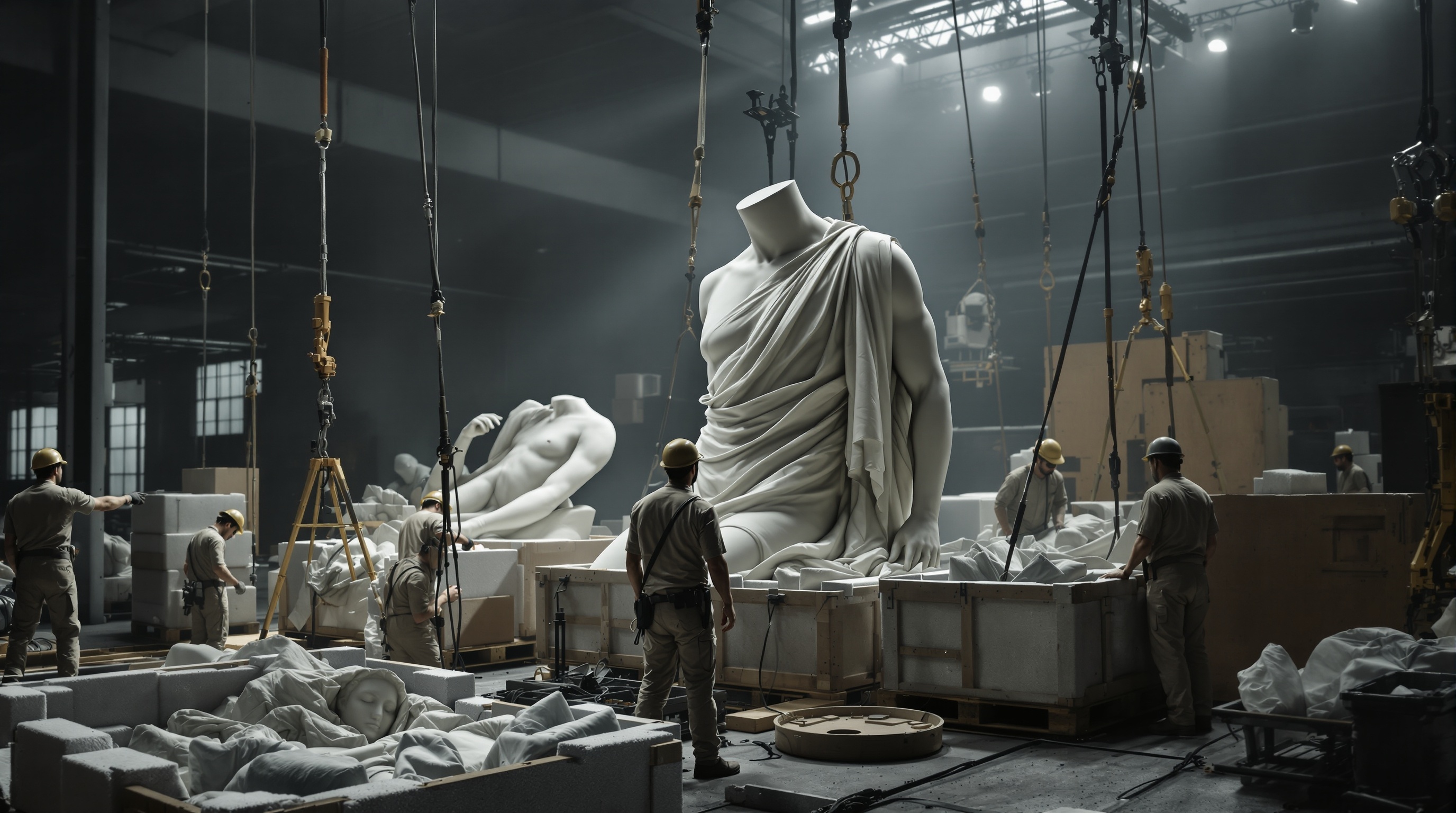
Transport logistics are as important as design. Each modular section is labeled, padded, and packed into custom crates. Shock-absorbing foam, straps, and rigid frames prevent movement during transit.
Trucks with lift gates or forklifts handle the loading. Because the statue is lightweight, shipping costs are significantly lower than those for traditional materials. The sculpture can tour nationally or even internationally without extraordinary expense.
Every move is rehearsed, and detailed assembly instructions ensure that crews in different cities can install the statue correctly every time.
Creating Visual Impact Without the Weight
The magic of portable statues lies in illusion. They look heavy, ancient, and permanent, yet they are engineered for movement. This contrast creates a sense of wonder. Audiences feel as though they are standing before something monumental—yet the sculpture is part of a temporary experience.
This flexibility allows designers to experiment with scale, theme, and style. A statue can appear one week in a city square, the next in a museum atrium, and the next at a music festival. Each setting gives it new meaning.
The Future of Mobile Sculpture
As materials and fabrication technologies evolve, portable statues will become even more convincing and versatile. Lighter composites, smart anchoring systems, and digital modeling will allow artists to push scale and complexity without sacrificing safety or mobility. In a world that values experiences as much as objects, statues no longer need to stand still. They can travel, transform, and tell new stories wherever they go. Portable sculpture is not replacing traditional monuments—it is creating a new category altogether: art that moves with the moment.