
The Art and Engineering of Creating Scroll-Stopping Landmarks
In a world where attention is currency and scrolling never stops, oversized statues have become one of the most powerful tools for capturing public imagination. Towering above city streets, rising from desert landscapes, or dominating convention floors, these monumental creations are designed for one purpose: to stop people in their tracks. And in the age of Instagram, TikTok, YouTube Shorts, and viral reels, stopping someone for even three seconds can spark a chain reaction that reaches millions. Oversized statues are not just public art. They are marketing engines, brand statements, tourism magnets, and viral catalysts. From the instantly recognizable torch of the Statue of Liberty in New York to the colossal Christ the Redeemer overlooking Rio de Janeiro, large-scale figures have always commanded attention. Today, that attention translates directly into shares, tags, and digital momentum. Let’s explore how oversized statues generate social media buzz, why they work so effectively, and how they are designed and fabricated to maximize visual impact in a hyper-connected world.
The Psychology of Scale: Why Bigger Always Wins
Human beings are hardwired to react to scale. When something dramatically exceeds our expectations of size, it triggers a primal sense of awe. Psychologists often describe awe as a state that expands perception and temporarily disrupts normal cognitive patterns. In simple terms, big things make us feel small in a way that fascinates us.
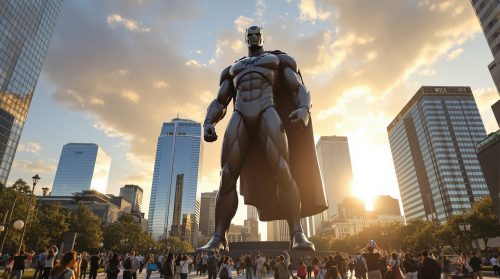
Oversized statues tap directly into this response. When someone stands beneath a 30-foot-tall superhero, a giant mascot, or a monumental sculpture, the contrast between human scale and sculptural scale becomes instantly compelling. That contrast creates a powerful photo opportunity.
Social media thrives on visual contrast. A person standing next to something enormous tells a clear story in a single frame. It requires no explanation. The image communicates scale, drama, and spectacle instantly. In an algorithm-driven environment where users scroll quickly, clarity and impact are everything.
The Shareability Factor: Built for the Camera
Oversized statues are inherently photogenic. Their height, dramatic proportions, and often bold colors make them impossible to ignore in a feed. They create natural framing devices and built-in storytelling.
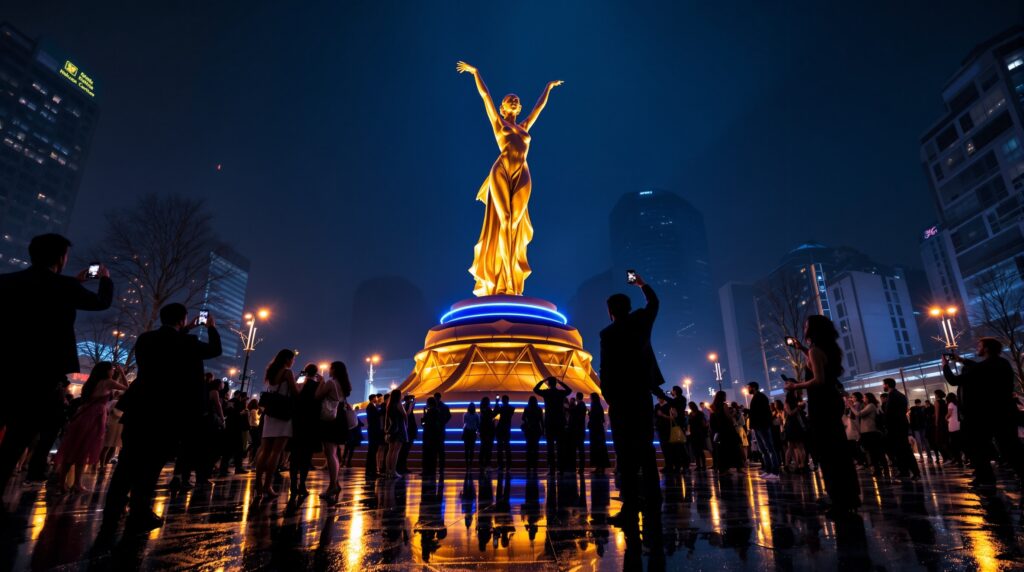
When people encounter a massive statue, they almost always take a photo. That behavior is nearly automatic. And when they take a photo, they share it. The statue becomes the background for selfies, group shots, proposal photos, travel highlights, and influencer content.
Platforms like Instagram and TikTok reward visually striking content. Large statues, particularly those with dynamic poses or expressive features, create dynamic visuals that perform well in short-form video. A slow pan upward from ground level to the top of a towering figure builds suspense. A drone shot circling a massive sculpture reveals scale in dramatic fashion. These cinematic moments are tailor-made for social media engagement.
The result is user-generated content at scale. Every visitor becomes a marketer. Every shared photo becomes free advertising.
Landmark Power: Becoming a Destination
Some oversized statues evolve beyond installations and become landmarks. The Statue of Liberty is perhaps the most iconic example, but modern installations follow the same principle. When a structure becomes recognizable enough, it draws visitors specifically for the experience of seeing it. Oversized statues create what marketers call a “destination effect.” People plan trips around them. They add them to travel itineraries. They post about visiting them as a badge of experience.
The effect is amplified when the statue has a compelling narrative. Christ the Redeemer is not just a sculpture; it represents faith, history, and Brazilian identity. When a statue carries symbolic weight, its shareability multiplies because people share not only the image but also the meaning. For brands, cities, and event organizers, this transformation from object to landmark is the ultimate win. A single installation can redefine a location’s visual identity online.
Spectacle at Events: Fueling Instant Viral Moments
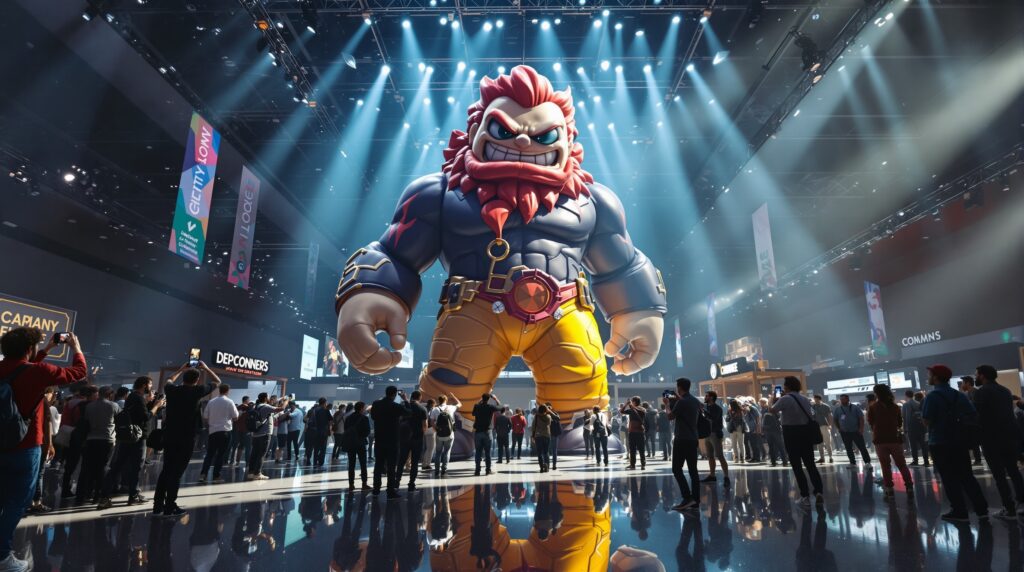
Oversized statues are especially powerful in temporary environments such as fan expos, product launches, trade shows, and festivals. Imagine walking into a convention center and being greeted by a 25-foot-tall replica of a beloved fictional character. The experience is immersive and cinematic.
In these environments, the statue becomes a centerpiece. Attendees gather around it. Influencers film content near it. Media outlets photograph it. The statue appears in thousands of social posts within hours.
The buzz is immediate because the installation creates a sense of exclusivity. People feel they are witnessing something limited or special. That urgency drives real-time sharing. The scale also makes it easy to identify the event in photos. A single glance at a towering sculpture can reveal exactly where someone is. This creates organic tagging and location-based engagement.
Emotional Amplification: From Nostalgia to Wonder
Oversized statues are not just about size. They are about emotional resonance. A giant recreation of a childhood cartoon character can trigger nostalgia. A monumental abstract sculpture can inspire wonder. A hyper-realistic animal statue can provoke surprise.
Emotion fuels engagement. Posts that trigger strong feelings are more likely to be shared. Oversized statues amplify emotion because they exaggerate presence. When a familiar character is blown up to massive proportions, the emotional impact intensifies. That amplification effect is powerful for brands and storytellers. It transforms ordinary imagery into extraordinary spectacle.
The Fabrication Process: How Oversized Statues Are Made
Behind every viral oversized statue is a complex fabrication process that blends art, engineering, and technology. The journey from concept to installation is meticulous and highly collaborative.
- The process typically begins with concept design. Artists and designers create sketches and digital models that define scale, pose, materials, and structural considerations. In modern fabrication, 3D modeling software plays a crucial role. Designers simulate structural stress, wind loads, and balance to ensure safety.
- Once the design is finalized, sculptors may create a smaller-scale maquette. This miniature model allows clients and engineers to evaluate proportions and details before committing to full-scale production.
- Large statues are often constructed using internal steel armatures that act as skeletons. These frameworks provide strength and stability. Depending on the installation environment, the structure may require reinforced footings or deep concrete foundations.
- The outer shell can be made from a variety of materials. Fiberglass is common for event-based statues because it is lightweight and durable. High-density foam may be used for certain decorative elements, especially when weight reduction is critical. For permanent installations, bronze, aluminum, or reinforced concrete may be chosen for longevity.
- Modern fabrication frequently incorporates CNC milling and 3D printing technologies. Large foam blocks can be milled into precise shapes, then coated with resin and fiberglass for durability. Artisans then hand-finish the surface, adding texture, paint, and protective coatings.
- Transportation and installation are major logistical undertakings. Oversized statues are often fabricated in sections and assembled on site. Cranes, rigging teams, and specialized transport vehicles are required to move and position large components safely.
- Lighting design is another crucial step. Strategic illumination enhances nighttime visibility and ensures the statue photographs well after dark. In some cases, integrated LED systems allow for dynamic color changes that boost social media appeal even further.
When all elements come together, the result is not just a sculpture but a carefully engineered experience.
Designing for Virality: Strategic Considerations
Oversized statues that generate the most buzz are rarely accidental successes. They are designed with shareability in mind.
- Visibility matters. Placing the statue in a high-traffic area ensures maximum exposure. Accessibility encourages interaction and photography.
- Silhouette clarity is essential. Strong outlines read well in photos. A dynamic pose or exaggerated feature creates instant recognition.
- Interactive elements can boost engagement. A statue positioned so visitors can stand in a specific spot to create a forced-perspective illusion invites participation. Participation increases sharing.
- Narrative depth enhances longevity. When a statue connects to a story, movement, or cultural moment, people have more reason to post about it.
Case Studies in Monumental Buzz
The Statue of Liberty remains one of the most photographed landmarks in the world. Its scale and symbolism make it an enduring social media fixture.
Christ the Redeemer in Rio de Janeiro is another example of monumental impact. Towering over the city, it creates breathtaking panoramic shots that circulate globally.
In the entertainment world, large-scale statues unveiled at major conventions generate instant buzz. When film studios debut massive character sculptures, fans flood social platforms with content, creating waves of organic promotion.
These examples demonstrate a consistent pattern: scale plus meaning equals virality.
The Economics of Attention
Oversized statues represent a significant investment. Fabrication, transport, installation, and maintenance can require substantial budgets. However, the return on investment can be extraordinary.
When a single installation generates millions of impressions across social platforms, the equivalent advertising value can far exceed the cost of production. The statue becomes a long-term asset, continuously producing shareable content without ongoing ad spend.
For cities, oversized sculptures can increase tourism. For brands, they can elevate launches. For events, they can define identity. In a digital landscape saturated with content, physical spectacle offers a competitive edge.
Longevity in the Feed: Why Monumental Content Endures
Unlike fleeting trends, oversized statues can maintain relevance for years. They become recurring backdrops for new generations of visitors. Seasonal lighting updates or limited-time modifications can refresh interest.
The key is durability in both physical construction and conceptual design. A statue that remains visually compelling across seasons continues to generate content. In many ways, oversized statues operate as analog anchors in a digital world. They are tangible experiences that fuel intangible engagement.
Building Buzz That Towers Above the Rest
Oversized statues generate social media buzz because they combine psychology, spectacle, and storytelling. They harness the human fascination with scale, transform spaces into destinations, and convert everyday visitors into enthusiastic content creators. From initial concept sketches to steel frameworks and hand-painted finishes, the fabrication process is as impressive as the final result. When done strategically, these monumental installations become more than art. They become cultural moments. In an era defined by scrolling, towering sculptures remind us that sometimes the best way to stand out online is to build something impossible to ignore in real life.