How Oversized Statues Are Fabricated Without Bronze
We Build Custom 3D Props
The Surprising Materials and Methods Powering Today’s Massive Sculptural Landmarks
Oversized statues have always carried an air of permanence. For centuries, bronze stood as the unquestioned champion of monumental sculpture—heavy, weather-resistant, and timeless. But today, some of the world’s most striking large-scale statues are not cast in bronze at all. They rise from fiberglass, foam, steel frameworks, polymers, and advanced composites, redefining what monumental sculpture can be. From towering public art installations to cinematic props, theme park icons, architectural landmarks, and roadside giants, modern oversized statues prove that scale no longer requires centuries-old metallurgy. Instead, they reflect a blend of engineering, artistry, and material science that allows creators to build big without building heavy. This article explores how oversized statues are fabricated without bronze, why artists and builders are choosing alternative materials, and what actually goes into making a massive sculpture stand tall, stable, and visually convincing—sometimes fooling even trained eyes.

The Decline of Bronze as a Default Monument Material
Bronze once dominated large-scale sculpture for good reason. It was durable, resistant to corrosion, and capable of capturing fine detail. But it came with major drawbacks. Bronze is expensive, incredibly heavy, energy-intensive to cast, and logistically complex when used at monumental scales. As public art budgets tightened and creative ambitions expanded, artists began seeking alternatives that could achieve the same visual authority without the financial and structural burden.
Modern statues are often expected to be installed quickly, transported across long distances, or mounted in locations where extreme weight would be impractical. Bronze, while beautiful, simply cannot compete with lighter materials when speed, flexibility, and cost efficiency become priorities. The result has been a quiet revolution in how large sculptures are imagined and built.
What “Oversized” Really Means in Modern Sculpture
Oversized statues occupy a fascinating middle ground. They are large enough to dominate space and command attention, but not so massive that they require the infrastructure of skyscrapers. These sculptures might range from 12 feet tall to 60 feet or more, often designed to feel monumental without overwhelming their environment. Unlike truly colossal statues carved from stone or cast in bronze, oversized non-bronze statues are often hollow, modular, and engineered for efficiency. Their visual impact comes from proportion, surface detail, and scale illusion rather than raw mass. This shift allows creators to think bigger without committing to materials that lock a sculpture into one place forever.
The Materials That Replaced Bronze
Modern oversized statues rely on a layered approach rather than a single material. Fiberglass reinforced plastic, expanded foam, steel armatures, epoxy resins, and high-performance coatings work together to create sculptures that are strong, lightweight, and weather-resistant.
- Fiberglass is one of the most commonly used materials because it balances durability with flexibility. It can be molded into complex shapes, holds paint exceptionally well, and withstands outdoor exposure for decades when properly sealed.
- Foam, often polyurethane or polystyrene, plays a crucial role in shaping volume without adding weight. It allows artists to carve massive forms quickly, adjusting proportions and details before sealing the surface.
- Steel provides the skeleton. Without it, even the strongest composite materials would eventually sag, crack, or fail under their own weight. The steel framework ensures structural integrity while remaining hidden beneath sculpted layers.
Together, these materials create statues that look solid and imposing but are surprisingly lightweight.
Why Artists and Cities Choose Non-Bronze Statues
The appeal of non-bronze oversized statues goes beyond cost. These materials offer creative freedom that traditional metal casting cannot match. Artists can experiment with exaggerated proportions, dynamic poses, and complex internal structures without worrying about casting limits.
Installation becomes easier. Transporting a fiberglass statue in sections is far simpler than moving a single massive bronze casting. Repairs are also more manageable, allowing damaged sections to be patched or replaced rather than requiring extensive restoration.
From a sustainability standpoint, alternative materials often have a lower environmental impact than large-scale bronze casting, which requires high heat and significant energy consumption.
In short, non-bronze statues offer flexibility, speed, and creative range that modern public art increasingly demands.
The Illusion of Weight and Permanence
One of the most fascinating aspects of non-bronze statues is how convincingly they mimic heavier materials. Through surface treatments, textures, and finishes, artists can simulate stone, metal, or aged patina so effectively that viewers assume the statue is solid and ancient. This illusion relies on layered coatings, hand-applied textures, and specialized paints that react to light in realistic ways. Shadows, highlights, and subtle imperfections all contribute to the sense that the statue has real mass. The result is a sculpture that feels monumental without being immovable.
How Oversized Statues Are Fabricated Without Bronze
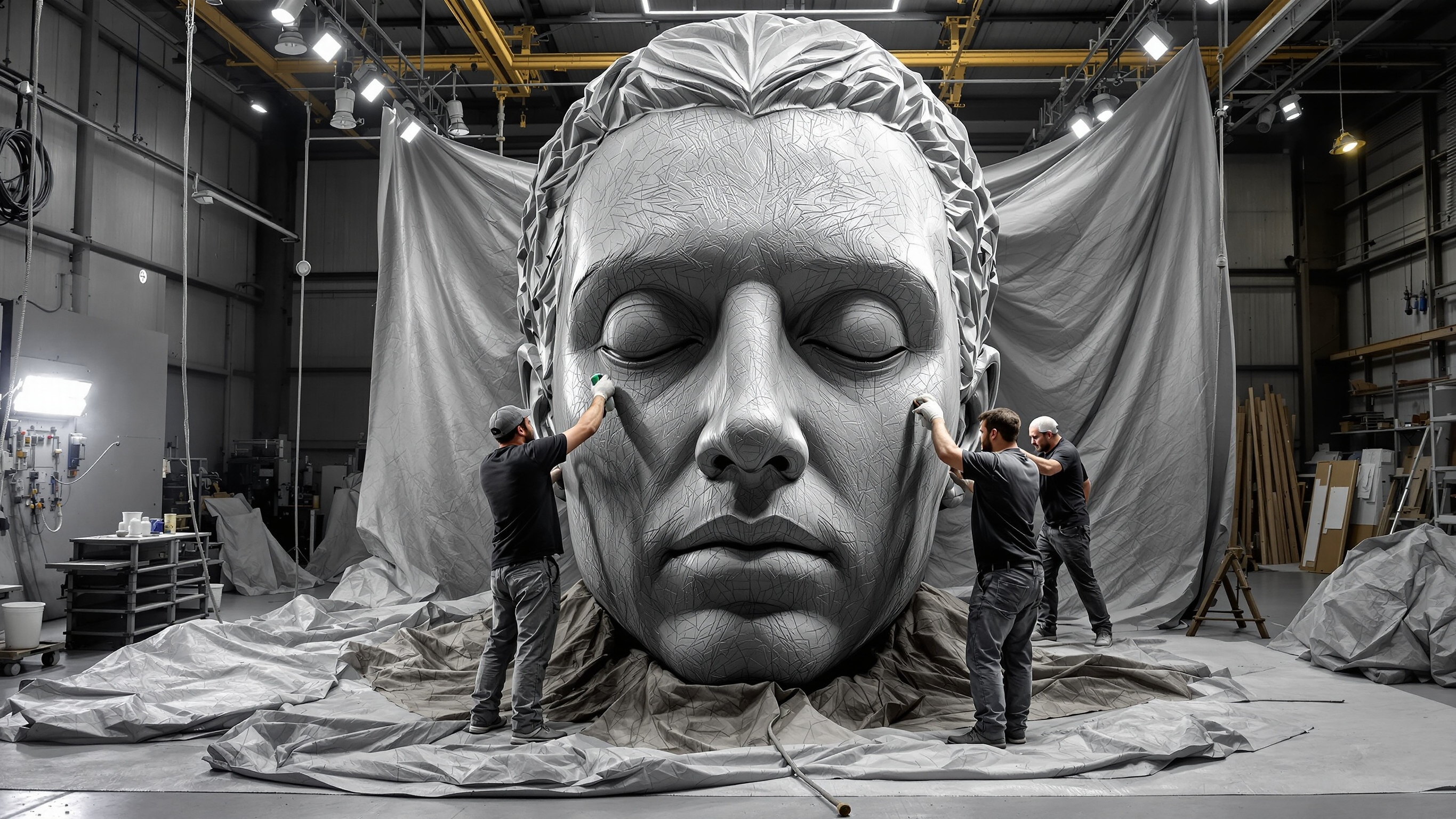
The fabrication process for a non-bronze oversized statue is a carefully choreographed sequence of engineering and artistry. It typically begins with a detailed design phase, often using digital modeling software to refine proportions and structural needs.
Once the design is finalized, a steel armature is constructed. This internal framework functions like a skeleton, defining posture, balance, and load distribution. Engineers calculate wind resistance, weight distribution, and anchoring points to ensure the statue can withstand environmental forces.
Next, large foam blocks are attached to the armature and carved into the statue’s basic form. This stage is surprisingly sculptural, with artists shaping muscles, folds, and contours much like traditional stone carving—only faster and far lighter.
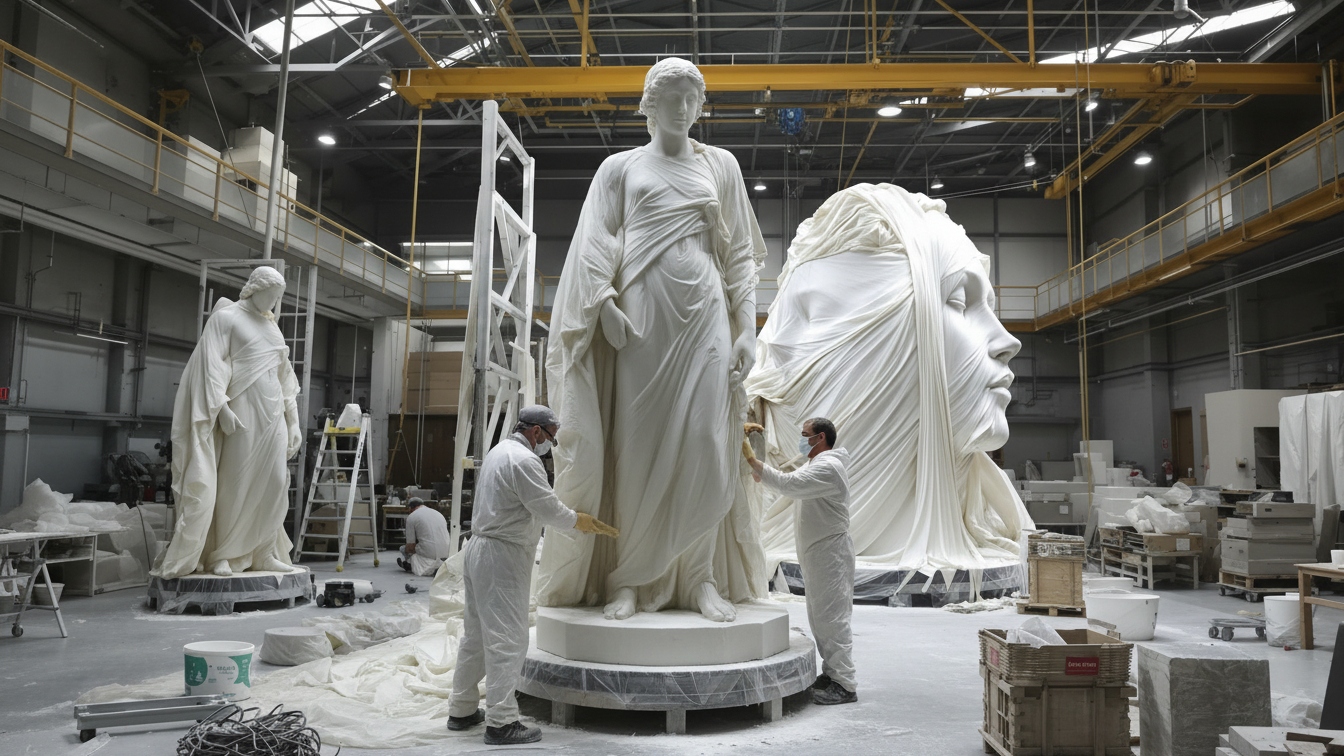
After the foam is refined, layers of fiberglass and resin are applied to create a hard, protective shell. This shell locks in detail while providing structural strength. Once cured, the surface is sanded, textured, and prepared for finishing.
The final stage involves painting and sealing. Specialized coatings protect against UV exposure, moisture, and temperature changes. The paintwork often includes layered techniques to replicate stone grain, metallic sheen, or weathered patina.
The statue is then transported, often in sections, and assembled on site, where it is anchored to a foundation designed specifically for its weight and height.
Engineering Challenges Behind Lightweight Giants
Creating a large statue without bronze does not eliminate engineering challenges—it transforms them.
- Wind becomes a major factor, especially for tall, narrow sculptures. Engineers must ensure the statue does not act like a sail during storms.
- Temperature fluctuations also matter. Composite materials expand and contract differently than metal, requiring flexible joints and coatings that can accommodate movement without cracking.
- Water infiltration is another concern. Proper sealing and drainage prevent moisture from entering the structure and compromising internal components.
These challenges are addressed through meticulous planning, material testing, and collaboration between artists and structural engineers.
Outdoor Durability Without Heavy Metal
A common misconception is that non-bronze statues are fragile or temporary. In reality, many fiberglass and composite sculptures last decades outdoors with minimal maintenance.
Protective coatings play a crucial role. UV-resistant paints prevent fading, while waterproof sealants protect against rain, snow, and humidity. Regular inspections and touch-ups help extend lifespan even further.
In some cases, non-bronze statues outlast their metal counterparts, which can corrode internally or require expensive conservation.
Oversized Statues in Entertainment and Architecture
Theme parks, museums, and entertainment venues have embraced non-bronze oversized statues for their visual impact and flexibility. These environments demand dramatic scale, vivid detail, and the ability to update or replace installations over time.
Architectural landmarks also increasingly incorporate large sculptural elements made from composites. These pieces integrate seamlessly with modern building materials while maintaining a strong artistic presence.The line between sculpture and structure continues to blur.
Cultural Shifts in Monument Design
As society reexamines what monuments represent, the materials used to build them matter more than ever. Non-bronze statues allow for adaptability, reinterpretation, and even relocation, aligning with contemporary values of change and inclusivity. Artists can respond to cultural moments without committing to materials meant to last for centuries unchanged. This flexibility reflects a world that values dialogue over permanence.
The Future of Monumental Sculpture
Advancements in materials science promise even more innovation. Lightweight composites, recycled materials, and smart coatings are expanding what oversized statues can do.
Digital fabrication tools, including CNC milling and large-scale 3D printing, are beginning to play a role, allowing for unprecedented precision and speed. As these technologies mature, the idea of monumental sculpture will continue to evolve—less about weight and more about experience.
Why Bronze Is No Longer the Only Symbol of Permanence
Oversized statues fabricated without bronze challenge long-held assumptions about monumentality. They prove that impact does not require mass, and that durability can come from smart design rather than sheer weight. By combining engineering, artistry, and modern materials, today’s sculptors create works that are visually powerful, structurally sound, and adaptable to the needs of contemporary spaces. In the end, these statues stand not because they are heavy, but because they are thoughtfully built.
Check out WhiteClouds’ 3D Props for more information.
Contact us today to learn more about our 3D services and how we can help you achieve your goals.