
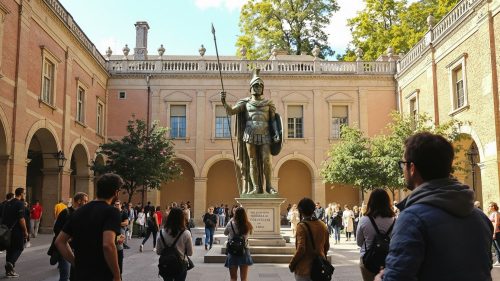
Preserving the Past Through Modern Innovation
From ancient heroes to iconic monuments, the world has long looked to bronze as the timeless medium of historical art. For thousands of years, bronze casting defined prestige, endurance, and artistry. Yet in today’s world of advanced materials and modern fabrication, artists, museums, and educational institutions are finding new ways to recreate the past—without a single drop of molten metal. Welcome to the era of historical replicas without bronze casting, where innovation meets tradition, and where ancient beauty finds new life through lightweight, durable, and sustainable materials. From museum-quality reproductions to full-scale public monuments, these new-age replicas capture every chisel mark, fold of drapery, and expression of genius—while offering flexibility, safety, and cost-efficiency bronze simply can’t match. This is more than an evolution in art; it’s a revolution in access.

The Enduring Allure of Historical Replicas
Humanity has always been fascinated with reproducing history. Replicas allow us to touch, study, and experience artifacts and sculptures that would otherwise be too fragile, rare, or valuable to leave their original settings. They fill museums, educational spaces, and public parks with accessible versions of the world’s most famous creations—from Michelangelo’s David to the Terracotta Warriors of Xi’an.
For centuries, bronze was the material of choice for such projects. Its strength and elegance made it the hallmark of permanence. But bronze casting is labor-intensive, expensive, and not always environmentally friendly. The process requires extreme heat, heavy foundry equipment, and significant safety precautions. Enter modern fabrication—a world where high-density foams, resins, composites, and polymers are reshaping what’s possible. Today, artists and engineers can create faithful, museum-grade historical replicas that look and feel like bronze, stone, or marble—without the weight, cost, or hazards of metal casting.
The Problem with Bronze: Tradition Meets Limitations
While bronze has earned its place in history, it also comes with challenges that have fueled innovation. The casting process—which involves creating molds, melting bronze at nearly 2,000°F, and carefully pouring it into casts—demands specialized skill and infrastructure. The materials and energy required make it both costly and environmentally taxing. Additionally, bronze is heavy, prone to oxidation, and often unsuitable for lightweight displays or mobile exhibits. Even with protective coatings, it can patina or tarnish in outdoor environments. For institutions and artists seeking large-scale installations or traveling exhibitions, this weight and cost can become prohibitive.
And while bronze’s natural beauty is undeniable, the truth is that modern materials can now replicate its look, texture, and warmth with such fidelity that most viewers can’t tell the difference—especially when finished by skilled artisans. Thus, the creative challenge of our time is not “Can we replace bronze?” but rather, “How do we honor its legacy with smarter, more sustainable materials?”
The Rise of Alternative Materials
Modern fabrication technology has opened up a stunning range of possibilities for historical replicas. Artists and engineers are turning to lightweight structural foams, reinforced resins, fiberglass composites, and high-density plastics—each offering the ability to mimic bronze, stone, or even aged patina without sacrificing realism.
- Fiberglass has become one of the leading choices for outdoor replicas. It’s durable, lightweight, and can be molded into complex forms that once required hours of metalwork. When coated with polyurea or metallic finishes, fiberglass can achieve a convincing bronze sheen that endures years of sun, rain, and public interaction.
- Polyurethane foam – specifically EPS (expanded polystyrene) and XPS (extruded polystyrene)—serves as the sculpting core for many large-scale replicas. These materials are easy to carve and shape using CNC machines or robotic mills, allowing artisans to produce intricate details quickly and accurately. Once coated with resin or epoxy, the result is a lightweight yet incredibly strong sculpture that looks every bit as authentic as metal.
- Resin casting has also revolutionized small-scale historical reproductions. Artists use silicone molds to replicate fine surface detail, then cast in durable resins mixed with bronze or marble powder to achieve texture and weight similar to traditional materials—perfect for museum replicas and collectible editions.
In short, these new materials empower creators to preserve history in ways that are safer, faster, and more accessible than ever before.
The Art of Authenticity: Achieving the Bronze Look Without Metal
The key to crafting believable historical replicas lies not just in the form, but in the finish. Replicating bronze’s subtle warmth, reflectivity, and patina is both science and art.
Fabricators use a variety of finishing techniques to simulate the metallic luster of bronze, brass, or copper. A base layer of metallic paint or powder coating provides the initial sheen, while antiquing washes and oxidized patinas create depth and realism. Artisans then apply protective clear coats that not only preserve color but mimic the soft sheen of hand-polished bronze. Some advanced studios even mix real bronze powder into resins and coatings to enhance authenticity. When buffed or lightly oxidized, the surface reacts like genuine metal—complete with the subtle color variations that make bronze so beloved.
Lighting also plays a crucial role. Sculptors and display designers position replicas under natural or directed lighting that highlights texture, casting shadows that add richness and presence. The illusion is so convincing that many visitors never realize they’re admiring a work made from foam, fiberglass, or resin.
How Historical Replicas Are Made Without Bronze Casting
The process of creating a non-bronze historical replica combines traditional artistry with cutting-edge technology. Every step is designed to ensure historical accuracy, structural integrity, and aesthetic excellence.
Digital Scanning and Modeling
The journey begins with 3D scanning of the original artifact or statue. High-resolution scans capture every minute detail—from tool marks and texture to proportions and imperfections—allowing sculptors to reproduce the piece with stunning precision. For lost or incomplete works, digital artists fill in gaps based on historical records, photos, or sketches. The scanned data is refined in digital sculpting software, ensuring every contour and feature is faithful to the source. Adjustments can also be made to scale the replica for its intended setting—whether it’s a life-size reproduction or a monumental outdoor installation.
CNC and Foam Carving
Once the design is finalized, the digital model is transferred to CNC carving machines or robotic sculpting arms, which cut the shape from blocks of EPS or XPS foam. This process ensures precise replication of complex forms that might take months to hand-carve. After the rough shape is formed, sculptors refine details manually—chiseling, sanding, and adding texture that replicates the artist’s original touch.
Structural Reinforcement
For large or outdoor pieces, a steel or aluminum internal framework is added to ensure strength and stability. This skeleton supports the lightweight foam core, allowing for monumental sizes without risk of collapse or warping.
Coating and Hard Shell Application
Next comes the protective shell. The sculpture is coated with polyurea, fiberglass resin, or epoxy, creating a rock-hard surface that can withstand weather, handling, and time. These coatings also provide the perfect foundation for metallic finishes.
Painting, Finishing, and Patina
Artisans then apply a multi-layered paint system to achieve the look of real bronze, marble, or aged stone. Techniques may include airbrushing, dry-brushing, and hand-rubbing metallic powders into the surface. Antiquing washes, highlights, and oxidation patterns complete the transformation. Finally, a UV-resistant clear coat seals the work for outdoor longevity. The result is a visually stunning, weatherproof replica that can fool the eye and inspire the imagination—without the environmental or financial burden of traditional casting.
Why Choose Non-Bronze Replicas
The advantages of modern fabrication go far beyond cost savings. These materials and methods open doors for creativity, accessibility, and sustainability.
- Lightweight Construction makes transport, installation, and relocation easy. Museums can rotate exhibits or take traveling collections worldwide without the logistical challenges of heavy metal pieces.
- Safety and Durability are dramatically improved. Unlike bronze, which can corrode or react with outdoor environments, modern coatings resist rust, oxidation, and physical damage.
- Eco-Friendliness is another major advantage. Foam, resin, and fiberglass replicas can be produced using recycled materials and emit far less carbon than metal foundry work.
- Accessibility and Education also benefit. Schools, cultural centers, and small museums can now display faithful historical reproductions without prohibitive cost, bringing heritage to wider audiences.
And from an artistic standpoint, the flexibility of these materials allows for creative reinterpretation—merging the look of antiquity with modern concepts, colors, or mixed media for a new generation of art lovers.
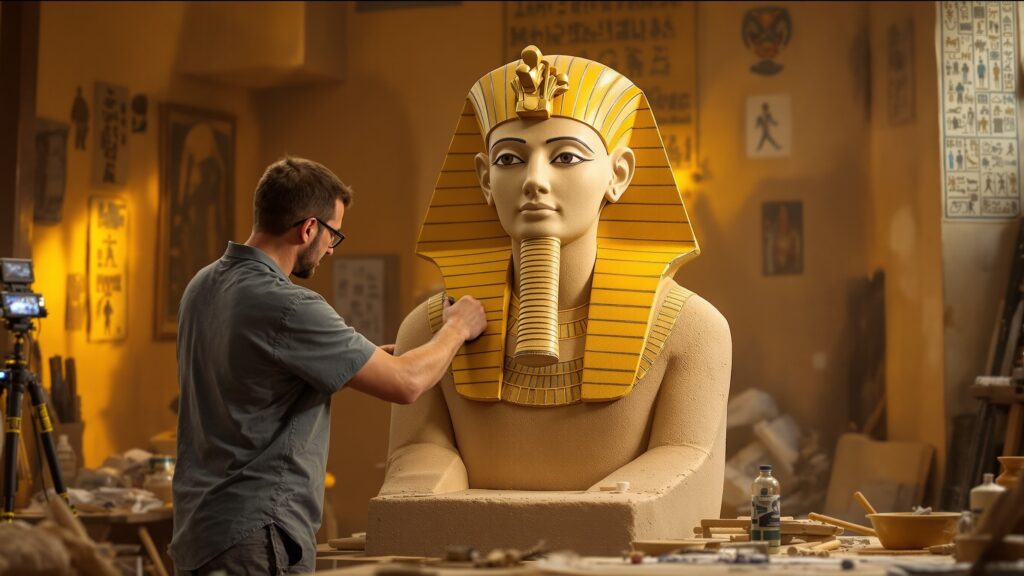
Modern Marvels of Historical Reproduction
Across the world, artisans and institutions are embracing non-bronze replicas as both educational tools and artistic statements.
Museums now display resin-cast replicas of ancient sculptures for hands-on learning, allowing visitors to touch textures that would be off-limits on originals. Historical parks and cultural landmarks feature full-scale foam-and-fiberglass recreations of long-lost monuments—built to last through seasons without the weight or cost of bronze.
Even Hollywood and theater productions use these methods to recreate history on screen and stage. From Egyptian temples to Renaissance sculptures, lightweight replicas make it possible to create immersive environments with realism that would have been unthinkable just decades ago.
In some cities, outdoor heritage installations use weatherproof foam and resin replicas to represent artifacts that can’t be displayed publicly for security reasons—offering a safe, striking alternative that still honors authenticity.
Craftsmanship in the Modern Age: The Artist’s Touch
While technology drives precision, it’s still the human hand that gives a replica soul. Skilled sculptors, painters, and fabricators breathe life into materials, ensuring that even the most advanced processes remain rooted in artistry.
The surface texture of a statue—whether smooth marble-like skin or rough-hewn chisel marks—tells a story of craftsmanship. Artists study not only the original piece but also the techniques of its creator, ensuring that brushstrokes, tool patterns, and aesthetic nuances are faithfully translated.
Patina specialists then use their expertise to age the sculpture naturally. Through careful layering of color, they simulate the centuries-old depth of real bronze—complete with subtle variations and weathering. The goal is not just imitation, but continuation—to honor the hand of history with the tools of today.
When Historical Meets Contemporary
Not all replicas aim to reproduce exactly what was. Some reinterpret the past through modern sensibilities, merging ancient design with innovative fabrication to create hybrid works of art. Imagine a Roman bust reimagined in lightweight translucent resin with embedded LED lighting, or a medieval knight sculpted in fiberglass with a sleek metallic finish. These works celebrate history while embracing the aesthetics of the present, bridging old and new through material storytelling. By stepping beyond bronze, artists are free to reimagine history—not just preserve it.
Beyond Art: Applications in Education, Tourism, and Restoration
The applications of non-bronze historical replicas stretch far beyond art studios.
- Museums and universities use them as tactile teaching tools, giving students the chance to study realistic sculptures and reliefs without risk of damaging priceless originals.
- Tourism sites commission full-scale replicas for outdoor display, enabling visitors to experience lost wonders like ancient statues or archaeological finds. These replicas make history accessible, photogenic, and interactive—ideal for public engagement.
- Architectural restoration also benefits greatly. When historical buildings lose sculptural details due to weathering, modern fabricators recreate the missing elements in foam or resin, perfectly matching the originals while ensuring longevity.
Through these methods, even fragile or lost artifacts can be revived and shared with the world, ensuring that history continues to inspire new generations.
The Future of Historical Replication
The future of historical replication lies in the marriage of technology and artistry. As 3D printing, scanning, and AI reconstruction continue to advance, the ability to reproduce ancient works with microscopic accuracy will only grow. Soon, high-resolution data will allow artisans to produce replicas indistinguishable from originals in every dimension—from surface texture to weight distribution. Combined with sustainable, weather-resistant materials, these replicas could adorn public spaces, universities, and museums worldwide, democratizing access to humanity’s greatest achievements.
We may even see interactive replicas—works embedded with digital touchpoints, AR overlays, or historical storytelling features that educate visitors about the original artifact. Imagine a sculpture that, when scanned with a phone, reveals its history, maker, and cultural context in stunning detail. The line between preservation, education, and innovation will continue to blur, giving rise to a world where every era of art can be touched, studied, and celebrated—without endangering the originals.
Preserving Legacy, Reinventing the Medium
The art of creating historical replicas without bronze casting represents a profound shift in how we experience heritage. It’s not a departure from tradition—it’s an evolution of it. By combining digital precision with the timeless hand of artistry, today’s sculptors are bringing history to life in ways that are more accessible, sustainable, and inspiring than ever before.
Through modern materials like foam, resin, fiberglass, and polyurea, we can preserve the past without being bound by the weight or limitations of metal. We can recreate the emotion of ancient craftsmanship, the majesty of forgotten monuments, and the soul of civilization’s masterpieces—all while embracing the efficiency and responsibility of the present age. The legacy of bronze will always shine in our museums and cities, but the future of historical replication belongs to those who see beyond tradition—those who understand that what truly endures is not the medium, but the message it carries across time. In this new age of artistry, the past is not just preserved—it’s reborn.
Check out WhiteClouds’ 3D Statues for more information.
Contact us today to learn more about our 3D services and how we can help you achieve your goals.