
3D-Printed Gila Monster with a Mechanic's Wrench
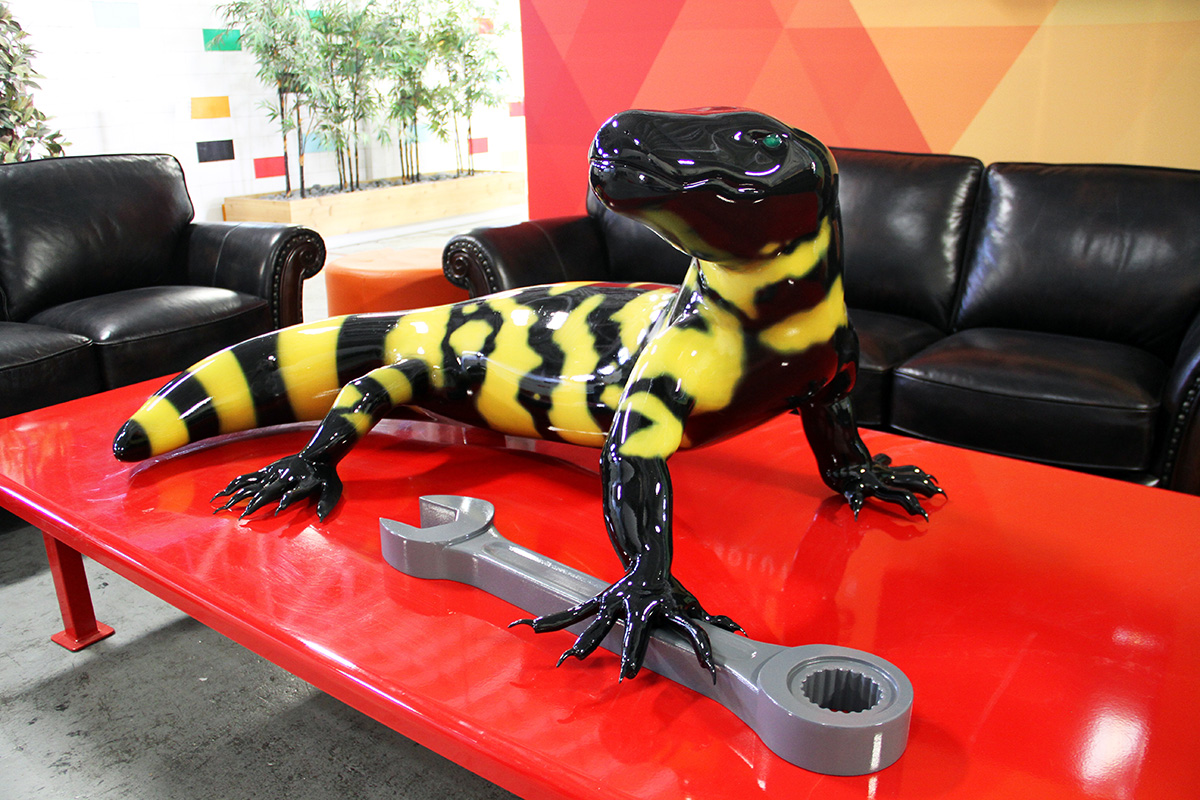
WhiteClouds created a 3D-printed Gila monster holding a wrench as table decor for an automotive repair waiting room.
- Application
- Automotive waiting-room decor
- Project Type
- Custom character prop
- Fabrication
- 3D printed
- Character Detail
- Gila monster with wrench
WhiteClouds created this stylized Gila monster as table decor for an automotive repair waiting room. The character grips a mechanic's wrench and combines a reptile body, turquoise eyes, raised claws, and a mottled surface pattern in one compact 3D-printed display.
A shop-themed character for a waiting-room table
The wrench connects the creature directly to the automotive setting without requiring a separate sign or printed explanation. Its pose places the tool across the front of the figure, where it remains visible from the primary viewing angle.
The finished piece was intended as table decor, so it presents the full character at a scale suited to an interior display rather than as a walk-through or outdoor statue.
Claws, scales, eyes, and tool produced as dimensional detail
WhiteClouds used 3D printing for the figure. The toes, raised claws, eye forms, mouth, wrench, and pebbled skin are built into the physical geometry rather than relying only on surface graphics.
The complete modeled body has a broad back, curved tail, low stance, and a tool held between the front limbs.
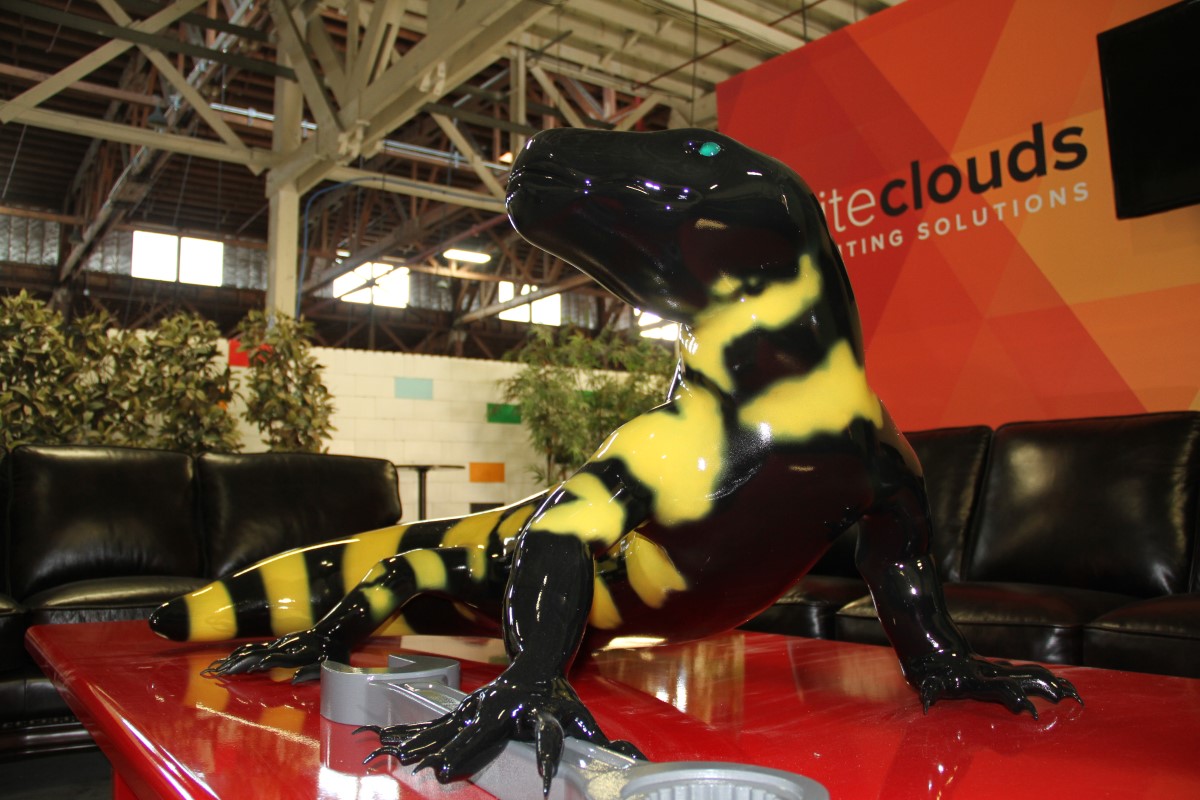
Paint separates the reptile pattern from the mechanic detail
Dark and warm mottled colors define the body, while turquoise eyes and the metallic-looking wrench create clear points of contrast. Shading around the scales, mouth, claws, and tool reinforces the printed form without changing the compact silhouette.
The broad body and curved tail give the compact figure a stable visual footprint on the table, while the raised head and wrench remain prominent from the front.
Planning a custom character prop for an interior
A similar project should define the subject, pose, prop or tool, target dimensions, viewing sides, authorized artwork, surface references, placement, destination, and schedule. The support footprint should be planned with the actual shelf, table, or counter where the piece will be displayed.
Planning a custom dimensional prop?
Share the subject, pose, target size, intended placement, viewing sides, finish references, destination, and schedule.