
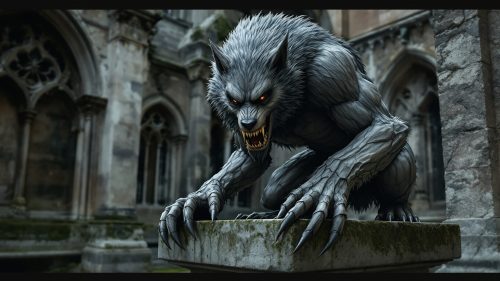
The Giant Werewolf Statue: A Monument to Mystery, Myth, and Midnight Legends
Human history has always been intertwined with myth. From the gods of Olympus to fire-breathing dragons, legends fuel our imagination and inspire art that stands the test of time. Among these timeless tales, one figure has howled louder than most: the werewolf. Half-man, half-beast, the werewolf has stalked folklore for centuries, a chilling embodiment of fear, transformation, and primal instinct. Now imagine this legendary creature immortalized in colossal form: a giant werewolf statue towering over onlookers, frozen mid-snarl, claws extended, its muscled body brimming with raw energy. Such a statue isn’t just art—it’s a visceral encounter with legend. In this article, we’ll explore the lore of the werewolf, the power of monumental statues, their cultural impact, and even how such an awe-inspiring creation might be fabricated in real life.
The Werewolf: A Creature of Legend
The werewolf is one of humanity’s oldest monsters, with roots spreading across continents and cultures. In ancient Greece, stories of King Lycaon being transformed into a wolf by Zeus gave rise to the very word “lycanthropy.” In medieval Europe, whispers of cursed men prowling forests on full moon nights fueled witch hunts and superstitions. Nordic sagas told of warriors donning wolf pelts to channel lupine strength, blurring the line between man and beast. Unlike other monsters, the werewolf’s terror stems not just from its physical form but from its symbolism. It represents duality: the civilized human versus the untamed animal within. It’s a creature of fear, but also of fascination. And that fascination makes the werewolf an ideal subject for monumental art.
Why a Giant Werewolf Statue?
Why immortalize a werewolf in towering stone, bronze, or steel? The answer lies in the creature’s cultural magnetism. A giant werewolf statue captures everything we love about legends. Its scale exaggerates the drama of the transformation. Its presence draws crowds eager to photograph, marvel, or shiver in awe. Unlike statues of ordinary animals, a werewolf statue lives at the crossroads of fear and wonder.
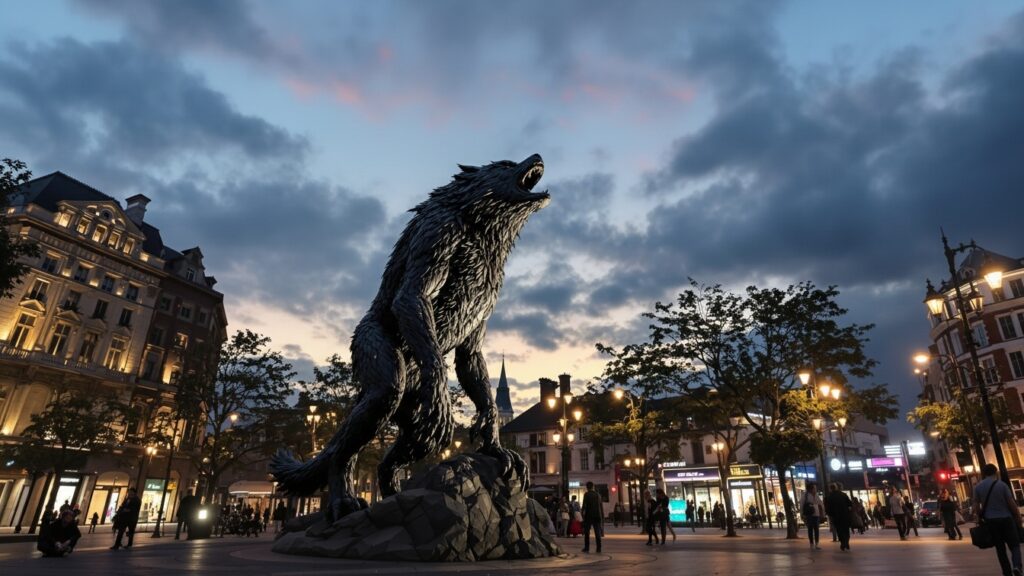
Placed in a city square, theme park, or forest clearing, such a statue would transform its environment into a stage for imagination. Visitors would not just see a work of art—they’d experience a confrontation with myth, standing face to face with a beast from stories whispered around campfires.
The Power of Monumental Art
Monuments have always carried weight far beyond their physical size. They are landmarks, conversation starters, and cultural touchstones. A giant werewolf statue would hold that same power, but with a distinct edge: the thrill of the uncanny. Unlike serene Buddhas or noble lions, a snarling werewolf freezes a moment of primal ferocity. It challenges viewers to question their own fears, their fascination with monsters, and the allure of transformation. Its presence can be both intimidating and exhilarating, a perfect example of art designed not just to be seen but to be felt.
Settings Where a Giant Werewolf Statue Thrives
The impact of a giant werewolf statue depends on its setting. Placed in the right location, it becomes unforgettable. In theme parks, it could serve as the centerpiece of a horror-themed zone, looming over rollercoasters and haunted houses. In city plazas, it might represent the city’s embrace of myth and imagination, drawing tourists eager for photo opportunities. Placed deep in a forested park, the statue could playfully blur the line between myth and nature, as if one of the old legends had stepped out of the shadows and frozen in stone. In museums of folklore or history, a werewolf statue could anchor exhibits on mythology and transformation, serving as both art and education. Even seasonal events like Halloween festivals could make use of such statues as dramatic focal points, creating spaces where people step into the story.
Styles of Giant Werewolf Statues
Like all monumental art, giant werewolf statues come alive in diverse artistic styles.
Some would be hyper-realistic, every vein and fang sculpted with uncanny precision. These statues feel alive, capturing the raw fury of the beast mid-howl or mid-pounce. They’re designed to elicit awe and fear simultaneously.
Others might be stylized, exaggerating certain features like oversized claws, glowing eyes, or spiked fur. These lend a more graphic-novel quality, resonating with pop culture fans who know the werewolf from movies and comics.
There are also abstract approaches, reducing the werewolf to sharp angles or shadowy silhouettes. Such statues speak less to the literal creature and more to the emotions it evokes: fear, transformation, untamed energy.
And then there are fantastical hybrids, where the statue doubles as symbolic storytelling. Imagine a werewolf with runes etched into its fur, standing atop a crescent moon pedestal, or a snarling beast entwined with chains that symbolize the battle between humanity and primal instinct.
The Emotional Impact of a Giant Werewolf Statue
Statues are designed to move us, and few figures are as emotionally charged as a werewolf. Standing before a giant werewolf statue, you feel tension ripple through the stone or metal. The beast’s posture—crouched, lunging, or howling at the sky—creates an atmosphere of suspense, as if it might break free at any moment. For children, it’s a thrilling brush with the spooky stories they’ve heard but never seen. For adults, it’s a reminder of the myths that fascinated them when they were young. For artists and thinkers, it’s a meditation on duality: the human side we present to the world versus the animalistic urges we keep hidden. A giant werewolf statue is more than decoration—it’s an emotional trigger.
Pop Culture and the Werewolf’s Enduring Appeal
The werewolf has never left the cultural stage. From classic horror films like The Wolf Man (1941) to modern blockbusters like Underworld and Twilight, werewolves continue to dominate books, movies, games, and art. Pop culture has shaped our expectations of the werewolf. Some envision them as tragic antiheroes cursed to transformation, while others see them as terrifying predators. Statues can embody either version, or even merge them—capturing both menace and melancholy. With the rise of fantasy fandoms, cosplay, and immersive experiences, a giant werewolf statue feels right at home in today’s culture. Fans would flock to such a statue the way they do to dragon sculptures or superhero monuments.
How a Giant Werewolf Statue Might Be Fabricated
The idea of a giant werewolf statue isn’t just fantasy. With today’s fabrication techniques, it’s entirely possible to bring one to life.
Concept and Design
The process begins with concept sketches and digital models. Artists determine the werewolf’s pose—perhaps crouched and ready to leap, or towering with head thrown back in a howl. Every muscle, claw, and tuft of fur is mapped out for realism or stylization.
Framework and Structure
Since a werewolf statue would feature dramatic, extended poses (like raised arms or lunging legs), a strong internal framework is critical. Welded steel armatures or rebar skeletons form the core, ensuring balance and structural stability.
Material Selection
The choice of material depends on location and purpose:
- Bronze: Ideal for permanence and outdoor display, offering rich texture and patina.
- Fiberglass: Lightweight and versatile, allowing fine details while being easier to transport.
- Concrete: Cost-effective and durable for parks or urban plazas.
- Resin with steel reinforcement: Great for themed attractions requiring lifelike detail.
Sculpting the Form
Depending on the material, sculptors might model the werewolf in clay first, then cast molds for bronze or fiberglass. For concrete, large molds are filled and layered. Special attention is given to the fur, claws, and snarl, which are defining features.
Detailing and Finishing
The magic lies in the details. Surface textures—fur patterns, wrinkles around snarling lips, scars across the body—add realism. Finishing may include paints, patinas, or coatings that emphasize musculature and add depth to shadows.
Installation
The completed statue is transported to its site and mounted on a prepared base, often reinforced concrete. Lighting may be added for dramatic nighttime effects—imagine floodlights illuminating a werewolf’s howl against the sky. In the end, what emerges is not just a statue but a spectacle.
Werewolf Statues as Storytelling Anchors
What sets the werewolf apart from other creatures is its built-in narrative. A giant werewolf statue doesn’t just show a beast—it implies transformation, conflict, and hidden danger. Its very presence tells a story without words. Public art thrives when it sparks conversation, and few statues could provoke discussion like a looming werewolf. Is it a warning about giving in to our animalistic side? A celebration of myth? A metaphor for the masks we wear? Each interpretation keeps the statue alive long after it’s been installed.
Conservation Through Myth: A Surprising Twist
Interestingly, werewolf statues can also connect with real-world conservation efforts. Wolves themselves, often vilified in myth, play critical roles in ecosystems. A giant werewolf statue might serve as a bridge, sparking awareness about wolves in the wild. It could shift the narrative from fear to respect, reminding us that legends stem from nature, and nature deserves protection.
The Werewolf’s Place in the Monumental Tradition
From the Sphinx of Egypt to the gargoyles of Gothic cathedrals, humanity has always built statues of creatures that inspire both fear and fascination. A giant werewolf statue fits neatly into that lineage. It combines the supernatural allure of gargoyles with the raw animal energy of predators, making it both familiar and unique. Just as giant dragons, demons, and angels have been immortalized in stone and bronze, so too does the werewolf deserve its place among monumental art.
Conclusion: A Howl Frozen in Time
The giant werewolf statue is more than a sculpture—it’s a monument to imagination itself. Towering above us, it embodies the thrill of myth, the duality of human nature, and the timeless appeal of monsters.
In gardens, cities, or forests, such a statue would not just be seen but experienced. It would spark wonder in children, nostalgia in adults, and inspiration in artists. It would remind us that the boundary between human and beast is thinner than we think, and that legends endure because they speak to something deep within us. So, the next time you hear a howl on a moonlit night, imagine it frozen in time, immortalized in bronze or stone. A giant werewolf statue doesn’t just capture a creature—it captures the eternal thrill of the unknown.
Check out WhiteClouds’ 3D Statues for more information.
Contact us today to learn more about our 3D services and how we can help you achieve your goals.