
Planning an Oversized Television Prop
An oversized television prop is defined by the cabinet era, screen proportion, bezel, depth, controls, base, and screen treatment. The first decision is whether it should look like a vintage set, a contemporary display, or an approved original television form.
Plan a Giant Television Prop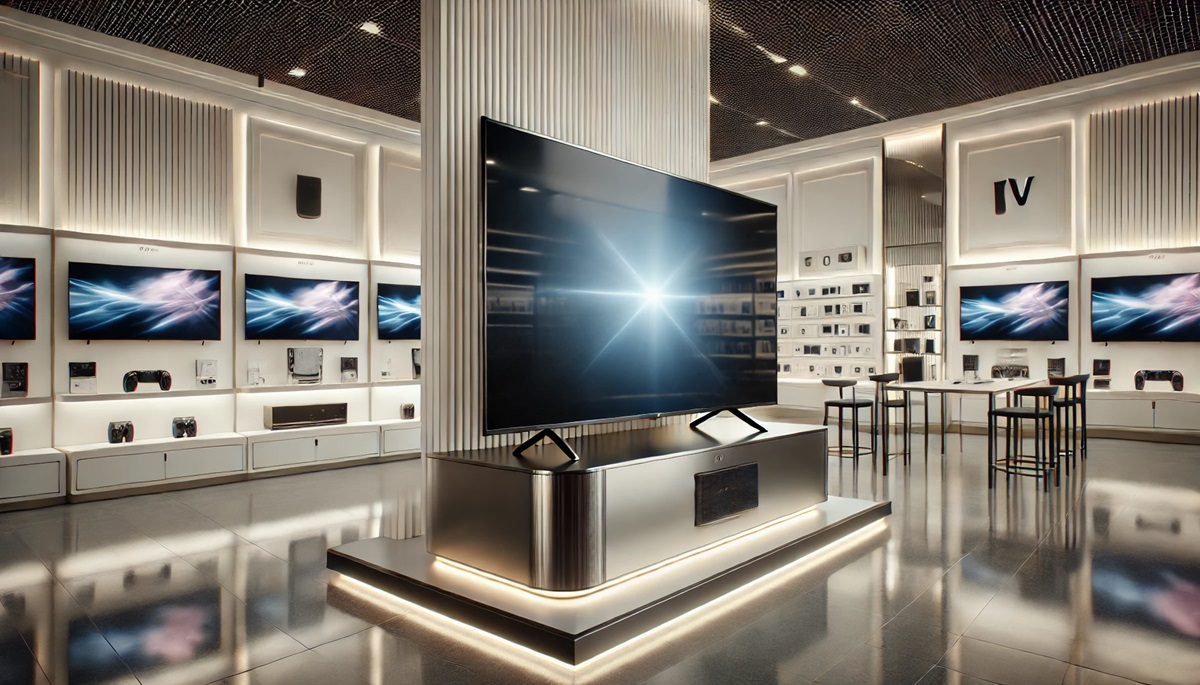
Choose the cabinet before sizing the screen
Supply a vintage, contemporary, or approved original television reference. Mark the screen, bezel, cabinet perimeter, controls, feet or stand, vents, speaker areas, and any details that establish the era.
A deep vintage cabinet can carry knobs and a smaller rounded-looking screen, while a contemporary display usually has a wider face and much shallower body. Avoid mixing those cues unless the original design deliberately calls for it.
Define what occupies the framed face
The screen can be designed in several nonfunctional ways.
Graphic face
Use an approved printed or painted image when one fixed visual should fill the screen area.
Open frame
A clear opening can frame a person, product, or supplied scenic element when the exact position is shown.
Reflective-looking plane
A dark or softly reflective visual treatment can suggest an inactive screen without promising actual electronics.
Separate equipment zone
If others are supplying real display hardware, define only the required opening and interface after the equipment dimensions are confirmed.
Show the side depth and principal viewing angle
Provide front and side elevations with the complete height, width, depth, screen opening, bezel, controls, and base. Mark whether the audience sees the side, rear, or only the front face.
Identify nearby walls, platforms, guests, products, or camera positions. This page describes a television-shaped display; it does not promise a functioning television, live video, audio, touch capability, or certified mounting system.
Compare two contemporary cabinet proportions
One concept uses a broad screen and compact pedestal inside a retail-like setting. The other gives the cabinet and base more visual weight, changing the screen-to-object ratio and visible side depth.
The two television images are conceptual references rather than WhiteClouds commissions. Replace them with the approved era, screen treatment, cabinet dimensions, controls, viewing angle, and actual site constraints.

Define the cabinet, screen, and physical setting
The screen treatment should be explicit before the surrounding cabinet is finalized.
- Approved television era or original design reference
- Overall cabinet height, width, and depth
- Screen aspect, opening, bezel, and corner treatment
- Graphic face, open frame, inactive-looking plane, or supplied-equipment zone
- Controls, feet, stand, speakers, vents, and approved artwork
- Primary view and visible side or rear areas
- Base, platform, wall, and surrounding clearances
- Access route, destination, display conditions, and schedule
Request pricing for an oversized television prop
Send the approved reference, cabinet and screen dimensions, screen treatment, controls, visible sides, base preference, placement conditions, access information, destination, and schedule.