
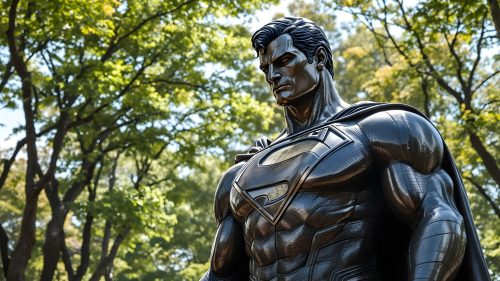
Giant Superman Statue: The Monument to a Superhero Legend
Few cultural icons inspire as much awe and admiration as Superman. From his first appearance in 1938 to his enduring presence in comics, films, and merchandise, the Man of Steel has become more than just a character—he is a symbol of hope, justice, and limitless possibility. Now imagine capturing that spirit in colossal form: a giant Superman statue towering over a plaza, museum, or city skyline. These larger-than-life monuments aren’t just fan tributes; they are cultural landmarks that connect generations and tell a story of heroism on a grand scale.
Why Superman Deserves to Be Monumental
Superman is more than an American superhero—he is a universal archetype. He represents strength tempered with compassion, power guided by morality, and the enduring belief that good can triumph over evil. These are qualities that resonate far beyond the pages of comic books. A giant Superman statue amplifies these ideals, taking them from the panels of a comic strip into the real world.
Unlike traditional monuments to historical figures, Superman statues celebrate a hero of imagination. Yet in many ways, he feels just as real as any leader or warrior. His influence on culture is undeniable. A giant statue doesn’t just pay tribute to Superman; it pays tribute to the human need for hope and inspiration.
The Small Town with a Big Superman
No conversation about giant Superman statues is complete without mentioning Metropolis, Illinois—the official “hometown” of Superman. Standing at 15 feet tall, the city’s Superman statue has become a pilgrimage site for fans. Located in front of the Superman Museum, it captures the hero in his classic pose: fists on hips, cape flowing, eyes fixed on the horizon. While modest compared to towering religious or political statues, it has become a powerful symbol of how fictional heroes can inspire communities. The Metropolis statue may be smaller than global colossi, but it has immense cultural pull. Thousands of fans travel there each year, proving that even in a small town, a larger-than-life superhero can create big impact.
Imagining a Colossal Superman
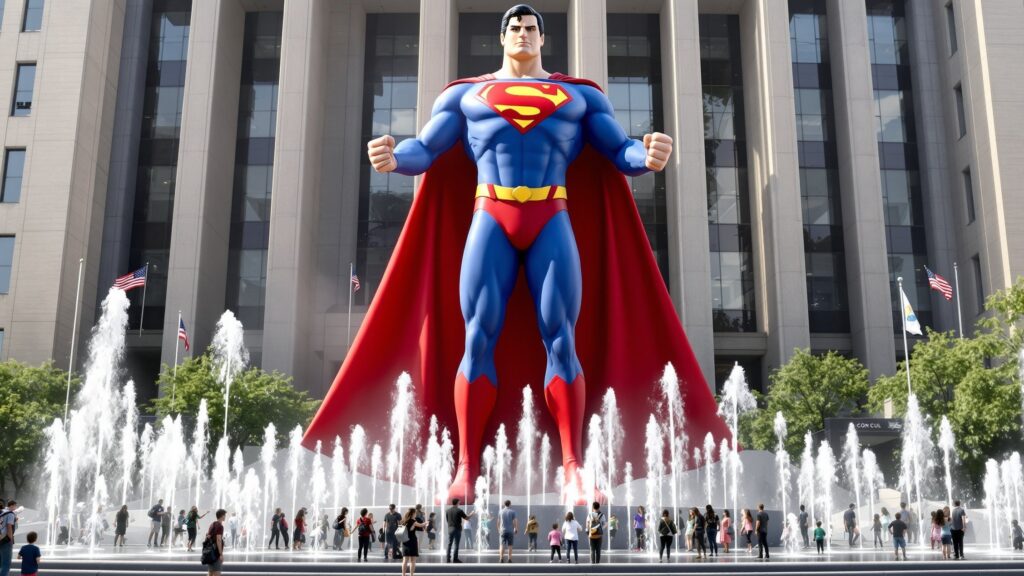
Now picture something even grander—a Superman statue not 15 feet tall, but 150. His cape rippling in the wind, his arms crossed, standing atop a pedestal like a sentinel of hope. Such a monument could dominate a skyline the way the Statue of Liberty welcomes travelers to New York Harbor. A Superman statue of this scale would not just attract fans; it would become a global landmark, symbolizing the universality of courage, justice, and compassion.
How a Giant Superman Statue Might Be Fabricated
Behind the awe of a giant Superman statue lies an impressive feat of engineering, fabrication, and artistry. Creating a superhero on such a scale requires precision, planning, and teamwork. The process often begins with digital sculpting. Artists use 3D modeling software to design Superman’s physique, ensuring that his musculature, cape, and iconic “S” emblem translate accurately to massive scale. Every detail—from the curve of his jawline to the folds of his costume—is carefully proportioned to ensure balance and realism when enlarged. Once the design is finalized, fabrication can proceed in several ways depending on the intended permanence of the statue:
Foam and Fiberglass Builds: For temporary or lightweight statues, large blocks of foam are CNC-carved into sections. These sections are assembled around a steel or aluminum framework, coated with fiberglass or polyurea for strength, and hand-painted to achieve a lifelike finish. This approach is cost-effective and allows for mobility, making it ideal for conventions, theme parks, or exhibitions.
Bronze and Metal Casts: For permanent outdoor monuments, bronze casting or stainless steel fabrication is used. Sculptors may create smaller clay or resin models, which are scanned and scaled up using computer-aided design. Sections are cast in bronze or shaped in steel, then welded together. The surface is polished or painted, often with brilliant colors to highlight Superman’s suit and cape.
Concrete and Composite Methods: Another common approach is reinforced concrete, sometimes faced with resin composites. This allows for durability against weather while still achieving intricate details. Gold leaf, enamel, or painted finishes may be applied to bring out Superman’s iconic blue, red, and yellow palette.
Installation involves cranes, scaffolding, and precise engineering to ensure the statue is structurally sound. A giant Superman statue must withstand not only the forces of weather but also the endless stream of visitors eager to pose at its base.
The Symbolism of Superman in Stone and Steel
Unlike statues of historical figures, Superman statues are inherently symbolic. They represent not a person but an ideal. His upright posture and heroic stance embody the best qualities we aspire to. His cape, often sculpted to billow behind him, suggests motion, freedom, and vigilance. The “S” shield on his chest is more than a logo—it has become one of the most recognized emblems on Earth, a visual shorthand for hope itself.
A giant Superman statue communicates these ideals in ways words cannot. By enlarging him beyond human scale, the statue reminds us that heroism, courage, and kindness are greater than any single person. They are universal values that stand tall, even when the world feels uncertain.
Tourism, Pilgrimage, and the Economics of a Super Statue
Just as religious monuments and political memorials draw pilgrims, giant Superman statues attract fans from every corner of the globe. Tourists flock to pose for photos, purchase memorabilia, and share their experiences online. This generates real economic benefits for host communities, from hotels and restaurants to themed attractions. In the case of Metropolis, Illinois, the Superman statue has become the cornerstone of the town’s identity, spurring an annual Superman Celebration festival. Imagine the economic ripple effect of a Superman statue five or ten times that size, placed in a major city. It would not only inspire fandom but also drive tourism, commerce, and civic pride.
Superman as Pop Culture Deity
Superman statues also reflect how modern culture elevates fictional heroes to the level of myth. In ancient times, societies built temples and statues to gods and demigods. Today, superheroes serve a similar role in our imagination. They embody our values, struggles, and hopes. A giant Superman statue is, in a sense, a modern temple—an altar to the timeless dream that humanity can rise above its limitations.
The Role of Technology in Super-Sized Statues
Technology has transformed the way monumental statues are built. In earlier times, artisans relied on hand-sculpting, chiseling, and trial-and-error scaling. Today, digital design, 3D scanning, and CNC carving make it possible to produce precise proportions at enormous scales. Computer modeling ensures structural integrity, while new materials like carbon-fiber composites provide strength without excessive weight.
This synergy of art and engineering means that a giant Superman statue could be built faster, stronger, and more detailed than monuments of the past. Advances in LED lighting even allow for dramatic effects, illuminating the statue at night in glowing blues and reds, as if the Man of Steel were about to take flight.
Challenges of Building a Giant Superman
Of course, monumental projects come with challenges. Structural engineers must ensure the statue can withstand high winds and seismic activity. Maintenance teams must regularly restore paint, polish surfaces, and repair weathering. Cultural debates may arise, questioning whether resources should be devoted to fictional heroes rather than practical needs. Yet these challenges also underscore the importance of Superman as a symbol. When communities invest in building such a monument, they are making a statement: that ideals of hope, courage, and justice are worth preserving and celebrating in physical form.
Comparing Superman Statues to Other Giant Icons
How does a giant Superman statue compare to other monumental figures? Like the Statue of Liberty, it represents ideals larger than life. Like Mount Rushmore, it immortalizes an image recognizable worldwide. Yet unlike historical or political monuments, it celebrates imagination itself—a hero born of storytelling who has become as enduring as any figure in history. This makes Superman statues uniquely modern. They demonstrate how pop culture has joined religion and politics in shaping the monuments we build.
The Future of Giant Superman Statues
As fandom culture continues to thrive and global interest in superheroes shows no signs of slowing, the future likely holds more Superman statues—and bigger ones, too. With studios investing billions into superhero franchises, communities could see opportunities to create landmarks that blend tourism, art, and cultural pride. Imagine a Superman statue rivaling the height of Christ the Redeemer in Brazil or even the Spring Temple Buddha in China. It would stand not just as a tribute to a character, but as a testament to the enduring human love for heroes.
Why We Can’t Look Away
Ultimately, the allure of a giant Superman statue lies in its power to capture imagination. It embodies the dream that humanity can be brave, compassionate, and just. It offers a tangible reminder of hope in a world that often feels uncertain. Whether 15 feet or 150, a Superman statue is more than stone, steel, or fiberglass—it is a story made monumental, a legend made real, and a hero made eternal. When you stand at the base of a giant Superman statue and gaze upward, you don’t just see a character—you see an ideal carved into reality. And perhaps that is the greatest superpower of all.
Check out WhiteClouds’ 3D Statues for more information.
Contact us today to learn more about our 3D services and how we can help you achieve your goals.