
Planning a Custom Giant Prop
Planning a custom giant prop starts with one practical decision: what physical object should be built? A product replica, stylized object, or small scenic composition each leads to a different brief. This guide organizes the essential references, dimensions, intended use, site limits, and schedule before a fabrication conversation.
Start With a Reference or Sketch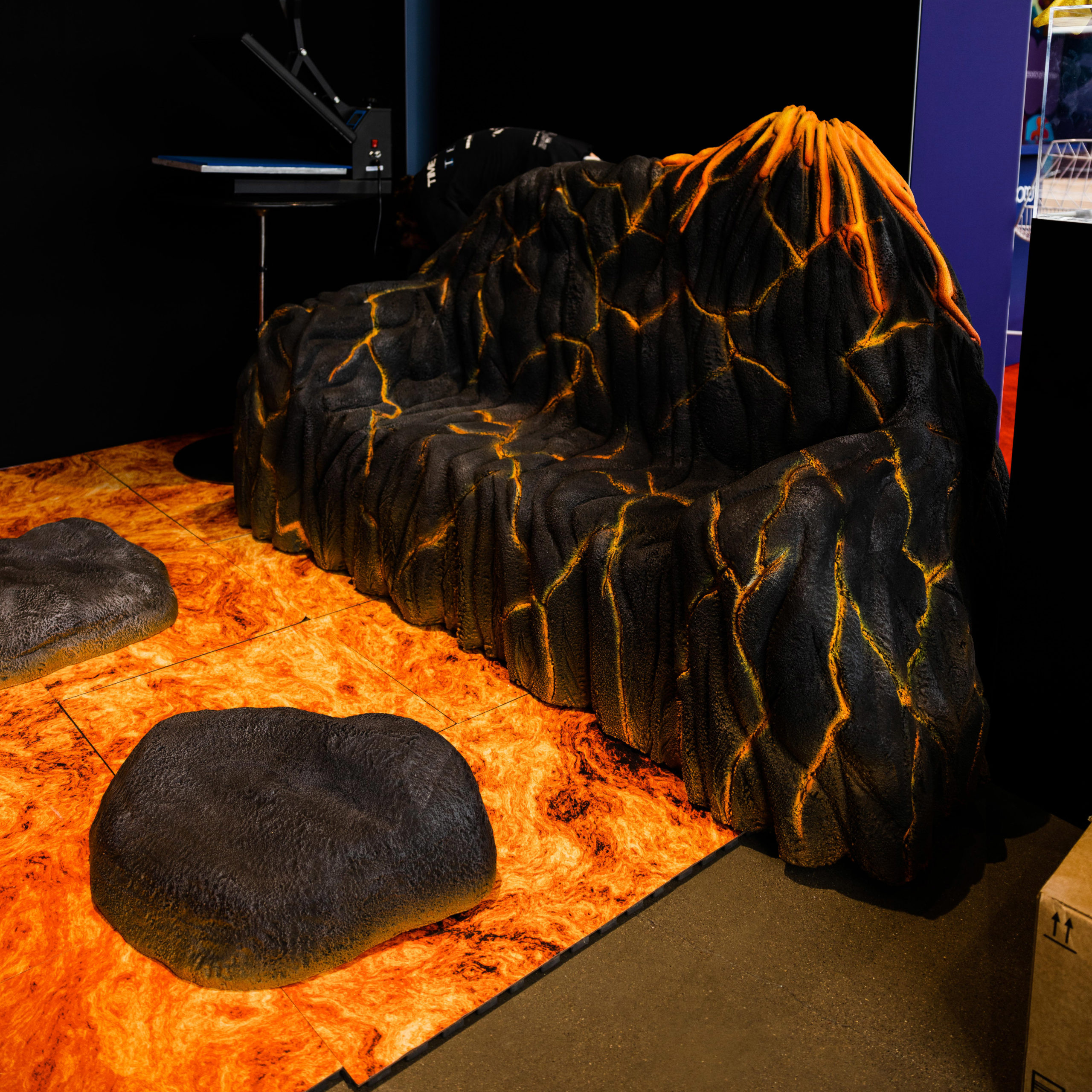


Choosing the Main Prop Object
Name one primary object and explain its job in the setting. Is it display-only? Will people stand beside it, move around it, or touch a defined surface? Identify the main viewing side and any required clearance around the form. If a campaign contains several visual ideas, rank them instead of forcing every symbol into one build.
A useful starting reference can be a sketch, product photograph, packaging file, 3D model, or marked-up image. Note which proportions must stay accurate and where interpretation is acceptable. That distinction keeps an exact product shape from being mixed with decorative choices that are still open.
Replica, Stylized Object, or Scenic Composition
A close replica depends on approved dimensions, logos, label artwork, and product details. A stylized prop can simplify small features, exaggerate selected proportions, or use an original color treatment. A scenic composition adds related pieces only when they are necessary to the concept, such as a floor element beneath a main object or a coordinated set of game pieces.
Choose the direction before discussing secondary decoration. It establishes which references control the work and which parts remain open for development. It also prevents unrelated examples from being combined into a single project description.
Size, Pose, and Audience Contact
Provide an approximate height, width, and depth, even when those numbers may change. State whether the object stands upright, tilts, lies horizontally, mounts to a wall, hangs, or connects to other elements. The pose and main viewing direction determine how much of the back, base, underside, or support must be resolved visually.
Describe audience contact in physical terms. Standing beside a prop, touching one area, sitting on a purpose-built seat, or operating a moving or lighted feature are different requirements. Seating, load-bearing surfaces, motion, sound, and electrical features must be identified in the project scope rather than assumed from the object.
Graphics, Viewing Side, and Setup
Supply approved logo files, colors, label graphics, textures, and any surface details that matter to the design. Mark the primary face on the reference and note whether all sides will remain visible. A prop viewed mainly from the front has a different detail plan from one placed where people circulate around it.
Include the installation location, indoor or outdoor setting, doorway and loading dimensions, elevators or stairs, ceiling limits, available power, setup window, delivery destination, and required completion date. These details help determine whether the piece needs a defined base, separate sections, concealed connections, or another site-specific arrangement.
Three Different Project Scopes
Three existing WhiteClouds projects began with different physical briefs: a coordinated seating composition, a branded throne, and a set of television game pieces.
Spacestation Lava Couch
WhiteClouds created a magma-themed couch and stepping-stone set for the Spacestation booth at VeeCon 2022. The seating form and related floor pieces were scoped as one coordinated project.
Read the Giant Lava Couch project storySpalding Basketball Throne
A throne for the Red Bull Half Court World Finals in New York City incorporated Spalding-supplied basketballs in its arms, back, and decorative structure.
Read the Basketball Throne project storyRelative Race Game Pieces
Game pieces for BYUtv's Relative Race Season 13 used geometric forms and integrated metal letters. This was a coordinated set rather than one enlarged product replica.
Read the Relative Race project storyRequest Pricing for a Custom Giant Prop
Use the quote form to send the primary reference, estimated dimensions, intended pose, main viewing side, approved graphics, audience-contact requirements, installation setting, access limits, deadline, and destination. Note any seating, movement, lighting, sound, or power requirement explicitly so it can be evaluated as part of the scope.