

The Fascination of the Giant Minecraft Statue
In the world of video games, few creations have inspired as much imagination, creativity, and community-driven culture as Minecraft. Known for its blocky, pixelated universe where players can build anything they can dream of, it’s no surprise that the game’s influence has spilled into real life. Among the many forms of fan expression, the giant Minecraft statue stands out as a truly spectacular phenomenon. These oversized sculptures capture the essence of the game while transforming its virtual elements into tangible landmarks that inspire awe, nostalgia, and delight. From colossal recreations of in-game characters to monumental sculptures of Minecraft’s iconic blocks, these statues merge the digital with the physical in ways that surprise and entertain. In this article, we’ll explore the cultural significance of giant Minecraft statues, how they function as both art and community symbols, where you might encounter them, and how such incredible projects might actually be fabricated in the real world.
Why Minecraft Statues Capture Our Imagination
Minecraft is more than a game—it’s a creative platform where imagination reigns supreme. Players spend countless hours constructing castles, cities, landscapes, and characters using the game’s signature blocks. Translating that creativity into the real world feels like the natural next step, and giant statues bring that digital artistry into tangible form. The appeal lies in nostalgia and recognition. A towering replica of Steve, the game’s default character, instantly connects with millions who have mined, crafted, and battled creepers for years. Similarly, statues of Minecraft animals, blocks, or even fan-inspired creations evoke joy by transforming pixel art into massive physical monuments. Another part of the fascination comes from scale. While a block in the game is uniform and simple, seeing it recreated as a ten-foot cube or a statue composed of hundreds of oversized blocks creates a sense of wonder. These statues aren’t just playful—they’re powerful reminders of how digital culture shapes our real-world environments.
Iconic Subjects for Giant Minecraft Statues
When it comes to choosing what to build, certain Minecraft icons lend themselves perfectly to statue form. Steve and Alex, the game’s classic avatars, are among the most popular subjects. Their square heads, simple clothing patterns, and instantly recognizable silhouettes make them ideal for scaling up.
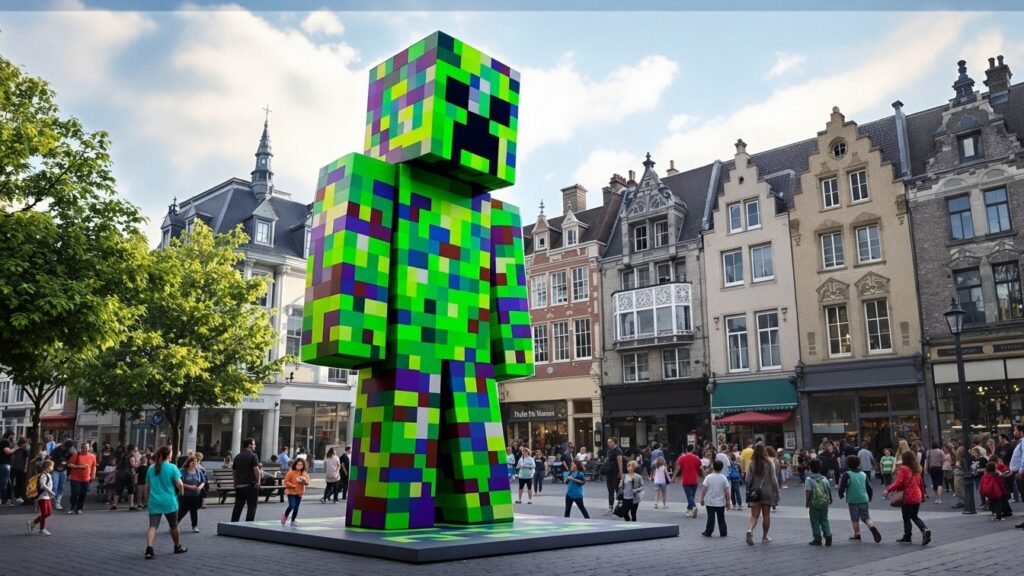
Animals are another favorite. Imagine a giant blocky pig, sheep, or wolf towering over a park, playground, or festival ground. These statues exude charm while reminding fans of the many adventures they’ve had with these creatures in-game. Then there are the mobs. A giant creeper statue, with its menacing green squares, would both terrify and delight. Endermen, skeletons, and spiders also lend themselves to monumental recreations, giving builders the chance to showcase both artistry and engineering.
Finally, some creators turn to blocks themselves—massive versions of grass blocks, TNT, or chests. While simpler in form, these statues often serve as giant symbols of the Minecraft aesthetic, perfect for photo opportunities and event spaces.
Community and Cultural Impact
The impact of giant Minecraft statues extends beyond the visual spectacle. They serve as gathering points for fans, community hubs for events, and attractions that blend digital fandom with physical presence. At conventions like Minecon or gaming festivals, giant Minecraft statues often dominate the floor, providing fans with places to meet, pose for photos, and celebrate their shared love of the game. Cities and schools sometimes use them for STEM projects, teaching students about engineering, geometry, and design through large-scale builds. In public spaces, these statues can become local landmarks. A Minecraft-themed park or plaza not only entertains fans but also draws tourists, generating economic benefits for communities. They reflect how gaming culture has become an integral part of modern identity, merging playfulness with artistry.
Artistic Styles: From Block-Perfect to Interpretive
Not all giant Minecraft statues look the same. Some aim for pixel-perfect recreations, maintaining the exact blocky proportions and colors from the game. These statues evoke the feeling of the game stepping directly into reality. Others take more interpretive approaches. Artists might smooth edges, add texture, or incorporate lighting to enhance the statue’s visual impact. A giant creeper with glowing LED eyes or a pig with interactive sound effects becomes more than a static sculpture—it transforms into an immersive experience. There’s also a blend of realism and fantasy. Some builders reimagine what a Minecraft character would look like if it leapt into the real world, retaining blocky proportions while adding lifelike elements. These statues straddle the line between game aesthetic and artistic interpretation, sparking new conversations about creativity.
Famous Examples of Minecraft Statues
Over the years, Minecraft has inspired countless large-scale physical builds. At fan conventions, life-sized statues of Steve, Endermen, and creepers have been showcased. Amusement parks and pop-up events often feature giant Minecraft blocks and mobs as part of their immersive designs. In Japan, Europe, and the United States, promotional events for new game updates or merchandise lines sometimes include enormous statues as centerpieces. These temporary structures create buzz, draw crowds, and amplify the excitement surrounding the brand. Online communities also document fan-made statues built in backyards, schools, or public spaces. While not as massive as corporate displays, these DIY projects highlight the game’s grassroots appeal. Even smaller statues, when scaled up just enough to be “giant” in the context of a yard or playground, capture that same sense of wonder.
The Experience of Encountering a Giant Minecraft Statue
Standing in front of a giant Minecraft statue is both surreal and delightful. For longtime players, it feels like stepping into the game itself, with digital creations suddenly made real. The sheer scale is striking—something once confined to a screen now looms above in three dimensions. Children often find the experience magical, running around the statue and interacting with it as though it were a character come to life. Adults, too, often can’t resist smiling or snapping photos, their inner child awakened by the playful design. The statues blur the line between the digital and the physical, reminding us how deeply gaming worlds have become woven into our cultural imagination.
The Fabrication of a Giant Minecraft Statue
Turning pixelated art into towering physical structures is no small feat. Fabricating a giant Minecraft statue involves careful planning, skilled engineering, and an eye for both accuracy and creativity.
Concept and Design
The process begins with digital blueprints. Designers often start within Minecraft itself, creating a virtual model of the statue. This blocky plan is then translated into 3D modeling software, where proportions, structural integrity, and materials are mapped out.
Material Choices
The choice of materials depends on the intended use. For temporary statues at events, lightweight materials like foam, wood, and fiberglass are common. These allow for easy transport and assembly while still looking impressive. Permanent statues require more durable options. Concrete, steel, and resin can withstand weather, while high-density plastics provide both strength and detail. Painted finishes mimic the game’s signature pixelated colors, ensuring the statue remains faithful to its source.
Structural Engineering
Though Minecraft blocks stack neatly in the game, real-world physics requires internal supports. Steel frameworks form the skeleton, distributing weight and ensuring stability. Engineers calculate wind resistance, especially for statues placed outdoors. If a creeper is ten feet tall, its top-heavy shape must be carefully balanced with a reinforced base.
Fabrication Techniques
Depending on material, blocks may be carved, cast, or assembled individually. Foam or wood blocks are often cut to size and painted, while fiberglass sections are molded for precise shapes. For large installations, sections of the statue are built separately and joined together on-site.
Special Effects
Modern giant Minecraft statues often include lighting, sound, or interactive features. LED lights can make creeper eyes glow menacingly at night, while motion sensors might trigger familiar sound effects. These touches enhance the immersive experience, making the statue not just a monument but an attraction.
Installation
Transporting and installing a giant statue is a challenge in itself. Large cranes or lifts are used to position pieces, while foundations must be strong enough to bear the weight. For events, the process is streamlined for rapid assembly and disassembly, while permanent installations involve months of careful planning and testing.
The Future of Minecraft Statues
As technology advances, the possibilities for giant Minecraft statues continue to expand. Augmented reality could allow visitors to see statues come alive with digital overlays, adding layers of interaction. Sustainable materials and solar-powered lighting could align builds with eco-friendly practices. We may also see more community-driven projects, where fans collaborate to fund, design, and build statues in public spaces. These grassroots efforts would not only celebrate the game but also foster community engagement and pride. In theme parks, gaming expos, and cultural events, expect giant Minecraft statues to remain centerpieces that draw crowds and spark conversation. They embody the fusion of gaming culture with real-world artistry, serving as enduring symbols of imagination without limits.
Conclusion: When Pixels Become Monuments
The giant Minecraft statue is more than a playful creation—it’s a cultural artifact, a symbol of how deeply video games influence our lives, and a testament to the boundless power of creativity. By taking the familiar blocky designs of the digital world and magnifying them into monumental real-world art, these statues captivate fans, unite communities, and inspire wonder across generations.
Whether it’s a towering Steve guarding the entrance to a convention, a massive creeper thrilling festival-goers, or a simple oversized grass block that sparks smiles in a park, each giant Minecraft statue tells a story. It’s a story of imagination, nostalgia, artistry, and the joy of seeing the digital worlds we love come to life. As long as Minecraft continues to inspire millions, giant statues will stand as powerful monuments to creativity—reminders that sometimes, even the simplest blocks can build something extraordinary.
Check out WhiteClouds’ 3D Statues for more information.
Contact us today to learn more about our 3D services and how we can help you achieve your goals.