
Planning a Custom Giant Macaw Display
A giant macaw display is governed by pose, wing spread, tail length, beak profile, feather grouping, and the surface or structure around the bird. A useful concept brief separates those physical choices from the narrative of any one completed character project.
Plan a Macaw Display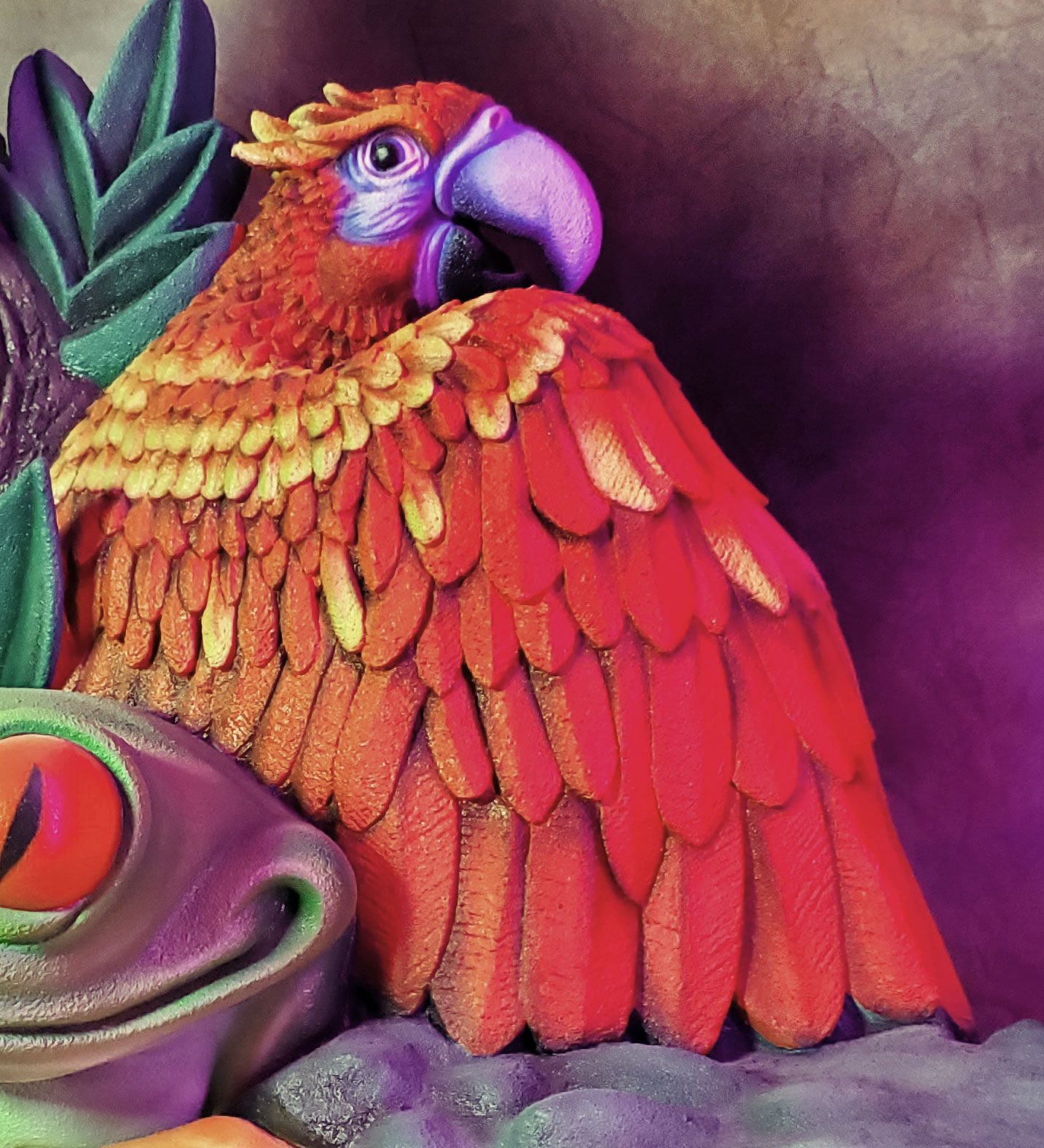
Set the body axis before drawing every feather
Begin with the head direction, chest angle, back line, wing position, foot contact, and tail path. A perched macaw concentrates the wings near the body. A flying pose increases span and changes the underside view. A raised wing can create an expressive outline without requiring full bilateral extension.
Provide front, side, and three-quarter references for the chosen pose. If the design follows a protected character or branded artwork, supply approved files and identify which details may or may not be adapted.
Organize the features viewers read first
Large color fields and silhouette usually carry farther than individual feather marks.
Head and beak
Define the upper-beak curve, lower beak, face patch, eye position, and head-to-body proportion.
Wing state
Show folded, lifted, extended, or layered wing geometry and the farthest feather tip.
Tail path
Dimension the longest tail feathers and note whether they hang, sweep sideways, or overlap another element.
Color grouping
Map the principal feather colors and transitions before adding smaller marks that may not read at distance.
See a macaw integrated into a dimensional entrance sign
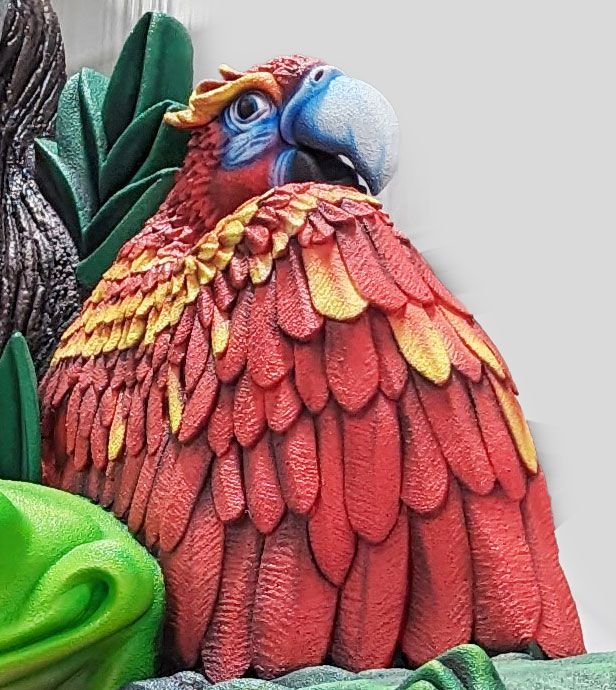
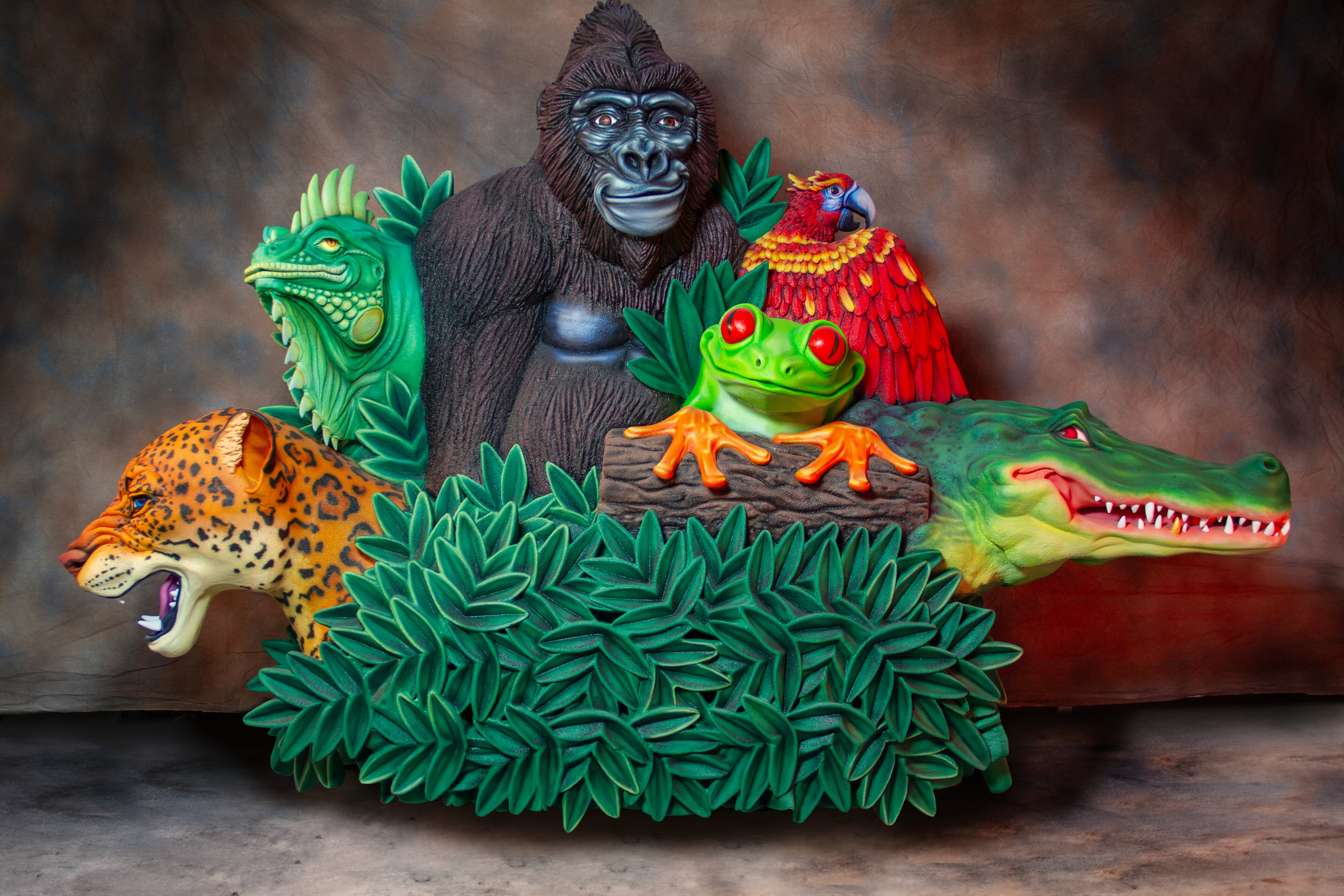
WhiteClouds fabricated Rio as part of a commissioned Rainforest Cafe sign at Disney's Animal Kingdom in Orlando. The photographs show the macaw above the lettering, where the raised body, extended wing, curved beak, tail, and color groups remain visible from below.
That completed project is one reference, not a default design for another request. The related Project Story covers Rio and the full sign. A new macaw display should begin with its own approved art, pose, site, and audience views.
Design the perch, sign, base, or scenery with the bird
Feet and tail should not be added after the surrounding structure is fixed. Mark exactly where the bird meets a perch, lettering, wall, branch, platform, or separate base. Include the visual overlap from the principal approach and any view from below.
For elevated placement, provide mounting surface information, viewing distance, and access constraints for evaluation. For a floor display, show visitor circulation and the full wing and tail envelope.
Assemble the visual and site inputs
The request should identify both the bird and the setting it occupies.
- Approved species, character, or original concept art
- Front, side, and three-quarter pose references
- Overall body height and length
- Wing state, maximum span, and feather-tip positions
- Tail length, direction, and floor clearance
- Beak, eye, face patch, and color divisions
- Perch, sign, wall, base, or scenery relationship
- Viewing height, access route, destination, and date
Request pricing for a custom giant macaw
Send the approved artwork, pose, dimensions, wing and tail envelope, color map, connection points, viewing height, site and access information, destination, and schedule.