
The Legendary Appeal of the Giant LOTR Statue
Few works of literature and film have captured imaginations as completely as The Lord of the Rings. J.R.R. Tolkien’s epic tale of hobbits, wizards, elves, and dark lords is more than just a story—it’s a cultural phenomenon. Across decades, it has inspired books, art, games, and cinema that continue to enchant fans worldwide. Among the most striking tributes to Middle-earth are the giant LOTR statues: monumental sculptures of characters, creatures, and moments from Tolkien’s legendarium that stand as both artistic masterpieces and cultural landmarks. These colossal statues are more than oversized fan art. They embody myth, heroism, and storytelling on a monumental scale. Whether installed in public squares, museums, theme parks, or private collections, giant LOTR statues are testaments to the enduring legacy of Tolkien’s world. They provide fans with a way to step into Middle-earth, to stand beside Frodo, Gandalf, or the towering Argonath kings, and feel part of the journey. In this article, we’ll explore the cultural significance of Lord of the Rings statues, famous real-world examples, the artistry that goes into designing them, their emotional impact, and the fascinating process of fabricating such grand works of art.
LOTR and the Power of Monumental Art
Tolkien’s world is built on myth. His stories are filled with epic battles, noble lineages, and landscapes that feel larger than life. Translating such grandeur into monumental statues is a natural extension of his vision. Just as ancient civilizations built statues of their gods, heroes, and kings to remind citizens of their legends, fans and artists create LOTR statues to honor Tolkien’s mythos. Characters like Gandalf or Aragorn embody values of wisdom, courage, and leadership, while villains like Sauron or the Nazgûl evoke fear and awe. Creatures such as ents, trolls, and dragons provide the dramatic scale for even grander sculptures. By creating these figures in monumental form, artists invite us to remember that Tolkien’s world was not just a story—it was a mythology designed to feel timeless and universal.
Famous LOTR Statues Around the World
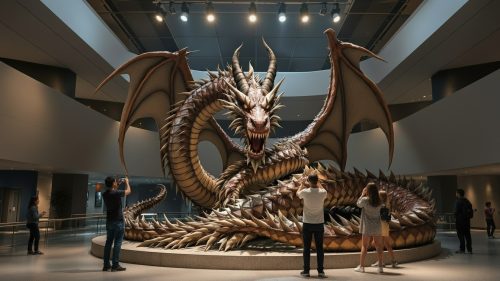
Several real-world statues inspired by The Lord of the Rings have already become iconic. In New Zealand, where Peter Jackson’s films were shot, Wellington airport greets travelers with enormous statues of Gollum, Gandalf, and Smaug suspended dramatically in the terminal. Elsewhere in Wellington, the Wētā Workshop, the legendary design studio behind the films, has produced colossal statues of orcs, trolls, and other Middle-earth denizens. These have been displayed at exhibitions, conventions, and film events, thrilling fans with their size and accuracy.
At theme parks and fan conventions, giant statues of characters like Legolas, Frodo, and the Nazgûl have become staples. Fans pose for photos beside towering recreations, often crafted with astonishing attention to detail. Perhaps the most famous fictional statues in Tolkien’s universe—the Argonath, or Pillars of the Kings—have been recreated in various scales, from collectible figurines to massive outdoor sculptures. Standing beside them in any form brings to life one of the most awe-inspiring moments from both the books and the films.
Why Giant LOTR Statues Inspire Awe
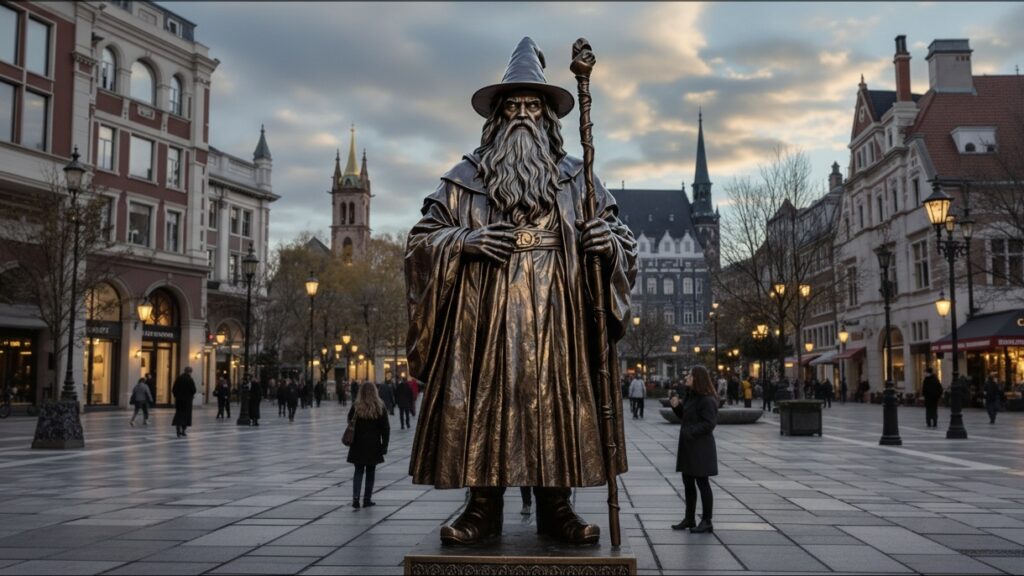
There’s something uniquely powerful about encountering Tolkien’s creations in monumental form. Part of it is the scale. Middle-earth is a land of towering mountains, sprawling battles, and titanic creatures. To see characters and symbols translated into giant statues feels fitting. It reflects the grandeur of Tolkien’s imagination and the epic proportions of his story. Another part is the connection to beloved characters. To stand beside a giant Gandalf feels like being drawn into the Fellowship itself. To gaze up at a statue of Sauron in full armor conjures the terror of facing darkness incarnate. These statues also spark community and shared experience. Fans who gather around a giant LOTR statue aren’t just taking photos—they’re participating in a shared mythology that spans generations and cultures. The statue becomes a focal point for fandom, storytelling, and collective memory.
Artistic Styles of Giant LOTR Statues
Not all LOTR statues are the same, and their diversity reflects the richness of Tolkien’s world. Some statues strive for hyper-realism, capturing every scar on Aragorn’s face, every wrinkle in Gandalf’s robes, or every jagged edge of Sauron’s armor. These bring characters to life with cinematic detail, as though they’ve stepped straight off the screen. Others adopt stylized or symbolic approaches. Abstract renditions of the One Ring, stylized silhouettes of hobbits, or simplified forms of elven warriors become artistic interpretations that honor Tolkien’s mythology without literal realism.
Then there are scenic statues, which depict entire scenes in monumental form: Frodo holding the Ring aloft, Gandalf facing the Balrog, or the Fellowship crossing a river beneath the Argonath. These statues are immersive, telling stories through pose, detail, and scale. Each artistic approach offers fans something different: realism offers immersion, stylization offers interpretation, and scenic art offers narrative.
The Emotional Impact of Encountering One
Standing before a giant LOTR statue is a profoundly moving experience. Fans describe it as stepping into Middle-earth, as though the barrier between imagination and reality has dissolved. Children often marvel at the sheer size, eyes wide as they recognize characters they’ve only seen in movies or illustrations. Adults, many of whom grew up with the books or films, often feel nostalgia and reverence. Statues depicting villains or dark creatures evoke awe and fear, allowing people to confront darkness in a safe but powerful way. Statues of heroes inspire admiration and courage, reminding viewers of the values Tolkien embedded in his myth: bravery, loyalty, friendship, and hope. Whether playful or solemn, the emotional impact is undeniable. These statues don’t just entertain—they connect us with timeless human stories told through Tolkien’s world.
LOTR Statues as Community and Cultural Landmarks
Giant LOTR statues are more than fan tributes; they are cultural and economic assets. In New Zealand, they play a central role in the nation’s tourism industry. Visitors flock to see locations where the films were shot and to take photos with statues of Middle-earth’s characters. These statues help cement New Zealand’s identity as the “home of Middle-earth.” In other communities, giant statues serve as rallying points for festivals, fan gatherings, and themed events. A statue outside a museum or convention center signals a city’s commitment to culture and creativity. They also strengthen local economies. Fans traveling to see statues spend money on lodging, food, and souvenirs. A giant LOTR statue can become the difference between a town being just another stop on the map and being a destination.
How a Giant LOTR Statue is Fabricated
Creating a giant LOTR statue is an ambitious blend of art, engineering, and logistics.
Concept and Design
The process begins with a concept: which character, scene, or symbol to depict, and in what style. Artists create sketches, digital renderings, and often smaller clay maquettes to refine the pose and proportions. When adapting characters from film, accuracy is paramount. Sculptors study costumes, weapons, and even actor likenesses to ensure authenticity. For purely literary interpretations, artists may lean on Tolkien’s descriptions or illustrative traditions.
Material Selection
Different purposes call for different materials:
- Fiberglass and Resin: Popular for conventions and traveling exhibits. Lightweight and versatile, they allow for easy transport.
- Bronze and Metal Alloys: Used for permanent outdoor statues. Strong and weather-resistant, bronze gives statues a timeless patina.
- Concrete or Stone: Monumental and enduring, perfect for large outdoor settings like parks or plazas.
- Mixed Media: For cinematic accuracy, some statues combine materials—metal weapons, fabric-like resin cloaks, glass eyes.
Structural Engineering
Large statues require hidden skeletons, typically made of steel. These frameworks provide balance and stability, especially for dynamic poses like Gandalf’s staff raised or Sauron’s mace extended. Engineers calculate weight distribution, wind resistance, and environmental stresses. For statues meant to last outdoors for decades, reinforced foundations are critical.
Sculpting and Finishing
The surface layer is sculpted or molded with meticulous detail. For realism, artists craft lifelike textures: chainmail, fabric folds, scars, and skin. For stylized works, surfaces may be smoothed or simplified. Painting and finishing add another layer of artistry. Weather-resistant paints bring color and vibrancy, while patinas or metallic finishes add gravitas. Some statues integrate special effects: glowing eyes, hidden speakers, or lighting for nighttime impact.
Assembly and Installation
Most giant statues are built in sections—head, torso, arms, base—that are transported and assembled on-site. Cranes position the parts while crews weld or bolt them together. Once installed, landscaping, pedestals, or architectural features may be added to complete the setting. The result is a work of art that is both immersive and monumental.
The Future of Giant LOTR Statues
The future promises even more creative possibilities for LOTR statues. Interactive technology may play a larger role, with statues integrated into augmented reality experiences. Visitors might scan a statue with their phone to see it “come alive,” revealing animations or audio clips from Tolkien’s stories. Eco-friendly practices are also on the rise. Recycled materials, solar-powered lighting, and sustainable construction could make statues not only culturally meaningful but environmentally responsible. We may also see more community-driven projects, where fans and local artists collaborate to build statues. Such projects create deeper emotional connections between the statue and the community that hosts it. As Tolkien’s stories continue to inspire new generations through books, films, and series, giant LOTR statues will remain powerful cultural touchstones.
Conclusion: When Myth Becomes Monument
The giant LOTR statue is more than an oversized figure from a beloved fantasy. It is a cultural landmark, a shared memory, and a testament to the enduring power of Tolkien’s world. These statues bring myth to life, transforming characters and stories into monumental art that can be touched, photographed, and experienced. Whether it’s Gandalf holding his staff, the Argonath kings standing guard, or Sauron looming menacingly, each giant statue tells a story. It connects us not just to Tolkien’s myth but to our shared human desire to celebrate courage, friendship, and imagination through monumental art.
For fans, encountering a giant LOTR statue is a chance to step into Middle-earth for a moment. For communities, it is an opportunity to celebrate culture, attract visitors, and foster pride. And for the world, it is proof that myths still matter—that stories can be so powerful they demand to be carved into stone, cast in bronze, or molded in fiberglass on a monumental scale. In the end, giant LOTR statues are not just statues. They are guardians of imagination, standing tall as reminders that even in our modern world, legends endure.
Check out WhiteClouds’ 3D Statues for more information.
Contact us today to learn more about our 3D services and how we can help you achieve your goals.