
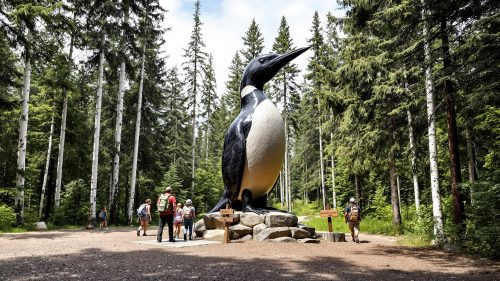
The Giant Loon Statue: A Monument to Wilderness and Wonder
Few creatures capture the imagination of northern lakeside living like the loon. Known for its haunting call that echoes across still waters, the loon is a symbol of wilderness, serenity, and mystery. But what happens when artists, communities, and tourism boards decide to turn this elegant bird into a larger-than-life spectacle? Enter the giant loon statue—a roadside attraction, community icon, and testament to human fascination with making the natural world monumental. This article dives deep into the history, meaning, cultural resonance, and craftsmanship behind giant loon statues. We’ll explore where you can find them, why they matter, and even how one might be fabricated today. Whether you’re a traveler with a love for Americana roadside oddities or someone enchanted by loons themselves, the giant loon statue is a story worth celebrating.
The Loon: Nature’s Northern Icon
To understand why a loon deserves to be immortalized in massive sculpture, we first need to understand the bird itself. Loons are waterbirds native to North America and northern Eurasia, instantly recognizable for their sleek black heads, dagger-like beaks, and striking checkered plumage. Beyond their beauty, they are renowned for their calls: eerie tremolos, yodels, and wails that seem almost supernatural. For many who spend summers on lakes in Minnesota, Wisconsin, Michigan, or Canada, the call of the loon is inseparable from memories of campfires and quiet canoe trips.
The loon is also deeply symbolic. In Native American traditions, the loon is considered a spirit guide, a bringer of dreams, or a creature that bridges the physical and spiritual realms. In modern culture, it’s often used as shorthand for wilderness itself—wild, untamed, and fragile. So, it’s little wonder that towns in “loon country” decided to elevate this bird not just in spirit, but in towering sculpture.
Roadside Americana: The Age of Giant Statues
The mid-20th century was the heyday of roadside attractions in North America. As automobile culture flourished, towns competed to lure travelers off the highways with oversized objects—giant lumberjacks, colossal animals, and outlandish sculptures that doubled as billboards. The giant loon fits perfectly into this tradition. These sculptures were never just art; they were local advertisements, photo ops, and declarations of civic pride. A town with a giant loon was saying: This is loon country. This bird matters here. Stop, take a picture, and maybe spend some money while you’re at it. Some of these statues still stand tall today, carefully maintained as local landmarks, while others have disappeared into memory. What unites them all is their ability to turn the ordinary into the extraordinary, transforming a beloved bird into a monumental presence.
Famous Giant Loon Statues Across North America
Vergas, Minnesota: “The World’s Largest Loon”
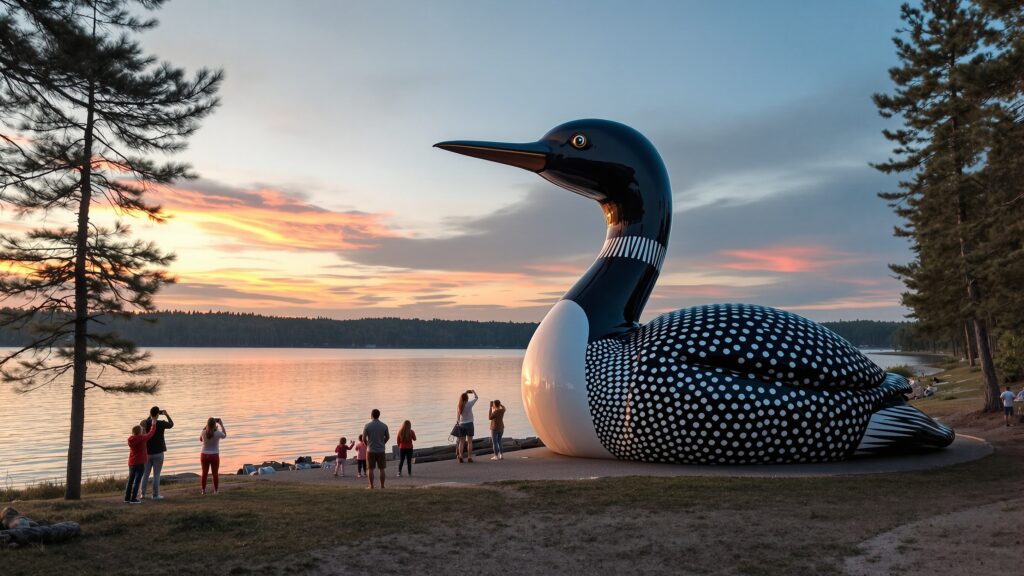
Perhaps the most famous of them all sits in Vergas, Minnesota. Standing at an impressive 20 feet long and perched on the edge of Long Lake, this colossal loon was built in the 1960s and quickly became a local treasure. The statue not only draws tourists but also anchors community events like the annual LoonFest celebration. For locals, it’s a symbol of home. For visitors, it’s an irresistible stop, often photographed with families posing at the bird’s feet, framed by water and pines.
Virginia, Minnesota: The Iron Range Tribute
Another impressive loon statue resides in Virginia, Minnesota, honoring both the region’s wildlife and its strong community identity. Though smaller than the Vergas loon, it has stood for decades as a proud symbol of the north woods lifestyle.
Echoes in Canada
Canada, too, boasts its share of loon tributes. Towns in Ontario and Manitoba have built oversized loons, recognizing the bird’s central place in Canadian identity. After all, the loon even graces the Canadian one-dollar coin—the “loonie.” A giant loon statue becomes not just a local attraction but a national emblem.
Why Do Giant Loon Statues Resonate?
There are countless giant animal statues across North America, so why do loon statues strike such a chord? The answer lies in a blend of cultural symbolism, nostalgia, and landscape.
The loon is not a barnyard animal or an exotic beast. It is a creature most often associated with tranquility, solitude, and deep wilderness. By enlarging it into a statue, communities transform these abstract qualities into something visible and tangible. It’s a way of saying: This place is defined by its wild beauty, and the loon is its herald. Tourists, in turn, are drawn to these statues because they embody both kitsch and authenticity. They’re whimsical enough to be fun but grounded in a bird that genuinely defines the region. In an age of digital photos and travel selfies, giant loon statues continue to thrive because they strike the balance between humor, heritage, and heartfelt pride.
Artistic Interpretations of the Giant Loon
Not all giant loons look alike. Some are sleek and realistic, with carefully painted feathers and a gleaming black beak. Others are more stylized, leaning into cartoonish shapes that make them approachable for children and families.
Modern fabricators often have to choose between these directions:
- Hyper-Realistic Loons: These emphasize the bird’s elegance, painting every feather and ripple of water. They often serve as more serious monuments, highlighting conservation or natural heritage.
- Whimsical Loons: These versions exaggerate certain features—the red eyes, the long neck, or the patterned feathers—for a playful roadside appeal.
- Abstract Loons: In rare cases, loons are reduced to sweeping shapes or metallic outlines, giving a more modernist spin suitable for parks or plazas.
Each style reflects a different community personality. A lakeside town with a reputation for artsy tourism might go abstract. A family-friendly vacation spot might lean into whimsy. And a conservation-focused community might demand realism.
The Fabrication of a Giant Loon Statue
Building a giant loon is no small feat. While the final product looks whimsical, the process is grounded in real engineering, artistry, and craftsmanship.
Concept and Design
The process begins with concept sketches and models. Artists study loons closely, capturing the curve of the neck, the proportions of the wings, and the sheen of the feathers. A scale model may be created first, often using clay or digital 3D design software. From there, engineers get involved. They calculate how to scale the statue safely, how to anchor it against wind, and what materials will provide both realism and durability.
Materials
Traditionally, roadside statues of the mid-20th century were built from:
- Concrete: Durable and heavy, though difficult to transport and install.
- Fiberglass: Lightweight, moldable, and perfect for detailed feathers or curves.
- Steel Framework: Used internally to ensure stability.
A modern giant loon would likely be constructed with a steel skeleton for strength, then a fiberglass shell for detail, with specialized paints that resist UV fading and weather.
Construction
Large pieces are usually fabricated in sections, then transported and assembled on-site. The head, body, and wings might be separate molds. Once fitted together, seams are smoothed and painted over, creating a seamless surface. Painters then replicate the loon’s striking black-and-white plumage, often using automotive-grade paints to achieve shine and resilience. Special attention is paid to the bird’s red eyes—an iconic feature that makes the statue instantly recognizable.
Installation
The statue is anchored to a reinforced base, often concrete, that ensures it won’t tip or shift. Placement is strategic: by lakeshores, town entrances, or parks where the water and landscape echo the bird’s natural habitat.
The Giant Loon in Tourism and Community Identity
For many towns, the giant loon isn’t just decoration—it’s an economic driver. Travelers pull over for photos, and while they’re there, they might buy lunch, souvenirs, or gas. Festivals build themselves around the statue, turning it into a centerpiece for parades, craft fairs, or fireworks shows. Beyond tourism, the statue reinforces identity. Small towns often face an existential question: What makes us unique? For communities in loon country, the answer is obvious. By building a giant loon, they declare to the world: This bird is ours. This is who we are.
Preserving and Restoring Giant Loons
Like any outdoor sculpture, giant loons require maintenance. Weather can fade paint, snow and ice can crack fiberglass, and wind can stress supports. Communities often rally together to restore their statues, fundraising for new coats of paint or structural repairs. These efforts are about more than maintenance—they’re about preserving tradition. Restoring the loon is a way of reaffirming pride, making sure the next generation can enjoy the same quirky landmark their parents did.
Giant Loons in Pop Culture
While not as ubiquitous as giant cows or dinosaurs, giant loons do make occasional appearances in popular culture. They show up in travel blogs, Instagram feeds, and even postcards that celebrate “Only in Minnesota” or “Quirky Canada.” For those who love offbeat tourism, the giant loon is an irresistible stop. And for bird enthusiasts, these statues often serve as gateways to deeper conversations about conservation. A roadside attraction becomes an opportunity to educate travelers about habitat protection, climate change, and the fragility of loon populations.
Why We Still Build Giant Statues Today
In an era where digital entertainment dominates, you might wonder: why build giant roadside statues at all? The answer is simple—because they work. They capture attention, create memories, and root people in place. For loons especially, the giant statue is both timeless and timely. It connects us to mid-century Americana, but it also speaks to ongoing human fascination with wildlife. As long as people cherish lakes, wilderness, and quirky Americana, the giant loon statue will remain relevant.
Conclusion: The Loon Made Monumental
The giant loon statue is more than fiberglass and paint. It is a love letter to northern lakes, a playful roadside attraction, a cultural symbol, and a feat of craftsmanship. Standing tall against the water or at the edge of town, it says to every passerby: Here, the loon is more than a bird. It is part of our identity. So the next time you hear the haunting call of a loon across a lake, imagine it magnified into towering sculpture. Imagine the pride of a community that decided to make their bird larger than life. That’s the magic of the giant loon statue—a celebration of wilderness, wonder, and the enduring joy of making the natural world monumental.
Check out WhiteClouds’ 3D Statues for more information.
Contact us today to learn more about our 3D services and how we can help you achieve your goals.