
Planning a Giant Lobster Prop
Giant Lobster Prop: one oversized lobster prop defined by an elongated segmented body, tail fan, paired claws, walking legs, long antennae, and supplied pose. Recognition depends on the long abdomen, overlapping tail segments, tail fan, two large front claws, narrow leg rhythm, head and eye placement, and sweeping antennae. The central scale question is that the long antennae and thin legs must stay readable while the segmented tail and claws carry the primary silhouette at viewing distance. The images are lobster design concepts rather than photographs of completed WhiteClouds work.
Plan a Lobster Display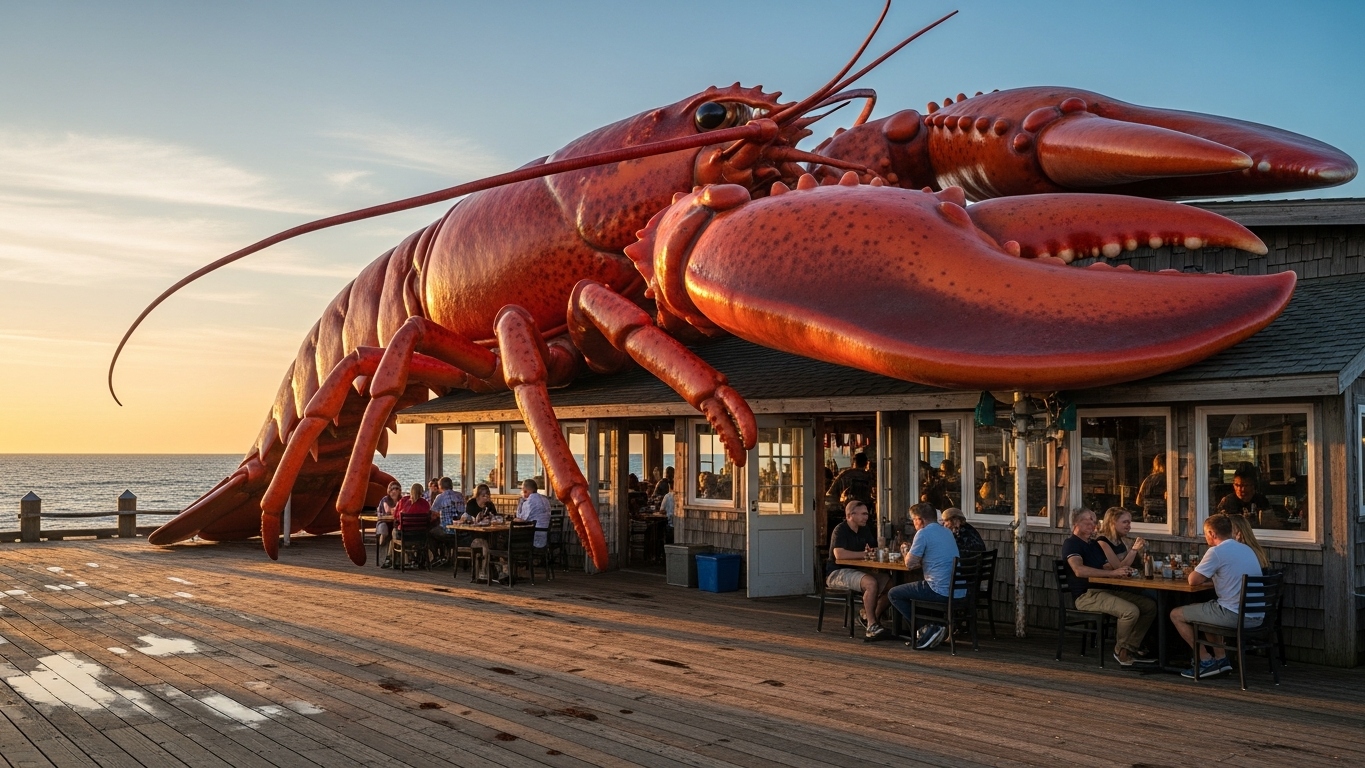
Define the Lobster Form
Lobster physical scope: one oversized lobster prop defined by an elongated segmented body, tail fan, paired claws, walking legs, long antennae, and supplied pose. Its geometry includes overall length, body and tail width, segment count, claw span and opening, leg placement, antenna length and curve, pose height, and support footprint. Its defining visual cues are the long abdomen, overlapping tail segments, tail fan, two large front claws, narrow leg rhythm, head and eye placement, and sweeping antennae.
Lobster presentation: a static lobster form posed low, raised, or upright with the elongated tail, claws, and antennae separated clearly from the support. The visual treatment can use approved naturalistic or stylized color, shell-like segmentation, restrained highlight and texture direction, and selected graphic treatment. Keep the lobster scope separate from crab body geometry, crawfish naming without reference support, moving claws or legs, climbable use, food-service function, biological claims, and invented commissions.
Lobster references should show top and side views because the subject is long, low, and articulated. Mark the head, thorax, abdominal segments, tail fan, claw size, claw asymmetry if relevant, walking legs, eyes, and principal antennae. A straight pose maximizes length; a curled tail shortens the footprint but changes segment overlap; a raised claw increases height and side clearance. Supports should remain secondary to the shell silhouette. The form must not drift into the wider, flatter crab authority or imply movement, handling, climbing, or food use.
Claw and tail proportions should come from one lobster reference rather than a blend of species. Establish whether the two claws match or differ, where each elbow-like joint bends, how the smaller walking legs spread, and how the antennae cross or separate in the principal view. Segment overlap should follow the selected straight, curved, or tucked-tail pose. A high viewpoint reveals the carapace and leg pattern; a low side view emphasizes claws and tail length. Water, dock scenery, menu graphics, trays, and restaurant architecture can contextualize the object only as separately defined scope and do not turn the prop into food service.
Control the Details That Identify the Lobster
Lobster planning variables include overall length, body and tail width, segment count, claw span and opening, leg placement, antenna length and curve, pose height, and support footprint; the long abdomen, overlapping tail segments, tail fan, two large front claws, narrow leg rhythm, head and eye placement, and sweeping antennae; approved naturalistic or stylized color, shell-like segmentation, restrained highlight and texture direction, and selected graphic treatment; and a static lobster form posed low, raised, or upright with the elongated tail, claws, and antennae separated clearly from the support.
Lobster form
For the lobster, set overall length, body and tail width, segment count, claw span and opening, leg placement, antenna length and curve, pose height, and support footprint. Show one oversized lobster prop defined by an elongated segmented body, tail fan, paired claws, walking legs, long antennae, and supplied pose, and keep the complete outline readable from the primary approach.
Lobster recognition
Preserve the long abdomen, overlapping tail segments, tail fan, two large front claws, narrow leg rhythm, head and eye placement, and sweeping antennae. Rank the lobster cues for the expected viewing distance, and make every permitted simplification explicit.
Lobster surface
Develop approved naturalistic or stylized color, shell-like segmentation, restrained highlight and texture direction, and selected graphic treatment. Place each requested lobster graphic on the reference views with usable artwork, orientation, and scale.
Lobster setting
Plan a static lobster form posed low, raised, or upright with the elongated tail, claws, and antennae separated clearly from the support. Record the footprint and visible sides for the lobster, then add circulation around the lobster, access limits, support preference, and fixed site constraints.
Plan Scale, Viewing, and Placement
Lobster scale issue: the long antennae and thin legs must stay readable while the segmented tail and claws carry the primary silhouette at viewing distance. Resolve that relationship through overall length, body and tail width, segment count, claw span and opening, leg placement, antenna length and curve, pose height, and support footprint, then test the lobster against its principal view and available floor or site area.
Lobster settings may include seafood or hospitality display; coastal, aquarium, or themed environment; festival, retail, stage, exhibit, or photo setting. Useful buyer inputs include lobster species or stylized reference; overall length and claw span; tail and body pose; antenna and leg arrangement; approved color direction; site and date. State any requested lobster contact, movement, lighting, or exterior exposure as a separate requirement.
Compare Lobster Directions
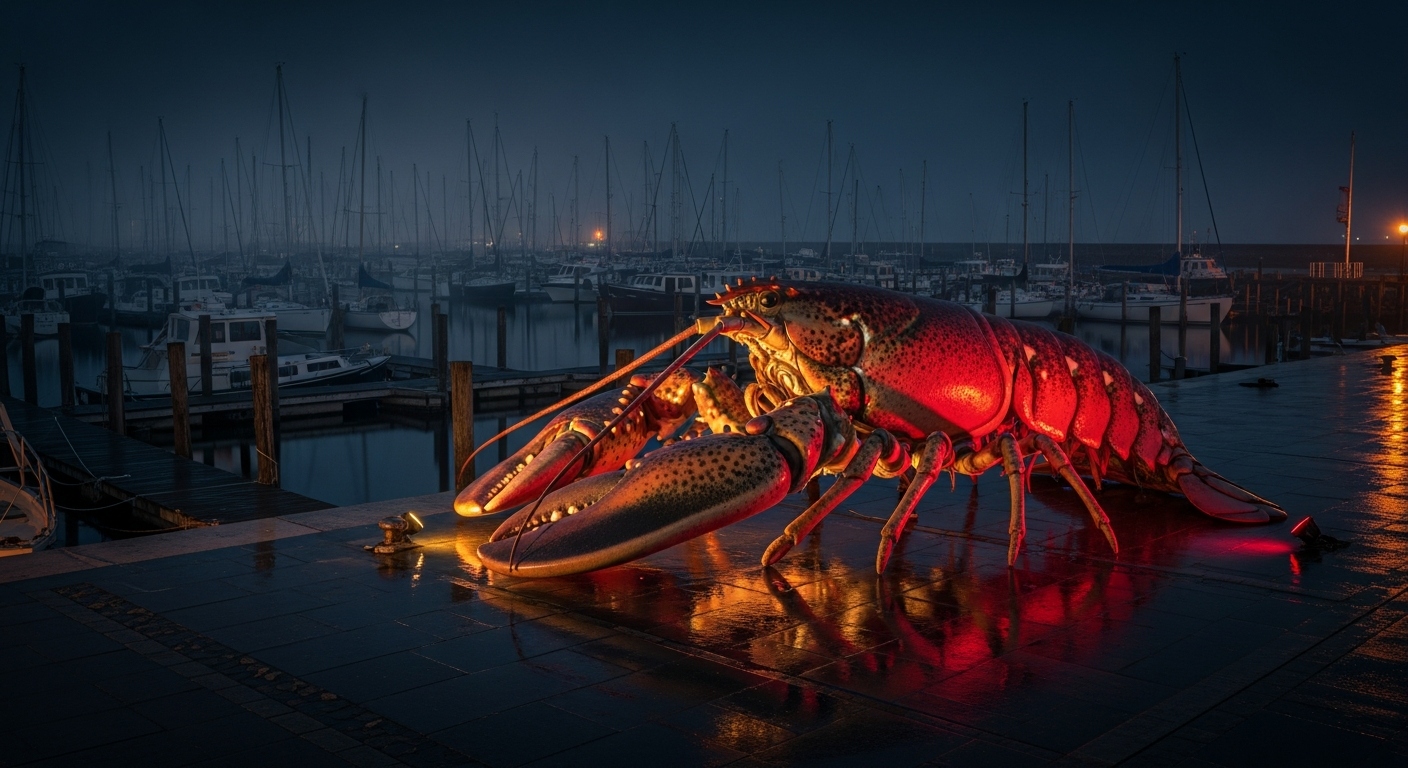
Lobster reference 1: Shows the complete lobster anatomy and a clear public-space scale comparison. Lobster reference 2: Provides an alternate pose and clearer side silhouette.
Compare the lobster concepts as visual directions. They do not identify a prior lobster customer or commission. Use the lobster views to compare overall length, body and tail width, segment count, claw span and opening, leg placement, antenna length and curve, pose height, and support footprint and approved naturalistic or stylized color, shell-like segmentation, restrained highlight and texture direction, and selected graphic treatment. The images do not establish final lobster dimensions, construction, performance, transport, installation, or outcome.
Prepare the Lobster Project Brief
Lobster quote inputs should connect the defining lobster cues with its intended dimensions and display setting. Include each applicable lobster item below.
- lobster species or stylized reference
- overall length and claw span
- tail and body pose
- antenna and leg arrangement
- approved color direction
- site and date
- Physical subject: one oversized lobster prop defined by an elongated segmented body, tail fan, paired claws, walking legs, long antennae, and supplied pose
- Geometry: overall length, body and tail width, segment count, claw span and opening, leg placement, antenna length and curve, pose height, and support footprint
- Recognition cues: the long abdomen, overlapping tail segments, tail fan, two large front claws, narrow leg rhythm, head and eye placement, and sweeping antennae
- Surface direction: approved naturalistic or stylized color, shell-like segmentation, restrained highlight and texture direction, and selected graphic treatment
- Display direction: a static lobster form posed low, raised, or upright with the elongated tail, claws, and antennae separated clearly from the support
- Scale issue: the long antennae and thin legs must stay readable while the segmented tail and claws carry the primary silhouette at viewing distance
- Lobster setting: seafood or hospitality display
- Lobster setting: coastal, aquarium, or themed environment
- Lobster setting: festival, retail, stage, exhibit, or photo setting
- Excluded scope: crab body geometry, crawfish naming without reference support, moving claws or legs, climbable use, food-service function, biological claims, and invented commissions
- Requested lobster contact, movement, lighting, or exterior exposure
Request a Custom Quote
Send the lobster reference, lobster species or stylized reference, overall length and claw span, tail and body pose, antenna and leg arrangement, approved color direction, site and date, destination, and required date. Also describe a static lobster form posed low, raised, or upright with the elongated tail, claws, and antennae separated clearly from the support. WhiteClouds can review the defined scope and prepare a custom quote. The concept images support visual planning and do not depict a completed WhiteClouds project.