
Designing a Giant Liver Display
A giant liver display has a broad asymmetrical outline, a distinct underside, and optional cutaway or connection details that change with the viewing angle. The project should resolve those physical characteristics without drifting into general medical content or another organ's display task.
Plan a Liver Display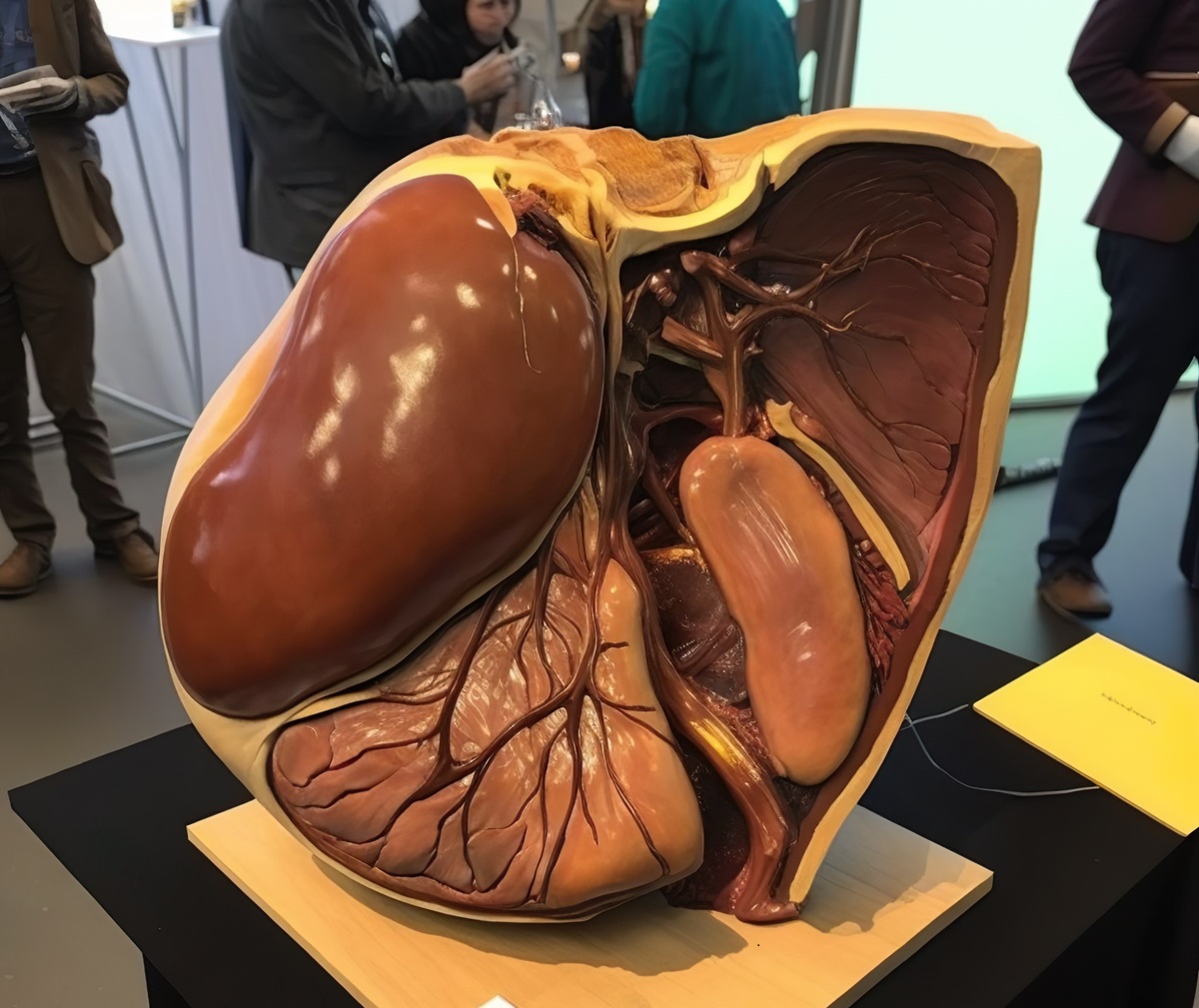
Choose the view that carries the display
The liver changes substantially between its broad outer face and its underside.
Broad exterior
Emphasize the overall asymmetrical outline, lobe relationship, thickness, and color fields with limited internal content.
Underside
Show the lower contour and only the connections or adjacent features required by the approved visual reference.
Open interior face
Define the opening, interior depth, number of visible regions, color separation, and any removable section.
Combined presentation
Use more than one face only when the site, labels, and viewer path can support a clear sequence.
Map width, thickness, and lobe transitions
Provide matching front, side, underside, and three-quarter references for the chosen presentation. Dimension the maximum width separately from height and depth. Mark the outer curve, lobe transition, thinner edge, and any recess or projecting connection that affects the silhouette.
A simplified version can use stronger color blocks and cleaner transitions. A reference-driven display needs enough coordinated visual information to keep the broad form from becoming a generic red or brown mass. State which details matter at the intended viewing distance.
Support the broad form without hiding its lower edge
An upright liver creates a wide vertical face and may need rear support or a defined base. An angled counter display can reveal both the exterior and underside. A wall-mounted piece reduces floor space but fixes the principal view. A horizontal arrangement needs enough elevation to keep the form visible above nearby graphics or people.
Place labels, leader lines, monitors, counters, and the audience path on the same elevation. If the display is walk-around, identify the required rear treatment. If a cutaway or removable panel is used, reserve the access space needed to view or operate it.
Read the outer mass and cutaway together
The pictured display combines a broad exterior contour with a cutaway face, visible interior color regions, and lower connection cues. The strong contrast helps separate the internal area from the outer liver form.
Its fabricator, material, size, and display purpose are not identified. A new request should use approved references to define its own silhouette, face, cutaway, labels, support, and setting.
Describe the selected face and physical arrangement
The brief should identify what the audience sees first and which details support that view.
- Approved liver references from matching directions
- Broad exterior, underside, cutaway, removable section, or combined presentation
- Overall width, height, depth, thickness, and lobe relationship
- Selected connections, interior regions, colors, labels, and callouts
- Upright, angled, horizontal, counter, wall, or integrated orientation
- Principal view, rear treatment, and target viewing height
- View-only or separately defined interaction
- Access route, destination, and required date
Request pricing for a custom giant liver display
Send the silhouette references, selected face, exterior or cutaway content, connections and labels, dimensions, orientation, support condition, viewer access, destination, and schedule.