

Giant Lego Statue: Building Dreams Brick by Brick
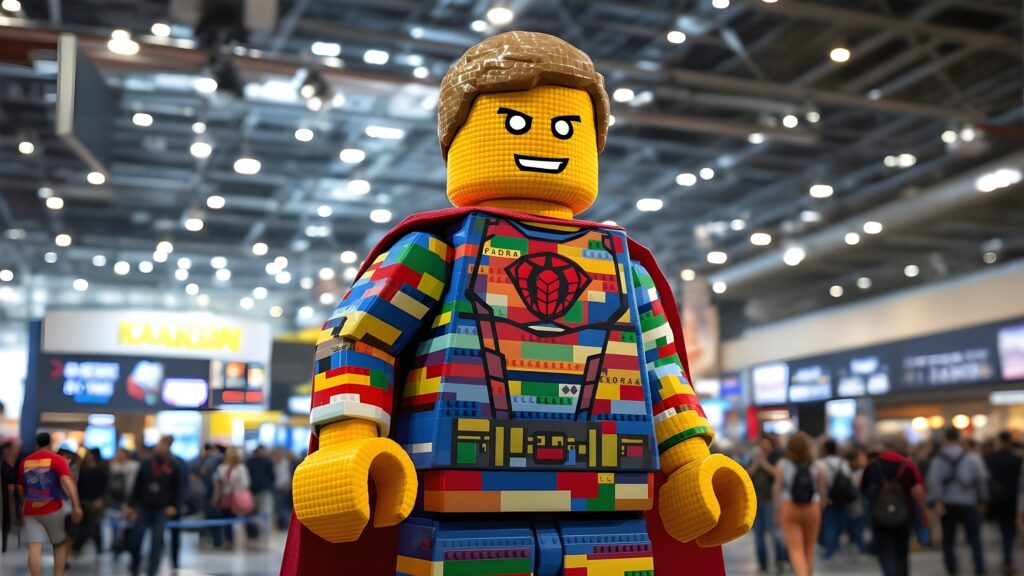
Few toys spark as much universal joy as the humble Lego brick. From childhood afternoons spent building castles and cars to elaborate adult collector sets that command entire rooms, Lego has always been a bridge between imagination and reality. But when the scale expands beyond the tabletop into towering figures, massive creatures, or monumental icons, Lego transcends its role as a toy and becomes art, architecture, and spectacle all in one. Enter the world of giant Lego statues, where millions of bricks come together to form life-size (and sometimes larger-than-life) masterpieces that turn heads and spark conversations wherever they stand.
From Playroom to Public Square
The evolution of Lego from a small-scale toy to public installation art feels natural when you think about it. Children instinctively stack bricks as tall as they can, testing gravity and creativity. What begins as a playful experiment eventually scales up with professional artists and engineers who ask, “What if?” The result is stunning: dragons guarding libraries, superheroes looming over convention halls, or full-scale cars that actually roll. These giant Lego statues are not just novelties—they are expressions of the limitless potential hidden in tiny plastic rectangles.
Why Giant Lego Statues Captivate Us
There’s a unique magic to seeing something familiar, like a dinosaur or a beloved movie character, reimagined in Lego form. The blocky texture highlights the artistry of translating curves and details into sharp, pixel-like surfaces. Visitors marvel at the patience required, the sheer number of bricks involved, and the engineering know-how behind structures that can weigh thousands of pounds. A giant Lego statue makes the impossible feel possible—it whispers to every child-at-heart, “You could build this too, if you only dreamed big enough.”
Iconic Examples Around the World
All around the globe, giant Lego statues appear as tourist attractions, corporate centerpieces, and museum exhibits. Life-sized Lego giraffes greet visitors at Legoland parks. A towering Lego Yoda at conventions wows Star Wars fans. The Guinness World Records even tracks extraordinary builds, like the largest Lego ship or the tallest Lego tower reaching several stories high. Each project has its own charm, whether it’s whimsical, nostalgic, or awe-inspiring. But together they form a global community of art that celebrates both nostalgia and innovation.
The Creative Process Behind the Bricks
Every Lego statue starts with an idea, but turning that vision into a towering sculpture requires meticulous planning. Artists use digital modeling software to map out each brick’s placement, ensuring both visual fidelity and structural stability. Colors are carefully selected to achieve gradients, shading, and lifelike detail. Internal supports may be designed to prevent collapse, especially in statues exposed to crowds or outdoor environments. What seems like a simple stack of bricks is actually a highly sophisticated balance of art and engineering.
How a Giant Lego Statue Might Be Fabricated
Concept and Design
The journey begins with brainstorming. Whether it’s a superhero, an animal, or a cultural landmark, artists sketch concepts and then translate them into digital Lego models. Programs like Lego Digital Designer or specialized 3D software allow them to map each brick and calculate the number of pieces required. At this stage, decisions about size, weight, and environment are crucial. Will the statue be indoors or outdoors? Will children climb on it? These choices guide the engineering approach.
Internal Support and Skeleton
While small Lego builds hold together with clutch power alone, giant statues often need internal skeletons made of steel, aluminum, or reinforced plastic. These supports act like bones inside a body, anchoring the structure and ensuring stability against vibrations, weather, or accidental bumps. The skeleton is designed in tandem with the Lego layout, allowing the bricks to lock neatly around it without disrupting the visual design.
Layer-by-Layer Construction
Fabrication proceeds much like building a Lego set—only scaled up enormously. Builders assemble the statue layer by layer, sometimes gluing bricks together for added strength. Teams may work simultaneously on different sections, later merging them into the final piece. For larger builds, modular construction is common: legs, arms, or sections are built separately, transported, and then locked together on site.
Finishing Touches
Once the main form is built, artists refine details—adding shading with carefully chosen brick colors, smoothing transitions, or inserting small decorative elements. Lighting can be integrated, especially for indoor displays, giving the statue an extra sense of drama. The final product is then polished, reinforced, and prepared for its public unveiling.
Transportation and Installation
Moving a giant Lego statue is no small feat. Some weigh hundreds or even thousands of pounds. Specialized crates, cranes, or dollies may be required, along with careful planning to avoid vibration damage. Installation teams often reassemble sections on site, ensuring the piece looks seamless once in position.
The Appeal of Lego as a Medium
Unlike stone, wood, or metal, Lego carries built-in nostalgia. It’s a material anyone can recognize and relate to. While marble statues feel distant and monumental, Lego statues feel personal and playful. Their bright colors draw the eye, while their modular form sparks imagination. They invite participation—people don’t just admire them, they think about what they might build themselves. This interactivity makes Lego statues uniquely engaging compared to other large-scale public art.
Lego in Pop Culture: From Toys to Icons
Lego’s cultural reach extends far beyond playrooms. From blockbuster films like The Lego Movie to video games and brand collaborations, Lego has become a pop-culture icon. Giant Lego statues ride this wave of popularity, appearing at fan conventions, theme parks, and advertising campaigns. Imagine a life-size Lego Iron Man at a comic con or a massive Lego Pikachu drawing crowds at a gaming expo—these statues are not just art pieces, they’re marketing gold and fan magnets.
Engineering Challenges and Triumphs
Creating giant Lego statues isn’t all fun and games. Builders must overcome serious challenges:
- Weight Distribution: A statue built entirely of bricks could buckle under its own weight if not properly reinforced.
- Weather Resistance: Outdoor displays require UV-resistant coatings or protective casings to withstand sunlight and rain.
- Brick Availability: Some builds use hundreds of thousands of bricks, requiring careful sourcing and sometimes custom colors.
- Time and Cost: Projects can take months to complete and cost tens of thousands of dollars.
Yet the results are worth the effort. Each completed statue represents a triumph of patience, creativity, and engineering.
Giant Lego Statues as Community Builders
More than art, giant Lego statues serve as gathering points. They invite selfies, spark conversations, and even inspire competitions. Communities have come together to build record-breaking Lego structures, with thousands of participants laying bricks side by side. Schools, museums, and cities use Lego statues as educational tools, teaching engineering principles, teamwork, and creative problem-solving.
The Future of Giant Lego Creations
As technology evolves, the possibilities for giant Lego statues expand. 3D printing may one day create custom-shaped Lego-like pieces for smoother curves. Augmented reality could allow viewers to “see inside” statues, revealing their skeletons or alternate designs. We may see interactive Lego statues that light up when touched or reconfigure with robotic assistance. What began as a toy may evolve into a high-tech medium for the next generation of public art.
Conclusion: Building More Than Statues
A giant Lego statue is more than a pile of bricks stacked sky-high. It is imagination made solid, a playful challenge to the limits of creativity. From fabrication workshops to city plazas, these statues remind us of what’s possible when tiny ideas are scaled up with passion, patience, and precision. Whether it’s a dragon roaring above a theme park gate or a life-size human figure standing in a gallery, each piece is both a tribute to Lego and a monument to human ingenuity. Giant Lego statues prove that even the simplest building block can support the weight of wonder. And maybe, just maybe, they inspire us to dust off the old brick box and start dreaming bigger ourselves.
Check out WhiteClouds’ 3D Statues for more information.
Contact us today to learn more about our 3D services and how we can help you achieve your goals.