
Developing a Giant Kidney Display
A giant kidney display begins with a clear bean-shaped mass, the recessed inner edge, selected connection points, and a decision about exterior versus cutaway presentation. Those physical choices separate the task from a broad medical-props page and from a bladder or complete urinary-system display.
Plan a Kidney Display
Compare a cutaway model with an interactive outline
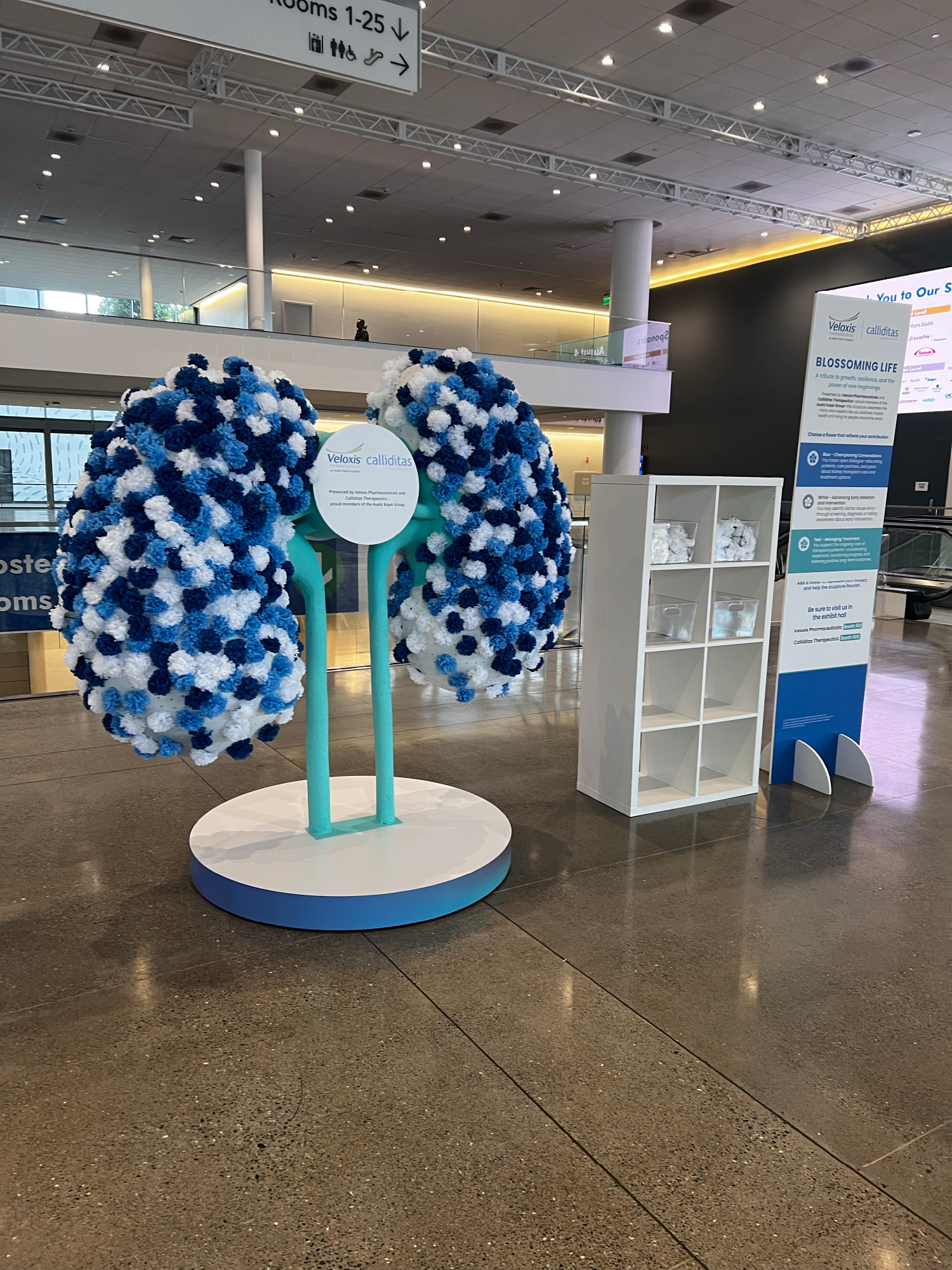
A physical kidney form shows a curved exterior, recessed inner edge, connection cues, and a cutaway face; its project identity is not confirmed. The documented WhiteClouds flower display for T3 Expo and the Kidney Foundation instead uses openings across a kidney-shaped outline.
These examples serve different physical jobs. One organizes selected interior regions for viewing; the other uses openings across a recognizable kidney silhouette for a visitor activity. A new brief should choose its own content and audience relationship rather than combine both by default.
Establish the curve and inner recess first
Supply front, side, and three-quarter references that agree on the overall contour, thickness, inner recess, and top-to-bottom orientation. Mark the widest point and the depth of the recessed edge. If the display is stylized, show which proportions may be simplified and which visual landmarks must remain.
Decide whether one kidney is enough or whether a paired arrangement is necessary. A pair introduces spacing, mirrored orientation, connecting forms, and a broader footprint. Include every surrounding element in the same elevation instead of estimating the kidney alone.
Choose the display face and its information
Exterior, cutaway, and interactive treatments create different physical requirements.
Intact outer form
Use the outer contour, recessed edge, connection cues, color fields, and labels without exposing interior regions.
Cutaway face
Set the section edge and choose which internal areas occupy the opening; record their relative depth, colors, and whether a panel lifts away.
Connections and labels
List the vessels, ureter cue, leader lines, text panels, or detachable markers required and show their exact positions.
Interactive openings
If visitors place, remove, or arrange objects, specify the opening pattern, reach zone, reset access, and supplied items as an explicit interaction.
Aim the important face toward the audience
A cutaway needs a principal view that reveals its depth without glare or obstruction. A closed walk-around form may require a complete rear treatment. A wall display reduces floor depth but fixes the viewing angle. An interactive face needs room for people to approach and for staff to reach any reset area.
Mark the support, base, counter, wall, graphics, labels, and visitor line on one drawing. If the piece travels, provide the door, dock, elevator, and final route dimensions so the overall kidney shape and any attachments can be evaluated against access.
Define the form and its audience role
The request should identify which kidney features are visual, informational, or interactive.
- Single kidney, paired kidneys, or larger system arrangement
- Approved contour, recessed edge, thickness, and connection references
- Closed exterior, cutaway, removable section, or interactive opening pattern
- Interior regions, colors, labels, callouts, and supplied objects
- Overall width, depth, height, and target viewing level
- Freestanding, counter, wall, or integrated support
- View-only, walk-around, or separately defined interaction
- Access route, destination, event or installation window, and required date
Request pricing for a custom giant kidney display
Send the contour references, single or paired arrangement, exterior or cutaway content, labels or interaction, dimensions, viewing face, support, access information, destination, and schedule.