
Building the Brief for a Giant Iguana Prop
A giant iguana prop depends on its low body, long tail, gripping feet, head profile, and ridge of dorsal spines. Planning those features around one pose and one site keeps the page focused on a new species-specific display while completed WhiteClouds iguana work serves as a physical reference.
Plan an Iguana Prop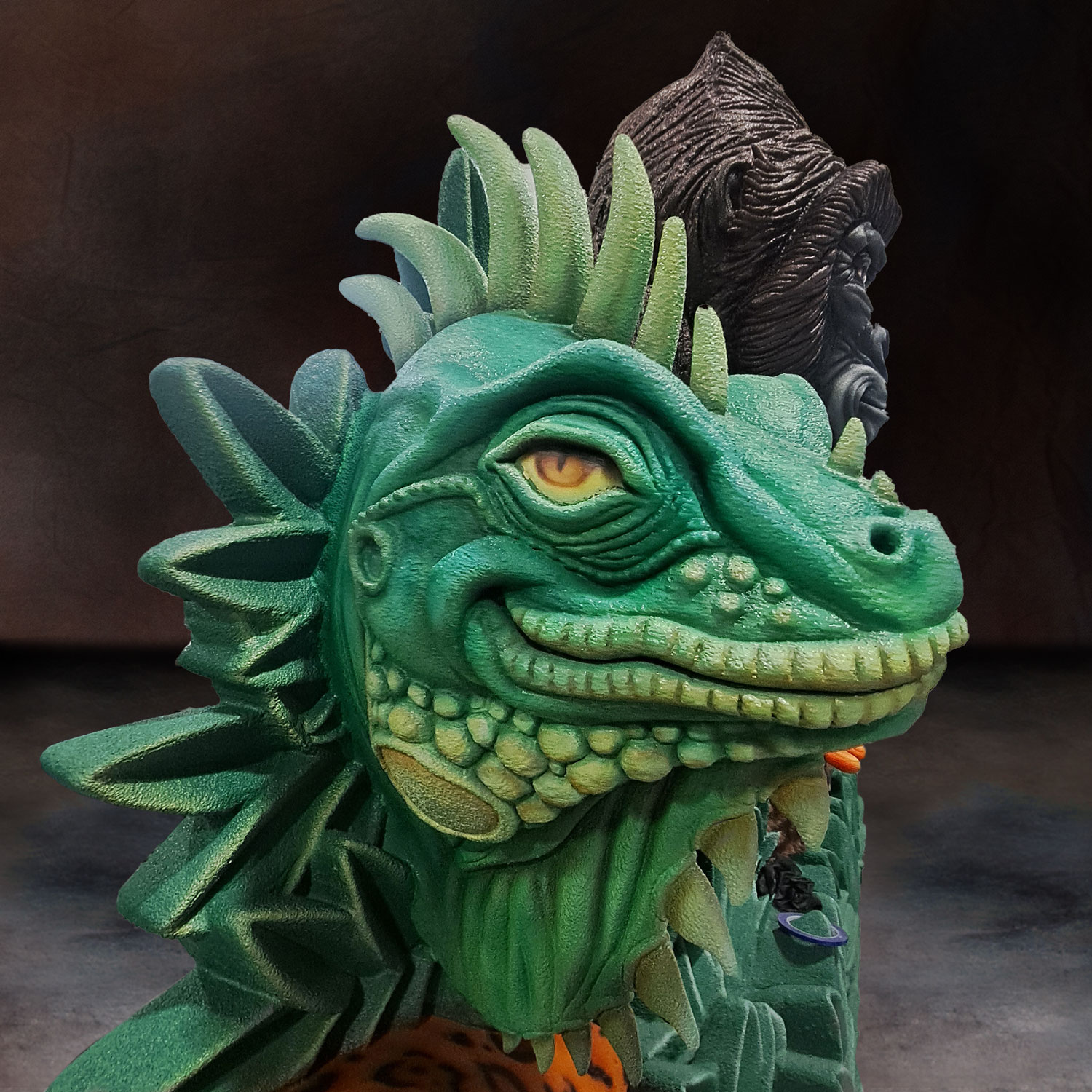
Arrange the features along one continuous spine line
The iguana reads through the relationship between its head, body, legs, and tail.
Head and dewlap
Set the snout, eye direction, cheek mass, mouth line, and hanging dewlap in both side and three-quarter views.
Dorsal spines
Define where the spine row begins, how its height changes, and whether it continues onto the tail.
Feet and toes
Show which feet grip, rest, or remain visible and how the long toes meet each scenic contact.
Tail route
Draw the full taper, curve, and final tip rather than allowing the tail to disappear behind scenery.
See species cues carried into a scenic sign
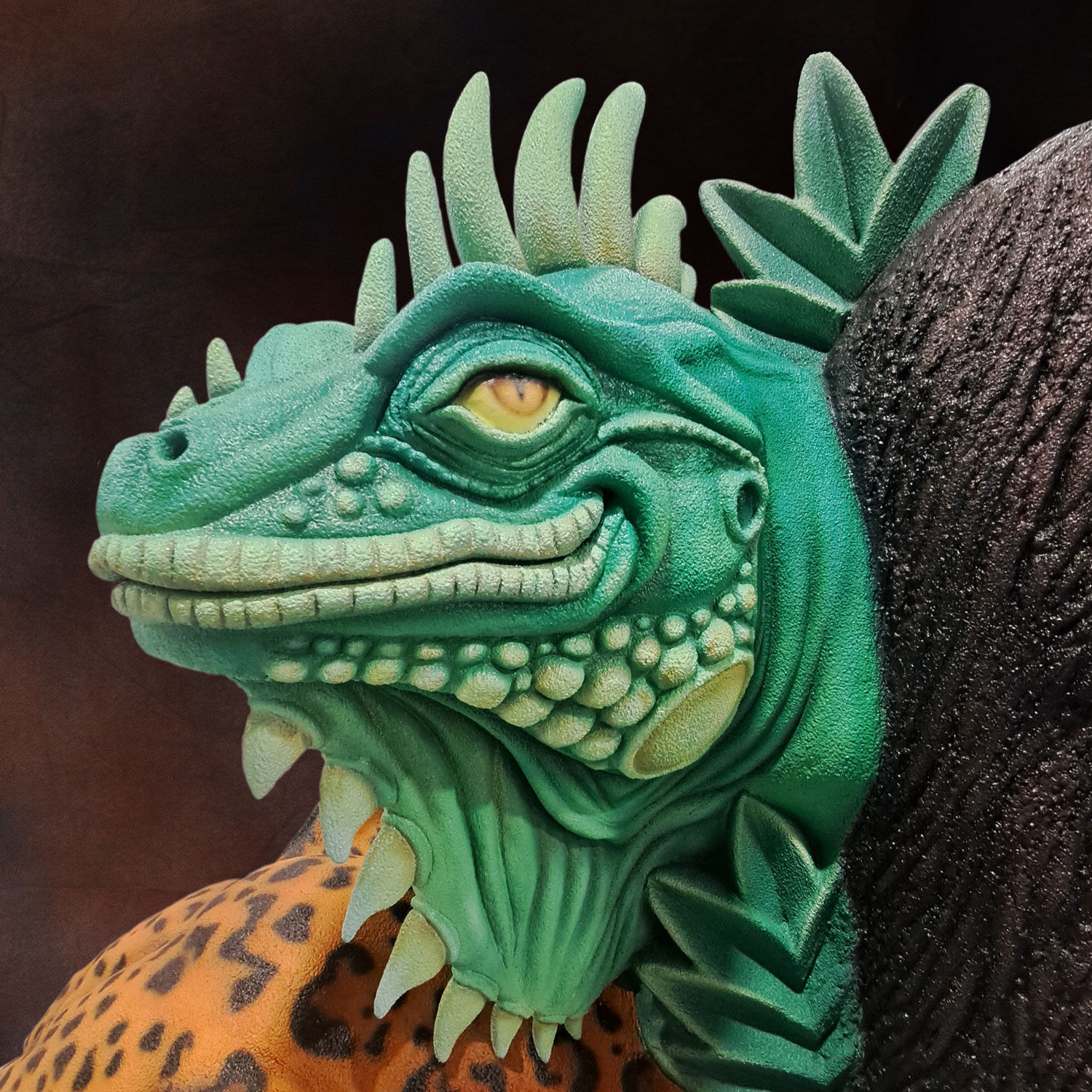
WhiteClouds fabricated Iggy the iguana for the Rainforest Cafe sign at Disney's Animal Kingdom. The selected views show a turning head, visible dewlap, spine row, gripping forefoot, and body fitted among tropical scenic forms.
This is a completed example, not the design for every iguana display. A new project should use its own approved pose, style, color direction, dimensions, site, and character details.
Map every foot, belly, and tail connection
A resting iguana can use a low platform or branch. A climbing pose raises the head and shifts the legs around a vertical or diagonal element. A clinging figure may expose the belly and require a different principal view. Mark each contact and the part supplied by the buyer or by WhiteClouds.
Draw the whole scene in plan as well as elevation. Tail curves, extended toes, spines, and nearby foliage may reach beyond the central body, affecting wall clearance, audience paths, and the route through doors or loading areas.
Keep the head and spine rhythm visible
From the primary approach, the head should not be hidden behind the shoulder or a branch. The dewlap and dorsal spines need enough silhouette contrast to remain distinct, while color fields and surface details should reinforce rather than replace the form.
For an elevated display, identify the audience eye line and underside exposure. For a walk-around piece, specify the rear and opposite side expectations, including how feet and tail contacts look away from the principal camera view.
Define the species, pose, and setting
Coordinated visual references should show the entire tail and every required contact point.
- Approved iguana or original character artwork
- Resting, climbing, clinging, turning, or another fixed pose
- Overall body length, height, width, and full tail path
- Head, dewlap, dorsal spine, leg, foot, and toe treatment
- Color pattern and surface character
- Branches, rockwork, signs, walls, or platforms
- Primary views, audience clearance, and interaction limits
- Access route, destination, installation window, and required date
Request pricing for a custom giant iguana
Send the approved references, pose, body and tail dimensions, dewlap and spine treatment, color direction, scenic contacts, sightlines, access information, destination, and schedule.