
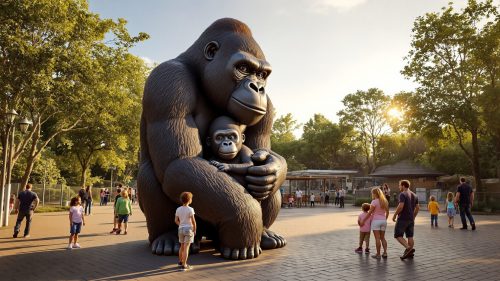
The Allure of the Giant Gorilla Statue
From the depths of dense jungles to the bright lights of cinema, gorillas have always commanded attention. They are creatures of power, intelligence, and mystery—animals that remind us of both our primal past and our shared connection to nature. So when communities, artists, or entertainment venues want to create something that embodies strength, majesty, and intrigue, few choices are as striking as the giant gorilla statue. These monumental sculptures are not just oversized animals carved from stone, metal, or concrete. They are cultural statements, crowd-pulling attractions, and symbols that resonate with people of all ages. Whether modeled after real-life gorillas or inspired by legends like King Kong, giant gorilla statues spark awe, curiosity, and conversation wherever they stand. This article explores the cultural significance of gorillas, the artistic and emotional impact of statues built in their honor, famous real-world examples, the process of fabricating such massive works of art, and why these colossal primates continue to fascinate us.
Gorillas as Symbols of Strength and Kinship
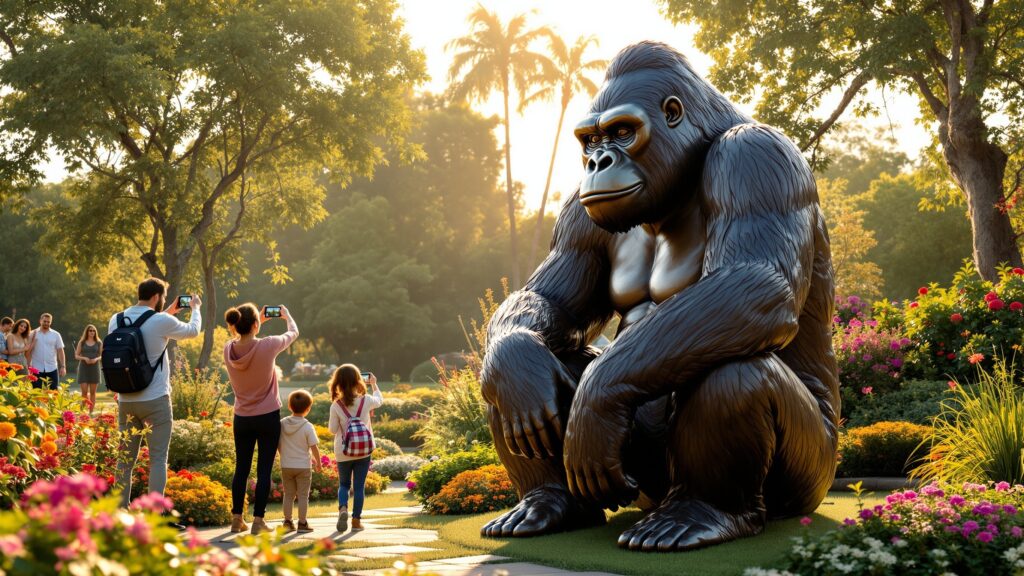
Gorillas have long been regarded as symbols of strength, dominance, and primal connection. They are the largest of the great apes, but they are not defined solely by their size. Gorillas are also known for their social bonds, intelligence, and gentle family structures. A giant gorilla statue often draws on this duality: the immense power of a silverback and the tender protectiveness he shows toward his troop. In many cultures, gorillas are seen as guardians of the natural world. They embody the wild and untamed, yet they also reflect traits we recognize in ourselves—care, loyalty, and communication. Statues capture this blend of ferocity and gentleness, reminding viewers of the beauty of strength balanced with compassion. Pop culture has amplified this symbolism through characters like King Kong, who has been portrayed alternately as a terrifying monster and a misunderstood guardian. A giant gorilla statue can channel this same duality, simultaneously awe-inspiring and approachable, depending on its pose, setting, and artistic interpretation.
Famous Inspirations and Real-World Examples
There are countless ways gorillas have been immortalized in monumental form. Some statues are tied to cinematic tributes, while others celebrate nature and conservation. One of the most famous inspirations is, of course, King Kong. Around the world, theme parks and movie studios have built towering statues of the colossal ape to honor his cinematic legacy. These statues are often exaggerated in size, making them appear as if the giant gorilla has truly stepped out of the silver screen.
In Africa, gorilla statues sometimes appear at the entrances to wildlife reserves and conservation centers, symbolizing the region’s deep connection to these endangered creatures. These works emphasize education, conservation, and respect for wildlife, reminding visitors that gorillas are not merely pop-culture icons but living beings whose survival depends on human care.
Elsewhere, gorilla statues have become public art. From stylized, modern sculptures in cities to hyper-realistic statues in zoos and parks, the gorilla has been embraced as a powerful motif. Each interpretation reveals a different facet of the animal: its dominance, its mystery, its intelligence, or its humanity.
Why Giant Gorilla Statues Capture Our Imagination
Part of the allure of a giant gorilla statue lies in sheer presence. Gorillas already stand tall and imposing in the wild; magnify their size, and they become irresistible spectacles. The sight of a giant gorilla statue—whether crouching in a defensive stance, standing tall and roaring, or gently holding a young gorilla—creates an immediate emotional response. The gorilla’s form is also highly expressive. Their musculature, facial features, and postures can convey an astonishing range of emotions: anger, serenity, playfulness, or authority. Unlike more static animals, gorillas invite dynamic poses that make statues come alive with drama and story. Additionally, there’s an inherent thrill in encountering a creature larger than life. It sparks the imagination, recalling tales of prehistoric beasts, jungle legends, or movie monsters. Standing before a massive gorilla statue, one can feel both dwarfed by its size and connected to the primal roots it represents.
Artistic Styles: From Realism to Fantasy
Not all giant gorilla statues look the same, and that diversity is part of their charm. Some artists pursue hyper-realism, sculpting every ripple of muscle, wrinkle of skin, and strand of hair to capture the gorilla’s physicality with breathtaking detail. These statues feel almost alive, as if the gorilla could move at any moment. Other statues lean into stylization. Angular, geometric interpretations transform the gorilla into a modern art piece. Shiny metallic finishes or abstract blocky shapes create statues that are less about realism and more about symbolic power.
Then there are fantasy-inspired gorillas. These often take cues from King Kong, Godzilla, or comic book aesthetics, exaggerating features for dramatic effect. Enormous teeth, glowing eyes, or dynamic action poses turn the gorilla statue into a larger-than-life spectacle straight out of myth or movie. Each artistic style speaks to different audiences and purposes: realism for education and conservation, stylization for public art and urban spaces, and fantasy for entertainment and pop culture.
The Emotional Impact of Encountering One
To stand in the shadow of a giant gorilla statue is to feel a unique blend of awe, respect, and reflection. The sheer size is humbling, reminding us of the natural power that exists in the world. Yet the gorilla’s human-like features—forward-facing eyes, expressive faces, and dexterous hands—invite empathy. Children often respond with wonder, fascinated by the scale and energy of the statue. Adults may reflect on deeper themes: the fragility of wildlife, the thin line between civilization and wilderness, or the timeless stories of gorillas in myth and cinema. In public spaces, giant gorilla statues become gathering points. Tourists take photos, couples pose together, and families make memories. These statues transcend their physical form to become shared experiences and symbols of community identity.
Giant Gorilla Statues in Public Spaces
The placement of a giant gorilla statue is just as important as the design. In zoos or conservation centers, a statue can embody the mission of protecting endangered species. In urban parks, it can serve as a dramatic artistic centerpiece, contrasting nature’s power with the cityscape. In theme parks and entertainment venues, giant gorillas become immersive icons. Visitors often find themselves staring up at a snarling Kong-like figure perched atop a building or bursting from the jungle canopy. These installations create thrilling photo opportunities and unforgettable experiences. Even in smaller towns, gorilla statues can become quirky local landmarks. Whether serious or playful, they add character to the landscape and give residents a source of pride.
How a Giant Gorilla Statue is Fabricated
Behind every monumental gorilla statue lies a fascinating blend of artistry, engineering, and craftsmanship. The process of fabrication involves multiple stages, each crucial to creating a sculpture that is both visually powerful and structurally sound.
Concept and Design
The journey begins with sketches, digital renderings, and sometimes small-scale clay models. Artists decide on the pose—whether the gorilla is standing tall, crouched in defense, or interacting with another element. Engineers then join the process to ensure the design is not only striking but also feasible at large scale.
Materials
Material choice depends on location, budget, and purpose.
- Bronze or Metal Alloys: Ideal for permanent outdoor statues. They offer durability, weather resistance, and a timeless finish.
- Concrete or Stone: Heavy and imposing, these give statues a raw, powerful feel. However, they require strong foundations.
- Fiberglass and Resin: Lightweight and versatile, these materials are perfect for temporary installations or theme parks where mobility may be required.
- Recycled Materials: Some modern artists experiment with scrap metal or salvaged wood, giving their statues eco-conscious significance.
Structural Engineering
A giant gorilla statue requires an internal skeleton or armature, typically made of steel. This framework distributes weight and stabilizes the sculpture against environmental forces like wind or earthquakes. Extended arms, outstretched fists, or wide stances must be carefully balanced to avoid collapse.
Sculpting and Detailing
Depending on the chosen material, the surface is cast, carved, or molded. For realistic statues, sculptors meticulously create textures that mimic skin, fur, and muscle. For stylized designs, smooth or geometric surfaces may be emphasized instead. Some statues incorporate lighting or sound effects, such as glowing eyes or roaring audio, to enhance the immersive impact.
Assembly and Installation
Many giant statues are constructed in sections off-site and then transported for assembly. Cranes and heavy machinery lift and secure the pieces, while workers weld, bolt, or seal the joins. A reinforced base is essential, often hidden beneath landscaping or decorative pedestals.
The end result is not just a sculpture but a fusion of art and engineering—an object designed to inspire awe for decades to come.
The Future of Giant Gorilla Statues
As technology evolves, so too does the future of monumental art. We may soon see giant gorilla statues enhanced with augmented reality, allowing visitors to scan the statue with their phones to unlock animations, stories, or conservation facts. Interactive features like motion sensors could make the gorilla roar or move subtly when approached, creating unforgettable experiences. Sustainability will also play a role. Eco-friendly materials, solar-powered lighting, and recycled construction elements could become standard, reflecting the conservationist symbolism often associated with gorillas. The integration of community involvement is another trend. Local artists, schools, and volunteers may contribute to the design and creation process, ensuring that the statue reflects the identity and values of the community it serves.
Conclusion: A Monument to Power and Connection
The giant gorilla statue is more than an oversized sculpture. It is a monument to the strength, intelligence, and complexity of one of nature’s most captivating creatures. Whether inspired by conservation, mythology, or cinema, these statues invite us to reflect on our relationship with the natural world and the power of art to inspire awe. Standing before a massive gorilla statue, one feels both small and connected—reminded of the wildness that lives within us and the shared history that binds us to the animal kingdom. These monuments are not only works of art but also cultural landmarks, symbols of imagination, and tributes to the enduring allure of the gorilla.
As long as humans crave inspiration from nature and myth, giant gorilla statues will continue to rise in cities, parks, and attractions around the world. They stand as guardians of wonder, forever capturing the delicate balance of power and compassion that defines these majestic apes.
Check out WhiteClouds’ 3D Statues for more information.
Contact us today to learn more about our 3D services and how we can help you achieve your goals.