
Planning a Giant Frog Prop as a Scenic Figure
A giant frog prop should be scoped as a scenic figure with a specific pose and relationship to its setting. The broad body, folded legs, toe spread, and perch can make its true footprint much larger than the torso suggests.
Plan a Scenic Frog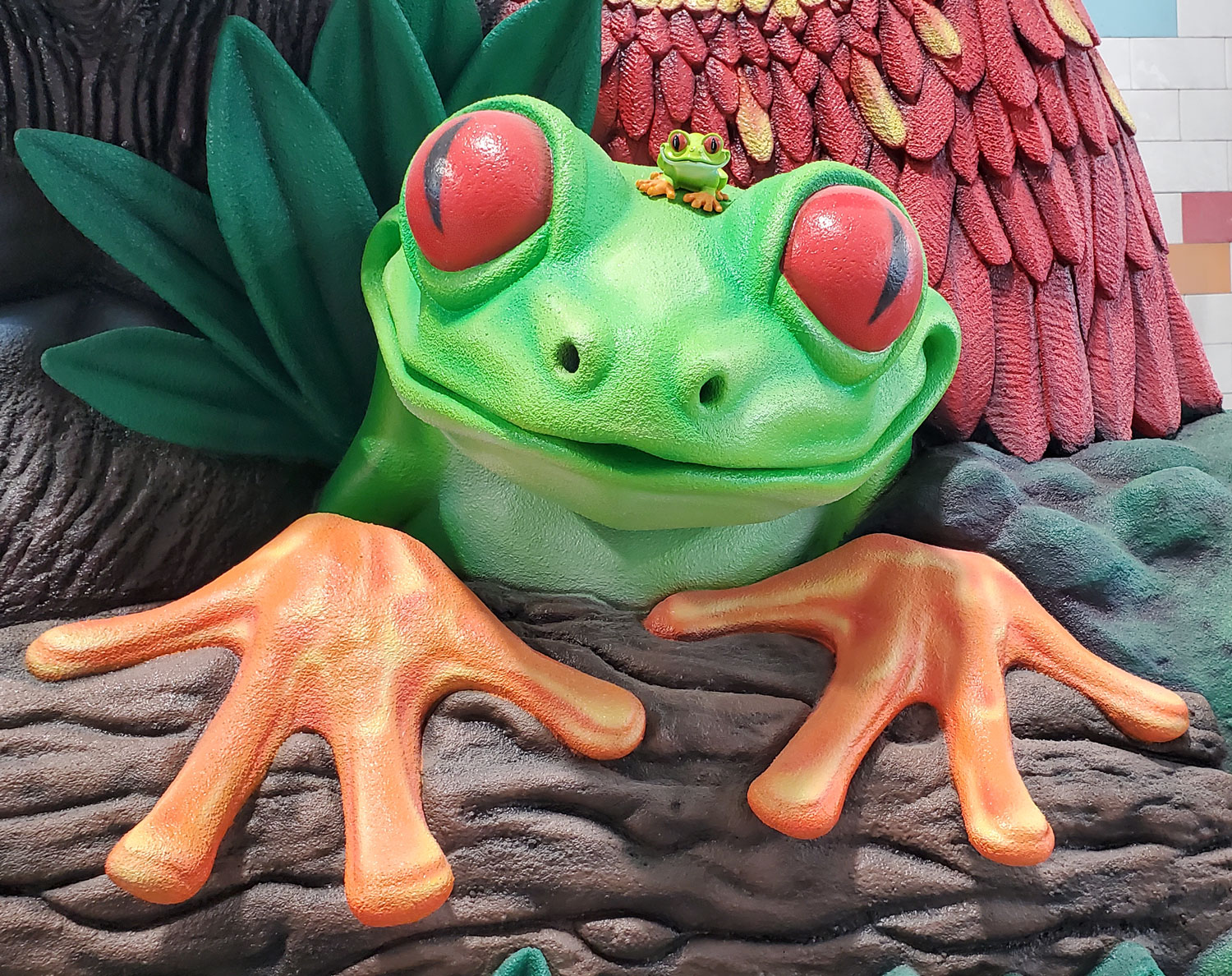
Draw the frog from its contact points outward
Start by marking where the feet, belly, and any supporting surface meet. Then place the hips, shoulders, and head. This prevents a recognizable front view from becoming an impossible side profile and reveals how much room the toes and rear legs actually need.
A species reference can guide eye placement, proportions, and markings. A stylized frog may enlarge the face or eyes for expression, but the brief should identify which anatomical cues cannot change. Supply front, side, and top views whenever the figure will be seen in the round.
Give the frog a clear place to sit
The surrounding geometry affects both pose and footprint.
Independent crouch
A compact floor pose keeps the figure self-contained, with enough room for the full rear-leg and toe envelope.
Perched figure
A branch, ledge, rock, or sign edge needs actual dimensions so the body and contact points can be coordinated.
Climbing pose
A vertical relationship emphasizes hands and feet and requires a defined wall or scenic host rather than an assumed backdrop.
Visitor proximity
State whether people only view the frog, stand beside it for photos, or are expected to touch a designated area.
Read the complete pose before focusing on color
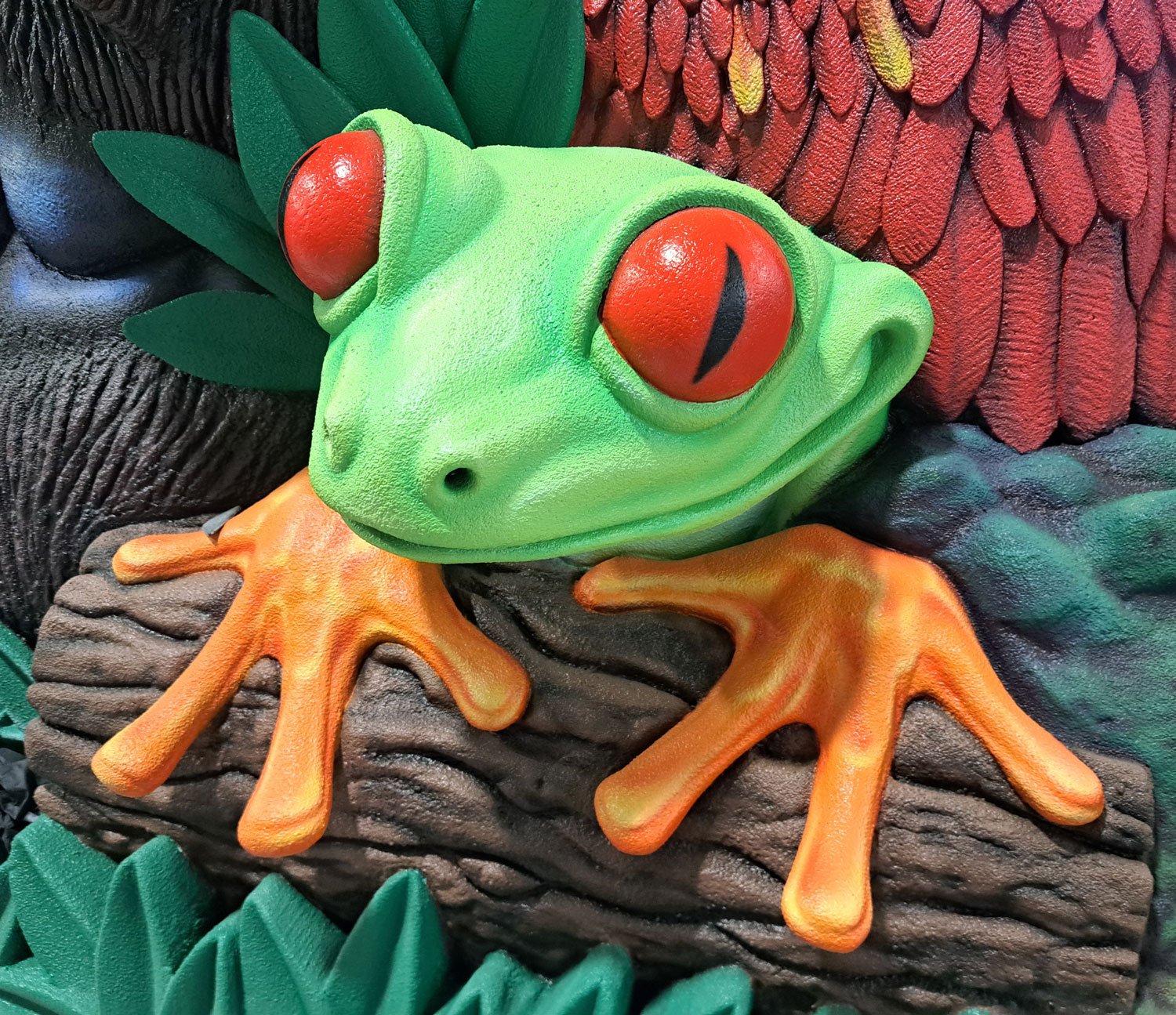
The supporting images show how a frog's face, folded limbs, and feet create one compact but visually complex shape. They are presented as examples of physical work, not as a retelling of the completed project or a claim that every frog uses the same construction.
What to send for an initial scenic-prop estimate
The pose and host surface are the most important early decisions.
- Species or approved stylized reference
- Front, profile, and top pose views
- Overall height and complete foot-to-foot width
- Independent base or supplied perch geometry
- Primary sightline and camera position
- Visitor distance and any planned contact
- Site access and display conditions
- Destination and required date
Request pricing for a giant frog prop
Share the species or style reference, pose, total footprint, perch information, viewing direction, visitor relationship, site conditions, access limits, destination, and date.