
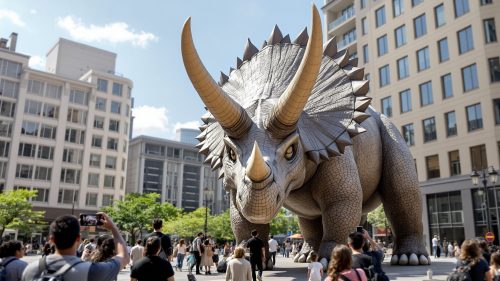
The Giant Dinosaur Statue: A Monument to Prehistoric Wonder
Dinosaurs have captivated human imagination for centuries. Their colossal size, mysterious extinction, and the sheer variety of species make them some of the most fascinating creatures ever to walk the Earth. Museums bring them back to life through skeletal reconstructions, films ignite our imaginations with roaring beasts on screen, and toys allow kids to hold prehistoric worlds in their hands. But nothing compares to standing face-to-face with a Giant Dinosaur Statue. These towering monuments blur the line between art, science, and entertainment, offering an unforgettable experience that transports us back to an era when thunderous footsteps shook the ground. In this article, we’ll explore the cultural significance of giant dinosaur statues, the emotional impact they create, their role in education and tourism, and how such massive structures are fabricated. Along the way, we’ll consider why these statues remain enduring attractions for families, schools, and travelers worldwide.
Why Dinosaurs Inspire Awe
Dinosaurs embody both wonder and mystery. They dominated Earth for over 160 million years, evolving into a vast array of shapes and sizes—from the towering Brachiosaurus to the fierce Tyrannosaurus rex. Their fossils provide a tantalizing glimpse into a world that existed long before humans. When people see a giant dinosaur statue, the fascination is immediate. It isn’t just about size; it’s about connection. These statues offer a rare opportunity to feel what it might have been like to stand in the shadow of creatures that once ruled the planet. For children, the statues bring bedtime stories and movies into vivid reality. For adults, they ignite curiosity and nostalgia, rekindling the excitement of first learning about these magnificent animals.
The First Encounter: What a Giant Dinosaur Statue Looks Like
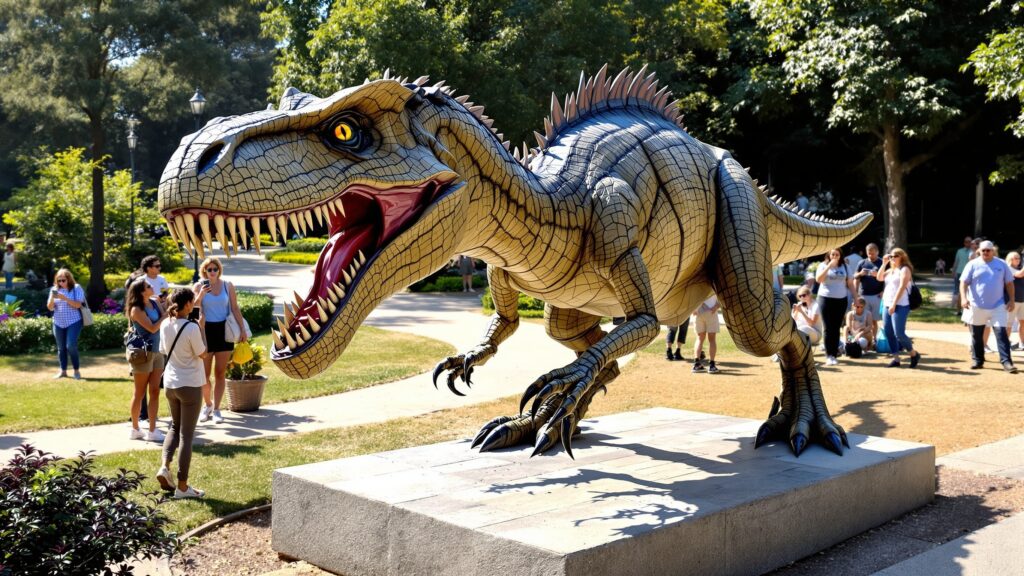
Imagine stepping into a park, zoo, or museum courtyard, and there it is: a giant dinosaur statue looming above you. A Tyrannosaurus rex, jaws wide open, teeth gleaming, claws outstretched as though frozen mid-roar. Or perhaps a long-necked Brachiosaurus, its head soaring into the sky, gentle and majestic, casting a shadow across the space below. The detail is astonishing. Scales are sculpted into the surface, muscles ripple beneath the skin, and realistic eyes seem to follow you as you move. Every wrinkle, every claw, every ridge on the tail looks lifelike. Whether crafted to mimic fossil evidence or stylized to resemble pop culture depictions, these statues captivate audiences in ways few other forms of public art can achieve.
Cultural and Educational Significance
Giant dinosaur statues aren’t just spectacles; they are powerful educational tools. They spark curiosity about paleontology, geology, and biology. Many children fall in love with science after standing before a colossal dinosaur figure and asking: How did it live? What did it eat? Why did it disappear?
Educational institutions, especially museums and science centers, often use these statues to bridge the gap between imagination and scientific fact. A towering dinosaur draws visitors in, encouraging them to explore fossil exhibits, interactive displays, and research labs. For schools, field trips to locations with giant dinosaur statues create memories that last a lifetime and often ignite lifelong interests in science. At the same time, these statues are deeply ingrained in popular culture. Dinosaurs have become symbols of power, endurance, and mystery. They feature prominently in films, books, and video games. A giant statue celebrates this cultural impact, making it both an educational asset and a pop culture landmark.
A Global Tourist Magnet
Few attractions are as universally appealing as a giant dinosaur statue. Families, students, tourists, and even casual passersby are drawn to these colossal figures. Cities that host them often see increased foot traffic, boosted tourism revenue, and stronger local economies. For example, life-size dinosaur parks have sprung up around the world, offering entire collections of giant statues placed in natural settings. Walking among them feels like stepping into a real-life Jurassic Park. Restaurants, gift shops, and hotels near these attractions thrive, as visitors flock to capture photos, buy souvenirs, and relive their childhood fascination with dinosaurs. In smaller towns, even a single giant dinosaur statue can put a place on the map. It becomes a roadside landmark, a quirky yet beloved symbol of the community. Travelers stop for photos, share them on social media, and spread awareness of the town far beyond its borders.
Emotional Impact: Standing in the Shadow of Giants
Statues are not just visual experiences—they’re emotional ones. Standing before a giant dinosaur statue, people experience a unique mix of awe, fear, and wonder. Children gasp at the sheer size, sometimes clinging to their parents in excitement or nervousness. Adults marvel at the craftsmanship and imagine themselves in a prehistoric world. These emotions are powerful because they connect us to something larger than ourselves. Dinosaurs remind us of Earth’s long history, of species that thrived and disappeared long before humanity arrived. A statue captures this feeling in a tangible way, allowing us to “meet” creatures we otherwise know only through bones and imagination.
How a Giant Dinosaur Statue Might Be Fabricated
The creation of a giant dinosaur statue is a marvel of modern engineering and artistry. Here’s a look at how such a massive figure might be brought to life:
Concept and Design
The process begins with extensive research. Paleontologists, artists, and designers collaborate to create accurate models based on fossil records, scientific reconstructions, and artistic interpretation. Digital 3D modeling software allows creators to design the dinosaur in intricate detail, from its posture to the texture of its skin.
Internal Structure
Large statues need strong “skeletons” of their own. Engineers design steel frames that act as the internal bones, ensuring the statue can withstand weight, weather, and environmental stress. For statues with long necks or tails, special support structures are essential to maintain balance and stability.
Surface Sculpting
The outer “skin” of the dinosaur is crafted using materials like fiberglass, resin, or reinforced concrete. These materials are chosen for their durability and ability to hold fine detail. Artists sculpt the scales, wrinkles, claws, and facial expressions with precision, often using molds or hand-carving techniques to achieve lifelike textures.
Painting and Detailing
Once the sculpt is complete, painters bring the dinosaur to life with vibrant, realistic colors. Techniques like airbrushing allow for shading, highlighting, and layering of colors to mimic skin tones, patterns, and natural wear. Some statues even feature glass or resin eyes that gleam in the sunlight, adding to the lifelike effect.
Installation
The statue is often fabricated in large pieces that are transported to the site and reassembled with cranes. The base may include reinforced foundations to ensure stability. Finally, landscaping and pathways are designed to complement the statue and enhance the visitor experience.
Interactive Features (Optional)
Some modern dinosaur statues incorporate technology. Motion sensors might trigger roars, lights, or small movements. While not every giant statue includes these features, they can elevate the experience, especially in theme park settings.
Comparisons to Other Giant Statues
To appreciate the impact of a giant dinosaur statue, it helps to compare it to other monumental creations. The Statue of Liberty, for example, stands at 305 feet tall. Christ the Redeemer towers at 98 feet. A giant dinosaur statue, depending on the species, might range from 30 feet (a life-sized T. rex) to over 80 feet (a Brachiosaurus). While not always as tall as traditional monuments, dinosaur statues offer a different kind of spectacle. Their dynamic poses, lifelike details, and cultural resonance make them just as memorable. Instead of solemnity, they exude energy, curiosity, and fun.
Where Should a Giant Dinosaur Statue Stand?
Location plays a crucial role in the success of a giant dinosaur statue. Museums and science centers are natural homes, offering educational synergy. Theme parks and zoos also make excellent locations, blending entertainment with learning.
But imagine other possibilities:
- A giant dinosaur statue welcoming travelers at the entrance to a city.
- One overlooking a public square, becoming the centerpiece of community life.
- Another placed in a natural park, blending prehistoric presence with modern landscapes.
Wherever they stand, these statues don’t just decorate space—they transform it.
The Legacy of Dinosaur Statues
Giant dinosaur statues are more than tourist attractions. They are legacies. They remind us of Earth’s ancient past and reflect humanity’s fascination with creatures that once dominated the planet. As time passes, they become cultural landmarks, symbolizing curiosity, imagination, and the human desire to connect with worlds long gone. Future generations may look at these statues the way we look at ancient temples or monuments—artifacts of what fascinated people of our era.
Final Thoughts: Bringing the Prehistoric to Life
The Giant Dinosaur Statue is more than an oversized decoration. It’s an invitation to wonder. It blends science, art, and imagination into a single breathtaking experience. Whether inspiring a child to become a paleontologist, attracting tourists to a city, or simply thrilling families with its lifelike presence, it holds immense value. Fabricated with precision and creativity, these statues stand as monuments to curiosity. They remind us of Earth’s vast history and our enduring fascination with creatures that roamed long before us. And most importantly, they show that awe and wonder are timeless. Standing before one, you can almost hear the thunderous footsteps of the past—and for a moment, the prehistoric world feels alive again.
Check out WhiteClouds’ 3D Statues for more information.
Contact us today to learn more about our 3D services and how we can help you achieve your goals.