
Product package replicas
Reproduce approved package shape and graphics at a scale suited to the viewing distance and surrounding booth or retail fixtures.
Food and beverage displays can combine oversized menu items, package replicas, characters, signs, and photo backgrounds. Begin with the real product or approved artwork, then decide which physical pieces need to work together in the store, booth, launch, or event space.
Scope a Food Display
The strongest scope may be one large object or a family of pieces. Separate the must-have product reference from supporting items so size, graphics, and budget can be assigned deliberately.
Reproduce approved package shape and graphics at a scale suited to the viewing distance and surrounding booth or retail fixtures.
Translate a prepared food or ingredient into a dimensional display, with the preferred serving angle identified in the brief.
Include a brand character only when approved artwork and usage permission are supplied for the requested physical setting.
Combine food forms, graphics, and open standing space while documenting the intended relationship between people and the display.
Use a brand name, campaign line, or product mark as a separate piece or as part of the larger composition.
Coordinate the display with existing counters or request purpose-built support where a prop needs a defined presentation height.
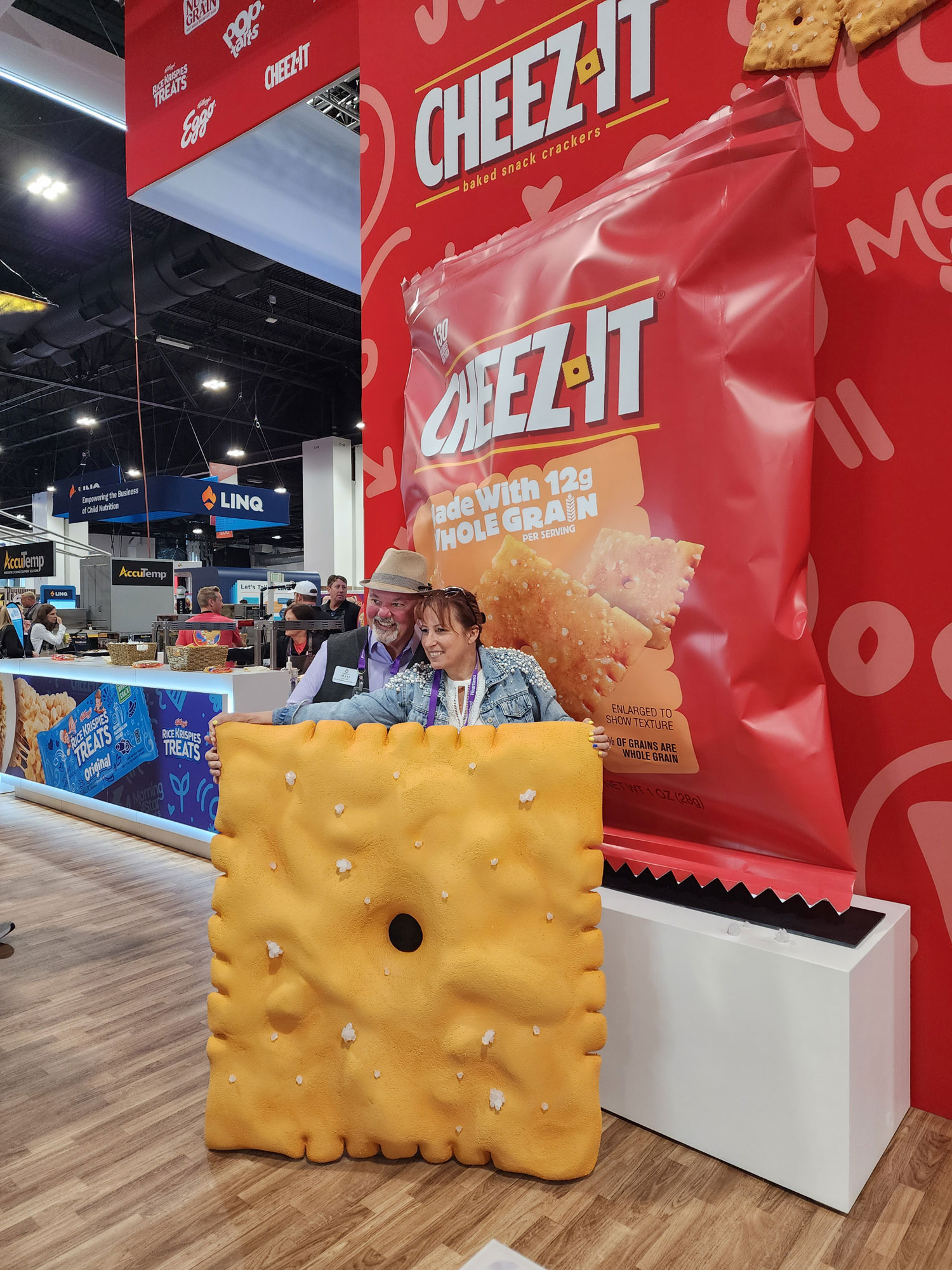
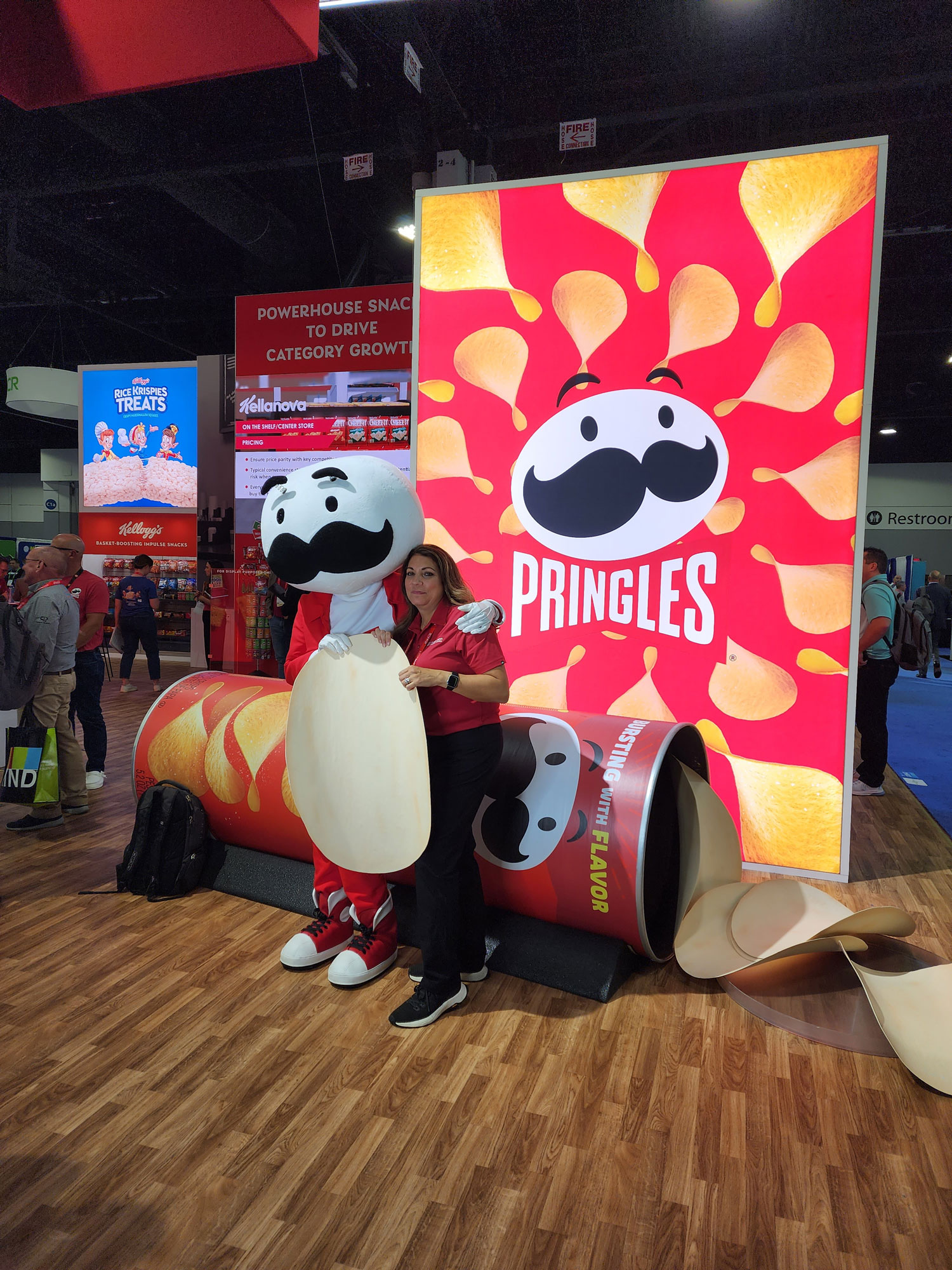
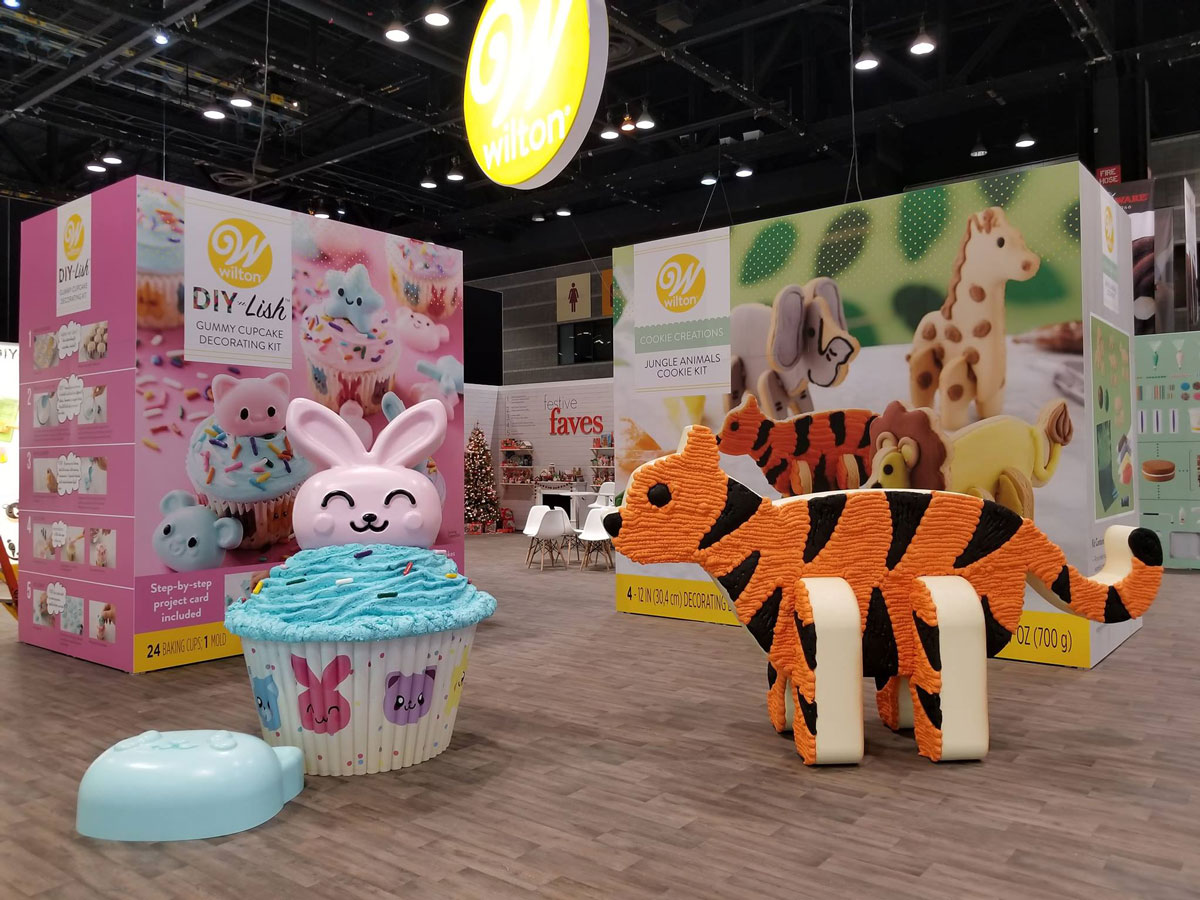
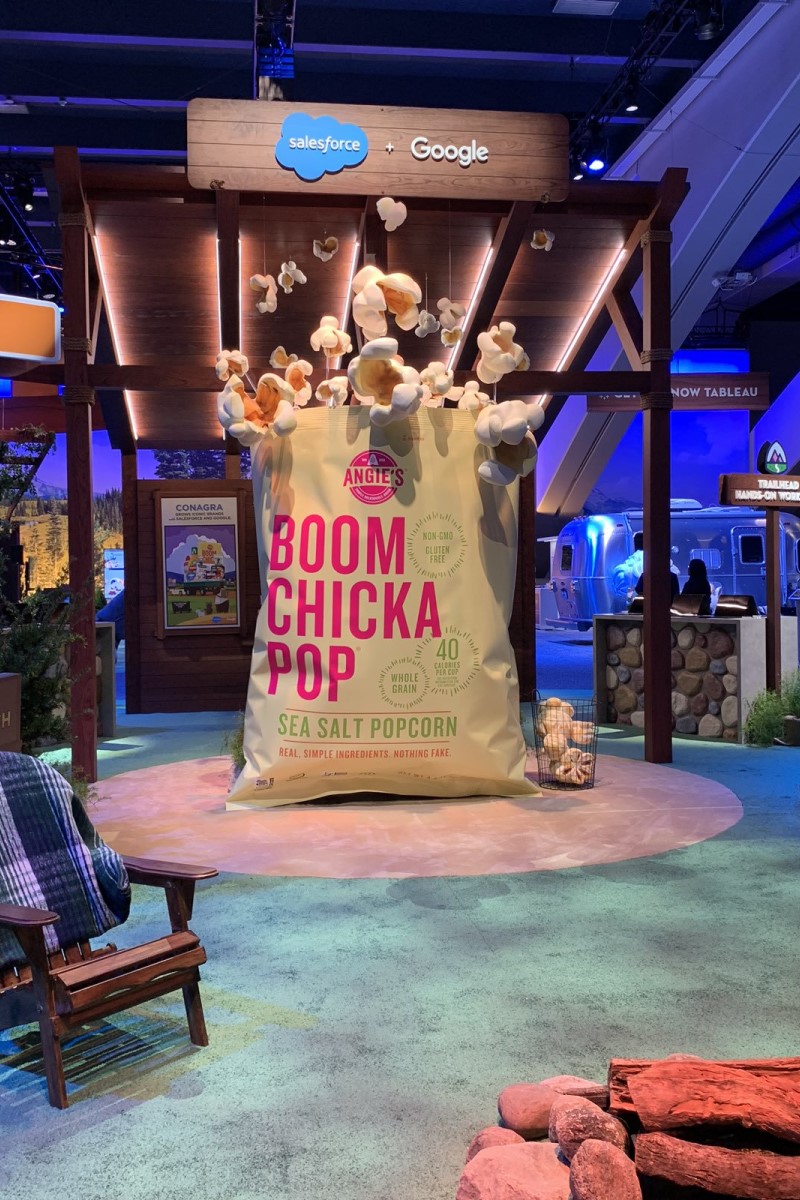
These completed WhiteClouds projects show a dimensional menu item, coordinated package-and-product display, character-shaped food models, an oversized package, a prepared-food sculpture, and a freestanding retail form.

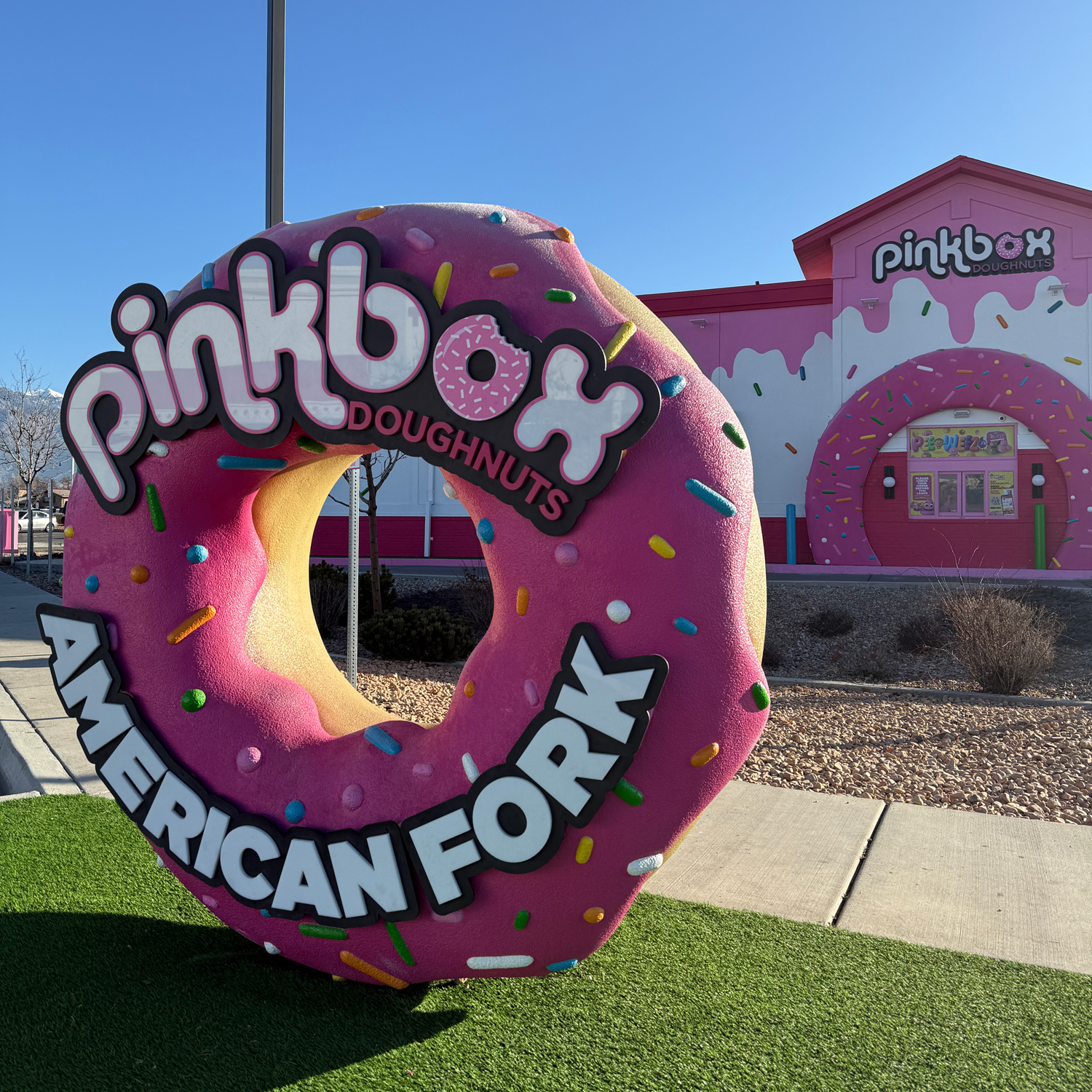
Send approved product photography, packaging dielines, logos, colors, and any 3D files available. A single front view may be adequate for a shallow background element but not for a freestanding replica viewed from all sides. Identify which faces must be accurate and where simplified construction is acceptable.
For a prepared-food sculpture, mark the desired arrangement and serving orientation. Toppings, labels, edges, and surface patterns can become substantial fabrication scope when enlarged. Prioritize the details that distinguish the product rather than asking the team to infer them from an informal image.
Confirm doors, elevators, loading access, ceiling height, and the final display footprint. A large piece can be fabricated in sections when the route requires it, but those divisions should be considered before the visual design is finalized.
State whether the props are display-only, moved during the event, used beside people, or designed for any specific contact. Do not assume an object can be climbed on or occupied. Functional or interactive requirements must be engineered and quoted as part of the project.
The pricing team can respond more precisely when the product and site information arrive together.
Use the product-replica service and gallery for broader fabrication examples. The related pages below provide narrower object and completed-project context without replacing this food-industry planning page.
Describe the display setting and list each required object. Attach product files, approved graphics, dimensional limits, delivery details, and the date the finished pieces need to arrive.