

The Giant Cube Seat: A Bold Statement in Design and Comfort
Furniture has always been about more than utility—it is an expression of style, culture, and innovation. While traditional chairs, sofas, and stools continue to serve their timeless purposes, designers have increasingly experimented with scale and form. Among these bold experiments, the giant cube seat has emerged as one of the most intriguing creations. At first glance, it appears simple: an oversized cube transformed into seating. Yet behind its apparent simplicity lies a blend of artistry, engineering, and cultural meaning. Giant cube seats have appeared in public art installations, modern interior design, and even urban landscapes, symbolizing both minimalism and playfulness. This article explores the origins, design, uses, and cultural significance of giant cube seats while celebrating their unique place in the world of furniture.
The Origins of Cube-Inspired Furniture
The cube as a form has fascinated designers and architects for centuries. It represents perfect symmetry, stability, and order. Ancient civilizations often used cube-like stones as building blocks, and the cube’s geometric purity has made it a recurring motif in art and design. In the 20th century, minimalism and modernism elevated the cube into a celebrated design element. Artists like Donald Judd created cube-based sculptures, while furniture makers explored modular cube seats, ottomans, and storage solutions. Scaling up this concept into giant cube seats became a natural extension of this fascination—taking something ordinary and amplifying it into something extraordinary.
Anatomy of a Giant Cube Seat
While the cube might look deceptively simple, turning it into a giant, functional seat involves careful design considerations.
Proportions and Dimensions:
Standard cube seats, such as ottomans, are typically around 16 to 20 inches tall. A giant cube seat, however, can range anywhere from 3 feet to over 10 feet in height, depending on whether it’s meant for single users, groups, or purely as art.
Materials:
Designers use a wide range of materials depending on function. Upholstered foam provides comfort in indoor settings, while concrete, fiberglass, or metal makes outdoor versions durable. Some giant cubes are hollow, reducing weight and material costs, while others are solid for long-term stability.
Comfort and Functionality:
Despite their size, many cube seats are designed with ergonomic consideration. Rounded edges, soft upholstery, or cushioned panels ensure they remain inviting rather than intimidating. In some cases, designers integrate lighting, storage, or even charging stations into the cube, transforming it into a multi-functional piece.
Design Aesthetics:
The beauty of the cube lies in its versatility. A giant cube seat can be sleek and modern in white lacquer, rustic in reclaimed wood, or playful in bright, bold colors. Its adaptability makes it suitable for both minimalist interiors and vibrant outdoor spaces.
The Giant Cube Seat as a Public Landmark
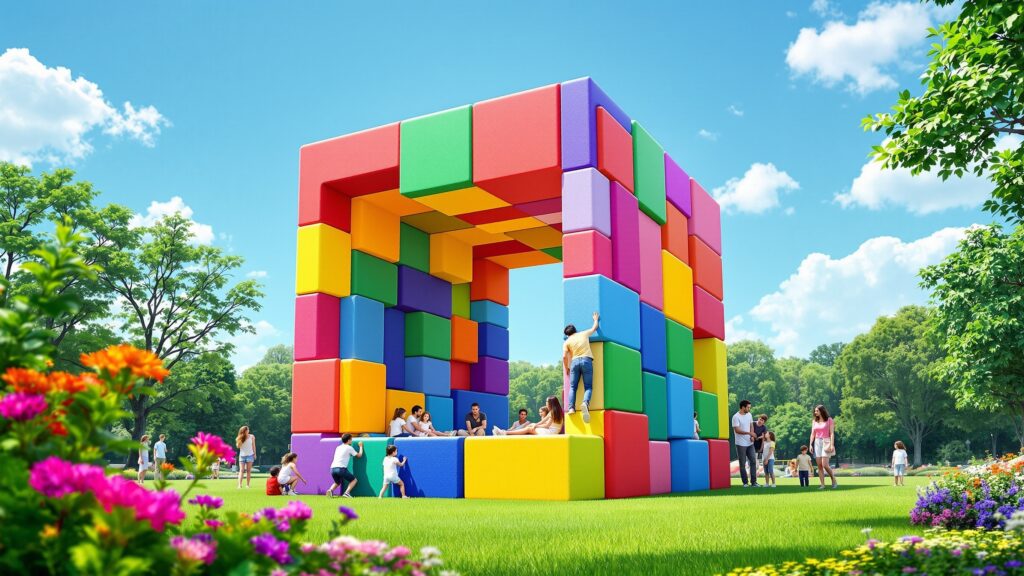
One of the most exciting aspects of the giant cube seat is its role in public spaces. Cities and communities worldwide have installed oversized cube seats as functional art pieces that invite interaction. Placed in parks, plazas, or campuses, these seats provide both visual appeal and practical utility. Their sheer size makes them ideal gathering spots—people sit, lean, or climb on them, turning a geometric form into a social hub. Public art installations often use giant cubes to symbolize modernity, stability, or the blending of form and function. In some urban spaces, cube seats double as sculptures, offering a new way for communities to engage with art.
A Marketing Marvel in Modern Design
Like other oversized furniture, giant cube seats have found their place in branding and marketing. Businesses seeking to stand out often use them as bold design statements. A hotel lobby with a giant cube seat instantly signals modern luxury and originality. A tech company’s headquarters with oversized cube seating conveys creativity and forward-thinking culture. Even retail stores use giant cubes as both functional seating and artistic décor, encouraging customers to linger longer and associate the brand with innovation. With today’s social media culture, giant cube seats also become natural photo opportunities. Visitors share their experiences online, extending a brand’s visibility and reinforcing the message that this is no ordinary space.
Symbolism of the Cube in Culture
The cube has long carried symbolic meaning, which extends into its oversized furniture form.
Order and Balance: The cube’s symmetry represents structure and harmony. Enlarged into a seat, it embodies stability while inviting people to interact with it.
Minimalism and Modernism: The cube is a cornerstone of minimalist design. A giant cube seat reflects modern simplicity and clarity of form, resonating with contemporary aesthetics.
Playfulness and Wonder: By scaling the cube up to human or superhuman proportions, designers reawaken childlike curiosity. Sitting on or beside a giant cube makes people reconsider their sense of scale and perspective.
Whether viewed as art, design, or symbolism, the giant cube seat speaks to humanity’s deep connection with geometry.
Famous Examples Around the World
Giant cube seats have appeared in various contexts, often becoming landmarks in their own right.
New York’s Astor Place Cube (Alamo): While not technically a seat, this rotating steel cube has inspired countless interactions. Its influence has extended into seating designs that replicate its monumental scale.
Modern Art Museums: Several museums feature giant cube-inspired seating within galleries, encouraging visitors to rest while still engaging with the art around them.
Urban Parks: Cities across Europe and Asia have embraced giant cube seats in public parks, using them as both artistic sculptures and functional resting areas.
These examples highlight the cube’s ability to transcend cultural boundaries and remain relevant across generations.
Building a Giant Cube Seat: Craft Meets Engineering
Designing and constructing a giant cube seat requires both creativity and technical expertise.
Planning and Modeling: Designers use 3D modeling software to ensure perfect proportions. Attention must be paid to weight distribution, stability, and potential use by multiple people at once.
Fabrication: Indoor cube seats often involve upholstery, foam, and wooden frames. Outdoor versions demand sturdier approaches—steel reinforcement, poured concrete, or weather-resistant composites.
Installation: Large cube seats are usually prefabricated in sections and assembled on-site. Depending on size, cranes or heavy equipment may be required to position them safely.
Durability: Protective finishes guard against UV light, moisture, and wear. Maintenance ensures they remain safe and appealing over time.
The result is a structure that blends artistic vision with practical usability.
The Giant Cube Seat in Interior Design
Beyond public spaces, giant cube seats are increasingly appearing in interior design. They are popular in modern homes, offices, and hospitality spaces where bold statements are valued. In residential settings, a giant cube seat may serve as a playful addition to a living room, children’s playroom, or outdoor patio. In offices, they double as casual meeting points—inviting employees to gather informally. In hotels or lounges, cube seating contributes to a sleek, contemporary vibe that distinguishes the space. What makes them especially versatile is their adaptability to scale. Smaller “giant” cubes might be just oversized enough to feel whimsical without overwhelming a room, while monumental cubes suit vast, open spaces.
The Role of Scale in Human Experience
The giant cube seat taps into a deeper human fascination: our relationship with scale. From childhood, we navigate a world where furniture often feels oversized. As adults, encountering furniture scaled far beyond normal proportions reignites this sense of wonder. Giant cube seats shrink us back into that perspective, making the familiar suddenly extraordinary. This psychological shift explains why people are drawn to oversized objects. They disrupt expectations, challenge perceptions, and invite interaction. The cube seat, with its geometric clarity, provides a perfect canvas for exploring this fascination.
Artistic and Cultural Applications
Many artists and designers use giant cube seats as part of installations or performances. They serve as props in theater productions, stages in music festivals, or even canvases for street art. Cultural festivals often adopt cube seating for its versatility. Painted in vibrant colors or patterns, cubes become interactive art pieces that double as furniture. This dual role—both practical and symbolic—makes them a favorite in creative spaces.
Everyday Applications: More Than a Gimmick
Although giant cube seats can be whimsical, they are far from impractical.
Event Seating: Large cubes are often used at concerts, fairs, or expos as durable seating for crowds.
Playgrounds: Oversized cube seats function as both resting spots and climbing structures for children.
Retail and Hospitality: Shops and cafés use cube seating to encourage customers to relax, extending their stay.
Their multifunctional nature ensures they can move seamlessly from art to utility without losing their appeal.
The Future of Giant Cube Seats
Looking forward, giant cube seats are likely to evolve with technology and sustainability. Interactive versions may include built-in screens, sound systems, or augmented reality features. Eco-friendly materials such as recycled composites or biodegradable fabrics will address environmental concerns. Modular designs will allow cubes to be rearranged easily, adapting to different spaces and needs. As smart cities expand, giant cube seats may even integrate with urban infrastructure—providing solar-powered charging hubs, Wi-Fi hotspots, or community message boards. The cube will continue to be a powerful symbol, now merged with technological innovation.
Conclusion: The Power of Simplicity at Scale
The giant cube seat demonstrates how something as simple as a geometric shape can become extraordinary when reimagined. At once artistic, functional, and symbolic, it captures attention wherever it appears. Its appeal lies in its balance: minimalist yet bold, practical yet whimsical, timeless yet modern. Whether in a park, a hotel lobby, a festival ground, or a living room, the giant cube seat invites us to sit, gather, and wonder. In a world filled with complexity, the cube reminds us that sometimes the simplest forms, when enlarged and reinterpreted, can have the greatest impact.
Contact us today to learn more about our 3D services and how we can help you achieve your goals.