
Planning a Custom Giant Crocodile Prop
A giant crocodile prop is defined by its complete body path, not by head size alone. The low silhouette, jaw position, torso curve, legs, and tail must work together within the available footprint and the audience's principal views.
Plan a Crocodile Prop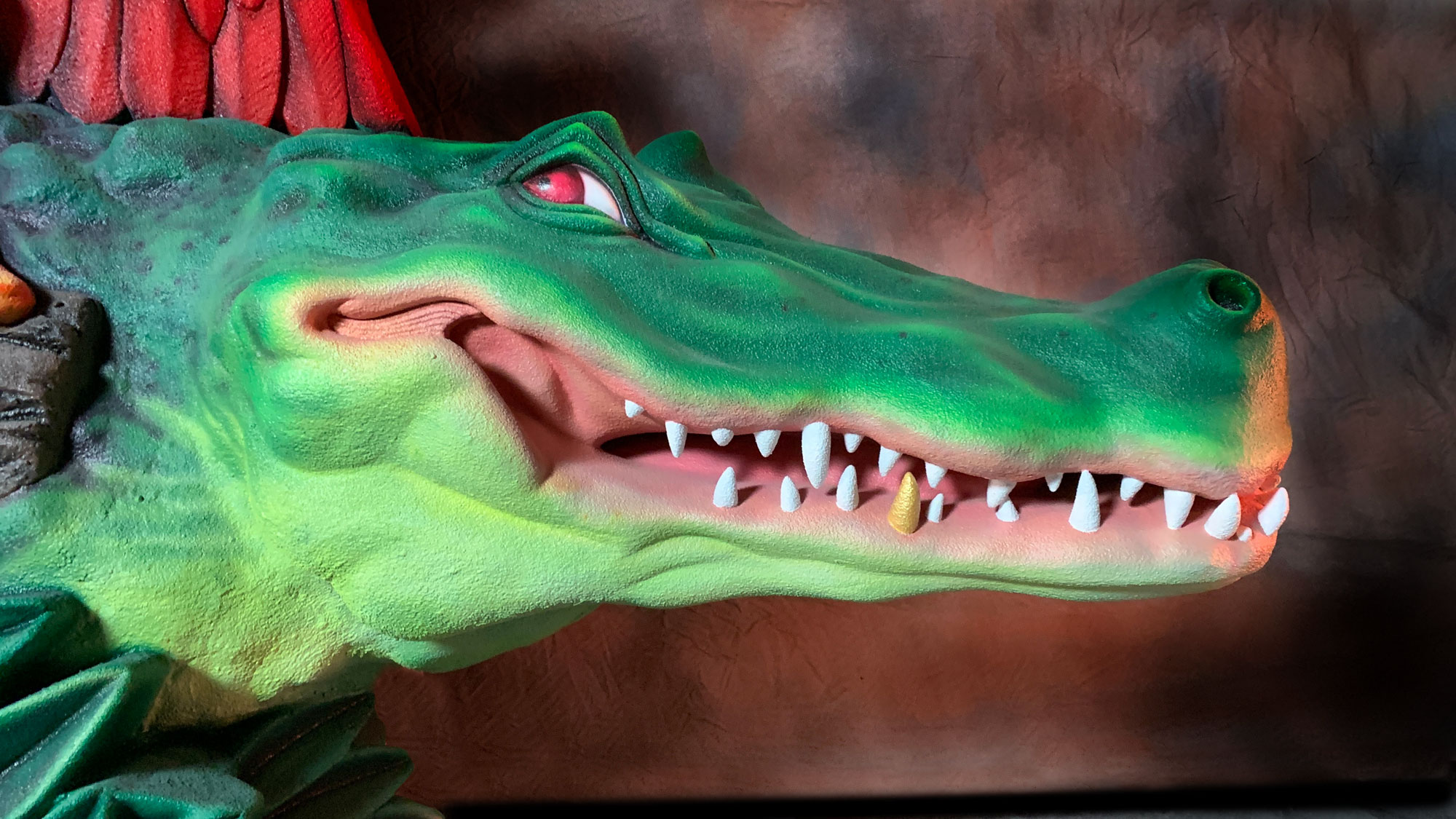
Plan the crocodile's full length and footprint
Begin with a plan view of the space. Draw the snout, shoulders, torso, hips, and tail as a continuous route, then add overall dimensions and the largest curve radius. A straight pose creates a strong side profile but needs substantial length. A curved pose can fit a tighter zone, although the inside of the bend and the far end of the tail may disappear from important views.
Mark every point where the figure meets the floor, a platform, a wall, or another scenic element. Leg position affects more than anatomy: splayed feet can widen the usable footprint, while a lifted head or tail changes the occupied height. Include nearby paths, rails, lettering, vegetation, or set pieces on the same drawing.
Resolve the head, jaw, tail, and audience views
The most useful crocodile brief describes what each major body region must do in the final composition.
Head direction
Choose the primary gaze and viewing angle. A head turned toward an approach can provide recognition before the rest of the body is visible.
Jaw position
An open jaw changes the silhouette and clearance around the snout. Provide front and profile references for the desired expression and tooth visibility.
Body and tail curve
Show where the torso changes direction and where the tail ends. Avoid defining the project with one overall length that hides the real floor plan.
Legs and contact
Identify which legs remain visible, where the feet land, and whether the belly sits low or leaves open space beneath the figure.
See one crocodile integrated into a dimensional sign
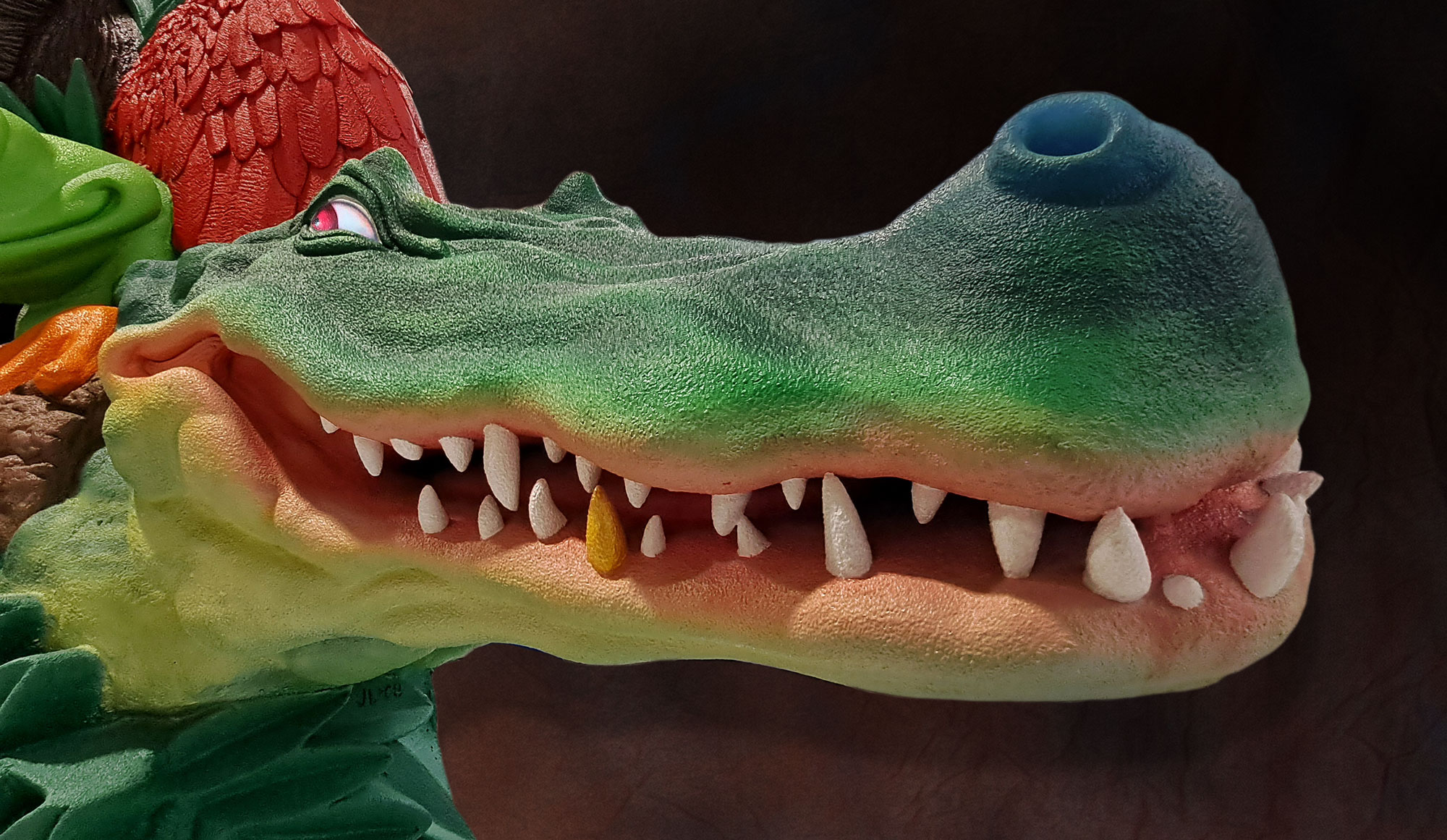
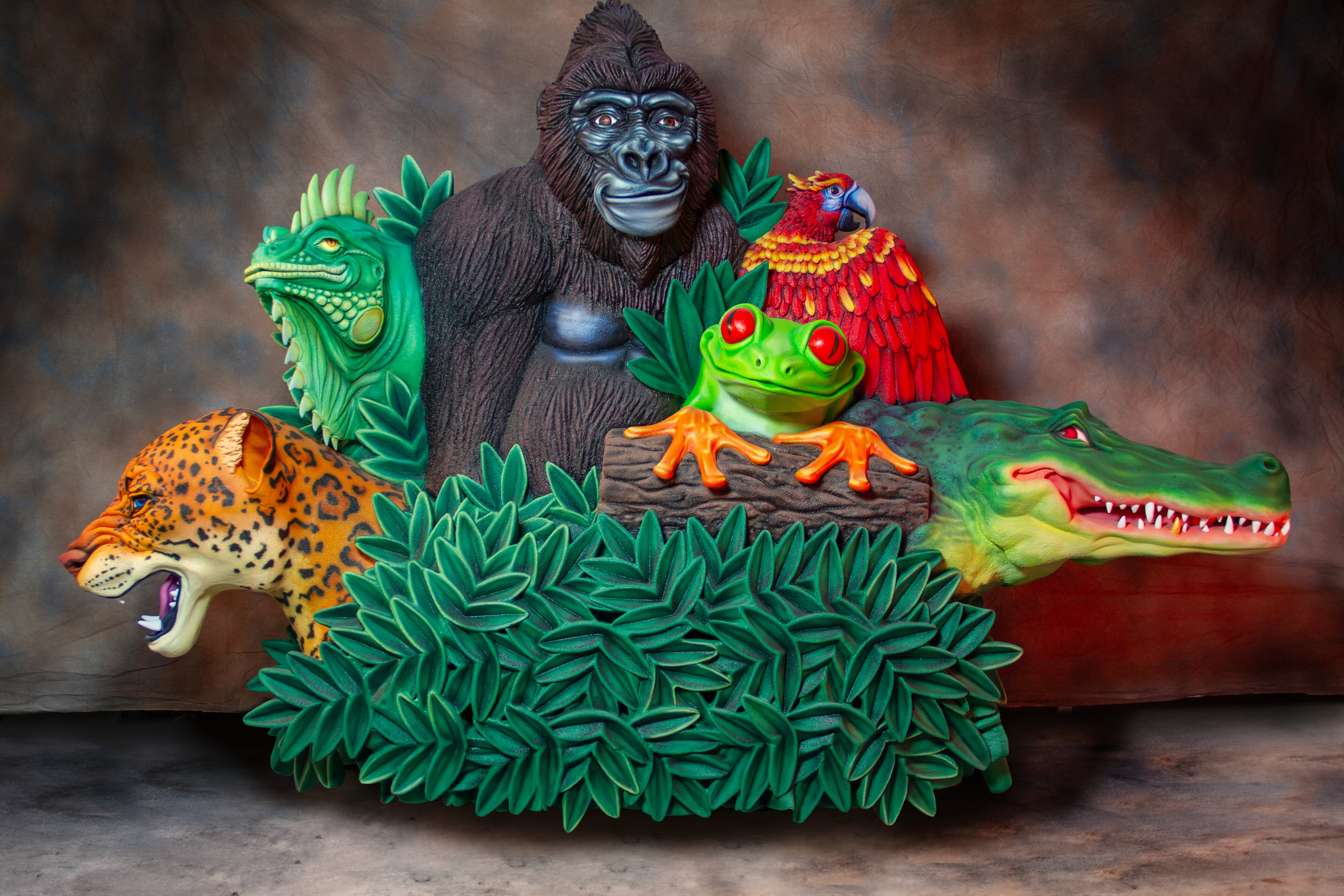
WhiteClouds fabricated a dimensional Rainforest Cafe sign at Disney World in Orlando, Florida. Nile the crocodile stretches across the lower portion of the composition. The photographs show how a low animal profile can sit beneath lettering while the head and open jaw provide a clear focal point.
This example is included to show physical relationships, not to prescribe a new design. A separate crocodile request may use a different pose, expression, finish, scale, or scenic setting. The complete Rainforest Cafe project is documented in the related Project Story.
Information that makes a crocodile estimate useful
Pair visual references with a dimensioned placement plan so the body does not outgrow the intended display zone.
- Reference images for realism or an approved stylized treatment
- Total length, widest point, and highest point
- Plan-view body curve and tail path
- Head direction, jaw position, and expression
- Visible sides and principal camera angle
- Floor, platform, wall, sign, or scenery relationship
- Visitor approach, interaction limits, and clearance
- Access route, destination, and required date
Request pricing for a custom giant crocodile prop
Send the approved visual reference, body path, target dimensions, head and jaw direction, viewing sides, placement conditions, interaction limits, access route, destination, and required date.