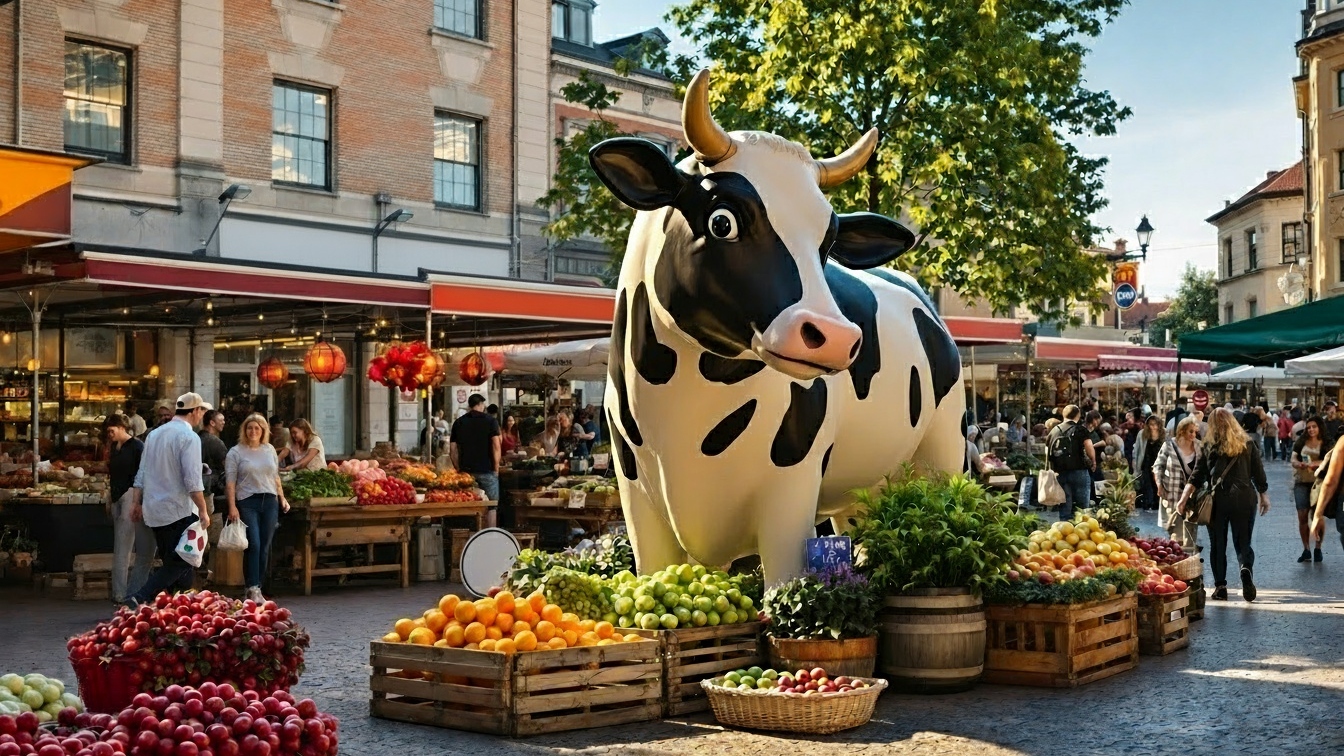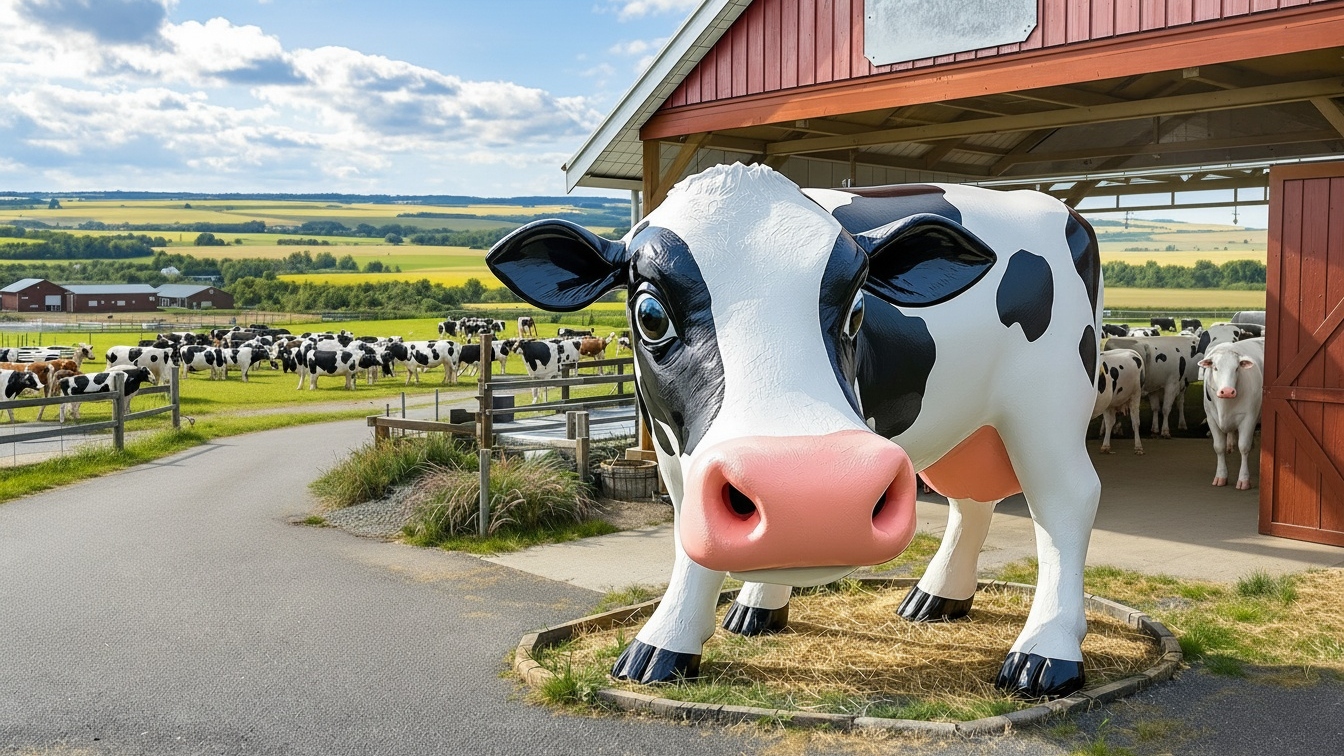
Giant Cow Statue
Giant Cow Statue
We Build Custom Giant Cow Statues
The Giant Cow Statue: A Colossal Celebration of Culture, Whimsy, and Craft
Few sights capture the imagination like an enormous cow perched proudly on a hilltop, guarding the entrance to a town, or looming above a dairy farm like a gentle giant. Giant cow statues have become roadside wonders, tourist magnets, and cultural symbols across the world. From fiberglass Holsteins towering over highways to artistic interpretations in concrete and steel, these oversized bovines remind us of the agricultural roots that sustain communities while offering a dose of humor and creativity. The story of the giant cow statue is one of tradition, craftsmanship, and local pride. Whether they celebrate dairy farming heritage, attract tourists to quirky roadside stops, or inspire art lovers, these colossal cows stand as enduring monuments to both rural life and human imagination.

The Rise of Roadside Giants
The phenomenon of giant statues in America and beyond took root in the mid-20th century, as car culture exploded and highways stretched across the countryside. Business owners recognized the need to stand out from the blur of billboards and traffic. The solution? Build something so massive and eye-catching that no driver could miss it. For dairy-rich states such as Wisconsin, Minnesota, and North Dakota, cows were the perfect choice. They symbolized local identity, economic strength, and a touch of humor. Soon, statues of Holsteins, Jerseys, and Guernseys dotted the landscape, each one bigger and bolder than the last. These statues were more than marketing gimmicks. They became civic icons. Communities held festivals at their feet, visitors posed for family photos, and postcards bearing their likenesses traveled across the globe. The giant cow statue had become both a beacon of local pride and an invitation to share in its story.
Iconic Examples Around the World
Salem Sue – North Dakota’s Dairy Queen
Towering nearly 40 feet tall and weighing in at 12,000 pounds, Salem Sue is one of the most famous giant cow statues in the world. Standing proudly on a hill overlooking New Salem, North Dakota, Sue is visible from miles away. She was built in 1974 to honor the state’s dairy industry, and to this day she attracts tens of thousands of curious visitors each year.
The CowParade Phenomenon
While not always “giant” in the same sense, CowParade—an international public art exhibit—transformed life-sized cow sculptures into vibrant canvases for artists. Cities from Chicago to Paris hosted these events, and although they weren’t monumental in size, they showed how the cow could be reimagined as art on a global scale.
The Quirky Roadside Stops
From Canada’s “Happy Cow” in Alberta to Australia’s “Big Cow” in Nambour, these statues embody a spirit of whimsy. Some serve as mascots for dairy brands, others simply as tourist attractions. What unites them is their power to draw people off the road, spark curiosity, and inspire stories shared across generations.
Why We Love Giant Cow Statues
The appeal of giant cow statues isn’t just their size. It’s what they represent. They are playful yet rooted in tradition. Cows symbolize nourishment, farming, and rural life. In Hindu culture, cows are sacred symbols of abundance and non-violence. In Western traditions, they represent industry and sustenance. A giant cow, therefore, is both a lighthearted roadside joke and a reminder of deep cultural significance. They also bring people together. Families stop to snap photos, towns organize festivals, and travelers share stories online. In a world where communities often search for unique identities, a giant cow statue offers exactly that—a quirky, unforgettable emblem.
The Artistic Challenge of Going Big
Designing a giant cow isn’t as simple as scaling up a barnyard animal. These statues must be structurally sound, weather-resistant, and recognizable from great distances. A 40-foot cow needs more than artistic skill—it requires architectural planning. Artists and fabricators often begin with scaled models or sketches, ensuring the proportions of head, legs, and body remain faithful to the real animal. The challenge is avoiding distortion when viewed from below. The curvature of the horns, the slope of the back, and the distinctive cow spots all need to be adjusted for perspective. Materials play a huge role. Traditional statues might use reinforced concrete or steel frames, while more modern examples rely on fiberglass for its lightweight durability. The paint must withstand rain, snow, sun, and decades of curious visitors touching and photographing the statue.
Fabricating a Giant Cow Statue: From Sketch to Landmark
Creating a giant cow statue blends artistry, engineering, and craftsmanship. Here’s how the process might unfold:
Concept and Design
The journey begins with a design. Sculptors and architects collaborate to draft a cow that reflects the community’s vision. Sometimes it’s realistic, modeled after Holsteins or Jerseys. Other times it’s more whimsical, painted in rainbow hues or wearing a crown. Digital 3D models are often used today to fine-tune proportions and plan construction.
Structural Framework
The skeleton of a giant cow statue is its most crucial element. Typically built from steel beams and rods, this internal frame ensures stability against wind, weather, and time. Engineers calculate load-bearing points and anchor systems to prevent the cow from toppling in storms.
Sculpting the Body
Fiberglass panels are a popular choice because they can be molded into smooth, organic shapes and then attached to the steel skeleton. In older statues, wire mesh and concrete plaster were used. Each section—legs, torso, head, horns—is carefully crafted and assembled on-site.
Detailing and Painting
Once the form is complete, artists add the details that make the cow come alive. From the gentle curve of the ears to the splash of black-and-white spots, this stage defines the character of the statue. Durable, UV-resistant paints are applied to ensure the cow retains its charm for decades.
Installation and Dedication
With cranes and construction crews, the cow is lifted into place, often overlooking highways or farmland. Communities sometimes hold dedication ceremonies complete with parades, dairy festivals, or local bands. From that moment, the cow belongs not just to its creators but to everyone who passes by.
Giant Cow Statues as Cultural Symbols
Beyond being roadside attractions, giant cow statues serve as cultural touchstones. In dairy states, they celebrate the farmers who built the local economy. In tourist towns, they become whimsical mascots that spark joy. In art installations, they provoke reflection on agriculture, consumerism, or the relationship between humans and animals. They also embody nostalgia. Many people recall childhood road trips where spotting the giant cow meant pulling over for ice cream or family photos. These statues tie generations together, linking personal memories to shared landscapes.
The Future of Giant Cow Statues
As technology advances, so does the potential for giant cow statues. Augmented reality could transform them into interactive experiences where visitors scan with their phones to hear cow-themed stories or learn about local farming. Solar-powered lighting might bathe them in dramatic nighttime glows. Communities may also explore sustainable fabrication methods—using recycled materials, eco-friendly paints, or integrating the statue into green spaces. While the materials may change, the core idea remains timeless: a giant cow as a symbol of pride, humor, and shared identity.
Conclusion: More Than a Monument
The giant cow statue is more than a supersized farm animal—it’s a cultural icon, a community gathering point, and a reminder that whimsy and tradition can coexist beautifully. From the rolling hills of North Dakota to small-town main streets worldwide, these statues continue to capture hearts and imaginations. When you stand beneath one, craning your neck to admire its massive horns and painted spots, you’re not just looking at fiberglass or concrete. You’re looking at decades of stories, laughter, and local pride—all wrapped in the familiar shape of a cow. So, the next time you’re on a road trip and spot a giant cow in the distance, don’t just drive past. Pull over, take a picture, and enjoy a moment with one of the most endearing giants of all time.