
Planning a Giant Cookie Prop
The cues that make a cookie recognizable at normal size become design decisions when the object is enlarged. Edge thickness, surface color, chips or icing, and the relationship between the front face and side profile all affect whether a giant cookie prop reads as a specific product or as a general baked-cookie form.
Plan a Giant Cookie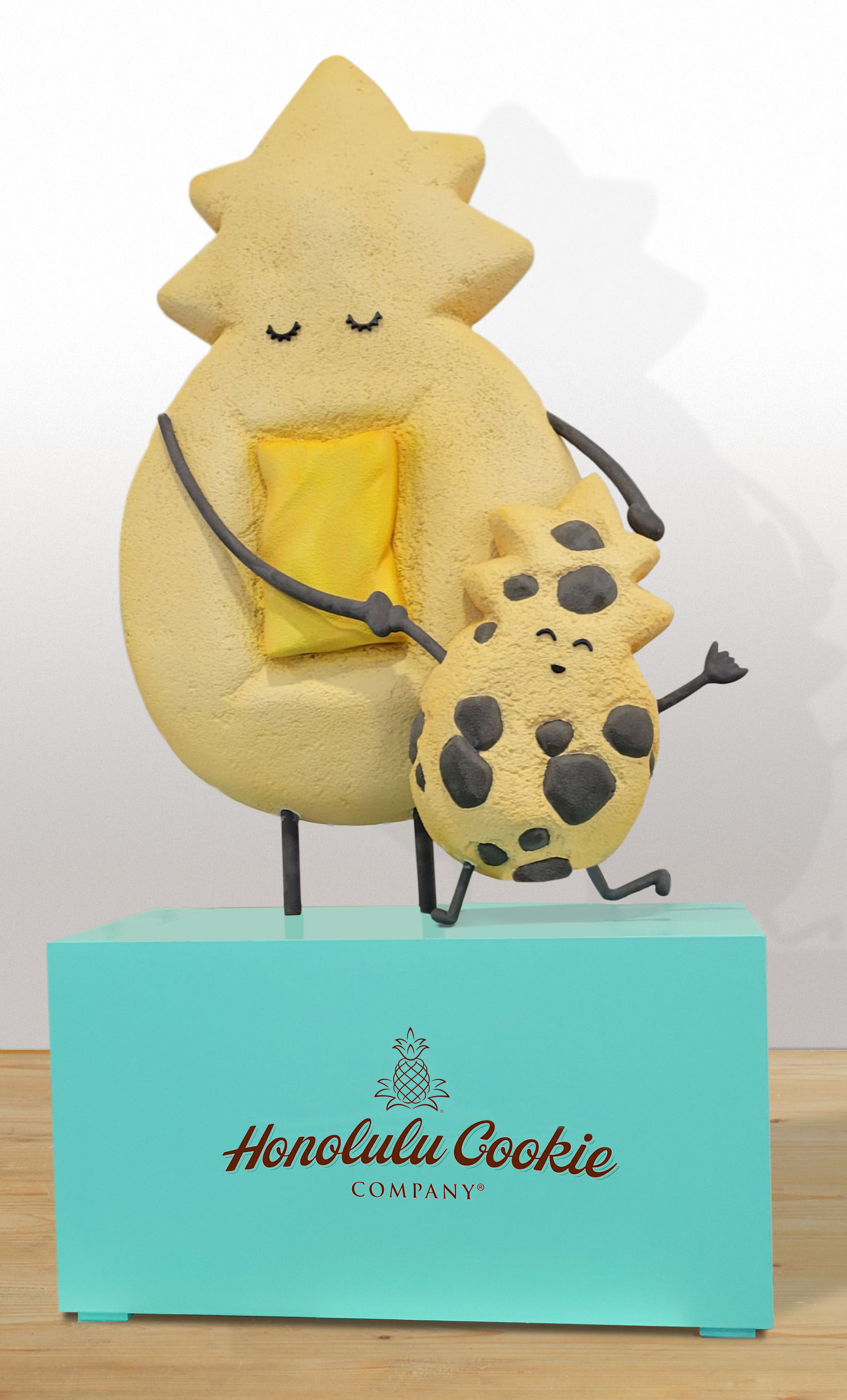
Choose the visual recipe for the enlarged cookie
The strongest references identify the exact traits that should survive enlargement.
Outline
Round, rectangular, scalloped, broken, bitten, or character-shaped edges establish the first recognizable cue.
Thickness
A thin wafer and a thick bakery cookie produce very different side views, shadows, and support needs.
Top surface
Chips, sugar, icing, embossing, cracks, and raised inclusions should be ranked by importance at the intended distance.
Color range
Approved references should separate the baked base tone from darker edges, toppings, filling, or printed graphics.
Decide whether the cookie stands, hangs, or lies flat
An upright cookie can present its broad face like a sign, while a tilted or horizontal cookie emphasizes thickness and toppings. A wall-mounted version has different depth and mounting constraints from a freestanding floor prop. If the display needs a missing bite, split section, exposed filling, or stacked arrangement, include that geometry in the first dimensions.
Give both the target size and the available footprint. A six-foot diameter describes only one dimension; the project also needs a planned thickness, base relationship, and maximum projection. Doorways, loading paths, and overhead clearance may favor a separable support or a cookie divided into transportable sections.
See how completed cookie forms handle identity
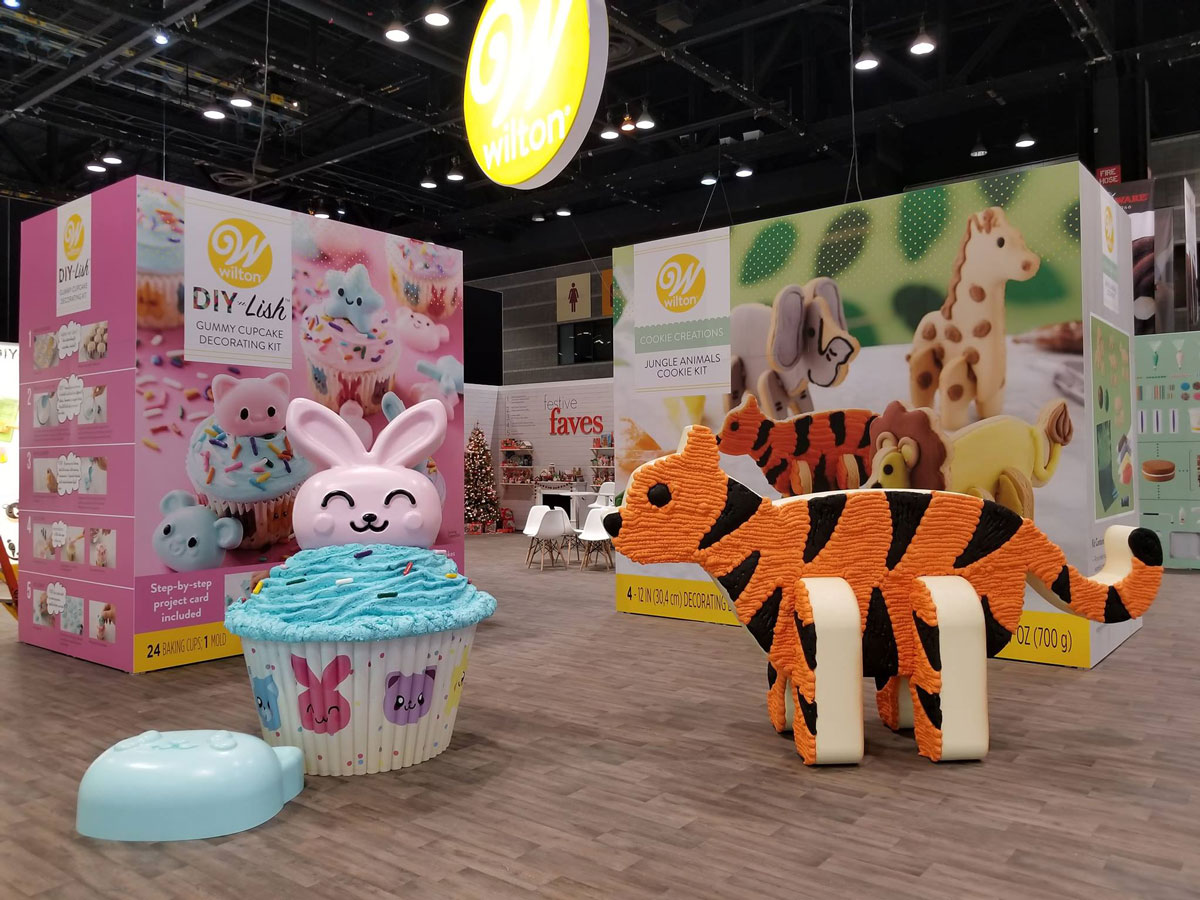
These WhiteClouds projects use different combinations of outline, texture, toppings, and graphic features. The pineapple shortbread, flying cookie, and decorated tiger cookie illustrate the range without implying that a new prop must repeat their dimensions or construction.

Keep the cookie legible from the expected distance
Small crumbs and fine baked texture can disappear when the prop is seen across a room, while oversized chips, icing lines, and edge color remain readable. For close inspection, more subtle surface variation may be useful. Identify the normal viewing distance and the feature a viewer should understand first.
A generic cookie idea can be developed from visual direction alone. A product-specific replica needs current, approved package or product references and a defined viewing face. State whether the reverse may be simplified, whether branding belongs on the cookie or a separate base, and whether the display will remain indoors or face other documented conditions.
Collect the details behind a cookie estimate
Useful first-round information describes the object and the route into its display area.
- Cookie type or product reference
- Diameter or overall dimensions
- Planned thickness
- Toppings and raised details
- Upright, wall, or horizontal format
- Primary and secondary viewing sides
- Access and packing limits
- Destination and required date
Request a quote for a giant cookie prop
Provide the cookie reference, finished size, orientation, visible toppings, graphic requirements, display position, access constraints, delivery location, and timing. Include straight-on and side references when the cookie must match a particular shape or product profile.