
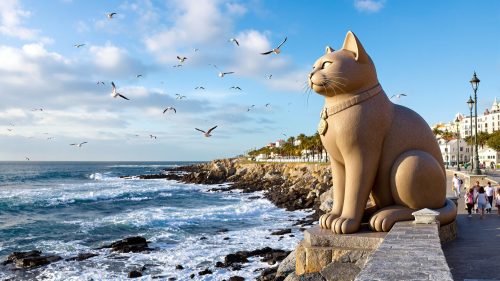
The Fascination of the Giant Cat Statue
Across cultures and centuries, cats have captivated humans with their elegance, independence, and mystery. They are creatures of duality—both aloof and affectionate, revered as guardians in temples and adored as household companions. It is no wonder that artists and communities have chosen to honor them in monumental form. The giant cat statue is one of the most visually striking and symbolically rich public artworks, embodying both the playful charm and the enigmatic power of the feline. From ancient Egyptian sphinxes to modern-day urban landmarks, giant cat statues transcend being simple sculptures. They serve as cultural icons, tourist attractions, and beloved symbols that inspire awe and delight. In this article, we’ll explore the history and cultural significance of cats in monumental art, examine real-world examples of giant cat statues, reflect on their role in modern communities, and take a detailed look at how these monumental sculptures are fabricated.
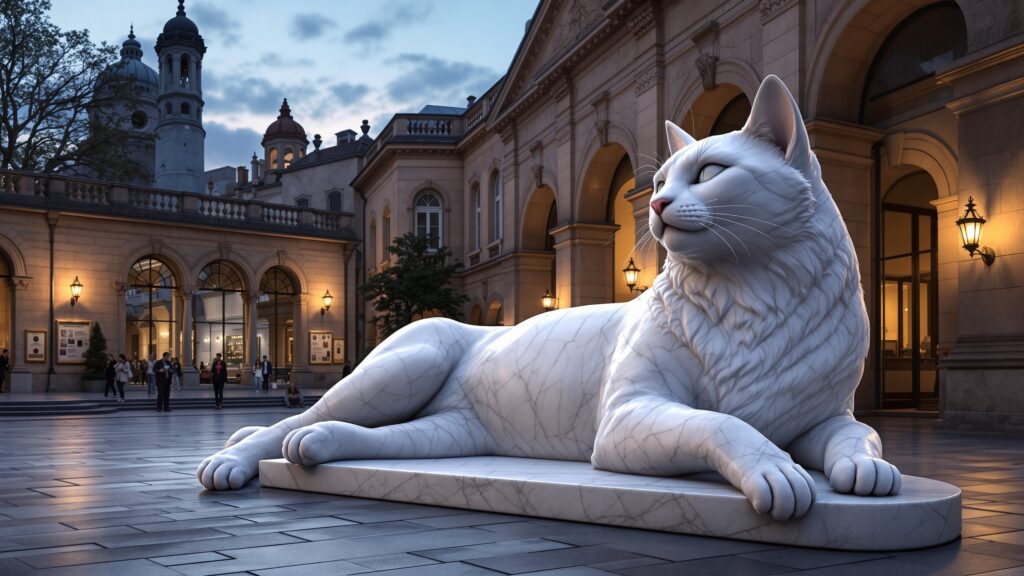
Cats as Timeless Symbols
Long before the age of contemporary art, cats were immortalized in colossal form. Ancient Egypt is perhaps the most famous example, where cats were revered as sacred animals. The goddess Bastet, depicted as a lioness or as a woman with the head of a cat, symbolized protection, fertility, and home life. Temples housed statues of cats large and small, some made of bronze, others carved in stone, each a tribute to the feline’s divine role. In other cultures, cats carried different meanings. In Japan, the maneki-neko—the beckoning cat—became a symbol of luck and prosperity, often appearing in statues outside shops and restaurants. Norse mythology connected cats to Freyja, the goddess of love and beauty, who drove a chariot pulled by cats. Even in modern times, cats symbolize independence, mystery, and comfort. By elevating the cat into statue form, communities and artists tap into these deep associations. A giant cat statue does not merely represent an animal; it embodies centuries of cultural reverence, superstition, and affection.
Real-World Inspirations: Where Cats Tower
Giant cat statues can be found in unexpected places across the globe, each with its own story and style.
In Kuching, Malaysia, known as “Cat City,” several large cat statues dominate roundabouts and city squares. These statues have become the city’s unofficial mascots, drawing tourists eager to photograph themselves alongside these quirky monuments.
In Egypt, though most ancient statues are long weathered, remnants of massive feline figures still awe modern visitors. The Great Sphinx of Giza, while part human, part lion, is perhaps the most iconic hybrid feline statue in history.
In Japan, enormous maneki-neko statues grace shopping districts and temples. Painted in white, gold, or calico, these statues represent luck and wealth, their raised paw welcoming prosperity.
And in modern urban art, giant cats appear in parks, zoos, or even in whimsical roadside attractions. Sometimes realistic, sometimes cartoonish, they reflect the adaptability of the cat motif across cultures and eras.
Why Cats Work So Well in Giant Form
The cat’s anatomy and personality make it an ideal subject for monumental art. Cats are natural performers of grace, with their elongated bodies, poised postures, and expressive faces. When magnified, their movements and features become even more striking. An upright cat sitting regally on a pedestal radiates dignity and composure. A crouched cat ready to pounce conveys power and alertness. A playful kitten with oversized paws and bright eyes brings humor and accessibility.
Cats are also deeply relatable. Nearly every culture has domesticated cats, and billions of people have personal relationships with them. A giant cat statue speaks to universal affection and recognition, bridging generations and geographies. Finally, cats are both mysterious and approachable. They are associated with the night, with independence, and with spiritual guardianship. When translated into monumental form, they inspire a mix of delight and reverence.
The Role of Giant Cat Statues in Communities
Giant cat statues play a surprising number of roles in the places where they reside.
In urban spaces, they often become landmarks. Residents give directions using the statue as a reference point, while tourists make it a “must-see” stop for photos. In commercial districts, giant cats serve as mascots. Businesses harness their playful or symbolic charm to draw attention, linking commerce with cultural identity. In public parks or plazas, these statues become meeting spots and gathering points, where people sit, chat, or rest in the shadow of a monumental feline. They also play a role in cultural storytelling. A giant cat statue in a city might recall local legends, honor historical ties, or symbolize prosperity and luck. Communities embrace these statues not only for their visual impact but also for the stories they carry.
Artistic Styles of Giant Cat Statues
Not all giant cat statues are created alike. Their artistic styles range widely, reflecting both cultural traditions and contemporary creativity.
Some statues lean toward hyper-realism, capturing every strand of fur, every whisker, and every sharp detail of feline anatomy. These statues might seem almost alive, their glass or stone eyes watching passersby with uncanny realism.
Others embrace stylized or abstract forms. Cats may appear as geometric shapes, polished metallic figures, or minimalist outlines. These statues appeal to modern urban tastes, offering sleek silhouettes that double as architectural features.
Then there are playful or cartoon-inspired designs. Oversized kittens, bright colors, and exaggerated proportions bring humor and accessibility. These are especially popular in commercial districts and family-friendly spaces, where statues are designed to entertain as much as to inspire.
Finally, spiritual and symbolic cats—such as maneki-neko or Egyptian-inspired designs—carry specific cultural meanings, combining artistry with tradition.
Each style reflects a different interpretation of what it means to be feline, proving the versatility of the cat as a muse for monumental art.
The Emotional Impact of Encountering One
Standing before a giant cat statue is an experience that blends humor, awe, and reflection. Children often respond with laughter and joy, running around the paws or climbing onto the base. For them, the giant cat is playful and approachable. Adults, on the other hand, often feel a mix of nostalgia and admiration. The statue might remind them of a beloved pet or connect them to deeper cultural traditions.
In spiritual or memorial contexts, giant cat statues can inspire reverence. They remind us of cats’ roles as protectors, guardians, and companions through history. In urban settings, they inspire creativity and pride, showing how even familiar animals can become monumental art. Above all, the emotional impact lies in the blend of the ordinary and extraordinary. Cats are everyday companions, yet seeing them magnified into giant form transforms them into symbols of wonder and delight.
The Fabrication of a Giant Cat Statue
Behind the whimsical charm or solemn dignity of a giant cat statue lies a complex process of fabrication that combines artistry, engineering, and practicality.
Concept and Design
The journey begins with an idea. Artists sketch or digitally model the intended cat, choosing its pose, expression, and scale. Will the cat sit regally, lounge playfully, or raise a paw in welcome? Designers also consider the cultural context—whether the cat should look realistic, stylized, or symbolic. Engineers join the design process to ensure that the statue can withstand environmental stresses, especially if it will be displayed outdoors. The posture and weight distribution must be calculated to prevent imbalance or collapse.
Material Selection
Materials vary depending on the purpose and location of the statue.
- Bronze and Metal Alloys: Durable and weather-resistant, bronze is ideal for permanent installations. Its warm patina adds timeless elegance.
- Concrete or Stone: Heavy, monumental, and enduring, stone statues feel rooted and commanding.
- Fiberglass and Resin: Lightweight, flexible, and cost-effective, these materials are popular for roadside attractions and temporary installations.
- Recycled Materials: Modern eco-conscious artists may use scrap metal, plastics, or reclaimed wood to create symbolic statues with an environmental message.
Structural Engineering
Most giant cat statues require an internal skeleton, usually made of steel. This framework distributes weight and ensures stability, especially for extended features like tails or raised paws. The skeleton is then clad in the chosen surface material.
Sculpting and Detailing
For realistic statues, sculptors meticulously carve or mold the surface to mimic fur, whiskers, and expressive eyes. Stylized or cartoon statues may use smoother surfaces with painted details or bright finishes. In some cases, statues include additional features like glass eyes, lighting, or sound effects.
Installation
Once fabricated, the statue is transported in sections and assembled on-site. Cranes and construction crews secure it to a reinforced foundation. In some cases, landscaping or architectural features are added to integrate the statue into its surroundings.
The result is not just a sculpture but a landmark—an artwork designed to endure decades of admiration, curiosity, and joy.
Giant Cat Statues in Modern Culture
In today’s world, giant cat statues have become more than just art—they are cultural phenomena. Social media ensures that these statues are photographed, shared, and celebrated worldwide. A quirky cat statue in a small town can suddenly become a global sensation if it captures the imagination of travelers online. They are also increasingly used in commercial branding. Cafés, bookstores, and art galleries may commission giant cat statues as attention-grabbing mascots. Cities, too, use them as symbols of creativity and identity, integrating them into tourism campaigns and public art projects. In conservation contexts, cat statues can raise awareness about endangered species such as lions, tigers, or even wildcats. Though not domesticated cats, these monumental feline figures share the same symbolic resonance, reminding us of the importance of protecting wildlife.
The Future of Giant Cat Statues
The future of giant cat statues is likely to be even more dynamic and innovative. Advances in technology open up new possibilities for interactivity. Imagine statues whose eyes glow at night, whose tails move subtly with the wind, or that integrate augmented reality features allowing visitors to see animations or stories through their phones. Sustainability will also shape the future. More artists will embrace recycled and eco-friendly materials, ensuring statues reflect both cultural pride and environmental responsibility. Community involvement is another trend. Local residents may help paint or design their town’s cat statue, turning it into a shared creation that reflects collective values. This not only fosters pride but also strengthens the emotional connection between statue and community.
Conclusion: A Monument to Elegance and Whimsy
The giant cat statue is more than an oversized feline rendered in metal, stone, or fiberglass. It is a cultural icon, a public artwork, and a tribute to one of humanity’s oldest companions. It embodies the qualities we associate with cats—grace, independence, playfulness, and mystery—while serving as a gathering point, a tourist attraction, and a symbol of local pride. To stand before a giant cat statue is to feel both joy and wonder. It is to see an everyday animal transformed into something monumental, something that reflects not only our love for cats but also our desire to find meaning and beauty in the familiar.
From ancient Egypt to modern cities, cats have held our fascination. And as long as humans seek to celebrate loyalty, mystery, and companionship through art, giant cat statues will continue to rise across the world—guardians of creativity, playfulness, and timeless feline charm.
Check out WhiteClouds’ 3D Statues for more information.
Contact us today to learn more about our 3D services and how we can help you achieve your goals.