
Designing a Giant Bladder Display Model
A giant bladder display is defined by its rounded reservoir, narrowed lower contour, paired upper connections, and chosen relationship to the surrounding urinary system. The brief should resolve those physical features, the level of simplification, and the way viewers encounter the model without turning the display into medical instruction.
Plan a Bladder Display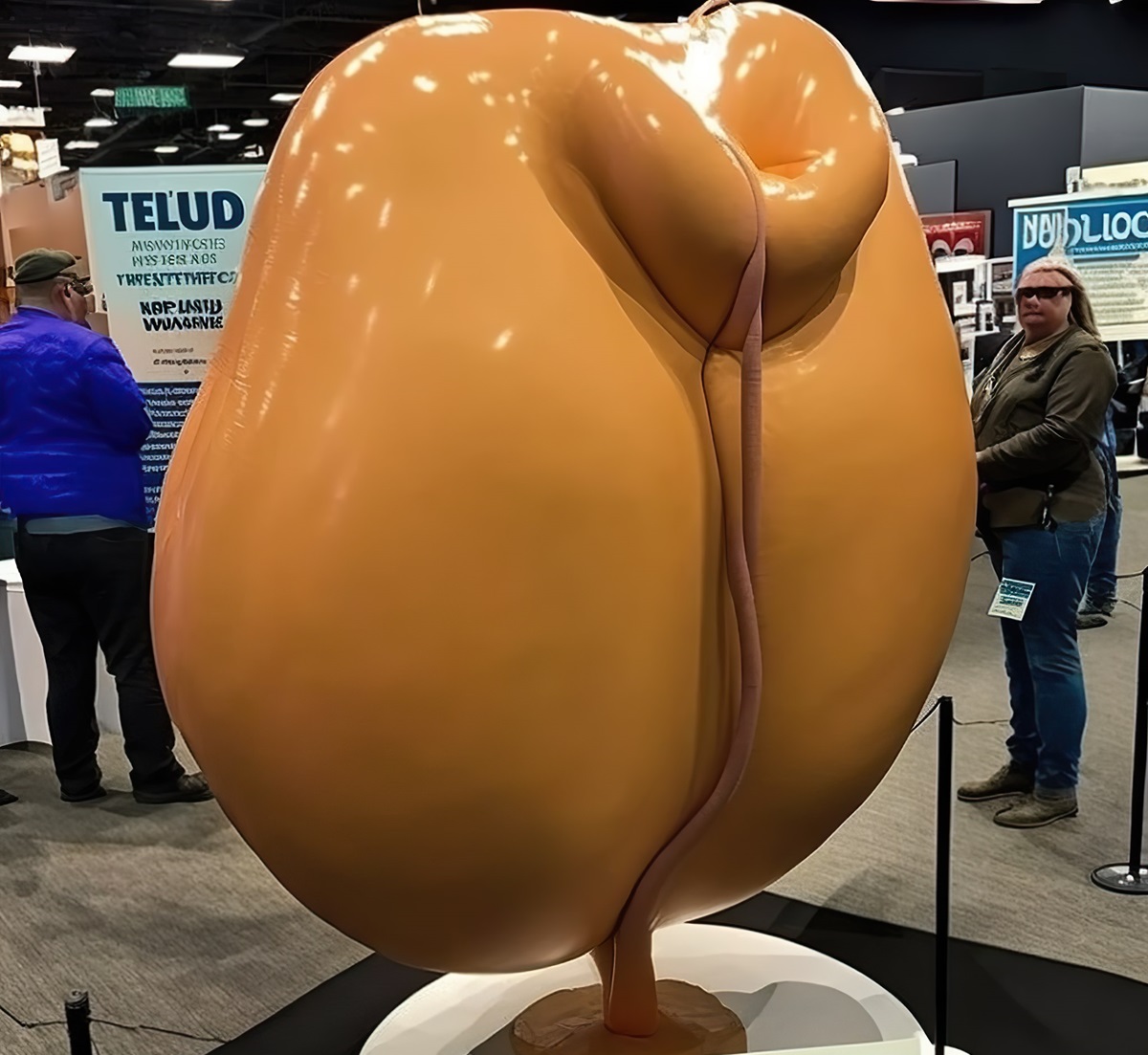
Begin with the reservoir and its connection points
Start with front, side, and three-quarter views that show the full outer contour. Mark the widest part of the reservoir, the transition into the lower outlet, and the position where paired upper connections meet the body. A deliberately simplified model can use a cleaner outline, while a more reference-driven form needs coordinated views so the shape does not become a generic rounded object.
Decide how much of the surrounding urinary system belongs in the composition. Short connection cues keep attention on the bladder itself. Longer ureter forms, nearby kidney elements, labels, or a supporting diagram create a larger system display and must be dimensioned as part of the occupied envelope.
Choose what viewers can see
The visible information changes the shape, depth, and principal viewing face of the model.
Closed exterior
A complete outer form emphasizes contour and can be viewed from several directions. Indicate where labels, color breaks, or connection points appear without relying on hidden interior detail.
Cutaway
An open section needs a defined cut plane, edge treatment, interior depth, and viewing angle. Identify only the internal features required for the display.
Connections and callouts
List every tube, vessel cue, label, leader line, or detachable marker and show where it meets the main body.
Interaction
If viewers should open, remove, touch, or enter any element, describe that behavior separately from ordinary visual access.
Keep the lower contour visible at the chosen height
An upright bladder display may need support that reaches the back or enters a planned base while leaving the narrowed bottom readable. A wall-mounted arrangement can simplify floor contact but requires a known viewing face. A suspended-looking or system-mounted composition introduces additional clearances around every connection.
Place the model on a site elevation with the expected eye level, nearby graphics, counters, railings, and visitor path. For a cutaway, set the principal approach so the interior is not hidden by the outer wall or by labels. For a closed form, decide whether the rear receives the same level of visual finish as the front.
Read the bladder silhouette at exhibit scale
The pictured display provides a useful physical reference for a rounded reservoir, tapered lower contour, upper connections, and a support relationship that leaves the main form visible. It does not establish a WhiteClouds commission or a prescribed construction method.
A new display can follow a different contour, level of realism, label system, or surrounding anatomy. The actual brief should replace the pictured proportions with approved visual references and the dimensions of the intended setting.
Prepare the organ-specific decisions
An initial request should define the physical model rather than provide a general medical topic.
- Front, side, and preferred three-quarter bladder references
- Simplified, stylized, or reference-driven exterior
- Closed form, cutaway, removable section, or another defined configuration
- Upper connections, lower outlet, labels, and callouts to include
- Relationship to kidneys, ureters, graphics, or a supplied background
- Overall width, depth, height, and target viewing height
- Freestanding, wall-mounted, or integrated support condition
- Interaction limits, access route, destination, and required date
Request pricing for a custom giant bladder display
Send the approved contour, realism level, closed or cutaway configuration, required connections and labels, overall dimensions, viewing height, support condition, interaction limits, access information, destination, and schedule.