
The Giant Beaver Statue: A Colossal Tribute to Nature’s Ingenious Builder
Few creatures in the natural world embody both industry and imagination like the beaver. Known for their elaborate dams and lodges, these tireless rodents are often called “nature’s engineers.” They symbolize hard work, resourcefulness, and environmental balance. So when communities choose to celebrate their heritage or environment with public art, it makes sense that some have turned to an unlikely but unforgettable mascot: the giant beaver statue. From whimsical roadside attractions to monumental works of art, giant beaver statues have become local landmarks that blend playfulness with cultural pride. These larger-than-life sculptures capture the spirit of an animal that has shaped landscapes and human history alike. In this article, we’ll explore the symbolism of the beaver, notable giant beaver statues around the world, their role in tourism and community identity, and how such massive monuments might be fabricated.
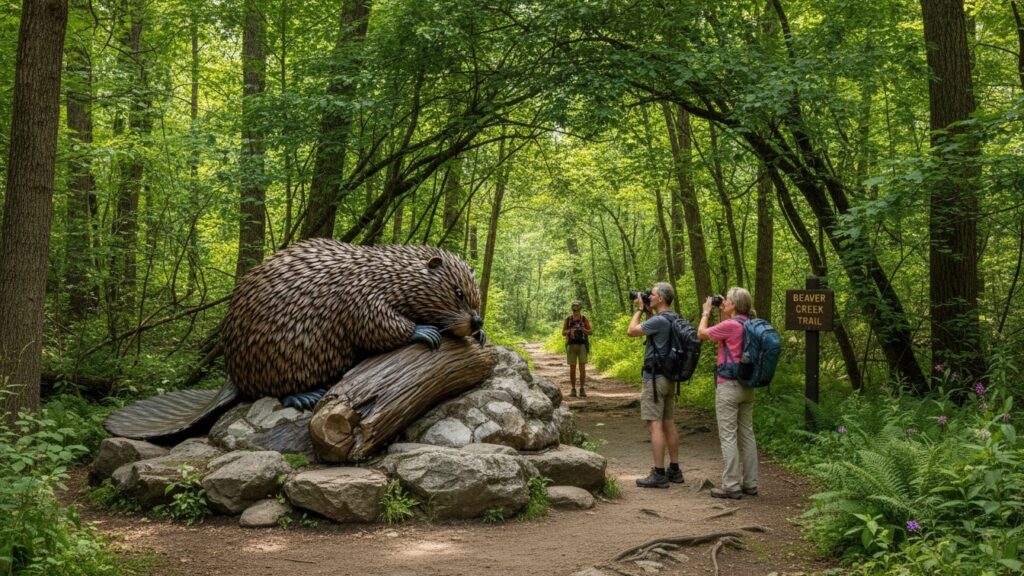
The Beaver as a Symbol of Ingenuity and Tenacity
The beaver has long been admired for its engineering prowess. With teeth strong enough to fell trees and an instinct for construction, it is one of the few animals capable of dramatically altering its ecosystem. Its dams create wetlands, providing habitat for countless species, improving water quality, and preventing erosion. Culturally, the beaver has been revered for centuries. Indigenous communities across North America honored the beaver in stories and teachings, seeing it as a model of perseverance and wisdom. In Canada, the beaver is an official national symbol, appearing on coins, stamps, and emblems since the 19th century. To Canadians, the beaver represents not only industriousness but also the fur trade that shaped the nation’s early history. When magnified into statue form, the beaver takes on even greater significance. Its round body, expressive face, and unmistakable flat tail offer sculptors plenty of inspiration. More importantly, the statue becomes a tangible reminder of how small but determined creatures can have an enormous impact.
Famous Giant Beaver Statues Around the World
Though not as common as statues of people, horses, or lions, giant beavers do exist and have become beloved curiosities in the places that house them.
Beaverlodge, Alberta – “Giant Beaver”
Perhaps the most famous example sits in Beaverlodge, Alberta, Canada. This 18-foot-long beaver statue was unveiled in 2004 as a symbol of civic pride. Perched atop a log, it greets visitors entering the small town, instantly making it one of the most photographed landmarks in northern Alberta. The sculpture reflects the community’s connection to both the beaver and the regional environment.
Beaver, Oklahoma – “Beaver the Beaver”
In the United States, Beaver, Oklahoma, proudly features its own beaver statue, known as “Beaver the Beaver.” This quirky monument highlights the town’s playful embrace of its name. Tourists stop for pictures with the beaver, and it has become a quirky staple of roadside Americana.
Smaller Sculptures and Regional Tributes
Beyond these major examples, smaller beaver statues appear in parks, museums, and zoos throughout North America. In many cases, they are used as educational tools, teaching children about the ecological importance of the species. While they may not always be colossal, the concept of the giant beaver statue has taken root as a beloved part of cultural storytelling.
Why Build a Giant Beaver Statue?
At first glance, the idea of building an enormous rodent may sound whimsical, even comical. But giant beaver statues serve serious cultural and community purposes. They act as symbols of local identity, especially in towns with names like Beaverlodge or Beaver. They also create instant tourist attractions, drawing road-trippers eager for offbeat photo opportunities. And beyond the economic boost, they connect people to themes of resilience, ingenuity, and cooperation—values embodied by the animal itself. On another level, giant beaver statues offer a playful sense of humor. Public art often veers toward the solemn or monumental, but a massive beaver with a mischievous expression invites laughter and lightheartedness. It reminds visitors and residents alike that art can inspire joy just as much as awe.
The Artistic Challenge of Capturing a Beaver in Monumental Form
The beaver may not have the regal mane of a lion or the towering antlers of a moose, but it presents unique artistic challenges. Sculptors must carefully exaggerate certain features to make the statue recognizable and engaging. The beaver’s teeth—essential to its identity—are often rendered oversized to emphasize its industrious nature. Its flat tail, a defining trait, must be carefully proportioned to look natural when scaled up. The body, rotund and compact, can be stylized for either realism or cartoonish charm depending on the community’s vision. Some giant beaver statues lean toward naturalistic detail, highlighting fur texture and musculature. Others embrace humor, exaggerating features for a friendlier, approachable look. Either way, the goal is to create something eye-catching and unmistakable, a sculpture that invites both admiration and selfies.
How a Giant Beaver Statue Might Be Fabricated
Constructing a giant beaver statue requires a combination of artistry, engineering, and craftsmanship. The process is far more complex than simply scaling up a model, as durability, weather resistance, and transportation must all be considered.
The process typically begins with detailed concept sketches and scale models. Sculptors often use 3D modeling software to refine the design, ensuring that proportions look correct when enlarged. This is crucial, as features that seem subtle at small scale may appear distorted when blown up to monumental size. Once the design is approved, a steel framework is constructed to form the skeleton of the statue. This frame supports the weight of the outer materials and anchors the sculpture against strong winds and shifting weather conditions. The framework may be welded into segments that can later be transported and assembled on-site.
The outer shell can be made from a variety of materials, depending on budget and intent. Fiberglass is a popular choice for roadside attractions, as it is lightweight, durable, and capable of being molded into complex shapes. Bronze or copper might be used for more permanent and prestigious installations, offering long-term resilience and a patina that evolves beautifully over time. Some communities opt for wood or stone carvings, though these require more maintenance against the elements. The fur texture of the beaver presents another fabrication challenge. Sculptors may carve or mold intricate patterns into the surface, or they might stylize the fur into smoother, simplified forms. The tail, often a separate piece, is created with its iconic scaly pattern carefully replicated.
After assembly, the statue undergoes finishing treatments. Metal surfaces may be polished or chemically aged, fiberglass may be painted with high-durability outdoor coatings, and wooden elements may be sealed with protective finishes. Finally, the statue is installed on a secure base, often concrete, and unveiled to the public in a festive ceremony.
Community Life Around Giant Beavers
Once installed, giant beaver statues rarely fade into the background. They quickly become woven into community life, serving as meeting places, backdrops for festivals, and even mascots for local schools or sports teams. In Beaverlodge, the statue has become a point of civic pride, appearing on postcards, t-shirts, and promotional materials. Visitors driving along the highway often stop just to take a picture with the massive rodent, boosting local tourism. In smaller towns, the presence of a giant beaver may serve as the most recognizable landmark, helping to put them “on the map.” Communities also embrace these statues in creative ways. Holiday decorations might see the beaver adorned with a Santa hat or festive lights. Local events may use the statue as a stage backdrop. Schoolchildren often take field trips to learn about both the animal and the artistry behind the sculpture. Over time, the beaver becomes more than a piece of art—it becomes part of the town’s identity.
Tourism and the Roadside Attraction Tradition
Giant animal statues fit neatly into the long tradition of roadside attractions. From giant ducks in New York to oversized moose in Canada, travelers have always been drawn to the quirky and unusual. The giant beaver is no exception. For many tourists, the appeal lies in the unexpected. You might be driving through farmland or forest when suddenly, a colossal rodent appears on the horizon. The surprise invites a stop, a photograph, and a story to share. In an age of social media, these statues also gain new life as Instagram-worthy backdrops, spreading images of the community across the globe. This kind of tourism may seem whimsical, but it can have real economic impact. Small towns benefit from visitors who stop to see the statue, then stay for meals, souvenirs, and local lodging. The giant beaver statue thus serves as both cultural heritage and economic engine.
Imagining Future Giant Beaver Statues
As public art continues to evolve, one can imagine even more innovative interpretations of the giant beaver statue. Some might be designed as interactive sculptures—climbable for children, or with seating integrated into the tail. Others could serve as eco-friendly educational spaces, with plaques or QR codes teaching visitors about wetlands, conservation, and the ecological role of beavers. Artists might also experiment with modern materials like stainless steel, giving the beaver a sleek, futuristic appearance. Or they might create hybrid sculptures, combining realism with abstract forms that highlight the animal’s engineering legacy. A beaver-shaped pavilion could even host community events, blending function with whimsy. In every case, the statue would serve the same purpose: to celebrate an animal that exemplifies hard work, resilience, and environmental stewardship.
Conclusion: From Lodge to Landmark
The giant beaver statue may seem like an unusual choice for public art, but its appeal is undeniable. Rooted in cultural symbolism and ecological significance, it connects communities to both history and nature. As a landmark, it sparks joy, curiosity, and pride, offering a whimsical yet meaningful reminder of what humans and animals alike can achieve through ingenuity and persistence. Whether crafted from bronze, fiberglass, or wood, the giant beaver statue stands as a testament to creativity and community spirit. From Beaverlodge to Beaver, Oklahoma, these colossal rodents remind us that art doesn’t always have to be solemn to be profound. Sometimes, it just needs to make us stop, smile, and celebrate the unexpected.
Check out WhiteClouds’ 3D Statues for more information.
Contact us today to learn more about our 3D services and how we can help you achieve your goals.