
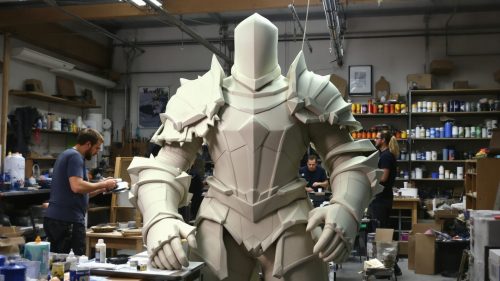
Transforming Blocks of Foam into Larger-Than-Life Icons
Walk into a theme park, parade, or trade show, and chances are your eye will lock onto something massive: a towering dragon, a 15-foot superhero, or a playful oversized mascot with exaggerated features. These aren’t simply decorations; they’re cultural magnets. Audiences are drawn to “big.” A larger-than-life character radiates personality, commands attention, and makes memories. And at the heart of creating many of these giants is one versatile material: foam. Foam carving has become a cornerstone of the fabrication world because it combines flexibility with strength, affordability with artistry, and practicality with theatrical impact. When sculptors want to transform a sketch into a 20-foot-tall panda or a medieval knight that can withstand the chaos of an amusement park, foam is often the secret ingredient.
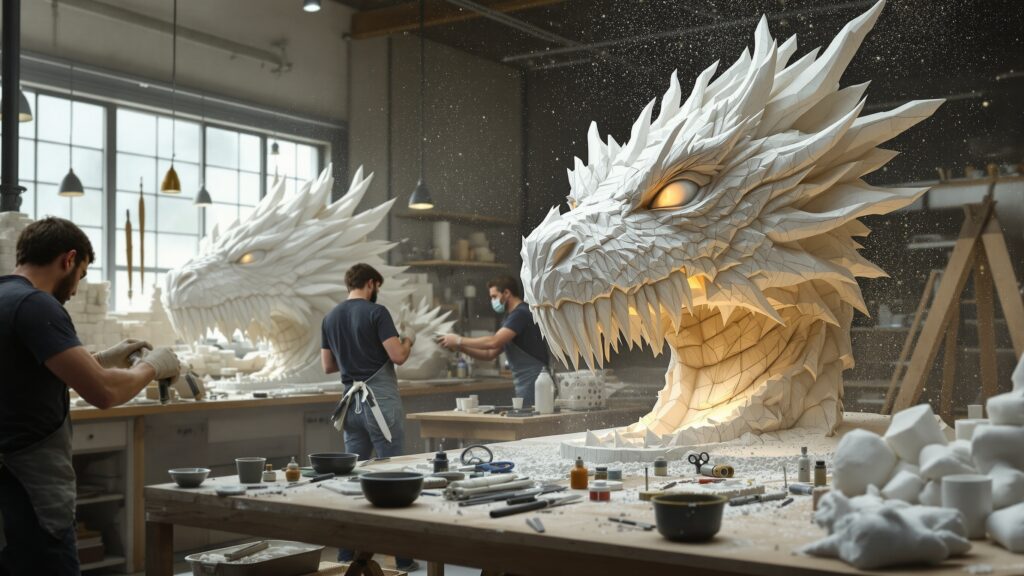
Why Foam Works for the Giant Scale
When fabricators need to go big, traditional materials such as wood, stone, or metal are impractical. A steel robot the size of a two-story building would weigh thousands of pounds and require cranes just to install. Foam, however, is light enough to move by hand yet strong enough to serve as a core structure once coated and reinforced.
Expanded polystyrene (EPS) and extruded polystyrene (XPS) are the workhorses of the industry. They’re easy to cut, sand, and shape into complex forms while being available in large blocks that allow sculptors to think on a monumental scale. Foam can mimic virtually any texture once it’s sealed and painted—wood grain, stone masonry, shimmering metallic armor, or the soft fur of a mascot.
This chameleon-like property makes foam invaluable to fabricators working in themed entertainment, advertising, and event production. Whether the client is a theme park operator, a corporate brand looking for a giant mascot at a product launch, or a film studio needing an alien warrior, foam delivers size without sacrificing imagination.
From Sketch to Sculpture: The Creative Process
Every giant character begins life as an idea. The process usually starts with hand sketches or digital concept art. These designs are refined into 3D models using CAD or sculpting software like ZBrush. Once proportions and poses are finalized, the digital model can be sliced into foam-friendly pieces.
CNC hot-wire machines and robotic mills often carve the basic shapes, shaving hours off manual labor. These tools translate the digital design into precision cuts through giant foam blocks, producing forms that already resemble the character. Artists then step in to refine details: the curve of a grin, the flow of hair, the texture of feathers.
This is where artistry shines. Foam may seem humble, but in the hands of a sculptor, it becomes expressive. Tools range from simple rasps and sandpaper to specialized hot knives that glide through polystyrene like butter. The surface is carefully shaped until the character’s personality emerges.
The Magic of Scale
Why do people instinctively stop and stare at oversized characters? Part of the answer lies in psychology. Scale transforms the ordinary into the extraordinary. A small figurine of a cat is cute, but a towering foam cat sitting in a city square becomes whimsical, surreal, and unforgettable.
Oversized characters also play with perspective. Visitors feel childlike when standing next to them, sparking joy and nostalgia. For businesses, this emotional impact translates into shareable social media moments. A 20-foot foam superhero outside a convention center practically guarantees selfies, hashtags, and viral visibility. In this sense, foam carving doesn’t just create physical objects; it creates experiences. The scale transforms a brand’s story into a public spectacle.
Fabrication in Action: How It’s Made
The fabrication process for giant foam characters is part science, part craftsmanship, and part stage magic. Here’s how the transformation typically unfolds:
1. Design and Planning
Every project begins with detailed blueprints. Engineers and artists collaborate to determine not just the look but also the practicalities: how the model will be transported, where seams will fall, how it will be anchored. Foam blocks come in specific sizes, so planning ensures the sculpture can be carved, coated, and reassembled without visible joints.
2. Foam Cutting
Massive blocks of EPS or XPS foam are cut down using hot-wire machines or CNC mills. The digital design is translated into physical slices. This stage produces the “rough draft” of the sculpture.
3. Hand Carving and Sculpting
Fabricators then move to hand tools to refine shapes. Hot knives add curves and grooves, rasps create texture, and sanders smooth surfaces. This is where facial expressions, intricate armor, or the flowing fabric of a cape begin to appear.
4. Assembly and Gluing
Because no single foam block is large enough for a 20-foot character, sculptors join multiple carved sections together. Specialized adhesives bond the pieces without visible lines.
5. Coating and Hardening
Raw foam is fragile, so it must be sealed and strengthened. Layers of polyurethane hard-coat, epoxy resin, or fiberglass are applied. Each choice has different benefits: polyurethane adds durability against handling, fiberglass creates a shell that can withstand outdoor weather, and epoxy smooths surfaces for glossy finishes.
6. Detailing and Surface Texture
After the shell cures, artists add surface textures. They may spray on stone effects, sculpt additional lightweight clay details, or carve faux wood grain into the hardened coating.
7. Painting and Finishing
Finally, professional painters bring the sculpture to life. Airbrushing adds depth with shading and highlights. Metallic paints can mimic bronze or steel, while flexible coatings allow for realistic skin or fur. Finishing touches, such as faux gems in armor or gloss coatings for cartoonish shine, complete the transformation.
By the end of this process, what began as blocks of foam has become a towering, lifelike character ready to dazzle audiences.
The Industries That Rely on Giant Foam Characters
The reach of foam carving spans far beyond theme parks. Giant character models appear in multiple industries, each with its own flavor of spectacle.
Entertainment and Theme Parks: From Disney to Universal Studios, foam characters populate immersive worlds. Whether it’s a 30-foot King Kong or whimsical fairytale creatures, foam allows parks to create immersive set pieces quickly and safely.
Film and Television: Productions often use foam to build characters and set pieces that appear massive on screen but are lightweight enough for quick scene changes. Foam dragons, robots, or prehistoric animals can appear terrifyingly real under the right lighting.
Marketing and Trade Shows: Brands love foam mascots. Imagine a giant cereal mascot towering over a convention crowd, or a colossal sneaker in a storefront window. Foam characters offer instant visual impact.
Public Art and Events: Cities commission foam sculptures for festivals, parades, and holiday displays. Oversized Santas, dragons in Lunar New Year parades, or sports mascots for fan zones often begin with foam.
Education and Museums: Foam also plays a role in learning. Life-sized dinosaurs, enlarged molecules, or giant insects carved from foam captivate visitors and bring education to life.
The Role of Technology in Foam Carving
Technology has revolutionized foam carving. Computer-aided design ensures accuracy and symmetry, while robotic milling machines can carve large sections faster than ever before. Laser projectors allow sculptors to trace outlines onto foam, maintaining fidelity to digital models. Augmented reality tools now allow sculptors to visualize how a character will look at full scale before cutting a single block. 3D printing, though slower at large sizes, is sometimes combined with foam to add intricate surface details. But even with advanced tools, human artistry remains central. Foam may be cut by machines, but the subtlety of a character’s grin or the emotion in a sculpted pose comes only from the sculptor’s hand.
Challenges and Creative Problem Solving
Foam carving isn’t without challenges. Giant characters must not only look impressive but also remain stable and safe. Weight distribution is critical—an oversized mascot with a huge head may require an internal steel armature to prevent tipping. Transport is another hurdle; sculptures must often be designed in sections that can fit through doors or onto trucks.
Weatherproofing also requires foresight. Outdoor characters need coatings that resist rain, UV light, and temperature swings. Creative problem solving is constant: how to make a foam gorilla look realistic yet survive a year outdoors in Florida, or how to create a foam wizard that can be quickly reassembled backstage at a theater. These challenges fuel innovation. Fabricators experiment with new coatings, lighter adhesives, and modular assembly systems. Each project pushes the boundaries of what foam can do.
The Environmental Question
In an era of sustainability, foam raises questions. EPS is not biodegradable, and large sculptures can generate waste. To address this, fabricators are exploring recycling options and biodegradable foam alternatives. Some projects incorporate reusable modular bases that can be re-carved for future events. Others use water-based coatings and low-VOC paints to reduce environmental impact. The push toward eco-friendly fabrication is gaining momentum, and foam carving is adapting to ensure that giant characters can inspire audiences without leaving an oversized footprint.
The Human Element: Artists Behind the Giants
Behind every giant foam character is a team of artists who blend technical skill with storytelling. Sculptors shape personalities into foam. Painters breathe life into blank surfaces with color and texture. Engineers ensure structures are safe and portable. Many of these artisans come from diverse backgrounds—fine art, theater, architecture, or industrial design. What unites them is a love of imagination. Their work requires both precision and playfulness. After all, carving a 25-foot pirate or an oversized alien is as much about fun as it is about fabrication. Visitors may never know the names of these artists, but they’ll remember the awe they felt when they first walked under the shadow of a giant foam character. That sense of wonder is the true measure of success.
Future Trends in Foam Carving
The future of foam carving is as exciting as the characters themselves. As technology advances, we’ll see even more ambitious projects. Projection mapping is already being layered onto foam sculptures, turning static giants into dynamic canvases that glow, move, and interact. Interactive features—such as giant foam mascots with embedded LED eyes or animatronic arms—are blurring the line between sculpture and performance. Sustainability will drive further innovation, with new recyclable foams and greener coatings entering the market. Virtual production techniques in film may even integrate foam characters with digital sets, creating hybrid experiences that feel both physical and cinematic. In short, foam carving isn’t just here to stay; it’s evolving into an ever more magical medium.
Big Dreams in Foam
Foam carving for giant character models represents the perfect marriage of practicality and imagination. Foam’s lightweight, versatile nature makes it the ideal canvas for bringing towering figures to life, whether they’re destined for a parade float, a theme park, or a trade show booth.
From the first sketch to the final airbrushed highlight, each sculpture is a triumph of creativity and craftsmanship. Standing beside a giant foam character, people don’t think about polystyrene, adhesives, or coatings. They think about the magic of scale, the thrill of spectacle, and the story the character tells. That is the ultimate achievement of foam carving: transforming simple blocks of material into unforgettable experiences that live large in memory long after the foam has been carved, coated, and painted.
Check out WhiteClouds’ 3D Statues for more information.
Contact us today to learn more about our 3D services and how we can help you achieve your goals.