
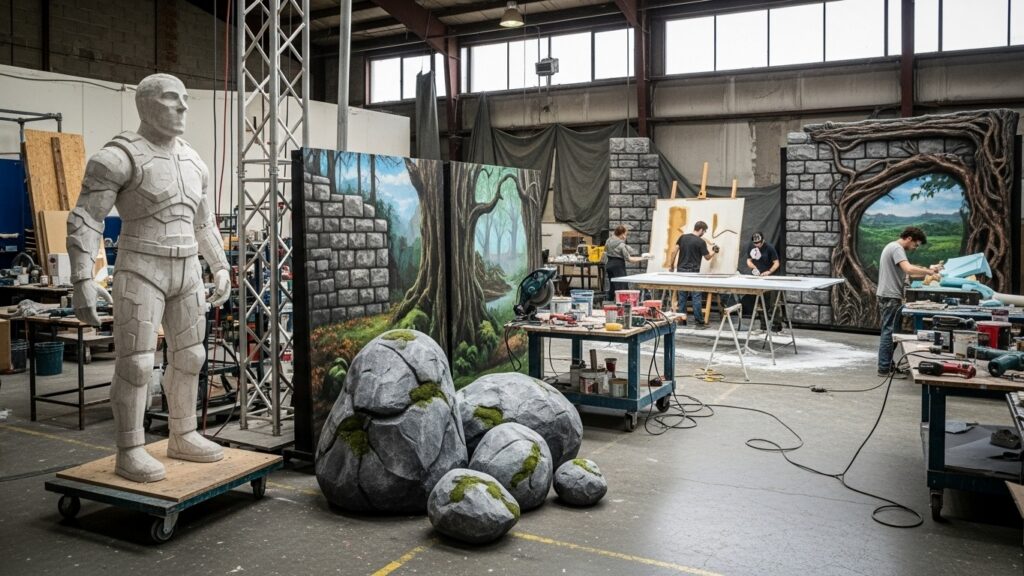
Bringing Worlds to Life Through Design, Detail, and the Art of Visual Storytelling
In the world of visual storytelling—whether it’s film, theater, theme parks, retail displays, or immersive events—two creative forces stand out as essential tools for bringing imagination into reality: character models and stage props. At first glance, they may seem interchangeable. Both are physical objects. Both contribute to visual environments. Both are crafted with artistry and precision. But dig a little deeper, and you’ll discover that each plays a very different role in shaping how audiences experience a story. Understanding the distinction between character models and stage props isn’t just useful for designers, builders, and creatives—it’s essential for anyone interested in how environments are built, stories are told, and worlds are constructed. From towering fantasy figures to subtle background elements, these components work together to create unforgettable visual experiences. Let’s explore how they differ, how they work together, and how they’re brought to life.
What Are Character Models?
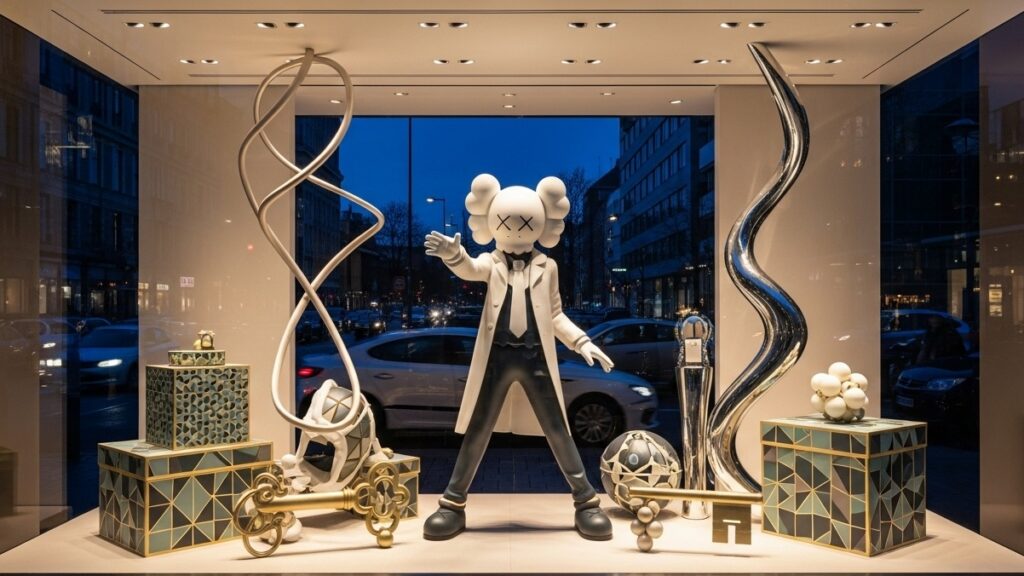
Character models are physical representations of living or fictional beings. They can be human, animal, robotic, mythical, or entirely imagined. Their purpose is to embody identity, personality, and narrative presence.
A well-designed character model is not just an object—it’s a presence. It might be a life-sized hero standing at the entrance of a themed attraction, a stylized mascot in a retail space, or a hyper-realistic creature in a museum exhibit. These models are designed to capture emotion, posture, movement (in some cases), and storytelling cues that immediately communicate who—or what—the character is.
Character models often become focal points. They draw attention, create emotional engagement, and give audiences something to connect with. In many environments, they are the “stars” of the visual experience.
What Are Stage Props?
Stage props, on the other hand, are objects used to support the environment, action, or narrative. They are tools of context rather than identity.
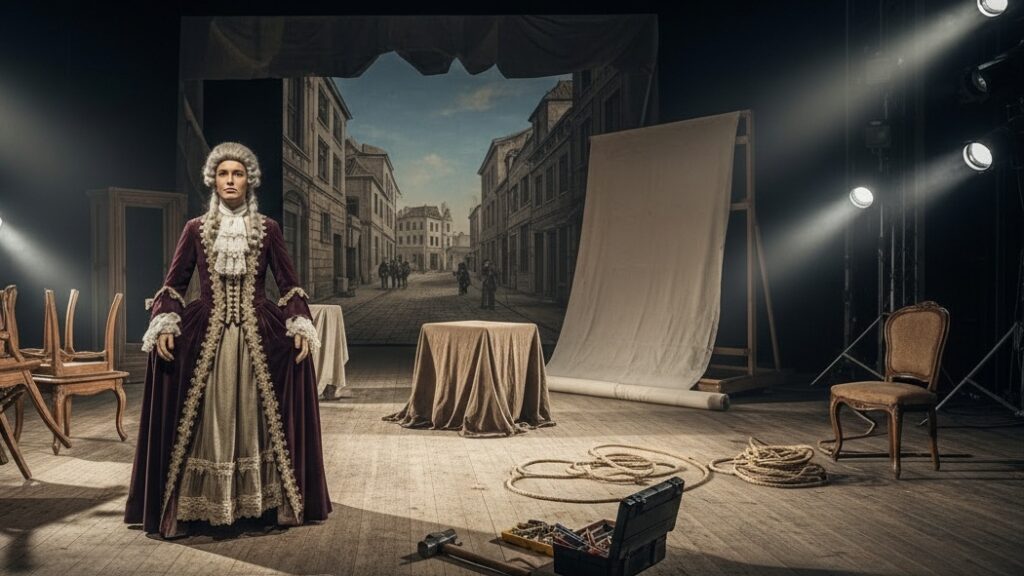
Props can include anything from furniture and handheld items to large scenic elements. A sword in a knight’s hand, a table in a dining scene, or a stack of crates in a warehouse setting—all are props. Their primary function is to enhance realism, support storytelling, and help actors or environments feel believable.
Unlike character models, props are usually not the focus. Instead, they work quietly in the background, reinforcing the world around the characters.
That said, some props can become iconic. Think of a throne, a treasure chest, or a mysterious artifact. Even then, their role is tied to the story, not to embodying a character themselves.
The Core Differences
At the heart of it, the difference between character models and stage props comes down to purpose and presence.
Character models represent beings. They are designed to express personality, identity, and narrative importance. They often require detailed sculpting, lifelike proportions, and expressive features.
Stage props represent objects. They are designed to support scenes, actions, and environments. Their focus is on function, realism, and integration into a larger setting.
Character models tend to be highly detailed, emotionally engaging, and visually dominant. Stage props tend to be supportive, contextual, and often more numerous within a scene.
In a theatrical or immersive environment, character models might be what audiences remember, while stage props are what make the scene feel complete.
Where Character Models Shine
Character models are most effective when storytelling relies on visual identity. In environments where live actors aren’t present, these models step in to represent characters in a tangible way.
In theme parks, character statues and figures often serve as photo opportunities, landmarks, and storytelling anchors. In museums and educational exhibits, character models can recreate historical figures or prehistoric creatures with striking realism. In retail environments, they can personify a brand or create memorable displays that attract customers.
They are also widely used in film production, particularly in special effects and practical builds. While digital effects dominate modern filmmaking, physical character models still play a role in creating realism, especially in close-up shots or hybrid effects.
Character models are about connection. When done right, they make audiences feel like they’re standing in the presence of something alive.
Where Stage Props Excel
Stage props thrive in environments where detail and immersion are key. They fill in the world around the characters, making scenes believable and complete.
- In theater productions, props are essential for storytelling. They give actors something to interact with, help define scenes, and provide visual cues for the audience.
- In film and television, props contribute to world-building, helping establish time periods, locations, and mood.
Props are also critical in event design, trade shows, and experiential marketing. They can transform a blank space into a themed environment, guiding how people move through and interact with a space.
Unlike character models, props are often designed with practicality in mind. They may need to be lightweight, durable, and easy to move or replace. Their success lies in how seamlessly they blend into the environment.
When the Lines Blur
While character models and stage props serve different purposes, there are moments when the line between them becomes blurred. A statue of a historical figure might function as both a character model and a prop, depending on its context. A large animatronic creature in a themed attraction could be considered a character model, but it may also act as part of the environment.
Similarly, oversized props—like a giant book, a massive tool, or a stylized object—can become focal points, almost taking on character-like qualities. In these cases, the distinction depends on how the object is used within the narrative. The most compelling environments often combine both elements seamlessly, allowing character models and props to complement each other.
The Role in Modern Experiences
Today’s audiences expect more than static displays. They want immersive, interactive environments that blur the line between reality and fiction.
Character models and stage props are central to this evolution. In escape rooms, themed restaurants, retail experiences, and branded installations, these elements work together to create fully realized worlds.
Character models provide emotional anchors—figures that audiences can recognize, relate to, or be intrigued by. Stage props provide the context—details that make the world feel lived-in and believable.
Together, they create environments that don’t just tell stories but allow people to step inside them.
Fabrication: How Character Models and Props Are Made
Behind every stunning character model or convincing stage prop is a detailed fabrication process that combines art, engineering, and craftsmanship.
The process typically begins with concept design. Artists create sketches or digital models that define the look, scale, and function of the piece. For character models, this stage focuses heavily on anatomy, expression, and personality. For props, it emphasizes usability, durability, and visual consistency with the environment.
Once the design is finalized, sculpting begins. For character models, this often involves creating a detailed clay or foam sculpture that captures every feature. Digital sculpting may also be used, especially for complex or large-scale builds.
Molding and casting follow. Materials such as fiberglass, resin, silicone, or foam are commonly used, depending on the requirements of the piece. Character models may require flexible materials for skin-like textures, while props often prioritize strength and lightweight construction.
Surface finishing is where the magic happens. Painting, texturing, and detailing bring the piece to life. For character models, this might include realistic skin tones, hair application, and intricate detailing. For props, it involves weathering, aging, and finishing techniques that make objects look authentic.
In some cases, mechanical components are added. Animatronics, lighting, and interactive elements can enhance both character models and props, making them more dynamic and engaging.
Finally, installation ensures that the piece fits seamlessly into its environment. This includes securing the structure, integrating it with other elements, and ensuring it meets safety standards.
Fabrication is where imagination becomes reality, transforming ideas into physical experiences.
Choosing Between Character Models and Props
When designing a space or experience, the decision between using character models, stage props, or both depends on the goal.
If the aim is to create a strong focal point or emotional connection, character models are the way to go. They capture attention and define the narrative.
If the goal is to build a believable environment or support a story, stage props are essential. They provide depth, context, and realism.
In most cases, the best approach is a combination of both. Character models draw people in, while props keep them immersed.
The Psychology of Visual Storytelling
There’s a psychological component to how audiences perceive character models and props. Humans are naturally drawn to faces and figures, which is why character models often command attention. They trigger emotional responses and create a sense of presence.
Props, on the other hand, engage the brain in a different way. They provide context clues, helping audiences understand the setting and narrative. They make environments feel real, even when the story is entirely fictional.
Together, they create a balance between emotional engagement and environmental immersion.
Future Trends in Character Models and Props
As technology advances, the line between character models and stage props continues to evolve.
3D printing, advanced materials, and digital fabrication techniques are making it easier to create highly detailed, customized pieces. Augmented reality and interactive technologies are adding new layers of engagement, allowing physical objects to interact with digital elements.
Sustainability is also becoming a focus, with designers exploring eco-friendly materials and reusable components.
Despite these innovations, the core principles remain the same. Character models and stage props are tools for storytelling, and their effectiveness depends on how well they serve the narrative.
Final Thoughts
Character models and stage props are more than just physical objects—they are the building blocks of immersive storytelling. One brings characters to life, giving audiences something to connect with. The other builds the world around them, making the story feel real. Individually, they are powerful. Together, they are transformative. Whether you’re designing a themed environment, creating a retail display, or building a cinematic scene, understanding the difference between character models and stage props allows you to use each element to its fullest potential.
In the end, it’s not about choosing one over the other. It’s about knowing how to combine them to create something unforgettable.