
CNC Precision in Creating Aluminum Letters
CNC Precision in Creating Aluminum Letters
We Build Custom Aluminum Letters
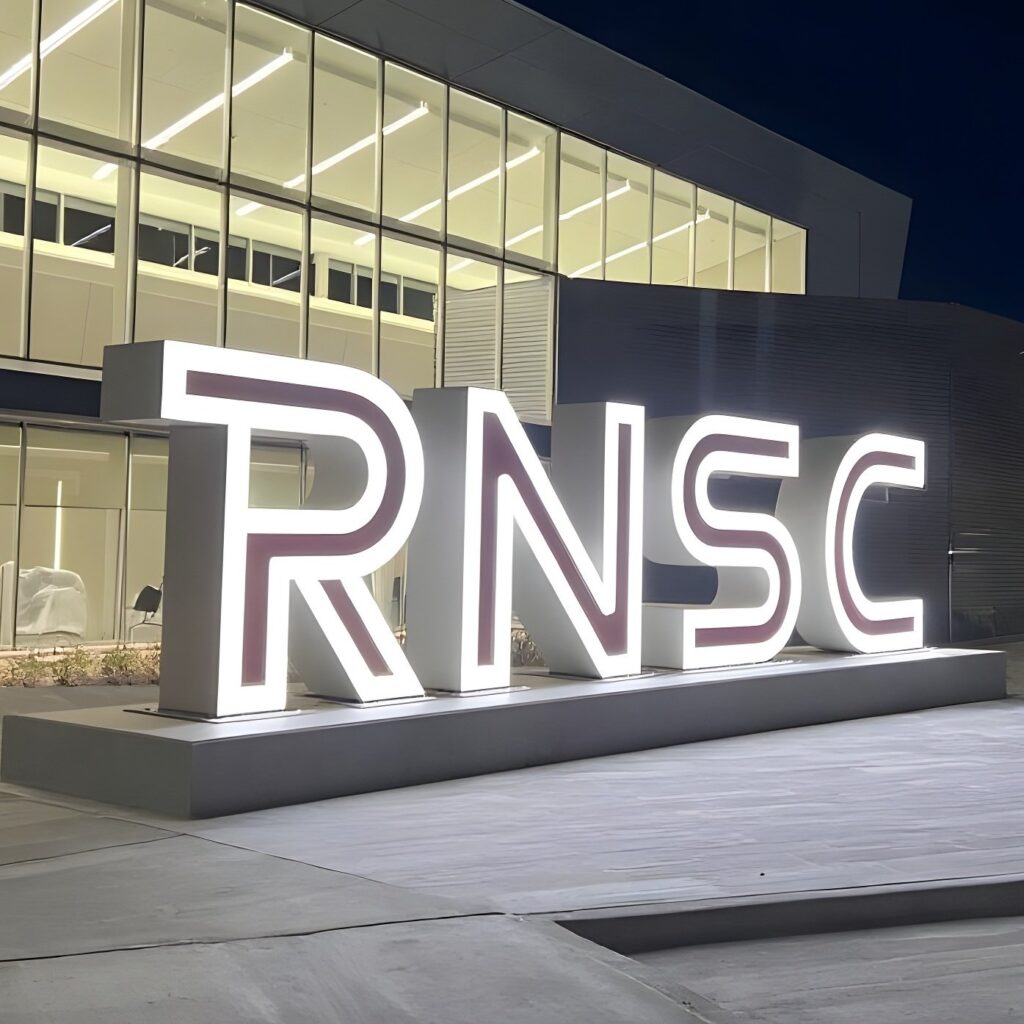
The Art & Science of CNC Precision in Aluminum Letter Fabrication
Imagine a crisp, bold signage display with clean edges glinting in the sun—letters that stand out, captivate, and last for years. That vision comes to life through the marriage of material, design and machine: cutting solid aluminum sheets with computer-controlled (CNC) precision to produce high-impact letters that define brands, direct visitors, and elevate architecture. In this article we explore the compelling world of how CNC machining shapes aluminum letters, why it matters, and how you can leverage it for your signage or architectural purpose.
1. True-to-font fidelity: Toolpathing preserves vector curves with micro-step smoothing for crisp beziers and consistent stroke weight.
2. Precision kerning & spacing: CAM-adjusted letterspacing compensates for cutter radius to maintain optical balance across a set.
3. Micro-fillets for inside corners: Router/mill radius constraints resolved with relief fillets to avoid “dog-bone” artifacts on tight counters.
4. Pocketed faces & inlays: CNC pockets accept acrylic or metal inlays for color, lighting diffusion, or texture accents.
5. Stepped returns: Multi-level steps create shadow lines, stiffen faces, and register components during assembly.
6. Chamfered & eased edges: 0.5–2.0 mm chamfers or radius breaks deliver a refined, safer edge while catching highlight lines.
7. Engraved fine detail: Micro-text, serials, and alignment ticks are V-carved or micro-milled directly into aluminum.
8. Parametric variants: Height/depth families generated from a single master to keep proportions and wall thicknesses consistent.
9. Hidden-fastener cavities: CNC pockets for studs, PEMs, and magnets enable clean, hardware-free faces.
10. Logo ligatures & overlaps: Complex brand forms handled with tab reliefs and contour priorities for flawless edges.
1. Alloy selection: 6061-T6 for structural strength, 5052 for formability, 3003 for economical flat cut letters.
2. Toolpath finish: Climb milling + finishing passes yield uniform satin cutter marks or pre-polish surfaces.
3. Bead blast prep: Fine media evens the CNC grain before anodizing or clear coating for a premium, diffuse sheen.
4. Anodize after machine: Hard, corrosion-resistant finish that seals edges and preserves crisp tool-cut geometry.
5. Powder coat systems: Etch/prime sequences ensure adhesion; masking preserves bond pads and datum faces.
6. Dual-finish strategies: Brushed returns with polished faces, or matte stencil sides with gloss tops for contrast.
7. Edge refinement: On-machine chamfering and Scotch-Brite deburr keep edges consistent on large runs.
8. Clear coats: UV-stable clears lock in brush/polish; marine-grade options for coastal installations.
9. Adhesive interfaces: Finish-compatible primers improve VHB/epoxy bonding on hidden cavities.
10. Lighting synergy: Finish choice tuned to front-lit or halo-lit optics for even glow and minimal hot spots.
1. CAD to CAM: Clean vectors (AI/DXF/SVG) or solids (STEP) → toolpath strategies for rough, finish, and contour passes.
2. Workholding: Vacuum tables, low-profile clamps, and sacrificial spoilboards maintain flatness across big letters.
3. Probing & zeroing: Edge-finders and touch probes set precise datums; tool length offsets verified before each run.
4. Feeds & speeds: HSM toolpaths, chip load control, and mist/air blast for cool, burr-free cutting.
5. Stepdowns & finish passes: Adaptive clearing with shallow finishing stepovers preserves edge quality.
6. On-machine deburr: Chamfer mills and brush heads remove burrs without touching critical faces.
7. Dry-fit assembly: Pinned cavities, PEM inserts, and stud alignment checked with printed or CNC-cut jigs.
8. Surface prep: Degrease, sanding grits staged, bead blast, and inspection before finishing.
9. Quality control: Caliper/CMM checks, radius gauges for inside corners, and tolerance log per letter.
10. Crating & labeling: Protective film, foam, and site sequence labels ensure safe handling and fast install.
1. CNC vs. waterjet: Waterjet excels on thick stock with no HAZ; CNC delivers tighter chamfers and pocket features.
2. CNC vs. laser: Laser is fastest on thin metals; CNC provides superior edge quality on thicker aluminum without melt.
3. Routing vs. milling: High-speed routers for volume flat-cuts; VMC milling for complex pockets and tighter tolerances.
4. 3-axis vs. 5-axis: 3-axis handles most letters; 5-axis unlocks bevel cuts, undercuts, and compound faces.
5. Adaptive vs. conventional: HSM reduces cycle times and tool wear while maintaining surface integrity.
6. Tabs vs. vacuum: Tabs secure small parts; vacuum yields clean edges and faster post-processing on larger letters.
7. Cast/fab vs. CNC flat-cut: Cast/fab for deep 3D shells; CNC for razor-sharp planar geometry with precise pockets.
8. Tolerance stacking: CNC minimizes stack—critical for modular, multi-panel words and tight kerning.
9. Finish readiness: CNC surfaces arrive bead-blast ready; waterjet/laser may need extra edge prep.
10. Cost dynamics: CNC shines on medium-to-large runs with repeatability and quick revision cycles.
1. Halo-lit perfection: Consistent stand-off pockets and light traps for even glow on brand walls.
2. Luxury storefronts: Micro-chamfers and mirror-polished faces deliver jewelry-grade edges.
3. Stadium scale: Nested toolpaths optimize 8′–10′ letters with uniform edge breaks for safety.
4. Corporate campuses: Repeatable kerning across multi-building programs keeps typography consistent.
5. Wayfinding sets: Arrowheads and icons cut with tight tolerances for clean, modular systems.
6. Integrated inlays: Acrylic or metal inlays seat into CNC pockets for color pops and branding accents.
7. Architectural stencils: Kerf-compensated stencil letters resist distortion and make clean paint edges.
8. Public art letters: Multi-layered typographic sculptures with precise registration for dramatic overlaps.
9. Rooftop frames: CNC brackets and datum slots speed install while maintaining letter alignment.
10. Heritage revivals: CNC-accurate redraws of classic type bring vintage signage back to life.
Q: What tolerances can you hold?
A: Typical ±0.010″ on profiles; ±0.005″ on critical features and inlay pockets depending on size and alloy.
A: Typical ±0.010″ on profiles; ±0.005″ on critical features and inlay pockets depending on size and alloy.
Q: Minimum stroke width for cutouts?
A: We recommend ≥0.125″ for clean through-cuts; micro-features can be engraved instead of through-cut.
A: We recommend ≥0.125″ for clean through-cuts; micro-features can be engraved instead of through-cut.
Q: How do inside corners stay sharp?
A: We add relief fillets or knife-edge inserts; lasers are an option on thin stock when zero radius is mandatory.
A: We add relief fillets or knife-edge inserts; lasers are an option on thin stock when zero radius is mandatory.
Q: What file formats work best?
A: AI/PDF/DXF for vectors; STEP/SAT for 3D. Outlines should be expanded, no live effects.
A: AI/PDF/DXF for vectors; STEP/SAT for 3D. Outlines should be expanded, no live effects.
Q: Recommended thicknesses?
A: 0.190″–0.500″ for flat-cut letters; thicker plates for stand-alone installs or deep pocketing.
A: 0.190″–0.500″ for flat-cut letters; thicker plates for stand-alone installs or deep pocketing.
Q: Edge quality options?
A: From crisp machined edges to eased/chamfered. Bead blast evens the grain prior to finish.
A: From crisp machined edges to eased/chamfered. Bead blast evens the grain prior to finish.
Q: Lead times?
A: Fast tracks in 1–2 weeks for flat-cuts; complex pocketed, inlaid, or lit sets take longer.
A: Fast tracks in 1–2 weeks for flat-cuts; complex pocketed, inlaid, or lit sets take longer.
Q: Do you provide mounting templates?
A: Yes—CNC-cut acrylic or paper patterns with datum references for rapid, accurate installs.
A: Yes—CNC-cut acrylic or paper patterns with datum references for rapid, accurate installs.
Q: Can you match brand colors?
A: Absolutely—powder coat and paint systems matched to Pantone/RAL; anodize colors available.
A: Absolutely—powder coat and paint systems matched to Pantone/RAL; anodize colors available.
Q: Service & repairs?
A: Replacement letters are machined from the same CAM program for perfect fit and finish continuity.
A: Replacement letters are machined from the same CAM program for perfect fit and finish continuity.
Why Aluminum Letters Are a Top Choice for Impact
Choosing aluminum letters isn’t just about looks—it’s about performance. Aluminum offers an outstanding strength-to-weight ratio, meaning large letters can be bold yet manageable. WhiteClouds explains that aluminum is naturally resistant to rust and corrosion, making it ideal for outdoor conditions and long-term exposure. Its ease of fabrication means that one can apply custom finishes—brushed, polished, anodized, or powder-coated—to align with brand identity. For signage, especially architectural or high-visibility displays, all these factors combine to make aluminum letters a smart choice. Using CNC machining for aluminum letters ensures dimensional accuracy, repeatability, and clean edges. As one sign-industry provider notes, “Cut aluminum letters are precision cut using lasers, CNC and water jets.” What this translates to in practice is crisp typography, perfectly replicated logos, and mounting-ready pieces that fit and finish well.
How CNC Technology Enables Precision in Letter Fabrication
At the heart of modern aluminum letter fabrication is the CNC router, laser cutter or water-jet cutter—all under the control of a digital file. Stability, repeatability and control are the keywords. These machines handle materials like aluminum with “precision and reliability” from custom designs, enabling sign makers to push creative limits. The process begins with a digital vector file of the letter shapes or logo. That vector becomes the instructions for the CNC machine, which translates the geometry into tool paths, speeds, feeds and movements. The workflow generally involves design creation, programming, precision cutting, smoothing and finishing, and inspection. That chain is vital for aluminum letters because the metal doesn’t forgive sloppy cuts, rough edges, or poor mounts. Because CNC systems are computer-driven, the same file can be used to produce identical pieces repeatedly, enabling scalability for multi-unit installations.
Precision means tight tolerances: edges are true, corners cut exactly, depths match, and mounting holes align. This reduces waste, reduces corrections and improves turnaround time. In practical terms for letters you’ll see: flat-cut letters (thin sheets), deep-return fabricated letters (for dimensional effect), and channel letters (with lighting). For example, WhiteClouds notes that flat cut letters are CNC or laser-cut from solid aluminum for crisp edges and minimalist profiles.
The Fabrication Journey: From Sheet to Sign
The journey of a CNC-cut aluminum letter starts as a concept and ends as a precise work of craftsmanship. The design team or client supplies artwork—fonts, logos, dimensions, mounting requirements—and the file is converted into vector format for machining. Engineering considerations include size, mounting method, thickness, finish, and installation environment. Next comes material selection. Choosing the correct aluminum alloy and sheet thickness ensures strength and longevity. Sign providers often work with standard thicknesses ranging from .040” to ½” for flat-cut letters. The chosen alloy, temper, and coating—clear coat, powder coat, or anodize—all influence durability and finish quality. Once prepared, the CNC machine begins cutting. The vector file directs the toolpath across the aluminum sheet, cutting each letter with astonishing accuracy. Because CNC machines hold tight tolerances, letters emerge with crisp corners and smooth curves even in intricate fonts. After cutting, letters undergo edge finishing to remove burrs, ensuring a refined appearance. The surface is then prepared for finishing—sanded, cleaned, and coated. In some cases, larger letters are welded or reinforced internally. Mounting preparation follows, where holes, studs, or backplates are added to ensure easy installation. Precision is critical at this stage—mounting patterns must align perfectly with the digital layout. Finally, each letter is inspected for size, surface uniformity, and edge smoothness before shipping. The result: signage that combines modern technology with craftsmanship.
Flat-Cut vs Custom Cut Aluminum Letters: What’s the Difference?
When exploring aluminum letter options, two common styles dominate: flat-cut aluminum letters and custom aluminum letters. Flat-cut aluminum letters are sliced from solid sheets—often between 1/8” and ½”—using CNC routers or lasers. They create sleek, flush-mounted signage with modern appeal. They’re ideal for interior offices, storefronts, and wayfinding installations that prioritize minimalism and clean geometry. Their efficiency in production and their sharp finish make them one of the most popular sign types on the market. WhiteClouds highlights their crisp lines and high precision as reasons for their popularity.
Custom aluminum letters, however, take things further. They can include deeper returns, lighting integration, and complex curves. These are often 3D or sculptural in nature, and CNC precision ensures every unique contour fits perfectly. WhiteClouds notes that custom aluminum letters enable truly unique fonts, finishes, and dimensional designs for businesses that want to stand out. In short, flat-cut letters deliver modern simplicity; custom aluminum letters bring architectural artistry.
Why CNC Precision Truly Matters for Aluminum Letters
CNC precision in aluminum letter fabrication isn’t just a manufacturing upgrade—it’s the foundation of visual excellence. The first benefit is edge definition. CNC cutting ensures sharp corners and perfect curvature that elevate the letter’s aesthetic. This precision separates professional-grade signage from amateur fabrication. Another crucial aspect is repeatability. With CNC systems, every letter, every order, every replication maintains identical quality. Whether producing fifty identical storefront sets or one monumental installation, consistency is guaranteed. CNC precision also improves efficiency and sustainability. Tool paths are optimized for minimal waste, conserving raw material and lowering costs. Designers can create intricate fonts, interlocking shapes, and complex logos that were once impractical to produce manually. CNC accuracy extends beyond appearance to installation. Pre-drilled holes and alignment guides are cut within thousandths of an inch, ensuring that every mounting stud aligns seamlessly on-site. It’s this combination of craftsmanship and computational accuracy that makes CNC aluminum letters both art and engineering.
Applications: Where CNC-Fabricated Aluminum Letters Shine
CNC aluminum letters thrive wherever visual impact meets durability. Architectural branding is one of their strongest applications—corporate façades, universities, and government buildings rely on precision-cut aluminum to communicate authority and permanence. WhiteClouds describes aluminum letters as more than signage—they’re architectural features that define space. Retail signage also benefits greatly. In busy streets and malls, aluminum letters maintain their polished appearance for years, even in harsh environments. Flat-cut aluminum letters are a favorite for modern retail and hospitality spaces seeking elegance without excess depth. Monumental signage—stadiums, public parks, airports—often uses large aluminum letters, sometimes reaching six to ten feet tall. Their strength-to-weight ratio makes installation easier without compromising scale.
Indoors, CNC-cut letters enhance offices, showrooms, and museums, where precision and finish quality matter as much as durability. They can be anodized, brushed, or painted to match branding palettes, creating cohesive interior design. Temporary exhibits and events also use aluminum letters for quick, repeatable setups. Lightweight yet strong, they transport easily and maintain their sharpness through repeated installations.
Choosing the Right Partner for Your Aluminum Letter Project
Selecting a capable fabrication partner ensures your signage vision is realized without compromise. Technical capacity should be your first filter. A qualified manufacturer must use CNC routers, lasers, or water-jet cutters engineered for aluminum precision. These machines should support tight tolerances and large material formats. Material and finishing expertise also matter. Confirm they offer multiple thicknesses, finishes such as brushed or anodized, and mounting solutions like studs or backplates. Installation support is equally critical. Precision-cut letters require accurate mounting patterns—your provider should supply drill templates or stud maps for effortless alignment. For complex or large-scale designs, look for design collaboration. A partner skilled in CAD modeling and engineering can anticipate challenges before production, saving you time and expense. Quality assurance seals the deal. Each letter should undergo inspection for consistency, surface finish, and fit. A transparent production timeline—often eight to ten business days—is a sign of professional workflow. Finally, cost transparency and consultation make the process smoother. A reputable partner like WhiteClouds will help balance design ambition with budget, ensuring you get maximum impact per dollar.
To get the most from CNC-cut aluminum letters, design for visibility and proportion. Opt for clean, legible fonts—CNC can handle complexity, but readability is paramount. Consider lighting conditions; brushed aluminum diffuses sunlight beautifully, while polished finishes shine in dim indoor spaces. Choose finishes that match your environment’s exposure—powder coating adds extra protection in coastal or high-humidity areas. Ensure your letters have appropriate mounting support; larger signs benefit from internal bracing or deep returns for added strength. Regular maintenance extends lifespan: simple cleaning with mild detergent prevents oxidation and keeps the surface bright. For illuminated or outdoor installations, periodic inspection of mounting hardware ensures long-term stability. By following these principles, your CNC aluminum letters will maintain their impact and structural integrity for years.
The Future of CNC Aluminum Letter Fabrication
Innovation continues to evolve. Hybrid fabrication techniques now combine CNC milling with laser etching or 3D printing for hybrid textures and contours. Automation allows faster transitions between designs, enabling on-demand production for architects and designers. As sustainability grows in importance, recycled aluminum and low-waste CNC tool paths are becoming standard practice. This not only reduces environmental impact but also enhances project efficiency. The next generation of CNC precision will integrate AI-driven optimization—machines learning how to improve cut paths, reduce vibrations, and increase edge smoothness automatically. For clients, that means even faster turnarounds, more creative freedom, and flawless quality.
Precision Meets Perfection: The Final Word
CNC precision transforms aluminum letter fabrication from a craft into a science of perfection. Every curve, every bevel, every edge becomes a testament to technology’s harmony with artistry. The result is signage that doesn’t just inform—it inspires. Whether you need sleek flat-cut aluminum letters or bold custom aluminum letters, the process behind them represents a quiet revolution in design. By combining aluminum’s timeless resilience with CNC’s mathematical precision, you achieve one thing above all: letters that make a statement—yesterday, today, and for decades to come.