
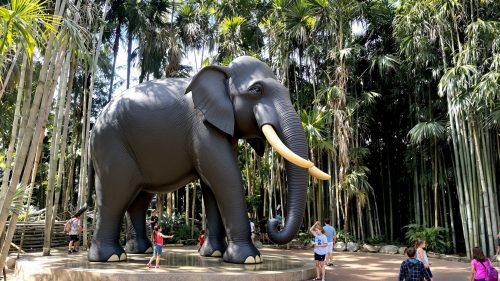
The Giant Elephant Statue: Majestic Monuments of Strength and Memory
The elephant has always fascinated humanity. Towering, powerful, and intelligent, elephants are symbols of memory, wisdom, and grandeur across cultures. But while most of us are used to seeing them in zoos, safaris, or documentaries, there is another way to encounter these magnificent animals—through monumental works of art. The giant elephant statue stands as a powerful testament to human creativity and reverence for one of the most iconic creatures on Earth. From ancient stone-carved elephants guarding temples to modern roadside fiberglass sculptures drawing tourists, these colossal figures carry stories of tradition, cultural identity, and artistic ambition. They are landmarks that honor elephants while showcasing humanity’s urge to build big, bold, and unforgettable monuments.
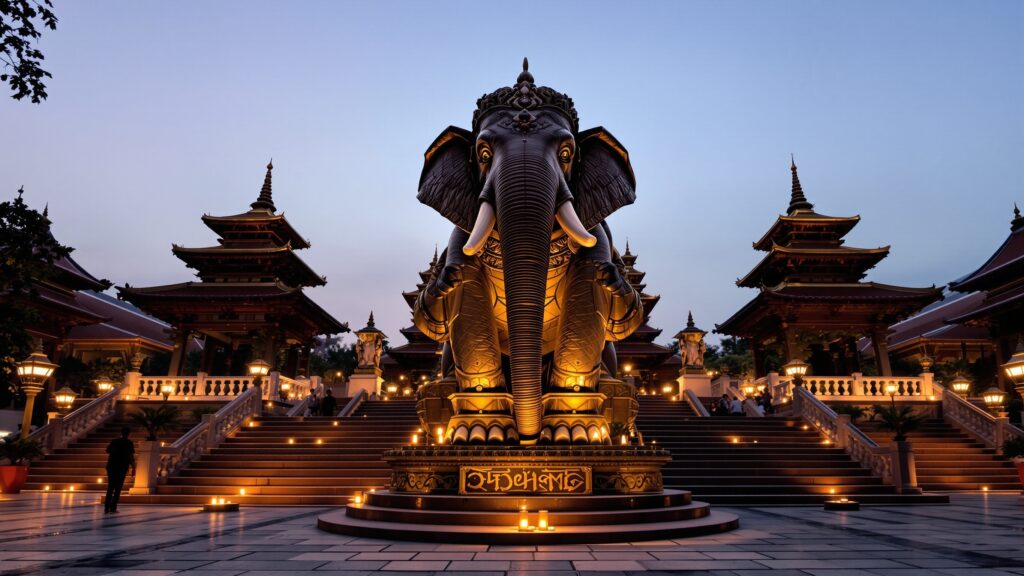
The Elephant as a Symbol Across Cultures
The elephant holds a special place in world culture. In Asia, elephants are revered as sacred animals. Hindu tradition honors the elephant-headed god Ganesha, a remover of obstacles and bringer of wisdom. In Buddhism, the white elephant symbolizes purity and enlightenment, while in Thailand and Myanmar, elephants are national symbols of strength and loyalty. In Africa, elephants are deeply woven into mythology and oral traditions. They represent memory, power, and leadership, often seen as the guardians of the land. Many Indigenous African stories celebrate elephants as wise elders of the animal kingdom.
In the West, elephants became emblems of strength and exoticism during the colonial era, immortalized in circuses, world fairs, and public monuments. The image of the elephant also spread into politics and entertainment, from the Republican Party symbol in the United States to beloved characters like Dumbo. When scaled up into giant statues, elephants become physical embodiments of these values—towering guardians, celebratory icons, and symbols of unity between human imagination and natural majesty.
A Tradition of Monumental Elephants
Elephant statues are not a modern invention. Ancient civilizations built them as guardians, protectors, and ceremonial figures.
- India’s Ancient Temples: Across India, giant stone elephants can be found at temple entrances, carved into gates or freestanding as protectors. These were not just decorative; they symbolized stability and strength, anchoring sacred spaces.
- Khmer Empire Sculptures: At Angkor in Cambodia, elephant carvings adorn temples and terraces, some towering over visitors as larger-than-life guardians.
- Colonial and Victorian Statues: In the 19th and early 20th centuries, as elephants became global curiosities, Europe and America erected elephant statues in gardens, circuses, and even novelty buildings.
Today, the tradition continues in both traditional and playful ways. From monumental bronze elephants in plazas to whimsical roadside attractions shaped like elephants, these statues remain global crowd-pleasers.
Famous Giant Elephant Statues Around the World
The Great Stone Elephants of India
Many Indian temples feature enormous elephant carvings, often standing guard at entrances. The temples of Kerala and Tamil Nadu are particularly famous for their towering elephant figures, seamlessly blending architecture and sculpture.
The White Elephants of Thailand
Thailand is dotted with monumental elephant statues, many painted white to reflect Buddhist symbolism. Some are part of temple complexes, while others stand in city centers as civic icons.
The Elephant Tower in Copenhagen
In Denmark, the Carlsberg Brewery built the Elephant Tower in 1901, featuring four massive granite elephant statues supporting an archway. This mix of function and ornament shows how elephant imagery has traveled far from its original cultural homes.
Lucy the Elephant, New Jersey, USA
On the whimsical side, “Lucy the Elephant” in Margate, New Jersey, is a six-story building shaped like an elephant. Built in 1881 as a novelty attraction, Lucy is both a roadside curiosity and a beloved historic landmark.
African Elephant Sculptures
Across Africa, giant elephant statues can be found in wildlife reserves, national park entrances, and city centers. Nairobi and Pretoria feature striking examples, often cast in bronze, that celebrate elephants as national treasures and keystone species.
Why Giant Elephant Statues Resonate
Elephants are already enormous animals. Enlarging them into statues emphasizes their natural majesty, turning them into awe-inspiring landmarks. No matter where you are in the world, elephants are instantly recognizable. Their form, trunk, and tusks make them ideal subjects for monumental art. Travelers are drawn to giant elephant statues as photo opportunities and memory markers. These monuments often become synonymous with the places they inhabit. For many, elephants symbolize peace, patience, and wisdom. Standing before a giant elephant statue can evoke feelings of humility and connection, bridging the human and natural worlds.
Artistic Styles of Giant Elephant Statues
Giant elephant statues are not uniform; they vary widely in artistic interpretation.
- Hyper-Realistic: These statues strive for lifelike accuracy, replicating every wrinkle of skin, every curve of tusk, and the massive bulk of the body. Often cast in bronze or detailed fiberglass, they make viewers feel as if a real elephant has been frozen in time.
- Stylized and Whimsical: Some lean into playful exaggeration—elephants painted in bright colors, adorned with patterns, or designed with cartoon-like proportions. These are especially popular in roadside Americana and theme parks.
- Abstract: Modern public art sometimes interprets elephants as geometric shapes, wireframe outlines, or minimalist forms. These focus less on detail and more on symbolic presence.
- Functional Monuments: Like Lucy the Elephant in New Jersey, some statues double as buildings or tourist centers, blending architecture with sculpture.
How a Giant Elephant Statue Might Be Fabricated
Building a giant elephant is both an artistic challenge and an engineering project.
Concept and Design
The process begins with extensive research. Sculptors study elephant anatomy, photographs, and sometimes even living elephants to capture realistic proportions and movement. Digital 3D models allow designers to scale the statue and test how it will look from various perspectives. Decisions about artistic style are made early—whether to pursue lifelike realism, stylized whimsy, or abstract forms. Scale models or maquettes are often built to refine the design.
Structural Framework
A giant statue requires a strong internal skeleton. Engineers design a steel framework capable of supporting the immense weight while withstanding wind, rain, and even seismic activity. For statues with extended trunks or tusks, special attention is given to load distribution and counterweights.
Exterior Shell
The outer body is typically built from fiberglass, concrete, bronze, or steel:
- Fiberglass: Lightweight and moldable, ideal for detailed work and cost-effective large builds.
- Concrete: Durable for permanent installations but requires more labor and weight-bearing engineering.
- Bronze: Timeless and prestigious, though expensive and extremely heavy.
- Steel or Aluminum: Sometimes used for abstract or modernist interpretations.
Panels are molded, cast, or welded, then fitted around the steel skeleton.
Surface Detailing and Finishing
Artists add texture—wrinkled skin, tusk surfaces, ear folds—by hand-sculpting or molding. Paint or patina completes the finish. Realistic statues may use earthy grays and browns, while stylized versions might include gold, white, or brightly patterned surfaces. For outdoor installations, UV-resistant coatings and protective sealants are essential.
Assembly and Installation
Statues are usually fabricated in large sections (head, body, legs) and transported to the installation site. Cranes lift pieces into place, which are then bolted and welded together. A reinforced concrete base anchors the structure. Finally, landscaping—stone paths, gardens, lighting—enhances the statue’s presence and integrates it into its surroundings.
Tourism, Community, and Cultural Identity
Giant elephant statues serve more than aesthetic purposes—they’re anchors of community identity and drivers of tourism. A town with a monumental elephant instantly communicates its cultural connection, whether to Asian spirituality, African wildlife, or roadside Americana.
Festivals and events often gather around these statues, using them as focal points for parades, performances, and community celebrations. Tourists share photos on social media, turning statues into viral attractions that spread far beyond their physical location. For many communities, a giant elephant is more than a statue—it’s a landmark that defines the place itself.
Maintenance and Preservation
Like all outdoor monuments, giant elephant statues must endure time and weather. Rain, snow, heat, and UV rays can wear down materials. Paint fades, joints shift, and metal can corrode. Regular inspections, cleaning, and resurfacing are essential. Communities often treat maintenance as a point of pride, rallying volunteers or funding preservation campaigns. The continued upkeep ensures that future generations can admire the monument in its full splendor.
The Future of Giant Elephant Statues
As technology advances, giant statues are becoming more interactive. Some modern elephant installations incorporate lighting effects, soundscapes of trumpeting calls, or even augmented reality apps that animate the statue through a smartphone. Eco-friendly materials and construction methods are also gaining traction. Future statues may be built from recycled metals, 3D-printed components, or solar-powered lighting, aligning the elephant’s symbolism of wisdom and care with modern environmental values. As global interest in public art and wildlife conservation grows, the giant elephant statue will continue to evolve—not just as a roadside curiosity, but as a meaningful expression of cultural and ecological consciousness.
Conclusion: Majestic Memory in Monumental Form
The giant elephant statue is far more than an oversized sculpture. It is a meeting point of art, culture, engineering, and community spirit. Whether guarding temple gates in Asia, welcoming travelers to African reserves, or delighting road-trippers in America, these statues are reminders of the elephant’s enduring hold on human imagination. Standing before one, you don’t just see an elephant—you feel the weight of history, the strength of symbolism, and the creativity of human ambition. The giant elephant statue is both a monument to the animal kingdom and a mirror of our own desire to celebrate, honor, and remember.
Check out WhiteClouds’ 3D Statues for more information.
Contact us today to learn more about our 3D services and how we can help you achieve your goals.