Giant Flamingo Statue
We Build Custom Giant Flamingo Statues
The Giant Flamingo Statue: A Monument of Whimsy and Wonder
Few creatures capture the imagination quite like the flamingo. With their long legs, elegant necks, and bold pink feathers, flamingos already stand out in the natural world. When their likeness is scaled up into monumental statues, they become even more dazzling, turning ordinary spaces into landmarks of joy and spectacle. The giant flamingo statue has emerged as one of the most playful icons of modern roadside Americana and urban art, combining humor, beauty, and cultural significance. Whether gracing the entrance of a zoo, presiding over a tourist plaza, or standing guard outside a retro diner, giant flamingo statues instantly draw eyes and smiles. They are more than sculptures—they are conversation starters, photo opportunities, and symbols of carefree fun.

Why Flamingos Inspire Such Big Art
Flamingos have long been associated with themes of elegance, balance, and tropical escape. Their pink plumage, caused by the carotenoids in their diet, has made them universally recognizable. In popular culture, flamingos carry playful associations, thanks in part to the famous pink plastic lawn ornament invented in the 1950s. This cultural backdrop makes flamingos ripe for monumental interpretation. Enlarging them into towering statues exaggerates their surreal qualities—the spindly legs, the gracefully curved neck, the outrageous color. A giant flamingo statue doesn’t just mimic the bird; it magnifies its already iconic personality.
Famous Giant Flamingo Statues Around the World
While flamingo statues can be found in many tourist towns, a few truly giant versions stand out as landmarks.
-
“Phoebe” at Tampa International Airport (USA): In 2022, artist Matthew Mazzotta installed a massive 21-foot flamingo sculpture in Tampa, Florida. With its head dipping through the ceiling as if wading into an imaginary pool, this piece instantly became a social media sensation.
-
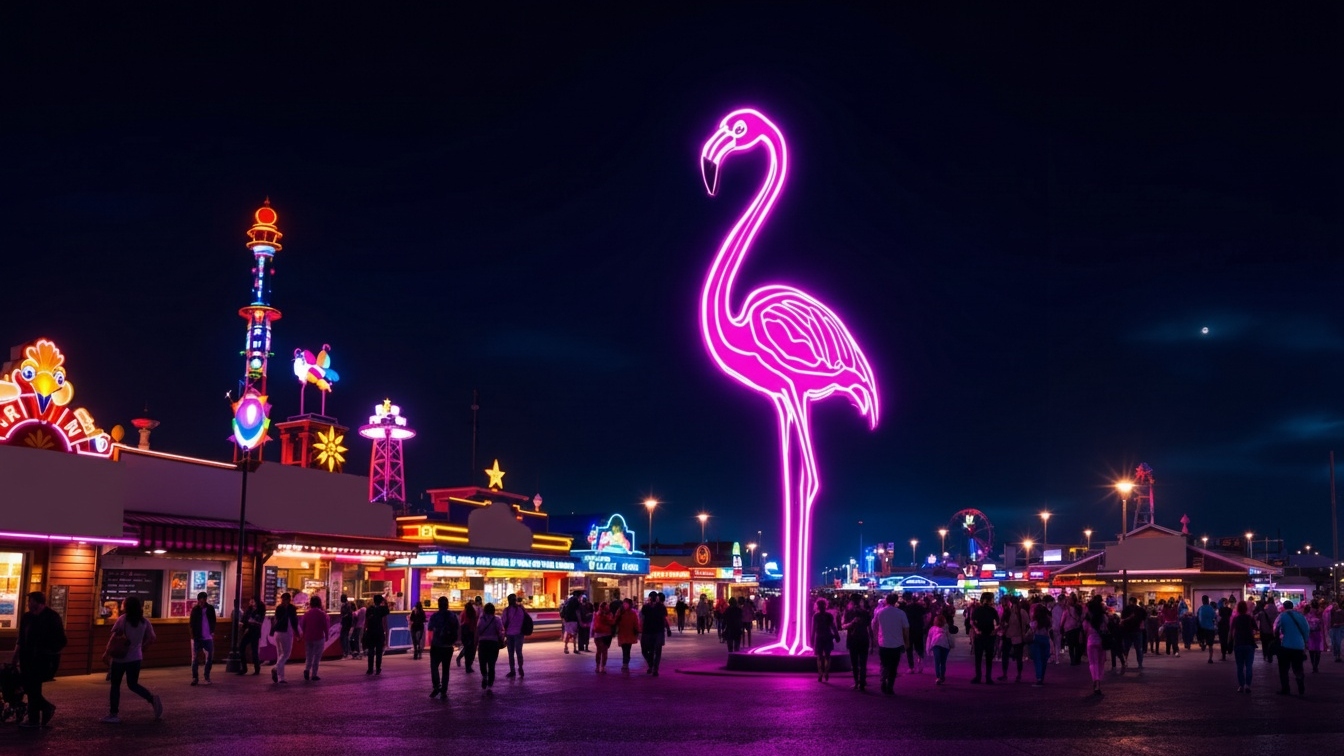
Resort and roadside flamingos (USA): From Las Vegas casinos to Florida beach motels, oversized flamingos dot the landscape, often serving as neon-lit mascots of leisure.
-
Festival installations: Temporary giant flamingos sometimes appear at art festivals, built from inflatable materials or sculpted from metal frames, designed to capture fleeting attention and inspire interaction.
These examples show how the giant flamingo bridges multiple worlds: fine art, kitsch, and tourism.
The Role of Flamingo Statues in Tourism
Much like other oversized statues—dinosaurs, roosters, or acorns—the giant flamingo statue has carved out a role in roadside Americana. Yet flamingos bring something uniquely playful. They aren’t fierce like dragons or solemn like lions; they’re quirky and flamboyant. Tourists love them because they embody escape. Standing next to a 20-foot pink flamingo feels like stepping into a postcard from a tropical vacation, even if you’re in the middle of a city. Businesses use them as bold advertising, ensuring that visitors stop, take pictures, and share their experience online. In this way, flamingo statues don’t just decorate—they drive traffic, tourism, and community branding.
Artistic Styles of Giant Flamingo Statues
Not every flamingo statue looks alike. Some strive for hyper-realism, with carefully sculpted feathers, lifelike eyes, and natural pink gradients. These often appear in zoos or wildlife parks, where the statue complements real flamingos nearby.
Others lean into cartoonish exaggeration, with oversized beaks, exaggerated colors, or humorous poses. These versions play to the kitsch heritage of the pink lawn flamingo and are especially popular outside diners, mini-golf courses, and gift shops.
A third style embraces modernist abstraction. Here, the flamingo is reduced to smooth lines, glossy surfaces, or metallic forms that capture its silhouette rather than its details. These statues fit perfectly into plazas, airports, and contemporary art spaces.
Why the Flamingo Works as Public Sculpture
The flamingo’s adaptability makes it one of the most effective subjects for monumental art. Its bold pink color naturally draws the eye. Its shape—tall, elegant, and curved—creates dynamic lines that look striking from any angle. And its cultural symbolism, tied to fun and leisure, makes it instantly welcoming rather than intimidating. Communities that adopt a giant flamingo statue also benefit from its universal recognizability. Unlike more obscure symbols, everyone knows what a flamingo is. That recognition makes the statue both approachable and memorable.
How a Giant Flamingo Statue Might Be Fabricated
Creating a towering flamingo is no small feat. The bird’s slender anatomy—long, narrow legs and thin neck—poses significant engineering challenges. To prevent collapse, fabricators must balance artistry with structural reinforcement.
The process typically begins with a steel framework that outlines the flamingo’s shape. These skeletal supports act like the bones of the bird, especially important in the legs, which must support the weight of the body. Once the framework is secure, the outer shell is added. This shell might be molded from fiberglass for lightweight durability, welded from sheet metal for a gleaming finish, or even cast in reinforced concrete for permanent outdoor installations.
Surface finishing is where artistry shines. Airbrush painting can achieve realistic feather textures, while glossy enamel creates a smooth, toy-like effect. In some cases, feathers are carved in relief or stylized into abstract geometric patterns. Finally, protective coatings are applied to withstand rain, UV exposure, and the occasional climbing tourist.
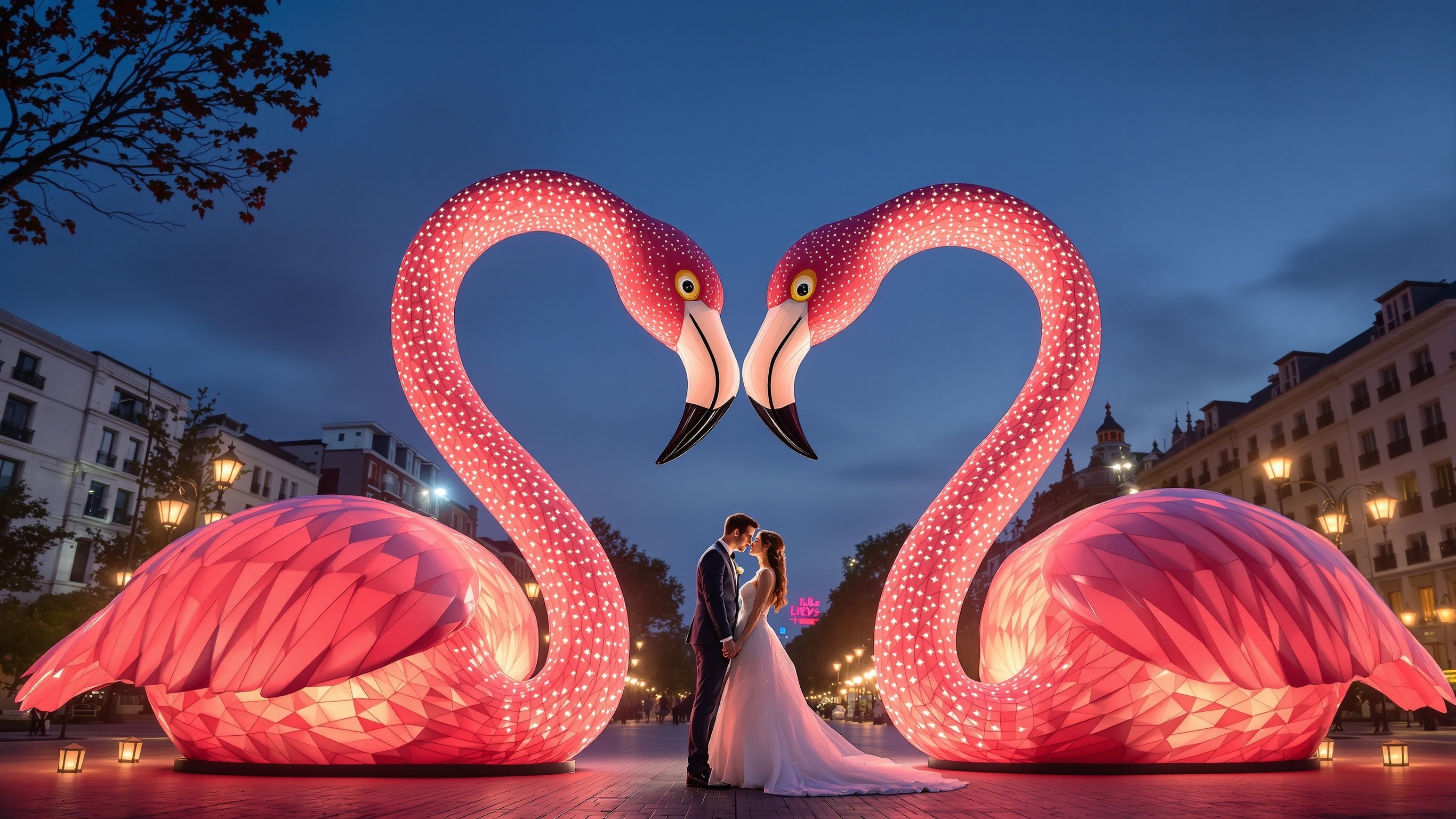
Lighting adds another dimension. LED spotlights can bathe the flamingo in dramatic hues, or internal lighting can make parts of the sculpture glow at night. The result is a flamingo that feels alive in both day and evening settings.
The Flamingo as a Cultural Beacon
Beyond aesthetics, the giant flamingo statue carries cultural resonance. In Florida, it represents the state’s wildlife and tropical identity. In Las Vegas, it nods to the flamboyance of the Flamingo Hotel, one of the Strip’s original icons. In art festivals, it symbolizes whimsy and play, breaking down the barrier between high art and kitsch. Because of these multiple associations, the flamingo works equally well in serious art contexts and playful roadside ones. It is, in many ways, a bird of dual identity: elegant in nature, humorous in human imagination.
Imagining Future Flamingo Installations
The possibilities for giant flamingo statues are as limitless as the imagination of artists and communities. One could imagine a mirrored flamingo in a city park reflecting the skyline, a neon-outlined flamingo glowing at night like a living sign, or a series of smaller flamingo statues arranged in a “flock” across a plaza. Some might even dream of interactive flamingo pavilions, with hollow interiors that visitors can enter, filled with projections of tropical wetlands. Others could be kinetic sculptures, with heads or wings that gently move in the breeze. Each of these ideas would push the boundaries of public art while keeping the flamingo’s sense of fun intact.
Why We Keep Building Big Birds
At its core, the fascination with giant flamingo statues reflects humanity’s love for scaling the ordinary into the extraordinary. Flamingos already look unusual; making them monumental exaggerates that strangeness into something unforgettable. These statues invite playfulness in a way few other monuments can. They remind us that not every landmark has to be serious. Sometimes, the best icons are the ones that make us smile, laugh, or feel like we’ve stepped into a cartoon world.
Conclusion: The Legacy of the Giant Flamingo
The giant flamingo statue is more than just a novelty. It is an emblem of joy, a testament to artistic creativity, and a beacon for communities seeking to stand out. Whether rendered as sleek modern art, whimsical roadside kitsch, or realistic wildlife tribute, the flamingo never fails to inspire delight. As more cities and towns invest in public art and roadside attractions, it’s likely we’ll see more giant flamingos rising up in plazas, parks, and highways. And every time one does, it will draw crowds who can’t resist taking a picture beside this towering bird of paradise.
The flamingo is flamboyant by nature—and when magnified into a colossal statue, it becomes unforgettable.